
20 nightsFrom Fort Lauderdale9 ports of call
6902E
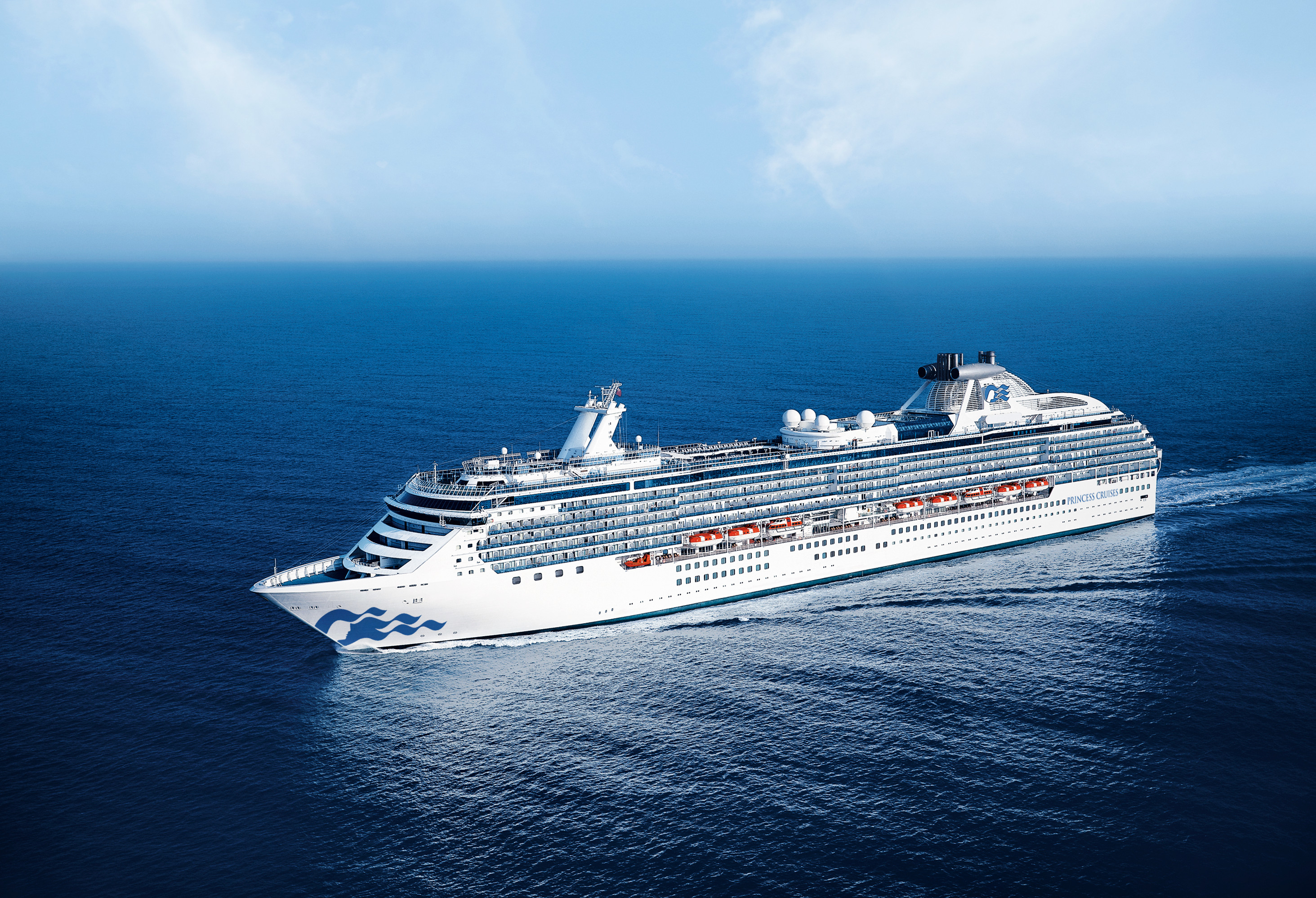
Princess Cruises · Coral Princess
Overview
A 20-night voyage aboard Coral Princess, departing Fort Lauderdale on 4 Jan 2029 and arriving in San Antonio, Chile, calling at 9 destinations along the way.
Fort LauderdaleOranjestad, ArubaCartagena, ColombiaFuerte Amador, Panama CityMantaCallao, PeruSan MartinCoquimboSan Antonio, Chile
Cabin prices
Live prices per person based on two sharing. Select a grade to see its fare options.
Loading live cabin prices…
Itinerary
20 nights · 21 ports of call- 1
Day 1 ·Fort LauderdaleEmbark
4 Jan 2029Depart 16:00According to the popular 1960 beach movie, Fort Lauderdale is "where the boys are." The city's reputation as America's Spring Break capital, however, has been replaced with the more favorable image of a prime family tourist destination, attracting more than 10 million visitors annually. The most popular beach resort in Florida is even more rightly famed as the "Yachting Capital of the World," with more than 40,000 registered crafts calling its waters home. The city also prides itself on being the "Venice of America" with more than 300 miles of navigable waterways. Fort Lauderdale boasts world-class theaters, museums, sightseeing, and shopping. - 2
Day 2 ·At Sea
5 Jan 2029 - 3
Day 3 ·At Sea
6 Jan 2029 - 4
Day 4 ·Aruba
7 Jan 2029Arrive 10:00Depart 22:00Dutch influence still lingers on this balmy Caribbean island, part of the former Netherlands Antilles until its independence in 1986. Aruba is a contrast: the island's arid interior is dotted with cactus and windswept divi-divi trees while secluded coves and sandy beaches make up its coast. Aruba's long and colorful heritage is reflected in its dialect. Called Papiamento, it is a tongue that combines elements of Spanish, French, Portuguese, Dutch, African and English. - 5
Day 5 ·At Sea
8 Jan 2029 - 6
Day 6 ·Cartagena, Colombia
9 Jan 2029Arrive 07:00Depart 21:00One of the more interesting cities on your itinerary steeped in history. This was the transit port for all the wealth Spain derived from South America. The famous "Old City" is comprised of 12 square blocks filled with attractions, boutiques and restaurants.
Throughout Colombia, the Spanish Empire's influence in the New World is self-evident. Its fortress walls, quaint narrow streets, and balconied houses are all vivid reminders of Spain's hold on Cartagena and throughout the Caribbean and South America. This is the land of El Dorado and flamboyant adventurers in search of the ever-elusive gold. Cartagena's well-constructed fortifications defended its borders against seafaring pirates whose attacks lasted for more than 200 years. Today this modern and bustling city, seaport, and commercial center still boasts much of its original colonial architecture. Your journey here will provide you with a significant link to the region's grand past.
**Please note that passengers may encounter numerous local vendors at various tourist locations and may find them to be persistent in their sales offers. - 7
Day 7 ·At Sea
10 Jan 2029 - 8
Day 8 ·Panama Canal - Full Transit
11 Jan 2029Arrive 06:00Depart 16:30Cruising through the Panama Canal will be one of the unforgettable experiences of your voyage.
It takes approximately eight hours to navigate the 50-mile waterway linking the Atlantic and Pacific Oceans, allowing you to experience firsthand one of the engineering marvels of the 20th century. Completed in 1914, the canal marks the culmination of a dream born in 1513, when Balboa became the first European to cross the Isthmus of Panama and sight the Pacific. In 1880 Ferdinand de Lesseps and the French Canal company, builders of the Suez Canal, began construction in Panama, only to be defeated by disease, staggering cost overruns, and massive engineering problems. The French sold their claim and properties to the United States for $40 million, a staggering loss of $247 million on their investment. The United States began construction in 1904, completing the project in 10 years at a cost of $387 million. Building the canal meant solving three problems: engineering, sanitation, and organization. The project, for example, required carving a channel through the Continental Divide and creating the then-largest man-made lake ever built, as well as defeating yellow fever and other tropical maladies. The United States oversaw the operation of the Panama Canal until December 31, 1999, when the Republic of Panama assumed responsibility for the canal's administration. The Panamanian government controls the canal through the Panama Canal Authority, an independent government agency created for the purpose of managing the canal. - 9
Day 9 ·Fuerte Amador
12 Jan 2029Arrive 07:00Depart 18:00Fuerte Amador, situated at the Pacific entrance to the Panama Canal, is a man-made peninsula extending out into the Pacific Ocean.
The one-mile causeway was created by connecting four small islands with rocks excavated from the Panama Canal. There are several shops, restaurants, and other specialty stores centered around a large marina that serves as a tender dock. The causeway also affords a panoramic view of Panama City's impressive skyline and serves as the home for the Smithsonian Institute of Tropical Research. - 10
Day 10 ·At Sea
13 Jan 2029 - 11
Day 11 ·Manta
14 Jan 2029Arrive 05:00Depart 21:00The breezy, seaside city of Manta is the second largest port in Ecuador and possesses one of the world's most varied terrains. To the west of Manta lie the Galapagos Islands. To the east rises the great rampart of the Andes. The Mantas were known for their traditional balsa rafts in the coastal waters and their ceramics and pottery. A huge tuna statue greets you on its shores, a whimsical nod to the tuna capital of the world. Fresh seafood is always on the menu, and a stroll along the promenade lets you take in the beach scene. The bustling center of town, an easy walk from port, displays a lively marketplace selling Panama hats, silver jewelry and apparel. There is lush green parkland; the nearby colonial town of Montecristi, the center of the Panama hat industry; and the Pacoche Wildlife Refuge, home to indigenous flora and fauna and cheeky howler monkeys. Explore the rich culture, heritage and people of Manta during scenic adventures that take in the Archaeological Museum, which highlights a small, well-curated collection of ceramics of the Manteño-Huancavilca culture that flourished here between 800 and 1550 A.D. Whether you explore its past or its vibrant city of today, a day in Manta is a rich and colorful experience.
Note: Manta offers little in the way of tourist infrastructure. Transportation and tour guides are imported to the area. Despite the sometimes hot and humid conditions there is no guarantee of air-conditioned vehicles. - 12
Day 12 ·At Sea
15 Jan 2029 - 13
Day 13 ·At Sea
16 Jan 2029 - 14
Day 14 ·Lima (Callao), Peru
17 Jan 2029Arrive 05:00Callao is a seaside city on the Pacific Ocean in the Lima metropolitan area. Callao is Peru's chief seaport and home to its main airport, Jorge Chávez International Airport. Callao municipality consists of the whole Callao Region, which is also coterminous with the Province of Callao. - 15
Day 15 ·Lima (Callao), Peru
18 Jan 2029Depart 18:00Callao is a seaside city on the Pacific Ocean in the Lima metropolitan area. Callao is Peru's chief seaport and home to its main airport, Jorge Chávez International Airport. Callao municipality consists of the whole Callao Region, which is also coterminous with the Province of Callao. - 16
Day 16 ·Pisco (General San Martin)
19 Jan 2029Arrive 07:00Depart 18:00San Martin is your gateway to the quiet colonial town of Pisco and its fertile coastal valley. For thousands of years, pre-Columbian societies thrived in river valleys such as this. Utilizing sophisticated systems of irrigation, they transformed the harsh coastal desert into productive farmland. The legacy of these ancient people, from their giant geometric etchings on the desert floor to their ancient burial grounds, continues to draw curious adventurers from around the world. San Martin is also your gateway to two other mysterious marvels: the Inca palace complex at Machu Picchu and the Galapagos Archipelago. - 17
Day 17 ·At Sea
20 Jan 2029 - 18
Day 18 ·At Sea
21 Jan 2029 - 19
Day 19 ·Coquimbo
22 Jan 2029Arrive 07:00Depart 16:00Coquimbo is a port city, commune and capital of the Elqui Province, located on the Pan-American Highway, in the Coquimbo Region of Chile. Coquimbo is situated in a valley 10 km south of La Serena, with which it forms Greater La Serena with more than 400,000 inhabitants. - 20
Day 20 ·Santiago (San Antonio)
23 Jan 2029Arrive 08:00Nestled between rolling hills topped with colorful houses and meandering coastal dunes, the bustling city of San Antonio enjoys its reputation as the gateway to Chile's central valley and the capital of Santiago. With a population of over five million people, Santiago sprawls at the feet of the snow-capped Andes. Inland lies the sun-kissed wine regions of Casablanca and Maipo Maipo Valley, Chile's internationally renowned wine district. - 21
Day 21 ·Santiago (San Antonio)Disembark
24 Jan 2029Nestled between rolling hills topped with colorful houses and meandering coastal dunes, the bustling city of San Antonio enjoys its reputation as the gateway to Chile's central valley and the capital of Santiago. With a population of over five million people, Santiago sprawls at the feet of the snow-capped Andes. Inland lies the sun-kissed wine regions of Casablanca and Maipo Maipo Valley, Chile's internationally renowned wine district.
Your ship: Coral Princess
Explore Coral Princess's cabins, dining and onboard facilities.