
16 nightsFrom Singapore8 ports of call
China / Japan / Korea
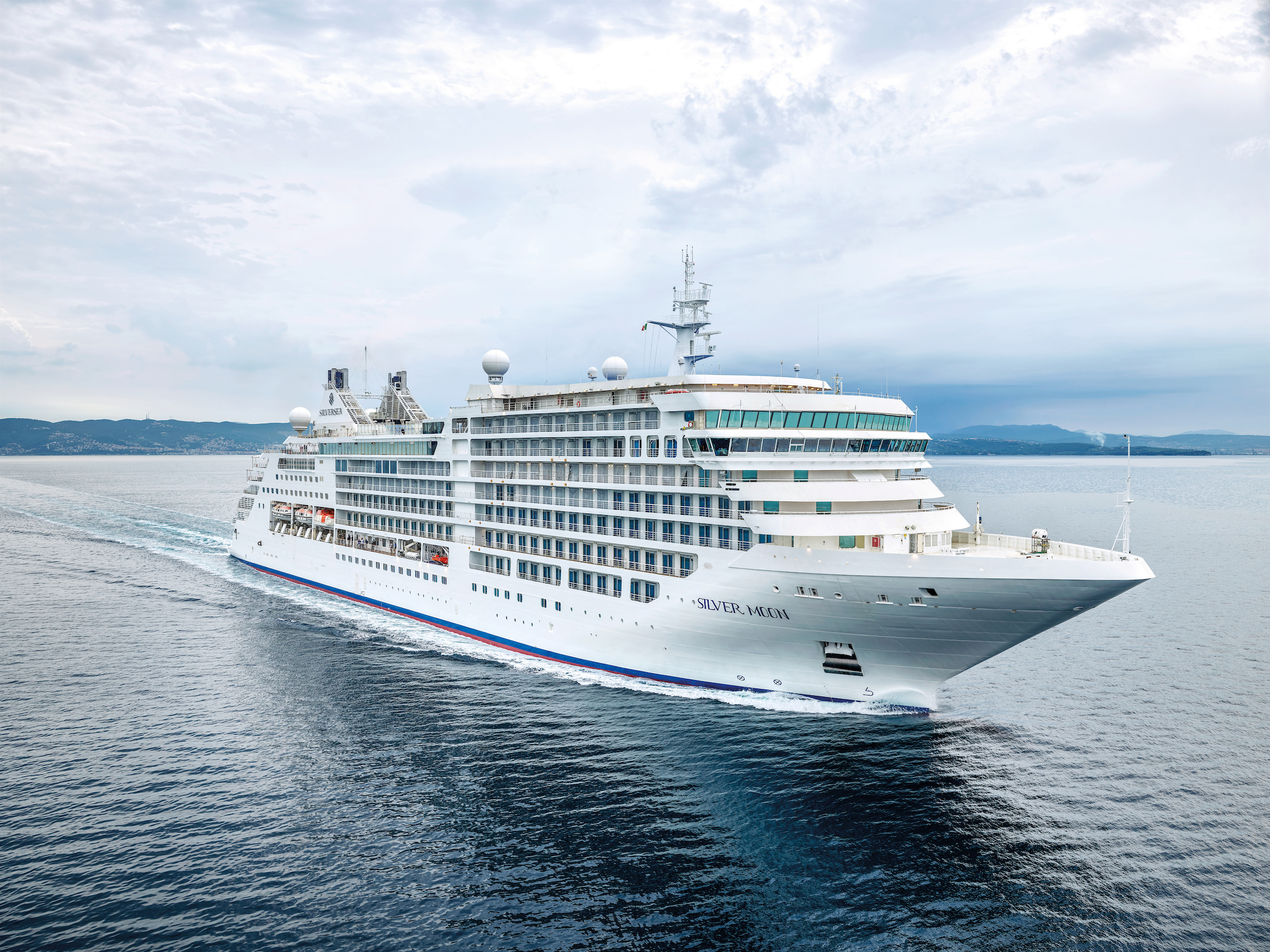
Silversea · Silver Moon
Overview
A 16-night voyage aboard Silver Moon, departing Singapore on 6 Mar 2029 and arriving in Tokyo (Yokohama), Japan, calling at 8 destinations along the way.
SingaporeHo Chi Minh CityHong Kong, ChinaTaipeiIshigaki IslandNaha (Okinawa Is.)KobeTokyo (Yokohama), Japan
Cabin prices
Live prices per person based on two sharing. Select a grade to see its fare options.
Loading live cabin prices…
Itinerary
16 nights · 17 ports of call- 1
Day 1 ·SingaporeEmbark
6 Mar 2029Advanced, airy and elevated, Singapore is a spectacular, futuristic vision of utopian city life. A healthy population of almost six million call it home, but this is a city designed with space to breathe, and gorgeous outdoor parks, massive indoor greenhouses and beautiful recreational spaces spread between the City of Gardens' skyscrapers and soaring structures. Once a quiet fishing village, now a glistening island city-state and an international beacon of science, education and technology. View less
Singapore is almost intimidatingly clean - and the hyper-efficient public transport system whips residents and visitors across the city's neighbourhoods in a heartbeat. Glorious fountains and audacious skyscrapers loom up - nodding to traditional feng shui beliefs - and putting on dazzling illuminated displays after dark. The lush green botanical gardens are a spectacular UNESCO World Heritage Site, covering 52 hectares and decorated with impressive colourful orchids. Or breathe in more of the freshest air by heading up to wander the canopy strung bridges of MacRitchie Reservoir Park. Head for the iconic Marina Bay - a landmark of the city crowned by three interconnected towers, which watch out over island sprinkled waters. Jaunt between Little India and the atmospheric Chinatown in minutes, where beautiful temples - like the Chinese Thian Hock Keng Temple and Hindu Sri Mariamman Temple add rich cultural intrigue. Singapore's cuisine is a mouthwatering fusion of its Indian, Chinese, Indonesian, and Malay influences, taking and enhancing the best of each. Enjoy dishes in towering restaurants, or toast the glowing skyline with the city's eponymous gin-soaked cocktail - a Singapore Sling. - 2
Day 2 ·At Sea
7 Mar 2029 - 3
Day 3 ·At Sea
8 Mar 2029 - 4
Day 4 ·Ho Chi Minh City, Vietnam
9 Mar 2029A chaotic, enchanting swirl of sensory stimulation - Ho Chi Minh City is a place of incense-infused temples, colonial architecture, warm people and delicious street food. Formerly known as Saigon, the city was affectionately-labelled the Pearl of the Orient by the French. Afternoons here drift by lazily on the gentle chaos of the River Saigon, as taxi boats and motor canoes flit up and down, and parks fill out with locals playing jianzi, kicking shuttlecocks back and forth. View less
The French colonial imprint is evidenced in the Saigon Notre Dame Basilica, which stands out with its grand double bell towers and red brick hue. Just across the road, you'll also find the celebrated Ho Chi Minh Post office, which was erroneously credited as a Gustav Eifel creation. In reality, the architect was another Frenchman, Alfred Foulhoux. The French also caffeinated this city with coffee culture, and a refreshing iced coffee, from the innumerable coffee shops, will perk you up instantly. Taste the street food to get under Ho Chi Minh City's skin, with humble restaurants serving up rich flavours - from the Vietnamese take on the baguette, a banh mi sandwich - to the local staple of pho, a delicious noodle soup. The Tortoise pagoda is a tranquil escape and a serene place of worship for Vietnamese who practice Buddhism and Taoism, while the Vietnamese medical museum has a fascinating collection of remedies and potions - some dating back to Stone Age. Journey out to learn more of the Vietnam War at the Remnants Museum and Cu Chi tunnels. Offering a vivid glimpse of conditions, and the ingenuity and resilience of the soldiers, you'll learn of the guerrilla war campaign raged from within this claustrophobic, 70-mile network of war tunnels. - 5
Day 5 ·Ho Chi Minh City, Vietnam
10 Mar 2029A chaotic, enchanting swirl of sensory stimulation - Ho Chi Minh City is a place of incense-infused temples, colonial architecture, warm people and delicious street food. Formerly known as Saigon, the city was affectionately-labelled the Pearl of the Orient by the French. Afternoons here drift by lazily on the gentle chaos of the River Saigon, as taxi boats and motor canoes flit up and down, and parks fill out with locals playing jianzi, kicking shuttlecocks back and forth. View less
The French colonial imprint is evidenced in the Saigon Notre Dame Basilica, which stands out with its grand double bell towers and red brick hue. Just across the road, you'll also find the celebrated Ho Chi Minh Post office, which was erroneously credited as a Gustav Eifel creation. In reality, the architect was another Frenchman, Alfred Foulhoux. The French also caffeinated this city with coffee culture, and a refreshing iced coffee, from the innumerable coffee shops, will perk you up instantly. Taste the street food to get under Ho Chi Minh City's skin, with humble restaurants serving up rich flavours - from the Vietnamese take on the baguette, a banh mi sandwich - to the local staple of pho, a delicious noodle soup. The Tortoise pagoda is a tranquil escape and a serene place of worship for Vietnamese who practice Buddhism and Taoism, while the Vietnamese medical museum has a fascinating collection of remedies and potions - some dating back to Stone Age. Journey out to learn more of the Vietnam War at the Remnants Museum and Cu Chi tunnels. Offering a vivid glimpse of conditions, and the ingenuity and resilience of the soldiers, you'll learn of the guerrilla war campaign raged from within this claustrophobic, 70-mile network of war tunnels. - 6
Day 6 ·At Sea
11 Mar 2029 - 7
Day 7 ·At Sea
12 Mar 2029 - 8
Day 8 ·Hong Kong, China
13 Mar 2029A spectacular, serrated skyline of soaring towers and neon lights, Hong Kong is a vibrant, immersive metropolis and cultural hub. Dramatic harbour-front light shows transform the waterfront’s gleaming buildings into a colourful canvas – best seen from the Star Ferry, when the Symphony of Lights blares into life each evening. A city where future and tradition collides - perhaps best illustrated by the skyscrapers that feature gaping holes, designed to allow spirit dragons to soar from the hills to the waterfront unimpeded. View less
Wander flowing shopping streets, wade through sprawling markets and soak up the neon glory of this one-of-a-kind city - which continues to reach for the sky. Hong Kong's dense jumble of activity is one of its main appeals, but once you've felt the thrill of rising to towering observation decks, to see the soaring city from above, it's surprisingly easy to find peace among Hong Kong's intense urban wonders. Victoria Peak is the highest point and it offers staggering views down over the city and harbour. The Peak Tram funicular can ferry you to the top, to the vantage point which was historically adored by the rich for the cooler air found here, away from the busy bustle of the city streets. Many elaborate temples add a tranquil element to Hong Kong’s whirr, and Tin Hau temple has a surprisingly urban location, considering its dedication to the Goddess of the Sea. It did once occupy the shorefront, but the city's growth saw land reclaimed from the sea around it, leaving the temple marooned inland. Having been leased to the British for 99 years, milky tea is a revered tradition here - enjoy your cup with a serving of local dim sum.While it's easy to think all the bright lights are the sum of today's Hong Kong, you need only walk or board a tram for the short jaunt west into Western to discover a side of Hong Kong that is more traditionally Chinese but no less high-energy. You'll discover the real Hong Kong to the east of Central, too, in Wan Chai, Causeway Bay, and beyond. Amid the residential towers are restaurants, shopping malls, bars, convention centers, a nice smattering of museums, and—depending on fate and the horse you wager on—one of Hong Kong's luckiest or unluckiest spots, the Happy Valley Racecourse. Kowloon sprawls across a generous swath of the Chinese mainland across Victoria Harbour from Central. Tsim Sha Tsui, at the tip of Kowloon peninsula, is packed with glitzy shops, first-rate museums, and eye-popping views of the skyline across the water. Just to the north are the teeming market streets of Mong Kok and in the dense residential neighborhoods beyond, two of Hong Kong's most enchanting spiritual sights, Wong Tai Sin Temple and Chi Lin Nunnery. As you navigate this huge metropolis (easy to do on the excellent transportation network), keep in mind that streets are usually numbered odd on one side, even on the other. There's no baseline for street numbers and no block-based numbering system, but street signs indicate building numbers for any given block. - 9
Day 9 ·At Sea
14 Mar 2029 - 10
Day 10 ·Keelung, Taiwan
15 Mar 2029Located on the north coast of Taiwan, and embraced by lush green mountains, Keelung City is Taiwan’s second-biggest port and a major gateway to Taipei's glittering lights and spectacular skyscrapers. It can get a little damp here at times - the city is known as the 'Rainy Port' after all - but even the elements fail to dampen the spirits in this Taiwanese hotbed of tradition, modernity and rich culture. View less
Keelung is famous for its Mid-Summer Ghost festival – when dragons decorated with flowers and spitting pyrotechnics are paraded through the streets. Flickering lanterns glitter on the water’s waves, creating a beautiful, ethereal scene. If you do linger in Keelung, witness the city coming to life as the sun dips - and Keelung Miaokou night market floods with people below a blinding wash of lights. Most will choose to take the ride to the country's capital, Taipei, and visit this mesmerising modern city, which blends influences from around the world. A quirky city of museums and countless bustling markets. Stands and stalls work late into the night, serving up every food you can imagine. Wander between the salivating smells and rising flames of open fires, which cook up everything from fried oysters to chicken and fish pastries - as you ride the all-out sensory assault of the city's bustling markets. Incredible temples are sprinkled across Taipei, such as Bao-An Temple, a peaceful, incense-infused place of colourful artistry. The country's heritage is reflected in towering new architecture like the tiered pagoda of the Taipei 101 skyscraper, which dominates the skyline from every angle. - 11
Day 11 ·Ishigaki-jima, Japan
16 Mar 2029 - 12
Day 12 ·Naha Okinawa
17 Mar 2029 - 13
Day 13 ·Naze, Amani Oshima Japan
18 Mar 2029Amami Oshima is something of an enigma for historians. No one can accurately place its age: stone tools suggest habitation as early as the Japanese Paleolithic period (pre-10,000 BC), while other artefacts, including pottery, indicate human presence much later, from the bronze age onwards. Great clumps of the sub-tropical cycad plant — one of the oldest surviving species in the world, said to be over 250 million years old — cover the island in profusion, immediately conjuring up images of dinosaurs chomping on the enormous leaves. View less
In other words, it’s very, very old. You won’t find the island’s port, Naze, mentioned in many guidebooks, nor indeed will you find much documentation about the island itself. Despite being the largest island in the Amami archipelago, tourism has not stretch this far. Closer to Taiwan than Tokyo, Amami Oshima is about as far off the beaten track as it gets. Do not expect the usual Japanese hybrid of techno wizardry versus ancient tradition here. Moreover, splendid coastline and verdant forested interior. There is superb diving and snorkelling to be had in the clear, coral-encrusted waters off the island, and many little-used, golden-sanded beaches to picnic on. The unspoilt slopes of Amami’s Kinsakubaru forest are filled with bright, healthy looking plants, many of which even the most ardent botanist would have trouble naming. Purple Lidth’s jay, Ryukyu robin, the orange-crowned Akahige, or the striking red-backed Ryukyu Akashobin, all live peacefully in the treetops. - 14
Day 14 ·At Sea
19 Mar 2029 - 15
Day 15 ·Kobe, Japan
20 Mar 2029The Japanese city of Kobe needs no introduction. The name is synonymous with its home grown superstar. We are not talking of its stunning shrines, cherry trees laden with blossom during sakura or effervescent city, buzzing with life 24/7. We are of course talking of a much more grass roots hero – its eponymous beef. The delicacy might have put the city on the map, but there is far more to Kobe than its meat. Naturally, Kobe wears its cuisine as a badge of honour. View less
Its port history has given it a gastronomy that is quite different from its neighbours. Seafood and sushi is naturally some of the freshest and most diverse you can find, but Kobe’s multi-cultural nature (the city is home to 98 different nationalities) means that it has one of the most diverse gastronomic cultures in Japan. Bread and bakeries are also an (unexpected) delicacy. Additionally, Sake is taken very seriously – Kobe even has its own museum dedicated to the national spirit. Historically, Kobe has always been a key city for Japan. Renamed in 1889, it was known as Owada no Tomari during the Nara Period (710-784 C.E.). Kobe’s location on the calm Inland Sea between Osaka and Kyoto has proven to be pivotal in Japanese history; it is mentioned in famous literary works such as The Tale of Genji (from approximately late 9th century) and the Taiheiki (14th century). The city and region are home to many attractions including the Himeji Castle (widely considered to be Japan's most beautiful feudal castle), a short ride away. - 16
Day 16 ·At Sea
21 Mar 2029 - 17
Day 17 ·Tokyo, JapanDisembark
22 Mar 2029Dense and delightful, there’s nowhere else like Japan’s kinetic capital - a city where ancient traditions blend seamlessly with a relentless pursuit for the future’s sharpest edge. See the city from above, as elevators rocket you up to towering viewing platforms, from which you can survey a vast urban ocean, interspersed with sky-scraping needles. Look out as far as the distant loom of Mount Fuji’s cone on clear days. View less
Futuristic – second-accurate - transport seamlessly links Tokyo’s 14 districts, while the glow of flashing advertisement boards, clanks of arcade machines, and waves of humanity flowing along its streets, adds to the sense of mesmerising, dizzying and glorious sensory overload. One of Tokyo’s most iconic sights, don’t miss the flood of people scrambling to cross Shibuya’s famous intersection. Join the choreographed dance, as crowds of briefcase-carrying commuters are given the green light to cross at the same time – bathed in the light of massive neon advertisements. The culture is immensely rich and deep, with 7th-century, lantern-decorated temples, stunning palaces and tranquil scarlet shrines waiting below cloaks of incense and nestling between soaring skyscrapers. Restaurants serve up precisely prepared sushi, and wafer-thin seafood slivers, offering a unique taste of the country’s refined cuisine. Settle into traditional teahouses, to witness intricate ceremonies, or join the locals as they fill out karaoke bars to sing the night away. In the spring, cherry blossom paints a delicate pink sheen over the city’s innumerable parks and gardens.
Your ship: Silver Moon
Explore Silver Moon's cabins, dining and onboard facilities.