
13 nightsFrom Barcelona9 ports of call
Greek Isles & Egypt
Silversea · Silver Dawn
Overview
A 13-night voyage aboard Silver Dawn, departing Barcelona on 5 Jan 2029 and arriving in Athens (Piraeus), Greece, calling at 9 destinations along the way.
BarcelonaPalma de MallorcaCagliariPalermoOlympia (Katakolon), GreeceRhodesAlexandria, EgyptHeraklionAthens (Piraeus), Greece
Cabin prices
Live prices per person based on two sharing. Select a grade to see its fare options.
Loading live cabin prices…
Itinerary
13 nights · 14 ports of call- 1
Day 1 ·Barcelona, SpainEmbark
5 Jan 2029The infinite variety of street life, the nooks and crannies of the medieval Barri Gòtic, the ceramic tile and stained glass of Art Nouveau facades, the art and music, the throb of street life, the food (ah, the food!)—one way or another, Barcelona will find a way to get your full attention. The capital of Catalonia is a banquet for the senses, with its beguiling mix of ancient and modern architecture, tempting cafés and markets, and sun-drenched Mediterranean beaches.
A stroll along La Rambla and through waterfront Barceloneta, as well as a tour of Gaudí's majestic Sagrada Famíliaand his other unique creations, are part of a visit to Spain's second-largest city. Modern art museums and chic shops call for attention, too. Barcelona's vibe stays lively well into the night, when you can linger over regional wine and cuisine at buzzing tapas bars. - 2
Day 2 ·Palma De Mallorca, Spain
6 Jan 2029The Balearics are comprised of 16 islands; the three principal ones are Mallorca, Ibiza and Minorca. Carthaginians, Romans, Vandals and Arabs have invaded these islands over the centuries. Ruins show evidence of the prehistoric Talayot civilization, a megalithic culture that flourished here between 1500 BC and the Roman conquest. Today the islands are besieged by invaders of a different sort - hordes of tourists.
Lying 60 miles (97 km) off the Spanish mainland, the islands' lush and rugged landscape combined with an extremely mild, sunny climate proves irresistible, especially to northern Europeans. As a result, the Balearics boast cosmopolitan resorts with lively nightlife and plenty of sports activities.
Mallorca (also spelled Majorca) is the largest of the islands, with an area of more than 1,400 square miles (3626 sq.km). The scenery is magnificent, with cliffs along indented shorelines jutting out of the sea and mountain ranges sheltering the plains from harsh sea breezes. The fertile plain in the centre is covered with almond and fig trees plus olive groves with some trees more than 1,000 years old. Tall pines, junipers and oaks line the mountain slopes.
Palma de Mallorca is the capital of the archipelago. A cosmopolitan city with sophisticated shops and restaurants, it also offers buildings of spectacular Moorish and Gothic architecture.
In the western part of Mallorca, nestled into the mountains, lies the village of Valldemosa. It is known for its Carthusian Monastery where Frédéric Chopin and George Sand spent the winter of 1838-39. - 3
Day 3 ·At Sea
7 Jan 2029 - 4
Day 4 ·Cagliari (Sardinia), Italy
8 Jan 2029The serene sea approach to Cagliari is an exquisitely beautiful way to first lay eyes on the city’s mesmerising interplay of colour, spires and domed churches. Sat on Sardinia’s south coast, Cagliari is the island’s largest city, and a sun-blessed escape of beaches, architecture and Mediterranean food – where stress evaporates on contact. That first sight of Cagliari’s mosaic of architecture reveals much about the island’s history, and is a living document of the civilisations and influences that have passed through.
Combining Byzantine churches with crumbling Roman ruins and Pisan towers, it’s an elegant, beguiling place to explore. Usher in the morning with a short, sharp espresso hit, before wandering along to San Benedetto market’s bustle, crammed full of overflowing heaps of local produce. Taste crisp, freshly-baked bread, thin shavings of sheep’s cheese, and ripe red strawberries, as you wander amid the market’s melody of good-natured bartering. The Castello quarter’s tight, flower-draped streets and salmon-hued brick buildings incline up above the Med’s softly lapping waves. Climb Bastione di Saint Remy staircase to Terrazza Umberto’s views of the turquoise Gulf of Angels. Next, Cathedral of Santa Maria awaits, with its marbled interiors, elaborate side chapels and intricately decorated crypt. Once you’ve unravelled Cagliari’s historical tapestry, Poetto Beach invites you to find a spot on almost five miles of uninterrupted sand, met by a dazzling expanse of turquoise water. On a hot summer’s day, soak up some sun before saluting the sunset with an ice cold Spritz at a beachside bar. Spaghetti with salted bottarga and artichokes will keep the good times rolling, perfectly accompanied by a glass of ruby-coloured Cannonau wine. - 5
Day 5 ·Palermo, Sicily, Italy
9 Jan 2029The capital of Sicily is situated on a crescent-shaped bay on the island's north coast. Once the intellectual capital of southern Europe, Palermo has always been at the crossroads of civilization. Due to its favourable location, Sicily's most interesting city has attracted almost every people and culture touching the Mediterranean world. Its most unique characteristic is a harmonious blend of Arab-Norman cultures mixed with Byzantine and Jewish elements, which created some unforgettable and resplendent works of art.
Phoenician traders first colonized Palermo in the 6th-century BC, but it was the Carthaginians, who built the important fortress here that caught the covetous eye of the Romans. After the first Punic War, the Romans took control of the city in the 3rd-century BC. Following several invasions by the Vandals, Sicily was settled by Arabs, who made the country an emirate and Palermo a showpiece capital that rivalled in splendour both Cordoba and Cairo. The city became a magical place of palaces and mosques, minarets and palm trees. In the 11th-century Palermo was conquered by the Norman ruler, Roger de Hauteville. During the Normans' hundred-year occupation, the city experienced a remarkable period of enlightenment and a flourishing of the arts. Counting a population of more than 300,000, Palermo became the centre of Norman rule and one of the most important trading centres between East and West.
Eventually, Palermo was incorporated into the “Kingdom of the Two Sicilies” under the Swabian ruler Frederick II, known as the Holy Roman Emperor. After the bloody Sicilian Vespers uprising in 1282, the Spanish took control and brought the Inquisition to Palermo. Some historians believe that the nature of the Inquisition helped foster the protective secret societies that eventually evolved into the Mafia.
Today, visitors can still experience the legacy of Palermo's rich past. Great Arab-Norman buildings include the Cappella Palatina, La Martorana, San Giovanni degli Eremiti and, a few miles outside the city, the Cathedral of Monreale. Palermo's bustling streets and animated markets give the town an Oriental feel. The Quattro Canti, or Four Corners, is the monumental crossroads laid out in 1608-1620 at the central intersection of the four longest and straightest streets of the city. North of Piazza Castelnuovo lie the avenues of the new city. Most sights are scattered along three major streets: Corso Vittorio Emanuele, Via Maqueda and Via Roma.
A vigorous metropolis with a strong historical profile, Palermo is packed with interesting sights, which make it an enriching and enjoyable place to explore. - 6
Day 6 ·At Sea
10 Jan 2029 - 7
Day 7 ·Katakolon (Olympia), Greece
11 Jan 2029The tiny port of Katakolon serves primarily as the starting point for an excursion to the archaeological site of ancient Olympia. Adjacent to the port is the small village of Katakolon with a few souvenir shops and typical local restaurants. Ancient Olympia, the great Panhellenic sanctuary, is located 21 miles from the port.
The site of ancient Olympia spreads out at the foot of wooded Mount Kronos. Excavations began in 1875; they are considered one of archaeology's great achievements. A direct consequence was the revival of the Olympic Games by Baron Pierre de Coubertin.
Today's visitors walk among the ruins and reflect on their significance. Don't miss the site where the Olympic flame is lit even today for the modern games. - 8
Day 8 ·At Sea
12 Jan 2029 - 9
Day 9 ·Rhodes, Greece
13 Jan 2029Located only seven miles from the Turkish coast, Rhodes is one of Greece's favored vacation centers. In ancient times, the entrance to its harbor featured a celebrated landmark, the Colossus of Rhodes. The 105-foot statue rose from a 35-foot stone base and was considered one of the Seven Wonders of the Ancient World. Rhodes was an important cultural center with a well-known School of Rhetoric attended by such historical figures as Cicero and Caesar. From a school for sculptors came the famous Laocoon group, which is now in the Vatican Museum. Rhodes' most famous attractions originated with the Knights of St. John, who occupied parts of the island from 1308 to 1522. As their legacy they left a medieval town, dominated by the Palace of the Grand Masters and the Knights' Hospital. The Old Town is encircled by one of the best-preserved walls in Europe. In addition to buildings that showcase the legacy of the Knights of St. John, there are plenty of shops and dining opportunities throughout the Old Town. - 10
Day 10 ·At Sea
14 Jan 2029 - 11
Day 11 ·Alexandria, Egypt
15 Jan 2029Egypt's main port and second largest city after Cairo was built between 332-331 BC at the order of Alexander the Great. Immortalizing his name, the city quickly flourished into a prominent cultural, political and economical metropolis, home to the famous Bibliotheca Alexandrina. It was the renowned capital of the Ptolemies and the site of the Pharos Lighthouse, one of the Seven Wonders of the Ancient World. - 12
Day 12 ·At Sea
16 Jan 2029 - 13
Day 13 ·Heraklion , Greece
17 Jan 2029It may not be the prettiest place in Crete, but Heraklion's patchwork of history, bustling activity and cultural intrigue makes it the perfect change of pace. This is certainly no sleepy island fishing village, and Greece's fifth-largest city is adorned with a rich collection of quality museums, ancient ruins from antiquity, and a lively culture of its own. View less
A refreshing shift-up from the many quaint beach towns and fishing villages you'll encounter in the Greek islands, Heraklion – also known as Iraklio - has great shopping, extraordinary history and is the ideal base for ventures to the archaeological treasures of Crete. Traded by the Arabic, Venetian and Ottoman empires over the years, Heraklion is a multi-layered place with fascinating tales to tell. The city's impressive Venetian fortress, which waits over the gently rolling waves of the gleaming Mediterranean, welcomes you ashore. A stroll out along the seawall, alongside creaking fishing boats, will take you out to the squat fortifications that have stood since 1540. Climb to the top for views out across the water, back towards the city's waterfront. The sun-roasted earth outside the city hides treasures from the realms of history, including the Bronze Age remnants of Europe's oldest city, Knossos. A visit to the fantastic Archaeological Museum of Heraklion ties all of this history together and exhibits relics from the civilisations and eras of Crete's past. Elsewhere, Daidalou's pedestrianised paving is a charming stroll through Heraklion's shops, with streets branching off to café-lined plazas and twinkling fountains. Stop to try local food - like fresh feta and olive sprinkled dakos mezze – all washed down with a sample of local raki brandy. - 14
Day 14 ·PiraeusDisembark
18 Jan 2029Piraeus, is a port city within the Athens urban area, in the Attica region of Greece. It is located in the Athens Riviera, 8 kilometres southwest of Athens’ city centre, along the east coast of the Saronic Gulf.
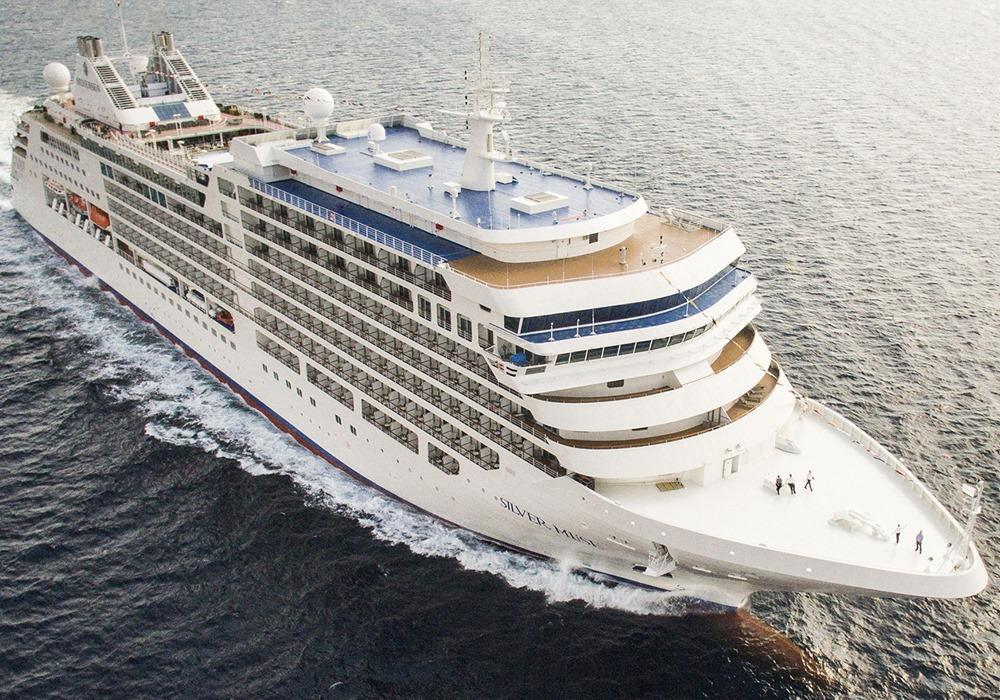
Your ship: Silver Dawn
Explore Silver Dawn's cabins, dining and onboard facilities.