
14 nightsFrom Barcelona11 ports of call
Atlantic Isles
Silversea · Silver Dawn
Overview
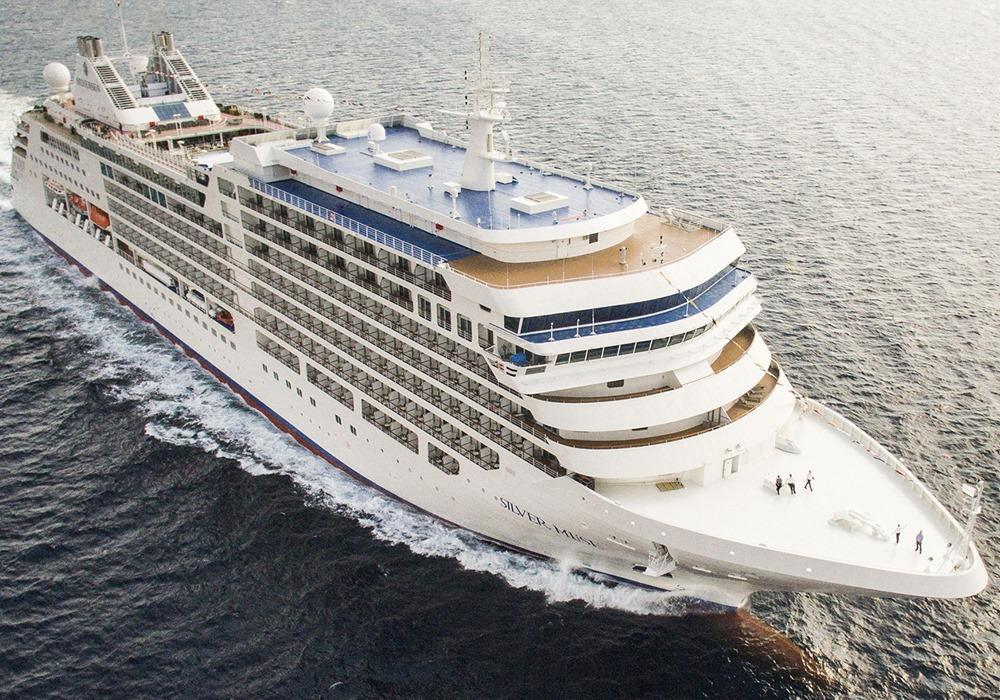
A 14-night voyage aboard Silver Dawn, departing Barcelona on 22 Dec 2028 and returning to the same port, calling at 11 destinations along the way.
BarcelonaValenciaAlicanteMalagaCadizGibraltarPorto Santo (Madeira)FunchalCasablancaTangier, MoroccoBarcelona
Cabin prices
Live prices per person based on two sharing. Select a grade to see its fare options.
Loading live cabin prices…
Itinerary
14 nights · 16 ports of call- 1
Day 1 ·Barcelona, SpainEmbark
22 Dec 2028The infinite variety of street life, the nooks and crannies of the medieval Barri Gòtic, the ceramic tile and stained glass of Art Nouveau facades, the art and music, the throb of street life, the food (ah, the food!)—one way or another, Barcelona will find a way to get your full attention. The capital of Catalonia is a banquet for the senses, with its beguiling mix of ancient and modern architecture, tempting cafés and markets, and sun-drenched Mediterranean beaches.
A stroll along La Rambla and through waterfront Barceloneta, as well as a tour of Gaudí's majestic Sagrada Famíliaand his other unique creations, are part of a visit to Spain's second-largest city. Modern art museums and chic shops call for attention, too. Barcelona's vibe stays lively well into the night, when you can linger over regional wine and cuisine at buzzing tapas bars. - 2
Day 2 ·Valencia, Spain
23 Dec 2028Valencia is Spain's third largest city and capital of the region. It was originally founded by the Romans on the banks of the river Turia in 138 BC. In 711 AD the Moors arrived and converted the area into a rich agricultural and industrial center, establishing ceramics, paper, silk and leather industries. Muslim rule was briefly interrupted in 1094 by the legendary Castillian knight, El Cid. Valencia boomed in the 15th and 16th centuries, becoming one of the strongest Mediterranean trading centers.
Valencia is a vibrant, friendly and chaotic city that boasts an outstanding fine arts museum and one of the most exciting nightlife scenes in Spain. The city center is about 3 miles inland from the coast. Plaza del Ayuntamiento marks the center of Valencia. Surrounded by flower stalls, it is also home to the town hall and the main post office. The cathedral was begun in the 13th century and finished in 1482. It has many architectural styles, including Gothic, Baroque and Romanesque. The octagonal bell-tower, called Miguelete, is one of the city's landmarks. The small cathedral museum boasts a tabernacle made from 550 pounds of gold, silver, platinum, emeralds and sapphires. It also purports to be the home of the Holy Grail, the cup used by Christ at the Last Supper.
West of the cathedral is the oldest part of the city, known as El Carme. Situated across the river in the Jardines del Real is the Museo de Bellas Artes, the Fine Arts Museum. Works include those by El Greco, Goya and Velázquez. - 3
Day 3 ·Alicante, Spain
24 Dec 2028The bustling resort of Alicante serves not only as the port for Madrid, but is also one of the loveliest vacation spots along Spain's sunny Costa Blanca. The latter is primarily due to the pleasant climate. - 4
Day 4 ·At Sea
25 Dec 2028 - 5
Day 5 ·Malaga (Costa Del Sol)
26 Dec 2028Bathing in the sunshine coast’s stunning subtropical climate, and laying out endless spectacular beaches, it’s no surprise that Malaga is one of Spain’s most popular cities. The already impressive cultural appeal of this holiday city has skyrocketed over recent years, and with a storied old town and Moorish fortifications, Malaga has a lot to offer. Nearby, you can recline on the renowned beaches of the Costa del Sol, or venture inland to discover the Moorish treasures of Granada and Cordoba. View less
La Malagueta beach is Malaga’s spacious urban beach, perfect for a sunbathe and a dip in the warm water, before enjoying seaside cocktails or seafood tapas in the restaurants nearby. Malaga and the Costa del Sol may be best known for glorious weather and beaches, but Malaga can now stake a genuine claim as an artistic powerhouse too. Visit the renowned Picasso museum – housed in the artist’s birthplace – before exploring the freshly opened outpost of the Pompidou Centre. The art also spills out onto the streets in the colourful Soho district – splashed with vibrant street paintings. Known as La Manquita – or the one-armed woman – the city’s cathedral rises over the historic old town. Its huge bell tower stands tall, but an accompanying second tower was never completed - hence the nickname. The Alcazaba fortress palace looms over the waterfront and forms a spectacularly preserved remnant from the era when the Moors controlled the Andalucía region. Discover more of the Arabic influence by visiting Granada’s Alhambra palace, or Cordoba’s La Mezquita mosque. Together with Seville’s converted cathedral, the cities form Andalucía’s Golden Triangle of Moorish wonders. - 6
Day 6 ·Cadiz, Spain
27 Dec 2028More than a hundred watchtowers gaze out across the waves surrounding this ancient Andalusian city. Sprinkled with evocative cobbled side streets, you’ll explore 3,000 years’ worth of history, while stumbling across palm-tree lined plazas of shaded coffee sippers. Cadiz claims the mantle of Western Europe’s oldest city, and every piece of architecture - and every wrong turn - offers a chance to discover fascinating new tales. Founded by the Phoenicians in 1100BC, Christopher Columbus used the city as a base for his exploratory, map-defining voyages of 1493 and 1502.
The port grew in importance and wealth as Cadiz’s strategic location close to Africa’s northern tip helped it blossom into a centre for New World trade. Catedral de Cádiz, is a display of the city’s wealth and importance, looming spectacularly over the Atlantic’s waves, with cawing seagulls sweeping between its twin bell towers. Inside, treasures from the city’s trading exploits in the West Indies and beyond - which helped fuel the growth of this historically prosperous city – are on display. Enveloped by ocean on almost every side, Cadiz has something of an island feel, and you can cool off from southern Spain’s unrelenting sunshine on the sweeping golden sand beach of Playa Victoria. The two towers of the new El Puente de la Constitución de 1812 mark a contemporary landmark in this most ancient of cities, in the form of a spectacular new road bridge. Torre Tavira, meanwhile, is the most famous of Cadiz’s army of watchtowers, and the highest point in the city. Reach the top for a view of the ocean fringing the city’s expanse, and to learn about the towers - constructed so trading merchants could survey the harbour from their lavish homes. The Central Market is a chaotic place of bartering, where flashing knives dissect fresh fish. Stop in at the orbiting bars to enjoy tapas, freshly prepared with the market’s produce. - 7
Day 7 ·Cadiz, Spain
28 Dec 2028More than a hundred watchtowers gaze out across the waves surrounding this ancient Andalusian city. Sprinkled with evocative cobbled side streets, you’ll explore 3,000 years’ worth of history, while stumbling across palm-tree lined plazas of shaded coffee sippers. Cadiz claims the mantle of Western Europe’s oldest city, and every piece of architecture - and every wrong turn - offers a chance to discover fascinating new tales. Founded by the Phoenicians in 1100BC, Christopher Columbus used the city as a base for his exploratory, map-defining voyages of 1493 and 1502.
The port grew in importance and wealth as Cadiz’s strategic location close to Africa’s northern tip helped it blossom into a centre for New World trade. Catedral de Cádiz, is a display of the city’s wealth and importance, looming spectacularly over the Atlantic’s waves, with cawing seagulls sweeping between its twin bell towers. Inside, treasures from the city’s trading exploits in the West Indies and beyond - which helped fuel the growth of this historically prosperous city – are on display. Enveloped by ocean on almost every side, Cadiz has something of an island feel, and you can cool off from southern Spain’s unrelenting sunshine on the sweeping golden sand beach of Playa Victoria. The two towers of the new El Puente de la Constitución de 1812 mark a contemporary landmark in this most ancient of cities, in the form of a spectacular new road bridge. Torre Tavira, meanwhile, is the most famous of Cadiz’s army of watchtowers, and the highest point in the city. Reach the top for a view of the ocean fringing the city’s expanse, and to learn about the towers - constructed so trading merchants could survey the harbour from their lavish homes. The Central Market is a chaotic place of bartering, where flashing knives dissect fresh fish. Stop in at the orbiting bars to enjoy tapas, freshly prepared with the market’s produce. - 8
Day 8 ·Gibraltar
29 Dec 2028Gibraltar is the famous promontory located at the western entrance of the Mediterranean, with Spain to the north and, across the Straits, Morocco to the south. The Straits, a channel 36 miles long that connects the Atlantic with the Mediterranean, are 27 miles wide at the west end, 8 miles at their narrowest and 15 miles between Gibraltar and Almina Point near Ceuta. Africa is clearly visible on a fine day. Gibraltar's airport is known for its unusual runway that bisects the two-mile-long narrow isthmus linking the colony geographically to mainland Spain. - 9
Day 9 ·At Sea
30 Dec 2028 - 10
Day 10 ·Porto Santo, Madeira
31 Dec 2028Porto Santo is a small island in the Portuguese archipelago of Madeira. It’s known for its warm waters, dive sites and the long, sandy Porto Santo Beach. In the capital, Vila Baleira, the Christopher Columbus House Museum has displays on maritime history in the Italian explorer's former home. Near the summit of Ana Ferreira peak, the Pedreira viewpoint has sweeping views and a towering rock face of multihued columns. - 10
Day 10 ·Funchal, Madeira
31 Dec 2028Bedecked with dramatic cliffs, fertile mountains and sun-gorged beaches, Madeira is a lush, colourful island of plants, paradise and Portuguese-flavoured pleasures. Bathing in year-round sunshine, Funchal - the lowkey capital of Madeira - is perfect for slowing the pace, and toasting the thrilling scenery with a bottle of the island's famous wine. Narrow, cobblestone streets line the old town, where whitewash buildings, iron-wrought balconies, and tiled patterns carry echoes of Lisbon. Rua de Santa Maria is the city's oldest street, and the doors have been vividly painted by local artists.
Sit for a drink, to sample your choice of Madeira's renowned wines - Boal is the ideal option for those with a sweeter tooth. You'll also find Corpo Santo Chapel here, one of the few remaining buildings to have survived from the 15th century. Blossoming parks and gardens splash colour around, and the sweet smell of pollen lingers in Parque de Santa Catarina. Look out over Funchal harbour between the fountains and blooming flower beds, as ducks and swans enjoy leisurely days on the lake. Madeira Botanical Garden waits in the hills over the city, along with Palhero Garden – a sophisticated and elegantly landscaped English garden, 500 meters above sea level. For an even more dramatic view of this gorgeous setting, head up to Cap Girao – a rusty-red cliff with a cable car strung up to its sheer drop. The cliff falls away vertically to the vivid blue waters below. Or head down to the sea, to enjoy Funchal's gorgeous pebble beaches rustling, framed by colossal, craggy cliffs. - 11
Day 11 ·At Sea
1 Jan 2029 - 12
Day 12 ·Casablanca, Morocco
2 Jan 2029Immortal lines from the silver screen may have imprinted a warm, fuzzy visage of old Casablanca into our minds, but this thriving city is a curious example of what Morocco’s modernity looks like. Glistening white art deco buildings line the wide pathways that sweep through Casablanca, as the sea sparkles like a thin mirage on the horizon. There’s an aura of creativity amid Casablanca’s culture and chaos, helping to make the city one of Morocco’s most curious and compelling.
The Hassan II Mosque took a staggering seven years and 10,000 artists to craft its legacy as the country's largest mosque, and to bring the world's tallest minaret to sky-high reality. A vision of cool to the touch marble, cavernous prayer rooms and intricate inlays, the mosque is extraordinary in scale and ambition. Retractable roofs let the sun flood in, while dizzying glass floors dazzle, and the blue Atlantic waves surge below your feet. After that humbling visit, stroll along La Corniche - where surfers glide across rough and tumble waves, and chic cafes offer front-row seats for sweet peppermint teas with a side of people-watching. Casablanca is a diner's city - boulevards laced with French-fusion restaurants, buzzy beachfront joints, and raw seafood bars provide gem-like offerings fresh from the boat. Those seeking a slice of that golden-age Hollywood romance can wander through the medina, with its unabashed ramshackle feel, and maze of alleyways punctuated with busy barber shops and butchers. - 13
Day 13 ·Tangier
3 Jan 2029Set on the Maghreb coast, Tangier is Africa’s outstretched hand to Europe. With its bustling markets and lively waterfront, this city on Morroco's north is an energetic and invigorating place and an exciting immersion into an incredible continent. The location, on the highly strategic narrowing of the Strait of Gibraltar, made Tangier a vital Phoenician trading town - and the resulting city is an invigorating mesh of cultures and curiosities. View less
Part of the fun of Tangier is the well-rehearsed dance, as you dodge good-natured hawkers, and this is certainly a place to stroll with confidence and purpose. Delve into the mayhem of the walled Medina of Tangier for a rush of stimulation, as bartering and bantering echoes along the tight alleys. Crowded, noisy and busy, you’ll be sold to with a smile as you wander between stands of colourful spices, dried fruits and fabrics in this authentic Moroccan marketplace. Refresh and escape the sun with a fresh orange juice - or a sip of mint tea. Close to the city, you can find the Caves of Hercules, a coastal hollow that opens at both ends. The Phoenicians cut a window in the shape of the African continent, which reveals views of the Atlantic's waves, and legend says Hercules rested within its confines. From Tangier, you can also venture inland to the Rif Mountains, where gorgeous Chefchaouen - a village of bright blue alleyways - waits. Punctuated by blooming flowers, the entire town is a beautiful, moulded artwork of colour, spilling down the mountain like a waterfall. - 14
Day 14 ·At Sea
4 Jan 2029 - 15
Day 15 ·Barcelona, SpainDisembark
5 Jan 2029The infinite variety of street life, the nooks and crannies of the medieval Barri Gòtic, the ceramic tile and stained glass of Art Nouveau facades, the art and music, the throb of street life, the food (ah, the food!)—one way or another, Barcelona will find a way to get your full attention. The capital of Catalonia is a banquet for the senses, with its beguiling mix of ancient and modern architecture, tempting cafés and markets, and sun-drenched Mediterranean beaches.
A stroll along La Rambla and through waterfront Barceloneta, as well as a tour of Gaudí's majestic Sagrada Famíliaand his other unique creations, are part of a visit to Spain's second-largest city. Modern art museums and chic shops call for attention, too. Barcelona's vibe stays lively well into the night, when you can linger over regional wine and cuisine at buzzing tapas bars.
Your ship: Silver Dawn
Explore Silver Dawn's cabins, dining and onboard facilities.