
11 nightsFrom Athens (Piraeus), Greece8 ports of call
11-Day Exploring The Pyramids Of Egypt & Evening At Ephesus
Seabourn · Seabourn Ovation
Overview
A 11-night voyage aboard Seabourn Ovation, departing Athens (Piraeus), Greece on 27 Oct 2029 and arriving in Civitavecchia, Rome, calling at 8 destinations along the way.
Athens (Piraeus), GreeceKusadasiBodrumRhodesAlexandria, EgyptSyracuse,ItalySalernoCivitavecchia, Rome
Cabin prices
Live prices per person based on two sharing. Select a grade to see its fare options.
Loading live cabin prices…
Itinerary
11 nights · 12 ports of call- 1
Day 1 ·Piraeus (Athens), GreeceEmbark
27 Oct 2029Depart 17:00Piraeus has been the port for Athens since 482 BC. The busy harbor is filled with ferries and cruise ships making their way to the Greek Islands and other Mediterranean cities. The busy metropolis of Athens and its treasure trove of antiquities lie just a few miles from the port. Even as the reality of the modern city took hold, with its high-rise apartments, crowded sidewalks and bustling traffic, the beauty of the Acropolis, the outstanding museums, charming cafés, sidewalk markets and startling views come together in a cultural mosaic for all to enjoy. - 2
Day 2 ·Kusadasi (Ephesus), Turkey
28 Oct 2029Arrive 09:00Depart 23:00Kusadasi, which means "bird island," is set in a superb gulf known for its sparkling water, broad sandy beaches and large marina. The city has managed to retain a certain earthiness while doing a brisk trade in Turkish carpets and leather goods to visitors. The town's old quarter is a picturesque maze of winding streets and houses adorned with flowers and birdcages. In the center stands a 17th-century caravanserai, now converted into a hotel. The resort is also gateway to important sites of archaeological and religious interest. - 3
Day 3 ·Bodrum, Turkey
29 Oct 2029Arrive 08:00Depart 18:00Today Bodrum is a picturesque yacht harbor filled with traditional wood-varnished sailboats, charming outdoor cafes and streets bursting with small shops selling carpets, leatherwear, jewelry and local artwork. In antiquity, it was the site of ancient Halicarnassus. Under King Mausolus, the city prospered, and in death, the king left the city its most enduring legacy, his majestic tomb, from which we derive the term "mausoleum." Only its massive foundations remain today but it was the largest tomb ever built by the Greeks and one of the Seven Wonders of the Ancient World. Models on the site recreate its form for visitors. Alexander the Great attacked the city in 334 BC, leveling all but the Mausoleum, which was later destroyed by an earthquake.
When the Knights of St. John lost their castle in Smyrna in 1402, they came here. Finding the mausoleum in ruins, they used the stone to construct the Castle of St. Peter, which proudly stood sentinel to the city. Together with their fortifications on Kos and Rhodes, the Knights dominated the southeastern Aegean, running a hospital for passing pilgrims and ruling the seas as privateers in swift vessels. They remained until 1523, when Ottoman ruler, Suleyman the Magnificent, conquered Rhodes and the Knights' position became untenable. The castle still dominates the harbor and houses an archeological museum. - 4
Day 4 ·Rhodes, Greece
30 Oct 2029Arrive 08:00Depart 18:00Best known of the Dodecanese Islands, Rhodes is a fascinating architectural patchwork of her past. Here the legacy of the ancient Greeks mingles with that of besieging Turks, crusading knights, and occupying Italians. Twin bronze deer, the symbol of Rhodes, guard the Mandraki Harbor where the 100-foot Colossus is said to have stood, a wonder of the ancient world. The medieval Crusader City is dominated by the Palace of the Grand Masters, while cobbled streets lead to the bustling bazaar and a lively harbor that is a center of the international yachting scene. - 5
Day 5 ·At Sea
31 Oct 2029 - 6
Day 6 ·Alexandria, Cairo, Egypt
1 Nov 2029Arrive 07:00Alexander the Great founded this city, but never lived to see it. When he took Egypt from the Persians in 332 BC, he decided to move the capital from Memphis to the Mediterranean. Leaving instructions with his architect, he traveled on to Asia where he died. Egypt passed under the control of his general, Ptolemy I, who made Alexandria a great intellectual center. The city was designed with grand proportions. Its lighthouse, the Pharos, was a beacon to all. The Mouseion, from which our word "museum" derives, incorporated laboratories, observatories and a vast library. With the fall of the Ptolemies, Alexandria slumbered in obscurity until revived as an international seaport. A cosmopolitan, decadent colonial era, captured such works as Lawrence Durrell's Alexandrian Quartet, ended in the 1950's, but the beaches, restaurants and architecture still draw visitors, along with such excavations as Cleopatra's Palace, where this Queen of Egypt shared her love with Mark Anthony. - 7
Day 7 ·Alexandria, Cairo, Egypt
2 Nov 2029Depart 21:00Alexander the Great founded this city, but never lived to see it. When he took Egypt from the Persians in 332 BC, he decided to move the capital from Memphis to the Mediterranean. Leaving instructions with his architect, he traveled on to Asia where he died. Egypt passed under the control of his general, Ptolemy I, who made Alexandria a great intellectual center. The city was designed with grand proportions. Its lighthouse, the Pharos, was a beacon to all. The Mouseion, from which our word "museum" derives, incorporated laboratories, observatories and a vast library. With the fall of the Ptolemies, Alexandria slumbered in obscurity until revived as an international seaport. A cosmopolitan, decadent colonial era, captured such works as Lawrence Durrell's Alexandrian Quartet, ended in the 1950's, but the beaches, restaurants and architecture still draw visitors, along with such excavations as Cleopatra's Palace, where this Queen of Egypt shared her love with Mark Anthony. - 8
Day 8 ·At Sea
3 Nov 2029 - 9
Day 9 ·At Sea
4 Nov 2029 - 10
Day 10 ·Syracuse, Sicily, Italy
5 Nov 2029Arrive 07:00Depart 14:00Now a sun-bleached provincial capital, Siracusa was once one of the most prestigious cities in the known world. Founded in the 8th century BC by settlers from Corinth, Siracusa gradually grew in prestige to rival Athens and was considered the western capital of Magna Graecia. In the Greek world dictators, often called tyrants, exercised unlimited power over colonies like Siracusa. Although often unpleasant people, they also often patronized poets and artists and competed to bring intellectuals to their courts. Siracusa was home to Archimedes, Plato and Aeschylus during its height of power and prestige. Today's visitors come to marvel at the remains of the ancient structures, reminders of the past glory and rich history of the area. The city is superbly situated at the head of a beautiful bay and enjoys a mild climate. The coastline to the south is renowned for its beauty, clear waters and evocative, mythical scenery. There are romantic abandoned coves and wide, sandy beaches not easily matched anywhere else in Italy. - 11
Day 11 ·Salerno
6 Nov 2029Arrive 09:00Depart 17:00 - 12
Day 12 ·Civitavecchia (Rome), ItalyDisembark
7 Nov 2029Arrive 07:00Originally built by Emperor Trajan who had a villa here, Civitavecchia has flourished as a major port for Rome since the 13th century. Today it is an important ferry terminal and for many travelers the gateway to the Eternal City, Rome. The Renaissance fortifications that surround the harbor area were begun by Bramante and completed by Michelangelo in 1535.
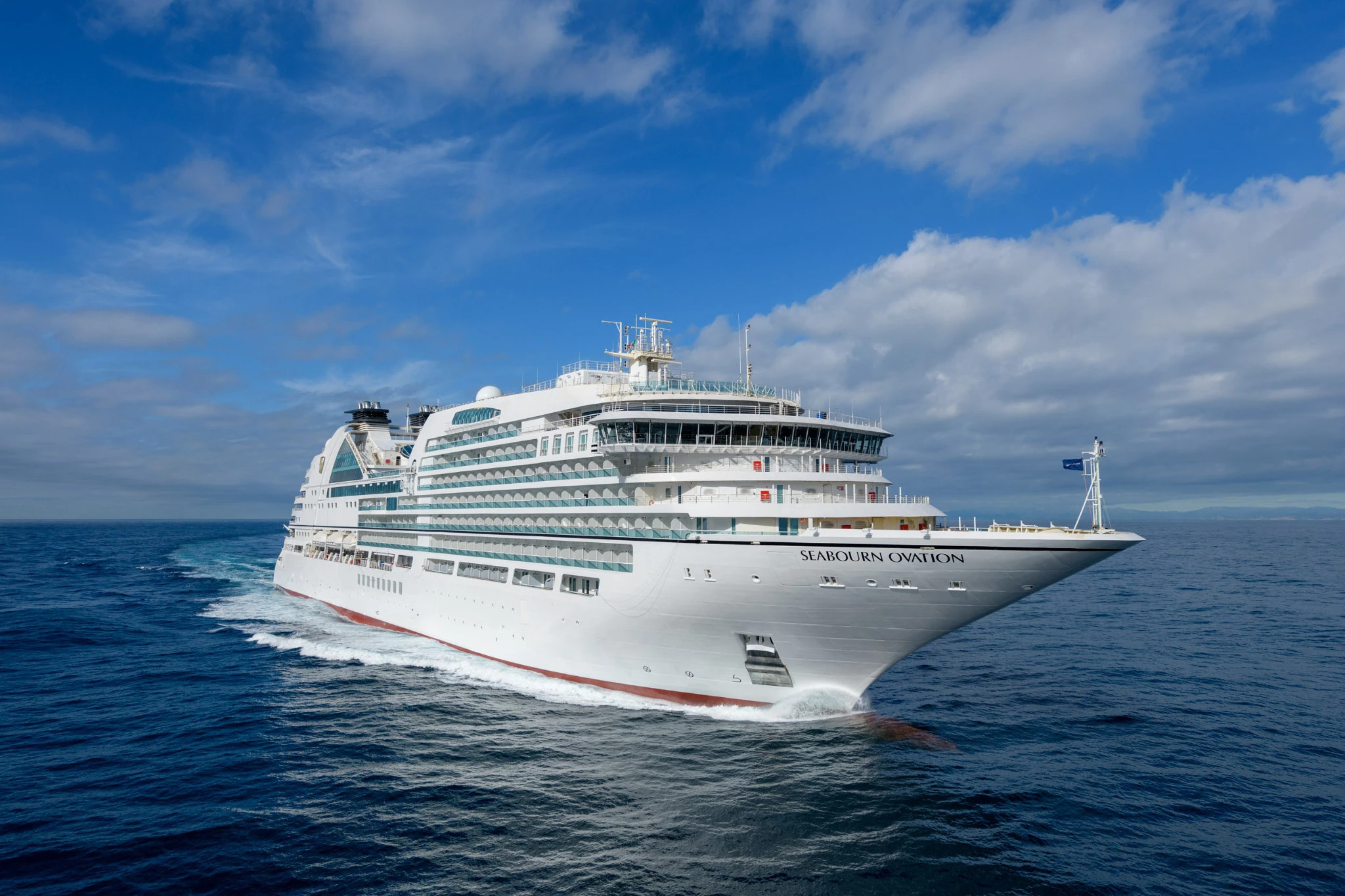
Your ship: Seabourn Ovation
Explore Seabourn Ovation's cabins, dining and onboard facilities.