
12 nightsFrom Copenhagen, Denmark12 ports of call
12-Day Norway, Shetland Islands, Faroe Islands & Iceland
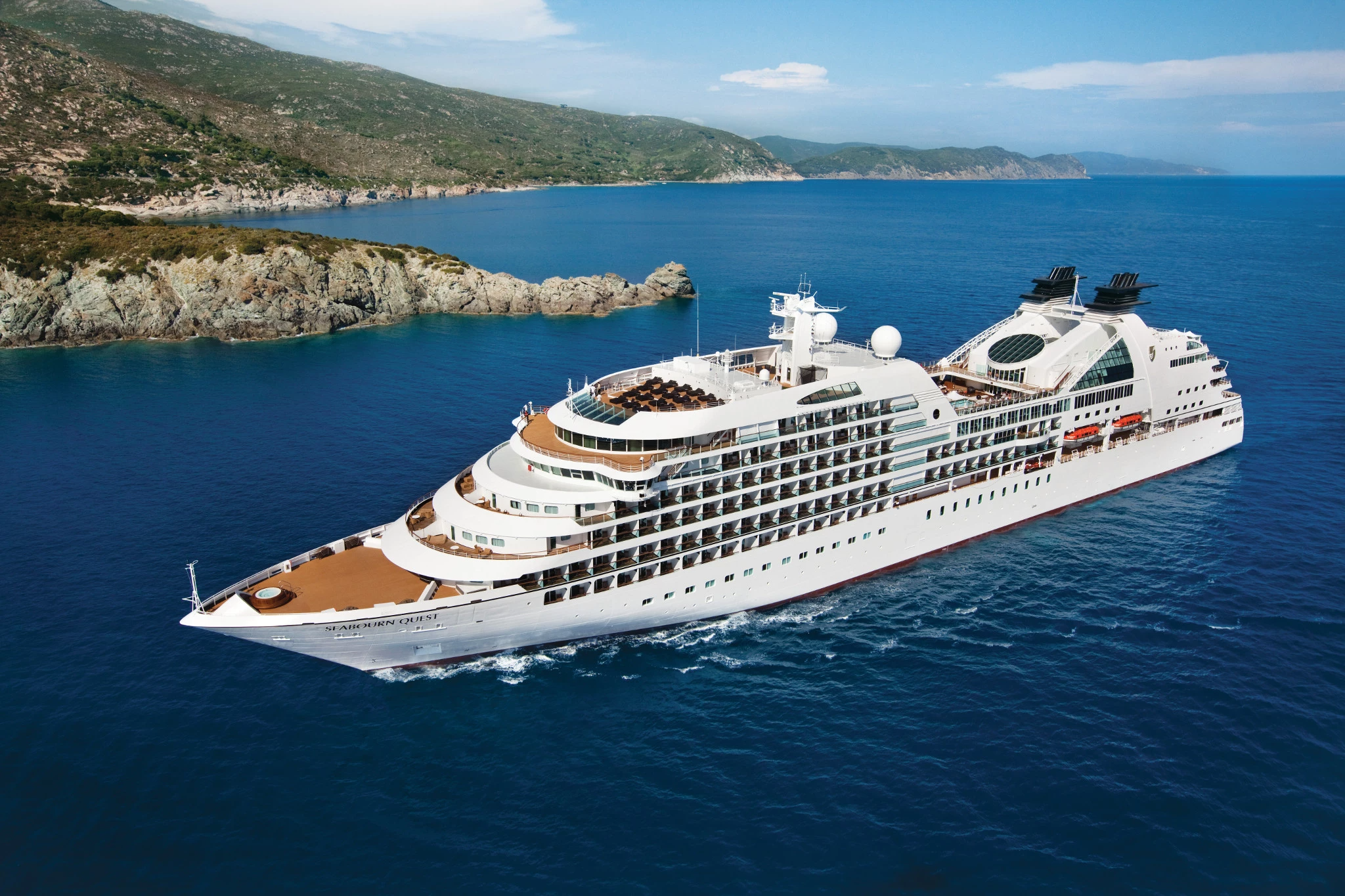
Seabourn · Seabourn Quest
Overview
A 12-night voyage aboard Seabourn Quest, departing Copenhagen, Denmark on 30 Aug 2029 and arriving in Reykjavik, Iceland, calling at 12 destinations along the way.
Copenhagen, DenmarkSkagenArendal, NorwayStavanger, NorwayLerwick, ScotlandThorshavenKlaksvikSeydhisfjordurHusavikSiglufjordurIsafjordurReykjavik, Iceland
Cabin prices
Live prices per person based on two sharing. Select a grade to see its fare options.
Loading live cabin prices…
Itinerary
12 nights · 14 ports of call- 1
Day 1 ·Copenhagen, DenmarkEmbark
30 Aug 2029Depart 19:00Denmark's capital is arguably one of the world's best-loved cities, and certainly the liveliest of all the Scandinavian capitals. It is a gracious and comfortable place, with a decidedly friendly, hospitable and fun-loving atmosphere. If there is such a thing as a cozy city, Copenhagen is it. From the lingering memory of the tales of Hans Christian Andersen to the colored lights of Tivoli Gardens, there is a delightful ambience that surrounds the visitor everywhere. Tidy, narrow streets are lined with tempting restaurants and cafes, and the pedestrian-only Stroget abounds with stylish shops. The spirited Copenhageners are imaginative and unconventional and exude a "do-what-you-want" philosophy that embraces and respects almost all aspects of life. Every friendly Dane you meet further illustrates the city's motto "Wonderful, wonderful, Copenhagen." - 2
Day 2 ·Skagen, Denmark
31 Aug 2029Arrive 08:00Depart 18:00At the tip of the flat, sandy Jutland peninsula, Skagen is Denmark’s northernmost town and a popular holiday destination for Danes. It was long Denmark’s most important fishing port, but its popularity as a recreation area began at the end of the 19th Century when Queen Alexandrine, the wife of King Christian X, fell in love with the rustic character of the place and built the summer residence Klitgaarden. The royal couple invited other Scandinavian and European royalty to share holidays with them and Skagen’s reputation grew. At the same time, the Skagensbanen railway made travel to Jutland easier. Impressionist artists were attracted by the exotic sand- and seascapes and the vivid light reflected from the sea, and a school of Skagen Painters thrived in the first quarter of the 20th century. Arts and crafts still remain an important local tradition, and the town has many shops and galleries offering handmade goods to visitors. There is a venerable lighthouse near the peninsula’s tip, where the North Sea and the Baltic Sea meet, but due to their differing densities, their margins can clearly be seen. A St. Lawrence’s Church was built in Skagen in the 14th century, but it was eventually inundated by drifting sand dunes. The Skagen Church of today was built in 1841. - 3
Day 3 ·Arendal, Norway
1 Sept 2029Arrive 07:00Depart 17:00The popular vacation town of Arendal is a beautifully preserved historical city with colorful wooden houses dating from the 17th century. The copper-plated spire and red brick walls of Trinity Church dominate the skyline from the center of town. The charming inner harbor, with its wooden sailing vessels, fishing boats and historic motor-launches, is lined with numerous cafes, restaurants and pubs and comprises the busiest part of the town. True to its maritime background, Arendal has three historic lighthouses nearby.
Situated on Norway’s southern coast, it resembles a sleepy, charming seaside village and boasts a colorful history. The village was established in the middle of 16th century, and became a prominent center of shipbuilding, shipping, and timber trade. By the end of the 19th century, Arendal was one of the biggest ports in the country. Its Old Norse name means ‘Eagle Valley,’ ǫrn being the word for eagle and dair meaning valley. - 4
Day 4 ·Stavanger, Norway
2 Sept 2029Arrive 08:00Depart 17:00A Romanesque cathedral and old medieval lanes blend beautifully with Stavanger's modern city and spectacular countryside. In 872, when Harald Fairhair won the Battle of Hafrsfjord near Stavanger, he united Norway for the first time. Huge harvests of brisling, herring and sardines have made the key of a sardine can the city symbol. Today, the town is the center of Norway's oil industry, and has become one of the country's most cosmopolitan cities. - 5
Day 5 ·Lerwick, Shetland Islands, Scotland
3 Sept 2029Arrive 09:00Depart 18:00Perhaps best known to most of the world for their shaggy ponies, the Shetland Islands offer magnificent seascapes, good trout fishing and prime bird watching. Local handicraft specialties such as polished stones, traditional silver craft, seal skin furs and distinctive hand knitted sweaters are displayed temptingly in local shops. Of the 100-or-so islands in the group, twelve are developed with permanent residents, and the largest is named Mainland. In this remote area of the North Sea, the lilting speech of the islanders may prove a bit difficult to understand at first, but their warm-hearted hospitality is easily grasped. - 7
Day 7 ·Torshavn, Faroe Island
4 Sept 2029Arrive 12:00A distant outpost of Denmark, the Faroe Islands suddenly appear out of the misty North Atlantic, nearly 200 miles from the nearest landfall. Of the twenty-two islands in the group, seventeen are inhabited, with a population of 17,000 residing in the capital city of Torshavn. Irish monks discovered the islands in the 8th century and became the first settlers, only to be driven out by Viking explorers a century later. The traditions and legends of their Viking forefathers are kept alive in a language so close to old Norse that Faroe Islanders can still read the ancient texts inscribed centuries ago. The name Faroe comes from faereyjar, the Old Norse word meaning "Sheep Islands." With thousands of sheep dotting the hillsides, the name remains apt today. While sheep are important to the economy, the real wealth of the islands comes from the fishing industry. A fleet of over 300 trawlers and line-fishing boats bring in an average annual haul of 245,000 tons of cod and herring. Ultra-modern processing and freezing plants do the job of getting the product to market in the most efficient manner. - 7
Day 7 ·Torshavn, Faroe Island
5 Sept 2029Depart 05:00A distant outpost of Denmark, the Faroe Islands suddenly appear out of the misty North Atlantic, nearly 200 miles from the nearest landfall. Of the twenty-two islands in the group, seventeen are inhabited, with a population of 17,000 residing in the capital city of Torshavn. Irish monks discovered the islands in the 8th century and became the first settlers, only to be driven out by Viking explorers a century later. The traditions and legends of their Viking forefathers are kept alive in a language so close to old Norse that Faroe Islanders can still read the ancient texts inscribed centuries ago. The name Faroe comes from faereyjar, the Old Norse word meaning "Sheep Islands." With thousands of sheep dotting the hillsides, the name remains apt today. While sheep are important to the economy, the real wealth of the islands comes from the fishing industry. A fleet of over 300 trawlers and line-fishing boats bring in an average annual haul of 245,000 tons of cod and herring. Ultra-modern processing and freezing plants do the job of getting the product to market in the most efficient manner. - 7
Day 7 ·Klaksvik
5 Sept 2029Arrive 07:00Depart 18:00 - 8
Day 8 ·At Sea
6 Sept 2029 - 9
Day 9 ·Seydisfjordur, Iceland
7 Sept 2029Arrive 07:00Depart 17:00The remote town of Seydisfjördur is perched at the end of a narrow twisting fjord in East Iceland. A very picturesque village of 700 people, it is known for its thriving arts scene and large number of resident artists. Tourism is on the rise as well, as its natural setting of mountains and waterfalls is simply breathtaking. Surrounded by impressive 1,085 meter (3,560’) tall snow-capped mountains, Seydisfjördur is home to the Technical Museum of Iceland and hosts populations of both eider ducks and Atlantic puffins. It was settled by Norwegian fishermen in 1848 and quickly became an important trading center between Iceland and Europe. It is known throughout Iceland for its colorful Norwegian-style wooden houses.
The first telegraph cable connecting Iceland to Europe made landfall here in 1906. A large dam was constructed here in 1913, which produced power for the country’s first high voltage AC power plant, a revolutionary achievement for its time. - 10
Day 10 ·Husavik
8 Sept 2029Arrive 08:00Depart 18:00 - 11
Day 11 ·Siglufjordur, Iceland
9 Sept 2029Arrive 07:00Depart 18:00Siglufjörður is the northernmost town on the Icelandic mainland, a small fishing village of some 1,200 people. Founded in 1918, it was in the past the capital of the North Atlantic herring fishing industry. The Síldarminjasafnið Herring Era Museum, one of Iceland's largest seafaring and industrial museums, houses three different areas where one can learn about both the traditional and the modern herring industry. A collection of many historic fishing vessels and artifacts is proudly displayed by the people of Siglufjörður, detailing how herring was salted, processed and collected. The small harbor with its colorful fishing boats and the red-roofed steeple of the Lutheran church dominate the village-scape.
The natural beauty of the area includes high mountains that rim the fjord, freshwater lakes, the Hólsá river, black sand beaches, and a wealth of birdlife all around. This northernmost region of Iceland is renowned for some of the largest and most dramatic waterfalls in the country. - 12
Day 12 ·Isafjordur, Iceland
10 Sept 2029Arrive 08:00Depart 17:00Like most Icelandic towns, this one on the northwest coast was started by fisherman and whalers. The name means ice-fjord. It is a perfect place from which to explore the cultural and economic staples of Iceland. An excursion to Sudavik reveals a town started by whalers and nearly destroyed by an avalanche in 1995, now rebuilt out of the path of further slides. Its lovely church was donated by whalers, as well. The own also holds a center for the study of the indigenous arctic foxes. The Maritime Museum in Isafjordur illustrates the lifestyles of the early inhabitants, including many implements of their trades, and also a wall of accordions, one of the few forms of entertainment on bygone days. Another option is a boat ride to nearby Vigur island, a nesting site for many species of seabirds, including eider ducks, whose down is yet another example of local economy based on the surrounding seas. - 13
Day 13 ·Reykjavik, IcelandDisembark
11 Sept 2029Arrive 07:00Warmed by the Gulf Stream as well as by highly active thermal hot springs and volcanoes, Iceland is somewhat misnamed. While it is a stark and barren country with three huge areas of glaciers, one theory is that early Norsemen sought to mislead other potential settlers by giving a pleasant name to fierce, inhospitable Greenland, and a forbidding name to the imminently habitable Iceland. Irish monks and hermits established themselves here in the 8th century, but left a century later when the pagan Norsemen arrived. Europe's first Parliament of General Assembly, the Althing, was established in the year 930 and still functions as the legislative body, although it was suspended by the Danes at the end of the 18th century and not reconvened until 1843. Reykjavik was the site picked by the island's first permanent resident, Ingolfur Arnarson in 874, and is home to more than half of the island's total population. The world's northernmost capital, Reykjavik is proud of its virtual lack of air pollution. Both electrical power and home heating are derived from the geothermal activity on the island. The city's large swimming pools are always warm, and in the countryside exotic fruits such as grapes and bananas are cultivated in greenhouses made cozy with the help of underground hot springs.
Your ship: Seabourn Quest
Explore Seabourn Quest's cabins, dining and onboard facilities.