
38 nightsFrom Dover, UK31 ports of call
38-Day Summer Exploration: Norway, Baltic Coasts & Iceland
Seabourn · Seabourn Quest
Overview
A 38-night voyage aboard Seabourn Quest, departing Dover, UK on 4 Aug 2029 and arriving in Reykjavik, Iceland, calling at 31 destinations along the way.
Dover, UKTrondheimBronnoysundSvolvaerTromso, NorwayHonningsvag, NorwayHaugesundFarsund,NorwayAalborg, DenmarkCopenhagen, DenmarkBornholmVisby, SwedenStockholmHelsinki, FinlandTallinn, EstoniaRigaKlaipeda, LithuaniaGdansk, PolandKarlskrona, SwedenCopenhagen, DenmarkSkagenArendal, NorwayStavanger, NorwayLerwick, ScotlandThorshavenKlaksvikSeydhisfjordurHusavikSiglufjordurIsafjordurReykjavik, Iceland
Cabin prices
Live prices per person based on two sharing. Select a grade to see its fare options.
Loading live cabin prices…
Itinerary
38 nights · 40 ports of call- 1
Day 1 ·Dover (London), EnglandEmbark
4 Aug 2029Depart 17:00Crossing the English Channel from continental Europe to Great Britain, the first view of England is the milky-white strip of land called the White Cliffs of Dover. As you get closer, the coastline unfolds before you in all its striking beauty. White chalk cliffs with streaks of black flint rise straight from the sea to a height of 350’ (110 m).
Numerous archaeological finds reveal people were present in the area during the Stone Age. Yet the first record of Dover is from Romans, who valued its close proximity to the mainland. A mere 21 miles (33 km) separate Dover from the closest point in France. A Roman-built lighthouse in the area is the tallest Roman structure still standing in Britain. The remains of a Roman villa with the only preserved Roman wall mural outside of Italy are another unique survivor from ancient times which make Dover one of a kind. - 2
Day 2 ·At Sea
5 Aug 2029 - 3
Day 3 ·At Sea
6 Aug 2029 - 4
Day 4 ·Trondheim, Norway
7 Aug 2029Arrive 08:00Depart 18:00Founded in 997, Trondheim is one of Norway's oldest cities, situated midway between southern and northern Norway. Dominated by the massive Nidaros Cathedral, Trondheim is often referred to as the Royal City. Traditionally, the kings of Norway have been crowned in the cathedral, which is considered a National Shrine.Straddling both sides of the River Nid, on Trondheimfjord, much of the town was rebuilt after a disastrous fire in 1681 destroyed the majority of its original wooden structures. Some of the oldest buildings, dating to the 1700s, have survived along the river, while the wide streets of the city center boast picturesque and brightly painted houses.Apart from the imposing cathedral, other points of interest include the Museum of Applied Art and Craft with one of the finest collections in Scandinavia, and Stiftsgaarden, the largest wooden structure in the country. Built in 1778 as a private home, it is now the King's official residence in Trondheim. The Royal Garden Hotel located on the river, features the same Hansa architecture as the old warehouses that line the waterfront - only in glass and concrete. It is the city's showcase hostelry. - 5
Day 5 ·Bronnoysund, Norway
8 Aug 2029Arrive 08:00Depart 17:00A coastal city, Brønnøysund’s origin dates back to its 13th century Viking heritage. In the intervening centuries, it has been settled by immigrants from southern Norway and Sweden, and its local Swedish-like dialect still carries echoes of this past.
Brønnøysund sits on a narrow peninsula from the mainland, is surrounded by waterways dotted with a maze of small scenic islands. In this fairytale setting, picturesque, colorful houses are set amidst thick lush greenery, turquoise blue water and shallow bays. Towering above the town like a giant troll’s hat is the massive granitic monolith of Torghatten Mountain. Here can be found one of the great natural curiosities of the area, a 520’ (160 m) hole piercing completely through the center of the mountain. The Viking sagas surmised that it was the impact of a warrior horseman’s arrow that created the wound. However, it was actually formed during the last Ice Age by erosion from ice and water. - 6
Day 6 ·Svolvaer (Lofoten), Norway
9 Aug 2029Arrive 08:00Depart 17:00Huddled together in what appears to be a wall of solid rock, the Lofotens are actually several islands. Their scenery, revealed when the ice disappeared from the last Ice Age, is held to be among the most dramatic in Norway. Svolvaer, located on the island of Austvaagoey, received town status in 1996, and is the Lofotens' most important city with about 4,500 residents. Dominating the town is the mountain peak called Svolvaergeita, a beacon for climbers. Fishermen flock here when the Norwegian Arctic cod enters the Vestfjord to spawn. Artists prize the picturesque setting and extraordinary light conditions. - 7
Day 7 ·Tromso, Norway
10 Aug 2029Arrive 09:00Depart 18:00Many a polar expedition has begun from Tromso. The town was founded in 1794, but its roots go back to Hanseatic and, even earlier to Viking times. Situated inside the Arctic Circle on the forest-clad island of Troms, this spirited city is linked to the mainland by the spectacular Tromsobrua Bridge, built in 1960. During WWII, Tromso was one of the few places in northern Norway to escape bombing, and a number of old wood buildings still remain. At the Tromso Museum, the exhibits include an extensive display on the people of Lapland. The town also boasts both the world's northernmost university and brewery. - 8
Day 8 ·Honningsvag, Norway
11 Aug 2029Arrive 09:00Depart 18:00The perpendicular cliffs of Nordkapp, or the North Cape, mark the very top of the European continent. This ultimate destination has long drawn adventurous royalty including Oscar II, King of Norway and Sweden, who visited in 1873, and followed by the King of Siam in 1907. The North Cape is located on the island of Mageroey, a name derived from a word that means "meager." While the landscape may have a lunar appearance, it is not really so isolated. Just 21 miles away, the main town, Honningsvåg, has some 4,000 inhabitants. In summer that number swells when the Sami people and their reindeer settle on the outskirts of town. - 9
Day 9 ·At Sea
12 Aug 2029 - 10
Day 10 ·Bodo, Norway
13 Aug 2029Arrive 07:00Depart 16:00 - 11
Day 11 ·At Sea
14 Aug 2029 - 12
Day 12 ·Haugesund, Norway
15 Aug 2029Arrive 10:00Depart 18:00A large columnar monument atop a small seaside hill at Haraldshaugen, near the town of Haugesund, commemorates the birthplace of Norway. In fact, the hill is the burial mound of Norway’s first king, Harald Fairhair, who ruled from A.D. 872 to 930 during the height of the Viking age. This homeland of Viking kings has a lot to offer visitors-- fjords, mountains, waterfalls, glaciers, culture, idyllic islands and a unique Norse heritage.
The Dokken Open Air Museum features thematic exhibitions of life during Haugesund’s herring fishing heyday of the 1800s, while the Karmsund Folkemuseum highlights the area’s maritime culture and heritage. Visiting the Arquebus War History Museum, you will be impressed by the quality and variety of the museum’s collection of World War II tanks and military equipment. A highlight in Haugesund for many people is the Vintage Car Museum. Norway's largest private car collection, with nearly 200 renovated and functioning vehicles, it is located in Frakkagjerd just outside Haugesund. - 13
Day 13 ·Farsund, Norway
16 Aug 2029Arrive 07:00Depart 17:00Farsund is located on the Lista Peninsula in southern Norway, which is filigreed with fjords and waterways such as the Lygdalsfjorden. It is a popular attraction for vacationers for its beaches and prolific birdlife, as well as hiking trails and historic events such as the pirate festival. The Vanse Church is one of Norway’s earliest, dating from 1037. The town was also an important part of the Atlantic Wall in WWII, with bunkers and fortifications such as the Nordberg Fortress, and nearby islands used as prisons for captured Axis soldiers. The Lista Lighthouse is a popular place to watch birds and get views over the beaches. - 14
Day 14 ·Aalborg, Denmark
17 Aug 2029Arrive 10:00Depart 18:00As one of the important cultural hubs of Denmark, Aalborg is known for its mixture of contemporary architecture, traditional wooden Danish houses, and the many preserved stone buildings in its historical city center. A number of large city parks, fountains, a gothic cathedral and a colorful waterfront make Aalborg a favorite vacation spot. Square-rigged heritage sailing ships make a contrast with numerous architectural masterpieces such as the ultra-modern designs of the Utzon Center and the University of Aalborg. The Aalborg Carnival, one of Scandinavia’s largest festivals, takes place every year in May and draws tens of thousands of participants. The Kunsten Museum of Modern Art exemplifies the creativity and energy of this beautiful Danish city.
Situated at the narrowest point of Limfjord in Jutland, Aalborg abuts some of the richest waterways in the country, which attracted not only the original Viking adventurers to the area, but settlers as far back as the Iron Age. - 15
Day 15 ·Copenhagen, Denmark
18 Aug 2029Arrive 07:00Depart 22:00Denmark's capital is arguably one of the world's best-loved cities, and certainly the liveliest of all the Scandinavian capitals. It is a gracious and comfortable place, with a decidedly friendly, hospitable and fun-loving atmosphere. If there is such a thing as a cozy city, Copenhagen is it. From the lingering memory of the tales of Hans Christian Andersen to the colored lights of Tivoli Gardens, there is a delightful ambience that surrounds the visitor everywhere. Tidy, narrow streets are lined with tempting restaurants and cafes, and the pedestrian-only Stroget abounds with stylish shops. The spirited Copenhageners are imaginative and unconventional and exude a "do-what-you-want" philosophy that embraces and respects almost all aspects of life. Every friendly Dane you meet further illustrates the city's motto "Wonderful, wonderful, Copenhagen." - 16
Day 16 ·Ronne (Bornholm), Denmark
19 Aug 2029Arrive 07:00Depart 16:00A favorite summer getaway for Danes, Bornholm's rolling countryside reveals distinctive round white churches and ruined castles. The picturesque seaport of Roenne lies at the southwest corner of this Baltic island whose coastline mixes pearl white sand in the south with sheer granite cliffs to the north. Here you can see four of Denmark's seven famous round churches dating from the 12th century. - 17
Day 17 ·Visby, Gotland, Sweden
20 Aug 2029Arrive 08:00Depart 17:00This delightful hilly town, boasting medieval houses and ruined fortifications, is Gotland's capital city. Due to its gentle climate an abundance of roses bloom here, even as late as November, marking Visby as 'The City of Roses. In its heyday, Visby was one of the richest trading centers in northern Europe. Remains of the medieval city walls are considered to be among the best-preserved in Europe. Additional points of interest include the cathedral, one of the town's 17 medieval churches still in use today; the Old Apothecary, a late-medieval four-story merchant's house; and the Fornsal Museum with an interesting exhibit of medieval artwork, hordes of silver form Viking times, and impressive picture stones that predate the Viking rune stones. Sweden's main holiday island offers wide sandy beaches, wild cliff formations, and verdant sheepfarming country and glades in which 35 different varieties of wild orchids thrive, attracting botanists from around the world. There are also a hundred more churches dating from Gotland's great commercial era scattered across the island which are still in use today. - 18
Day 18 ·Stockholm, Sweden
21 Aug 2029Arrive 09:00Sweden's capital has been called the most beautiful city in the world. This "city that floats on water" sprawls over 14 islands that are linked by over 50 bridges, which cross winding waterways in all directions. To the east is an archipelago of thousands of islands in different shapes, sizes and contours. Venice, for all its gondolas, does not approach the water traffic of Stockholm. The hundreds of small boats that line the inlets and canals testify to the passion of every family to own and sail a boat. - 19
Day 19 ·Stockholm, Sweden
22 Aug 2029Depart 14:00Sweden's capital has been called the most beautiful city in the world. This "city that floats on water" sprawls over 14 islands that are linked by over 50 bridges, which cross winding waterways in all directions. To the east is an archipelago of thousands of islands in different shapes, sizes and contours. Venice, for all its gondolas, does not approach the water traffic of Stockholm. The hundreds of small boats that line the inlets and canals testify to the passion of every family to own and sail a boat. - 20
Day 20 ·Helsinki, Finland
23 Aug 2029Arrive 08:00Depart 22:00Helsinki, capital of Finland and "Daughter of the Baltic," was founded in 1550 and became the capital in 1812. The city is beautifully set on a peninsula surrounded by islands and is protected by fortifications at Suomenlinna. A modern, lively city of approximately a half million inhabitants, Helsinki's attractions include the harbor, market square and many spacious parks. The Empire Center is one of Europe's finest examples of neoclassical architecture. - 21
Day 21 ·Tallinn, Estonia
24 Aug 2029Arrive 07:00Depart 23:00The capital of Estonia, Tallinn was called Reval until the 20th century. The port's ideal maritime position has always been a temptation to other nations and won it a position in the Hanseatic League. This cross-cultural history gives Tallinn a special ambience that visitors appreciate. The main attraction is the Old Town. Perched on a low hill by the shore, its fortification walls, worn cobbled streets and 13th-century buildings make it one of the purest medieval towns in all of northern Europe. With about a half-million inhabitants, Tallinn comprises almost a third of Estonia's population. Outside of town there is rich dairy land and along the coast stretch expansive sand beaches. - 22
Day 22 ·At Sea
25 Aug 2029 - 23
Day 23 ·Riga, Latvia
26 Aug 2029Arrive 07:00Depart 16:00Riga, situated on a sandy plain about 9 miles from the mouth of the River Dvina, is the capital of Latvia and is one of the most beautiful of the Baltic cities. The advantageous geographical position, with access to both the sea and via the river to the east, shaped both the history and culture of the city. Founded in the 12th century, it was established as a trading settlement and grew quickly into an important port with a remarkable diversity of Gothic, Baroque Renaissance and Classical architectural styles. Today, the capital city is a major tourist attraction while remaining one of the principal ports in the Baltic and a top producer of manufactured goods. - 24
Day 24 ·Klaipeda, Lithuania
27 Aug 2029Arrive 10:00Depart 20:00Klaip eda's history dates back to 1252, when it was founded as a fortress to provide protection against marauders arriving by sea. A member of the Hanseatic League during its heyday, Klaip eda was also ruled at various times by Sweden, Russia, Prussia, Lithuania, Germany, the Soviet Union, and now, once again, Lithuania. With a population of nearly 200,000, Klaip eda is one of Lithuania's largest cities and most important ports. Be sure to visit Mazvydas Sculpture Park or perhaps make the drive to nearby Palanga or Nida along the Baltic coast. Special Note: Please bear in mind that tourism in Lithuania is still in its infancy. Facilities and guides may not be up to Cunard's normally high standards. - 25
Day 25 ·Gdansk, Poland
28 Aug 2029Arrive 07:00Depart 18:00Historically known as the tinderbox whose spark ignited the WWII, it was also in Gdansk where the flame that signalized the collapse of communism was illuminated. Today, the affectionately restored facades of the town houses lining the streets in the Old Town remind visitors of the heyday of the Hanseatic League and preserve its distinctive charm. Nestled on the banks of the Bay of Gdansk, amid the seaside resort of Sopot and the seaport of Gdynia, the Gdansk area is often referred to as "Tri-City." The close affiliation to its neighboring cities and its advantageous location make Gdansk the perfect gateway to discover beautiful Poland. - 26
Day 26 ·Karlskrona, Sweden
29 Aug 2029Arrive 08:00Depart 17:00Karlskrona is a locality and the seat of Karlskrona Municipality, Blekinge County, Sweden with 66,675 inhabitants in 2018. It is also the capital of Blekinge County. Karlskrona is known as Sweden's only baroque city and is host to Sweden's only remaining naval base and the headquarters of the Swedish Coast Guard. - 27
Day 27 ·Copenhagen, Denmark
30 Aug 2029Arrive 07:00Depart 19:00Denmark's capital is arguably one of the world's best-loved cities, and certainly the liveliest of all the Scandinavian capitals. It is a gracious and comfortable place, with a decidedly friendly, hospitable and fun-loving atmosphere. If there is such a thing as a cozy city, Copenhagen is it. From the lingering memory of the tales of Hans Christian Andersen to the colored lights of Tivoli Gardens, there is a delightful ambience that surrounds the visitor everywhere. Tidy, narrow streets are lined with tempting restaurants and cafes, and the pedestrian-only Stroget abounds with stylish shops. The spirited Copenhageners are imaginative and unconventional and exude a "do-what-you-want" philosophy that embraces and respects almost all aspects of life. Every friendly Dane you meet further illustrates the city's motto "Wonderful, wonderful, Copenhagen." - 28
Day 28 ·Skagen, Denmark
31 Aug 2029Arrive 08:00Depart 18:00At the tip of the flat, sandy Jutland peninsula, Skagen is Denmark’s northernmost town and a popular holiday destination for Danes. It was long Denmark’s most important fishing port, but its popularity as a recreation area began at the end of the 19th Century when Queen Alexandrine, the wife of King Christian X, fell in love with the rustic character of the place and built the summer residence Klitgaarden. The royal couple invited other Scandinavian and European royalty to share holidays with them and Skagen’s reputation grew. At the same time, the Skagensbanen railway made travel to Jutland easier. Impressionist artists were attracted by the exotic sand- and seascapes and the vivid light reflected from the sea, and a school of Skagen Painters thrived in the first quarter of the 20th century. Arts and crafts still remain an important local tradition, and the town has many shops and galleries offering handmade goods to visitors. There is a venerable lighthouse near the peninsula’s tip, where the North Sea and the Baltic Sea meet, but due to their differing densities, their margins can clearly be seen. A St. Lawrence’s Church was built in Skagen in the 14th century, but it was eventually inundated by drifting sand dunes. The Skagen Church of today was built in 1841. - 29
Day 29 ·Arendal, Norway
1 Sept 2029Arrive 07:00Depart 17:00The popular vacation town of Arendal is a beautifully preserved historical city with colorful wooden houses dating from the 17th century. The copper-plated spire and red brick walls of Trinity Church dominate the skyline from the center of town. The charming inner harbor, with its wooden sailing vessels, fishing boats and historic motor-launches, is lined with numerous cafes, restaurants and pubs and comprises the busiest part of the town. True to its maritime background, Arendal has three historic lighthouses nearby.
Situated on Norway’s southern coast, it resembles a sleepy, charming seaside village and boasts a colorful history. The village was established in the middle of 16th century, and became a prominent center of shipbuilding, shipping, and timber trade. By the end of the 19th century, Arendal was one of the biggest ports in the country. Its Old Norse name means ‘Eagle Valley,’ ǫrn being the word for eagle and dair meaning valley. - 30
Day 30 ·Stavanger, Norway
2 Sept 2029Arrive 08:00Depart 17:00A Romanesque cathedral and old medieval lanes blend beautifully with Stavanger's modern city and spectacular countryside. In 872, when Harald Fairhair won the Battle of Hafrsfjord near Stavanger, he united Norway for the first time. Huge harvests of brisling, herring and sardines have made the key of a sardine can the city symbol. Today, the town is the center of Norway's oil industry, and has become one of the country's most cosmopolitan cities. - 31
Day 31 ·Lerwick, Shetland Islands, Scotland
3 Sept 2029Arrive 09:00Depart 18:00Perhaps best known to most of the world for their shaggy ponies, the Shetland Islands offer magnificent seascapes, good trout fishing and prime bird watching. Local handicraft specialties such as polished stones, traditional silver craft, seal skin furs and distinctive hand knitted sweaters are displayed temptingly in local shops. Of the 100-or-so islands in the group, twelve are developed with permanent residents, and the largest is named Mainland. In this remote area of the North Sea, the lilting speech of the islanders may prove a bit difficult to understand at first, but their warm-hearted hospitality is easily grasped. - 33
Day 33 ·Torshavn, Faroe Island
4 Sept 2029Arrive 12:00A distant outpost of Denmark, the Faroe Islands suddenly appear out of the misty North Atlantic, nearly 200 miles from the nearest landfall. Of the twenty-two islands in the group, seventeen are inhabited, with a population of 17,000 residing in the capital city of Torshavn. Irish monks discovered the islands in the 8th century and became the first settlers, only to be driven out by Viking explorers a century later. The traditions and legends of their Viking forefathers are kept alive in a language so close to old Norse that Faroe Islanders can still read the ancient texts inscribed centuries ago. The name Faroe comes from faereyjar, the Old Norse word meaning "Sheep Islands." With thousands of sheep dotting the hillsides, the name remains apt today. While sheep are important to the economy, the real wealth of the islands comes from the fishing industry. A fleet of over 300 trawlers and line-fishing boats bring in an average annual haul of 245,000 tons of cod and herring. Ultra-modern processing and freezing plants do the job of getting the product to market in the most efficient manner. - 33
Day 33 ·Torshavn, Faroe Island
5 Sept 2029Depart 05:00A distant outpost of Denmark, the Faroe Islands suddenly appear out of the misty North Atlantic, nearly 200 miles from the nearest landfall. Of the twenty-two islands in the group, seventeen are inhabited, with a population of 17,000 residing in the capital city of Torshavn. Irish monks discovered the islands in the 8th century and became the first settlers, only to be driven out by Viking explorers a century later. The traditions and legends of their Viking forefathers are kept alive in a language so close to old Norse that Faroe Islanders can still read the ancient texts inscribed centuries ago. The name Faroe comes from faereyjar, the Old Norse word meaning "Sheep Islands." With thousands of sheep dotting the hillsides, the name remains apt today. While sheep are important to the economy, the real wealth of the islands comes from the fishing industry. A fleet of over 300 trawlers and line-fishing boats bring in an average annual haul of 245,000 tons of cod and herring. Ultra-modern processing and freezing plants do the job of getting the product to market in the most efficient manner. - 33
Day 33 ·Klaksvik
5 Sept 2029Arrive 07:00Depart 18:00 - 34
Day 34 ·At Sea
6 Sept 2029 - 35
Day 35 ·Seydisfjordur, Iceland
7 Sept 2029Arrive 07:00Depart 17:00The remote town of Seydisfjördur is perched at the end of a narrow twisting fjord in East Iceland. A very picturesque village of 700 people, it is known for its thriving arts scene and large number of resident artists. Tourism is on the rise as well, as its natural setting of mountains and waterfalls is simply breathtaking. Surrounded by impressive 1,085 meter (3,560’) tall snow-capped mountains, Seydisfjördur is home to the Technical Museum of Iceland and hosts populations of both eider ducks and Atlantic puffins. It was settled by Norwegian fishermen in 1848 and quickly became an important trading center between Iceland and Europe. It is known throughout Iceland for its colorful Norwegian-style wooden houses.
The first telegraph cable connecting Iceland to Europe made landfall here in 1906. A large dam was constructed here in 1913, which produced power for the country’s first high voltage AC power plant, a revolutionary achievement for its time. - 36
Day 36 ·Husavik
8 Sept 2029Arrive 08:00Depart 18:00 - 37
Day 37 ·Siglufjordur, Iceland
9 Sept 2029Arrive 07:00Depart 18:00Siglufjörður is the northernmost town on the Icelandic mainland, a small fishing village of some 1,200 people. Founded in 1918, it was in the past the capital of the North Atlantic herring fishing industry. The Síldarminjasafnið Herring Era Museum, one of Iceland's largest seafaring and industrial museums, houses three different areas where one can learn about both the traditional and the modern herring industry. A collection of many historic fishing vessels and artifacts is proudly displayed by the people of Siglufjörður, detailing how herring was salted, processed and collected. The small harbor with its colorful fishing boats and the red-roofed steeple of the Lutheran church dominate the village-scape.
The natural beauty of the area includes high mountains that rim the fjord, freshwater lakes, the Hólsá river, black sand beaches, and a wealth of birdlife all around. This northernmost region of Iceland is renowned for some of the largest and most dramatic waterfalls in the country. - 38
Day 38 ·Isafjordur, Iceland
10 Sept 2029Arrive 08:00Depart 17:00Like most Icelandic towns, this one on the northwest coast was started by fisherman and whalers. The name means ice-fjord. It is a perfect place from which to explore the cultural and economic staples of Iceland. An excursion to Sudavik reveals a town started by whalers and nearly destroyed by an avalanche in 1995, now rebuilt out of the path of further slides. Its lovely church was donated by whalers, as well. The own also holds a center for the study of the indigenous arctic foxes. The Maritime Museum in Isafjordur illustrates the lifestyles of the early inhabitants, including many implements of their trades, and also a wall of accordions, one of the few forms of entertainment on bygone days. Another option is a boat ride to nearby Vigur island, a nesting site for many species of seabirds, including eider ducks, whose down is yet another example of local economy based on the surrounding seas. - 39
Day 39 ·Reykjavik, IcelandDisembark
11 Sept 2029Arrive 07:00Warmed by the Gulf Stream as well as by highly active thermal hot springs and volcanoes, Iceland is somewhat misnamed. While it is a stark and barren country with three huge areas of glaciers, one theory is that early Norsemen sought to mislead other potential settlers by giving a pleasant name to fierce, inhospitable Greenland, and a forbidding name to the imminently habitable Iceland. Irish monks and hermits established themselves here in the 8th century, but left a century later when the pagan Norsemen arrived. Europe's first Parliament of General Assembly, the Althing, was established in the year 930 and still functions as the legislative body, although it was suspended by the Danes at the end of the 18th century and not reconvened until 1843. Reykjavik was the site picked by the island's first permanent resident, Ingolfur Arnarson in 874, and is home to more than half of the island's total population. The world's northernmost capital, Reykjavik is proud of its virtual lack of air pollution. Both electrical power and home heating are derived from the geothermal activity on the island. The city's large swimming pools are always warm, and in the countryside exotic fruits such as grapes and bananas are cultivated in greenhouses made cozy with the help of underground hot springs.
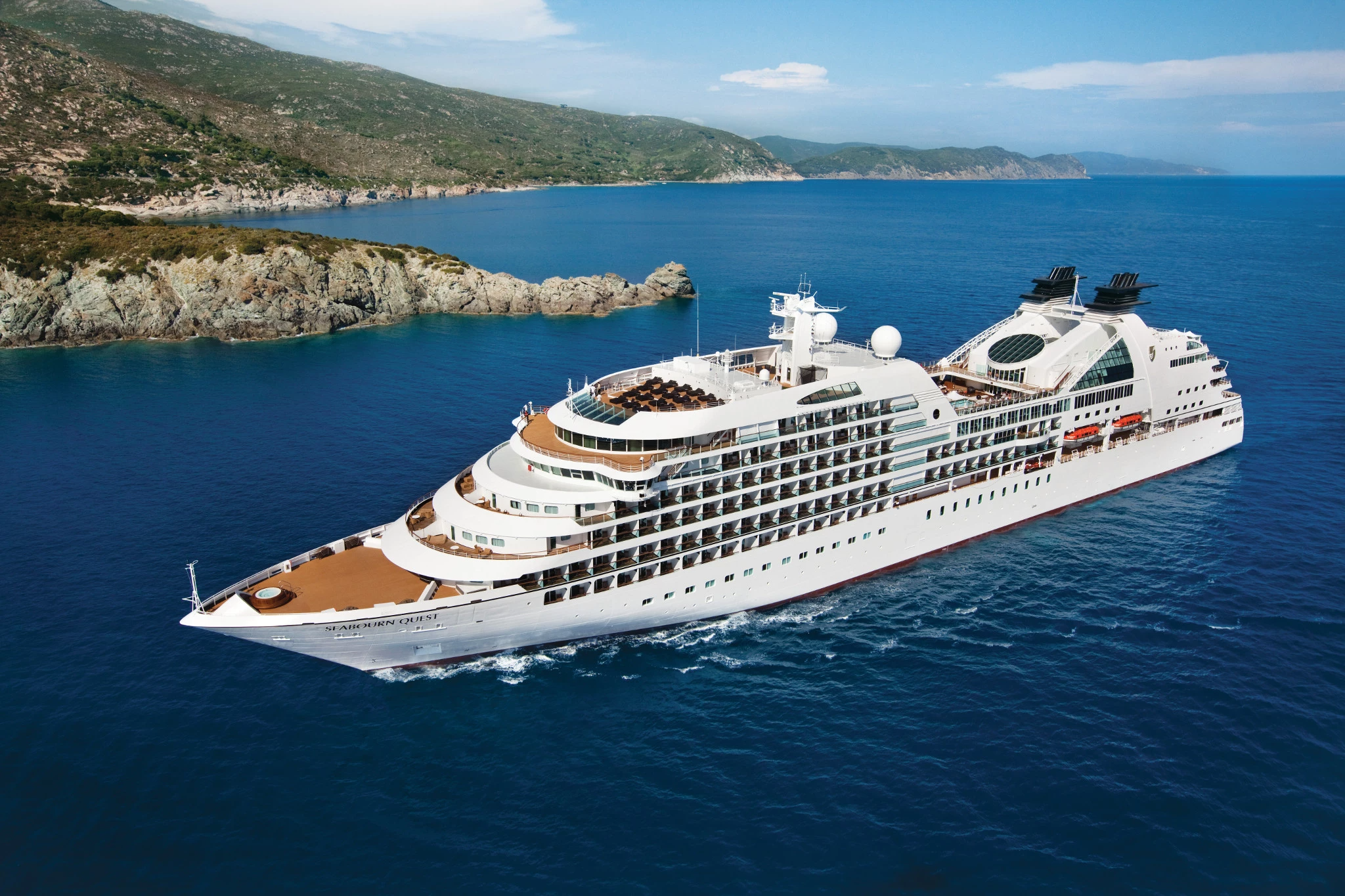
Your ship: Seabourn Quest
Explore Seabourn Quest's cabins, dining and onboard facilities.