
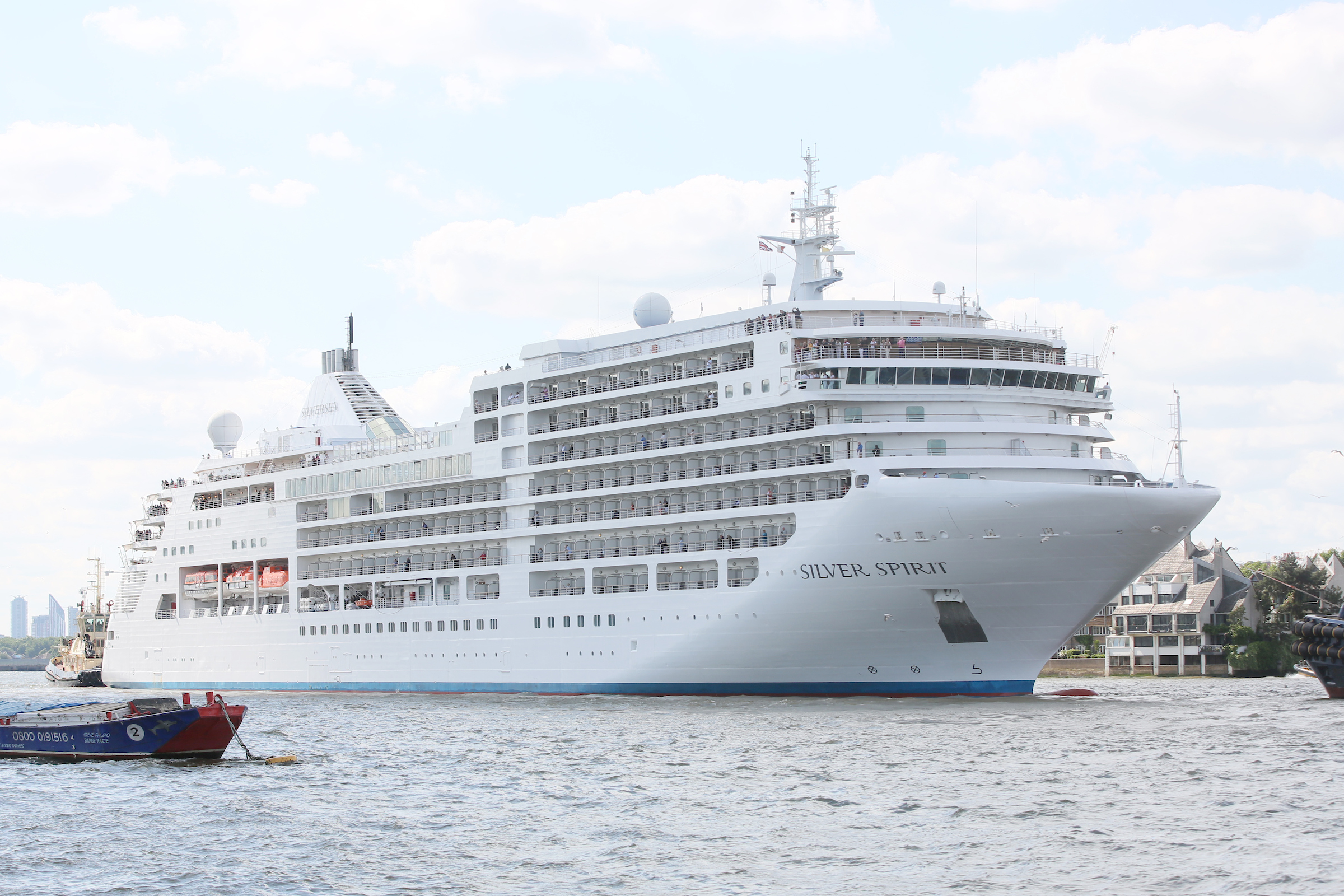
26 nightsFrom Bridgetown, Barbados17 ports of call
Bridgetown to Barcelona
Silversea · Silver Spirit
Overview
A 26-night voyage aboard Silver Spirit, departing Bridgetown, Barbados on 18 Mar 2028 and arriving in Barcelona, calling at 17 destinations along the way.
Bridgetown, BarbadosMindelo, Cape VerdeLas Palmas,Gran CanariaSanta Cruz de la Palma, La PalmaFunchalPorto Santo (Madeira)LisbonLeixoes, PortugalPortimaoCadizGibraltarMalagaMotril, GranadaCartagena, SpainValenciaAlcudia, Mallorca, SpainBarcelona
Cabin prices
Live prices per person based on two sharing. Select a grade to see its fare options.
Loading live cabin prices…
Itinerary
26 nights · 27 ports of call- 1
Day 1 ·Bridgetown, BarbadosEmbark
18 Mar 2028Depart 19:00Bridgetown, the captivating capital of Barbados, combines faded colonial history, captivating tradition, and vivid white beaches plucked directly from your richest imagination of Caribbean perfection. Recently listed as a UNESCO World Heritage site, thanks to its beautifully preserved colonial architecture, Bridgetown’s mask of modernity covers a core of complex history and fascinating culture. Sherbet coloured buildings line up to overlook the waterfront of the Constitution River at the ‘The Careenage’ - where gleaming ships bob on the blue water, and peaceful strolls along a wooden boardwalk await.
Stop for a sobering moment at the commemorative plaque honouring the people traded at this spot, when Bridgetown was the British Empire’s most important harbour, and first stop on the Transatlantic Slave Trade crossing. Just five minutes’ stroll from here is Carlisle Bay - a postcard-perfect place where you'll find crystal-clear, turquoise seawater glowing in the Caribbean sun, and a mile of soft white powder sand. A treasure trove for divers, the shipwrecks scattered below the shallow water’s waves are now inhabited by turtles and swirling, rainbow-coloured tropical fish. Head to the backstreets, where street food vendors serve up spicy chicken soup, barbecued pigtails and thirst-quenching coconut water. There are bargains aplenty to be had on Broad Street, where duty-free malls and souvenir stalls cram together, vying for your attention. Roebuck Street is the spot where one of the Caribbean’s favourite drinks, rum, was discovered - having been created here from the by-products of the island’s booming sugarcane trade. Nowadays, it’s lined with bars splashing every variety of the deliciously spicy dark libation imaginable into glasses. For a touch more culture, visit one of the oldest synagogues in The Americas - Nidhe Israel Synagogue, which was built in 1654. The adjoining museum tells the story of Barbados’ Jewish immigrants, who were instrumental in the island’s development. - 2
Day 2 ·At Sea
19 Mar 2028 - 3
Day 3 ·At Sea
20 Mar 2028 - 4
Day 4 ·At Sea
21 Mar 2028 - 5
Day 5 ·At Sea
22 Mar 2028 - 6
Day 6 ·At Sea
23 Mar 2028 - 7
Day 7 ·Mindelo, Cape Verde
24 Mar 2028Arrive 09:00Depart 19:00Mindelo is a port city on São Vicente, an island in the volcanic archipelago of Cape Verde. It's known for its music, nightlife and lively, Brazilian-influenced Carnival celebrations. Colorful colonial houses line the shores of Porto Grande harbor, which is set against a backdrop of rugged mountains. The Torre de Belém, by the harbor, is a scaled-down replica of a centuries-old tower in Lisbon - 8
Day 8 ·At Sea
25 Mar 2028 - 9
Day 9 ·At Sea
26 Mar 2028 - 10
Day 10 ·Canary Islands (Las Palmas)
27 Mar 2028Arrive 08:00Depart 19:00Watch the stars glittering at night, climb jungled volcano calderas, and explore the historical allure of this entry point to the sun-gorged island of Gran Canaria. The sprawling capital of the Canaries is Spain's ninth biggest city, stretched out along the sparkling coastline. Visitors and locals alike blow off steam on the city's urban beaches, before filling out bustling, authentic tapas bars. An offshore barrier of lava strips waves of their power, making Las Canteras's urban beach expanse one of the best and calmest in the Canaries.
Strap on your snorkel to explore the seabed, which blooms with colourful fish and tropical reefs. Or, settle back to soak in the warm glow of one of the best climates in the world, while reclining on the soft sand, which arcs along the capital's fringe. At the other end of town, La Vegueta old town is a charming stroll along cobbled streets, wandering past decorative doorways and balconies that beg to be photographed. The narrow 15th-century streets take on an extra romantic air in the evenings, as lanterns cast a soft glow over them. Calle Colon offers a hint of the street's history - and it's here where the handsome colonial house - turned museum - of Christopher Columbus stands. Columbus stayed here to recuperate, between his boundary-redefining voyages. Out of Las Palmas, diverse and exciting volcanic landscapes await, including the spectacular Caldera de Bandama, which plunges 200 metres into the earth. From the summit, views stretch out to the looming island of Fuerteventura unravel. You can also discover pretty white-wash fishing villages, dazzling gardens, and the sun-bathed vineyards that produce Gran Canaria's crispest wines. - 11
Day 11 ·Santa Cruz De La Palma (Canary Islands)
28 Mar 2028Arrive 07:00Depart 16:30Santa Cruz de Tenerife is the capital of the island of La Palma. Because of its spectacular vegetation and exuberant natural beauty, it is considered by many the most beautiful of the Canary Islands and referred to as the Pretty Isle – La Isla Bonita. In addition to its outstanding natural attributes, the island boasts a culture full of traditions, cuisine, crafts and folklore from the time of the original inhabitants, who left a variety of archaeological riches. View less
Once an important transatlantic port during colonial days, today Santa Cruz has the look of a genuine open-air museum. With colonial houses and carved balconies lining the streets, the port city retains the old-world charm of its glory days. Acclaimed attractions in the interior include the Taburiente National Park with its giant crater that has been photographed from the Space Shuttle, and the Roque de los Muchachos Astrophysics Observatory, standing on the island's highest point (7,260 feet) and considered the most important of its kind in the northern hemisphere. The green of the countryside, the abundant water and the floral wealth stands in sharp contrast to the many volcanic cones and lava flows that testify to the island's origins. The oldest volcanic rocks are estimated to be about 3 to 4 million years of age. There were seven recorded eruptions, the most recent one in 1971. While favored by pleasant temperatures in all seasons, the climate varies enormously between the south and the north of the island. The northeast is known to experience moisture-laden trade winds; the southwest is much drier and sunnier. Along the coastal strip, up to an altitude of 600 feet, temperatures are usually in the 70s, while higher up they drop in the winter time, even to freezing point at elevations above 6,000 feet. Our call to La Palma allows you to discover this island's amazingly different faces over a relatively small area. Mountains and volcanoes, beaches and forests, tiny villages and breathtaking views make up the impressive profile of La Isla Bonita. - 12
Day 12 ·Funchal, Madeira
29 Mar 2028Arrive 10:30Depart 21:00Bedecked with dramatic cliffs, fertile mountains and sun-gorged beaches, Madeira is a lush, colourful island of plants, paradise and Portuguese-flavoured pleasures. Bathing in year-round sunshine, Funchal - the lowkey capital of Madeira - is perfect for slowing the pace, and toasting the thrilling scenery with a bottle of the island's famous wine. Narrow, cobblestone streets line the old town, where whitewash buildings, iron-wrought balconies, and tiled patterns carry echoes of Lisbon. Rua de Santa Maria is the city's oldest street, and the doors have been vividly painted by local artists.
Sit for a drink, to sample your choice of Madeira's renowned wines - Boal is the ideal option for those with a sweeter tooth. You'll also find Corpo Santo Chapel here, one of the few remaining buildings to have survived from the 15th century. Blossoming parks and gardens splash colour around, and the sweet smell of pollen lingers in Parque de Santa Catarina. Look out over Funchal harbour between the fountains and blooming flower beds, as ducks and swans enjoy leisurely days on the lake. Madeira Botanical Garden waits in the hills over the city, along with Palhero Garden – a sophisticated and elegantly landscaped English garden, 500 meters above sea level. For an even more dramatic view of this gorgeous setting, head up to Cap Girao – a rusty-red cliff with a cable car strung up to its sheer drop. The cliff falls away vertically to the vivid blue waters below. Or head down to the sea, to enjoy Funchal's gorgeous pebble beaches rustling, framed by colossal, craggy cliffs. - 13
Day 13 ·Porto Santo, Madeira
30 Mar 2028Arrive 07:00Depart 18:00Porto Santo is a small island in the Portuguese archipelago of Madeira. It’s known for its warm waters, dive sites and the long, sandy Porto Santo Beach. In the capital, Vila Baleira, the Christopher Columbus House Museum has displays on maritime history in the Italian explorer's former home. Near the summit of Ana Ferreira peak, the Pedreira viewpoint has sweeping views and a towering rock face of multihued columns. - 14
Day 14 ·At Sea
31 Mar 2028 - 15
Day 15 ·Lisbon
1 Apr 2028Arrive 07:00Lisbon, the capital of Portugal, is a city open to the sea and carefully planned with 18th-century elegance. Its founder is said to be the legendary Ulysses, but the theory of an original Phoenician settlement is probably more realistic. Known in Portugal as Lisboa, the city was inhabited by the Romans, Visigoths and, beginning in the 8th century, the Moors. Much of the 16th century was a period of great prosperity and overseas expansion for Portugal. Tragedy struck on All Saints' Day in 1755 with a devastating earthquake that killed about 40,000 people. The destruction of Lisbon shocked the continent. As a result, the Baixa (lower city) emerged in a single phase of building, carried out in less than a decade by the royal minister, the Marques de Pombal. His carefully planned layout of a perfect neo-classical grid survived to this day and remains the heart of the city. Evidence of pre-quake Lisbon can still be seen in the Belém suburb and the old Moorish section of the Alfama that sprawls below the Castle of St. George.
Lisbon is a compact city on the banks of the Tagus River. Visitors find it easy to get around as many places of interest are in the vicinity of the central downtown area. There is a convenient bus and tram system and taxis are plentiful. Rossio Square, the heart of Lisbon since medieval times, is an ideal place to start exploring. After a fire destroyed parts of the historic neighborhood behind Rossio in 1988, many of the restored buildings emerged with modern interiors behind the original façades.
The city boasts a good many monuments and museums, such as the Jeronimos Monastery, Tower of Belém, the Royal Coach Museum and the Gulbenkian Museum. High above the Baixa is the Bairro Alto (upper city) with its teeming nightlife. The easiest way to connect between the two areas is via the public elevator designed by Gustave Eiffel.
Cruising up the Tagus River to the ship's berth, you can already spot three of Lisbon's famous landmarks: the Monument to the Discoveries, the Tower of Belém and the Statue of Christ, which welcomes visitors from its hilltop location high above Europe's longest suspension bridge. - 16
Day 16 ·Leixoes - Oporto
2 Apr 2028Arrive 09:00Depart 18:00Lively, commercial Oporto is the second largest city in Portugal after Lisbon. Also called Porto for short, the word easily brings to mind the city's most famous product - port wine.
Oporto’s strategic location on the north bank of the Douro River has accounted for the town’s importance since ancient times. The Romans built a fort here where their trading route crossed the Douro, and the Moors brought their own culture to the area. Oporto profited from provisioning crusaders en route to the Holy Land and enjoyed the riches from Portuguese maritime discoveries during the 15th and 16th centuries. - 17
Day 17 ·At Sea
3 Apr 2028 - 18
Day 18 ·Portimao, Portugal
4 Apr 2028Arrive 08:00Depart 18:00Located on the estuary of the Arade River, Portimao has made its living from fishing since pre-Romans times. Today a sprawling port and a major sardine-canning centre, the town is also a base for the construction industries generated by the tourist boom.
Although summer is the busiest time of the year, the mild climate of the Algarve and many sunny winter days attract multinational tourists in all seasons, coming here to visit historical sites, playing golf, strolling along the river boulevard or exploring the many shopping opportunities. Stunning rock formations and warm seawaters make the beaches particularly alluring. The most beautiful on the entire coast is Praia da Rocha, the first one of several Algarve resort developments. Its wide expanse of sand is framed by jagged sea cliffs and the walls of an old fort that once protected the mouth of the Arade River.
From Portimao, explorations can be made along the coast all the way to Cape St. Vincent, Europe's most westerly point, and inland to Lagos and Silves, once the residence and capital of the Moorish kings. - 19
Day 19 ·Cadiz, Spain
5 Apr 2028Arrive 08:00Depart 23:00More than a hundred watchtowers gaze out across the waves surrounding this ancient Andalusian city. Sprinkled with evocative cobbled side streets, you’ll explore 3,000 years’ worth of history, while stumbling across palm-tree lined plazas of shaded coffee sippers. Cadiz claims the mantle of Western Europe’s oldest city, and every piece of architecture - and every wrong turn - offers a chance to discover fascinating new tales. Founded by the Phoenicians in 1100BC, Christopher Columbus used the city as a base for his exploratory, map-defining voyages of 1493 and 1502.
The port grew in importance and wealth as Cadiz’s strategic location close to Africa’s northern tip helped it blossom into a centre for New World trade. Catedral de Cádiz, is a display of the city’s wealth and importance, looming spectacularly over the Atlantic’s waves, with cawing seagulls sweeping between its twin bell towers. Inside, treasures from the city’s trading exploits in the West Indies and beyond - which helped fuel the growth of this historically prosperous city – are on display. Enveloped by ocean on almost every side, Cadiz has something of an island feel, and you can cool off from southern Spain’s unrelenting sunshine on the sweeping golden sand beach of Playa Victoria. The two towers of the new El Puente de la Constitución de 1812 mark a contemporary landmark in this most ancient of cities, in the form of a spectacular new road bridge. Torre Tavira, meanwhile, is the most famous of Cadiz’s army of watchtowers, and the highest point in the city. Reach the top for a view of the ocean fringing the city’s expanse, and to learn about the towers - constructed so trading merchants could survey the harbour from their lavish homes. The Central Market is a chaotic place of bartering, where flashing knives dissect fresh fish. Stop in at the orbiting bars to enjoy tapas, freshly prepared with the market’s produce. - 20
Day 20 ·Gibraltar
6 Apr 2028Arrive 08:00Depart 18:00Gibraltar is the famous promontory located at the western entrance of the Mediterranean, with Spain to the north and, across the Straits, Morocco to the south. The Straits, a channel 36 miles long that connects the Atlantic with the Mediterranean, are 27 miles wide at the west end, 8 miles at their narrowest and 15 miles between Gibraltar and Almina Point near Ceuta. Africa is clearly visible on a fine day. Gibraltar's airport is known for its unusual runway that bisects the two-mile-long narrow isthmus linking the colony geographically to mainland Spain. - 21
Day 21 ·Malaga (Costa Del Sol)
7 Apr 2028Arrive 08:00Depart 18:00Bathing in the sunshine coast’s stunning subtropical climate, and laying out endless spectacular beaches, it’s no surprise that Malaga is one of Spain’s most popular cities. The already impressive cultural appeal of this holiday city has skyrocketed over recent years, and with a storied old town and Moorish fortifications, Malaga has a lot to offer. Nearby, you can recline on the renowned beaches of the Costa del Sol, or venture inland to discover the Moorish treasures of Granada and Cordoba. View less
La Malagueta beach is Malaga’s spacious urban beach, perfect for a sunbathe and a dip in the warm water, before enjoying seaside cocktails or seafood tapas in the restaurants nearby. Malaga and the Costa del Sol may be best known for glorious weather and beaches, but Malaga can now stake a genuine claim as an artistic powerhouse too. Visit the renowned Picasso museum – housed in the artist’s birthplace – before exploring the freshly opened outpost of the Pompidou Centre. The art also spills out onto the streets in the colourful Soho district – splashed with vibrant street paintings. Known as La Manquita – or the one-armed woman – the city’s cathedral rises over the historic old town. Its huge bell tower stands tall, but an accompanying second tower was never completed - hence the nickname. The Alcazaba fortress palace looms over the waterfront and forms a spectacularly preserved remnant from the era when the Moors controlled the Andalucía region. Discover more of the Arabic influence by visiting Granada’s Alhambra palace, or Cordoba’s La Mezquita mosque. Together with Seville’s converted cathedral, the cities form Andalucía’s Golden Triangle of Moorish wonders. - 22
Day 22 ·Motril
8 Apr 2028Arrive 08:00Depart 18:00Seeing the Alhambra palace sprawling majestically beneath the snow-sprinkled backdrop of the Sierra Nevada's range's peaks is one of Spain’s most enchanting vistas. White sandy beaches welcome you ashore at Motril, and it’s a short jaunt to the legendarily beautiful, sun-soaked setting of Granada - where the famous and lush Moorish palace stands. Fountains sprinkle, archways soar, and intricate mosaics sparkle at the Alhambra - a fairy-tale palace, fortress and treasure of Spain’s Moorish architecture. View less
The best view can be found opposite, at the magical Mirador de San Nicolas viewpoint - but you’ll need your wits about you to find it. The square sits perched amid the steep, historic labyrinth of the Moorish Albaicín district - a fiendishly labyrinthine - and gorgeously authentic quarter. You’ll also find Sacromonte mountain rising opposite, punctuated with cave dwellings. It's here, within these atmospheric caves, where rhythmic claps echo, guitars are stabbed and strummed, and sultry flamenco performances play out by candle-light. They say there’s no such thing as a free lunch, but that’s not entirely the case in Granada - one of the last cities in Spain where you will usually receive a free plate of tapas when ordering. Everything from sandwiches to healthy helpings of carne con salsa – meat in tomato sauce – is dished out accompanying drinks. Enjoy a culinary tour of the city’s many tapas bars before heading back to Motril – no one leaves Granada hungry. - 23
Day 23 ·Cartagena (Spain)
9 Apr 2028Arrive 08:00Depart 21:30On the crossroads of mighty cultures, this Murcian port has endless ancient stories to share. A valuable natural harbour attracted many civilisations to this sun-bathed, southeasterly setting - following its foundation by the Carthaginians in 227 BC. Blending the imprints left by countless cultures on this global junction, the presence of everyone from the Vandals to the Phoenicians and Moors can be felt as you explore, walking between ruins and celebrated modernist architecture along Calle Mayor. Cartagena is crowned by the soaring Castillo de la Concepcion - rise to the stout castle aboard a panoramic lift. Inside, look through reams of archaeological treasures, or admire the rolling views down over the port and across the waters. Watch out for the electric blue peacocks who strut flamboyantly. Cartagena's emergence as a visitor destination coincided with a stunning discovery in 1988 - the bowl of a gloriously preserved Roman Theatre. Enter to sit among the grandiose ancient venue, so evocative, you can't help but imagine the historic performances that have graced its stage. Wander the breezy waterfront, looking across the narrow strait towards Africa's distant haze, and spotting gleaming warships. Cartagena's perfect harbour means it has been one of Spain's oldest strategic navy positions since the 16th century. Settle to enjoy the joys of tapas in lively bars - sampling crisped paella, squid and honeyed-aubergine. Easter's Semana Santa festivities are typically lively here, as hooded processions, lavish floats and sombre fiery displays roll through the streets. - 24
Day 24 ·Valencia, Spain
10 Apr 2028Arrive 10:00Depart 18:00Valencia is Spain's third largest city and capital of the region. It was originally founded by the Romans on the banks of the river Turia in 138 BC. In 711 AD the Moors arrived and converted the area into a rich agricultural and industrial center, establishing ceramics, paper, silk and leather industries. Muslim rule was briefly interrupted in 1094 by the legendary Castillian knight, El Cid. Valencia boomed in the 15th and 16th centuries, becoming one of the strongest Mediterranean trading centers.
Valencia is a vibrant, friendly and chaotic city that boasts an outstanding fine arts museum and one of the most exciting nightlife scenes in Spain. The city center is about 3 miles inland from the coast. Plaza del Ayuntamiento marks the center of Valencia. Surrounded by flower stalls, it is also home to the town hall and the main post office. The cathedral was begun in the 13th century and finished in 1482. It has many architectural styles, including Gothic, Baroque and Romanesque. The octagonal bell-tower, called Miguelete, is one of the city's landmarks. The small cathedral museum boasts a tabernacle made from 550 pounds of gold, silver, platinum, emeralds and sapphires. It also purports to be the home of the Holy Grail, the cup used by Christ at the Last Supper.
West of the cathedral is the oldest part of the city, known as El Carme. Situated across the river in the Jardines del Real is the Museo de Bellas Artes, the Fine Arts Museum. Works include those by El Greco, Goya and Velázquez. - 25
Day 25 ·Alcudia, Mallorca, Spain
11 Apr 2028Arrive 07:00Depart 20:00Nothing if not strategic, Alcúdia is the ideal base for exploring Mallorca's north coast, with the 13-km-long (8-mile-long) beach from Port d'Alcúdia to C'an Picafort and the adjacent Playa de Muro, the bird-watchers' paradise in the S'Albufera wetlands, and the spectacular drive along the corniche to Cap de Formentor. The charming little walled town itself is a capsule version of Mallorcan history: the first city here was a Roman settlement, in 123 BC. - 26
Day 26 ·At Sea
12 Apr 2028 - 27
Day 27 ·Barcelona, SpainDisembark
13 Apr 2028Arrive 07:00The infinite variety of street life, the nooks and crannies of the medieval Barri Gòtic, the ceramic tile and stained glass of Art Nouveau facades, the art and music, the throb of street life, the food (ah, the food!)—one way or another, Barcelona will find a way to get your full attention. The capital of Catalonia is a banquet for the senses, with its beguiling mix of ancient and modern architecture, tempting cafés and markets, and sun-drenched Mediterranean beaches.
A stroll along La Rambla and through waterfront Barceloneta, as well as a tour of Gaudí's majestic Sagrada Famíliaand his other unique creations, are part of a visit to Spain's second-largest city. Modern art museums and chic shops call for attention, too. Barcelona's vibe stays lively well into the night, when you can linger over regional wine and cuisine at buzzing tapas bars.
Your ship: Silver Spirit
Explore Silver Spirit's cabins, dining and onboard facilities.