
26 nightsFrom Dakar23 ports of call
Dakar to Dublin
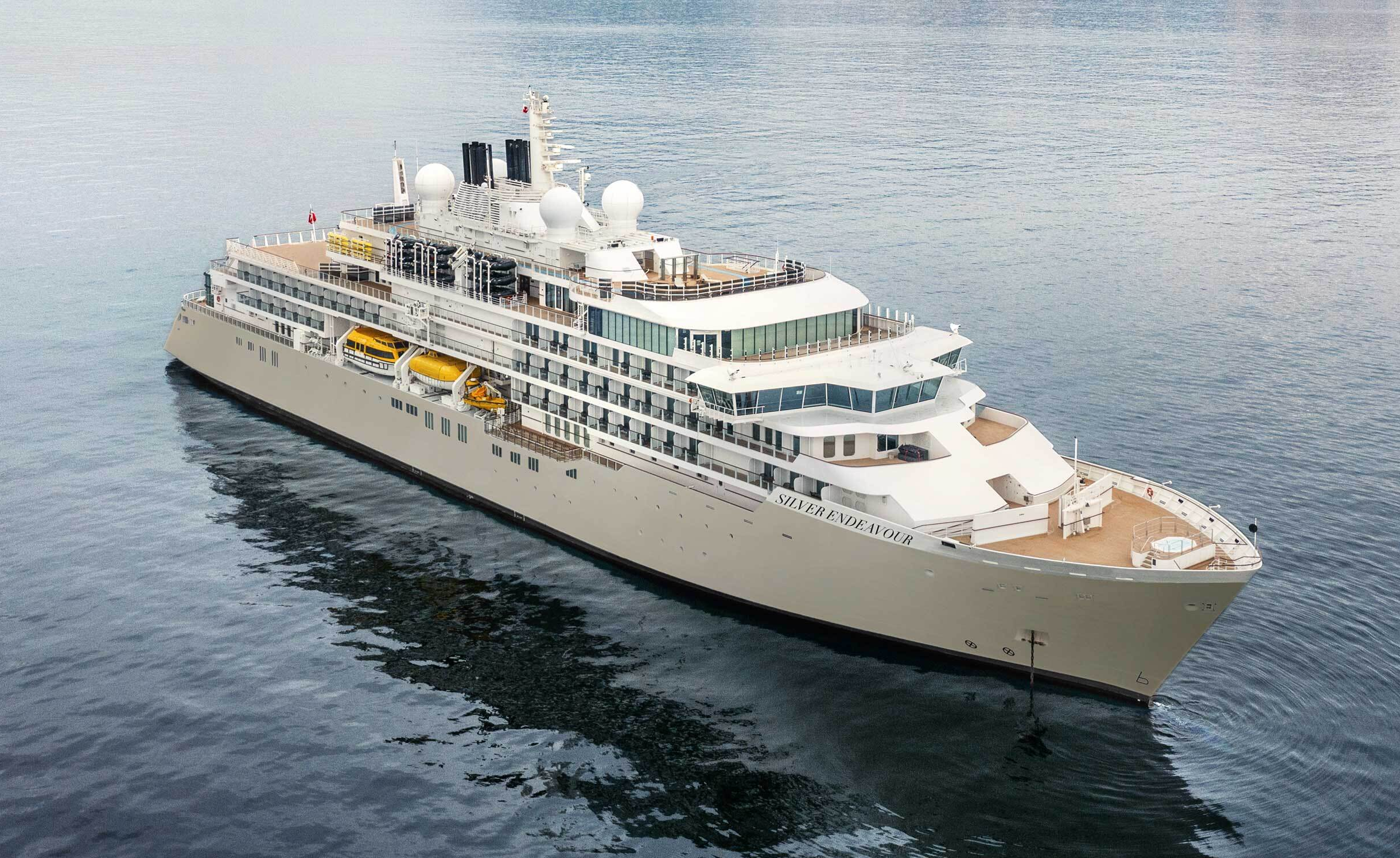
Silversea · Silver Endeavour
Overview
A 26-night voyage aboard Silver Endeavour, departing Dakar on 17 Apr 2027 and arriving in Dublin, calling at 23 destinations along the way.
DakarFogo, Cape VerdePorto Novo, Cape Verde IslesSanta Cruz de la Palma, La PalmaLa Gomera (Canary Islands)FunchalPorto Santo (Madeira)AgadirSafi (Morroco)LisbonTresco, Isles of ScillySt. Mary's, Isles of ScillyBelfastIonaLunga, Trishnish IslandSt. Kilda, United KingdomShiant Islands, Scotland, United KingdomLoch EweFort William, ScotlandTobermory, ScotlandIsle of MullIsle of ManDublin
Cabin prices
Live prices per person based on two sharing. Select a grade to see its fare options.
Loading live cabin prices…
Itinerary
26 nights · 32 ports of call- 1
Day 1 ·Dakar, SenegalEmbark
17 Apr 2027Depart 18:00Capital of Senegal, and a major gateway to Western Africa, the former colonial trading post of Dakar stamps the Cap-Vert peninsular with glorious surf-fringed beaches. Enjoy the thrum of markets - where colourful textiles are exchanged - and wander streets where jazz, sambar and mbalax spill from every ajar door. Offering tropical island-style beaches in an incongruous urban setting, Dakar is a wild and urgent experience for the senses. Watch on as surfers revel in consistent rollers on this, the most westerly peninsula of continental Africa.
Scuba divers can explore worlds below the surface in Dakar's diving areas, or you can head to sandy beaches like Plage des Mamelles' cove, which provide endless options for cooling off. Looking for a little more activity, loosen up and play on golf courses that unroll along the sun-kissed Senegalese coastline, or visit startling natural sites like the vivid pink water of the salty pink Lake Retba. Cultural relevance abounds in Dakar - those wanting to delve a little deeper into the dark history of Senegal should visit the House of Slaves on the UNESCO World Heritage Site listed Goree Island, or duck into the Theodore Monod Museum to pour over an incredible collection of masks, artefacts, and treasures. Sandaga Market is a full-on experience of choreographed chaos, sound and flavours. Tear into fish fresh off the boat, and don't be afraid to get your hands a little greasy while handling Dibi - the national street food - soft mutton, simmered with onions and zesty orange spice. - 2
Day 2 ·At Sea
18 Apr 2027 - 3
Day 3 ·Fogo, Cape Verde
19 Apr 2027Arrive 07:00Depart 18:00Fogo and neighboring Ilha Brava are the southernmost islands of Cape Verde and at the western end of the Sotavento group. Unlike some of the other islands in the archipelago which were named after saints, Fogo’s name goes back to the volcanic activity of its dominant feature Pico do Fogo, at 2,829 meters the highest elevation of Cape Verde and also its largest volcano. - 4
Day 4 ·Porto Novo
20 Apr 2027Arrive 07:00Depart 18:00Porto Novo is found on Sao Antonio, the northwesternmost of the Cape Verde Islands, and is the island’s largest town with approximately 17,400 inhabitants. Located on Sao Antonio’s southeastern and arid side, Porto Novo began as a fishing village and only in 2005 it was recognized as a city. Since the island has no airport and Porto Novo faces the town of Mindelo on the island of Sao Vicente, this harbor is the main link to the other islands in Cape Verde and the outside world. View less
A monument above the port shows a woman waving goodbye to those emigrating from the Cape Verde Islands. Roads leading out of Porto Novo have to either go along the impressive northeast coast or cross the island’s mountains through a rugged and even more spectacular landscape. The third highest peak of the Cape Verde islands at 1,979 meters is the Tope de Coroa to the west of Porto Novo. - 5
Day 5 ·At Sea
21 Apr 2027 - 6
Day 6 ·At Sea
22 Apr 2027 - 7
Day 7 ·Santa Cruz De La Palma (Canary Islands)
23 Apr 2027Arrive 07:30Depart 15:00Santa Cruz de Tenerife is the capital of the island of La Palma. Because of its spectacular vegetation and exuberant natural beauty, it is considered by many the most beautiful of the Canary Islands and referred to as the Pretty Isle – La Isla Bonita. In addition to its outstanding natural attributes, the island boasts a culture full of traditions, cuisine, crafts and folklore from the time of the original inhabitants, who left a variety of archaeological riches. View less
Once an important transatlantic port during colonial days, today Santa Cruz has the look of a genuine open-air museum. With colonial houses and carved balconies lining the streets, the port city retains the old-world charm of its glory days. Acclaimed attractions in the interior include the Taburiente National Park with its giant crater that has been photographed from the Space Shuttle, and the Roque de los Muchachos Astrophysics Observatory, standing on the island's highest point (7,260 feet) and considered the most important of its kind in the northern hemisphere. The green of the countryside, the abundant water and the floral wealth stands in sharp contrast to the many volcanic cones and lava flows that testify to the island's origins. The oldest volcanic rocks are estimated to be about 3 to 4 million years of age. There were seven recorded eruptions, the most recent one in 1971. While favored by pleasant temperatures in all seasons, the climate varies enormously between the south and the north of the island. The northeast is known to experience moisture-laden trade winds; the southwest is much drier and sunnier. Along the coastal strip, up to an altitude of 600 feet, temperatures are usually in the 70s, while higher up they drop in the winter time, even to freezing point at elevations above 6,000 feet. Our call to La Palma allows you to discover this island's amazingly different faces over a relatively small area. Mountains and volcanoes, beaches and forests, tiny villages and breathtaking views make up the impressive profile of La Isla Bonita. - 8
Day 8 ·La Gomera
24 Apr 2027Arrive 07:30Depart 15:00Unspoiled, green and lush, this UNESCO Biosphere Reserve has many secrets to reveal. A Canary Island capital like no other, life is lived at a refreshingly lackadaisical pace here. Wander between San Sebastian's faded pastel hues, which spill across the coastline, and bathe in this seaside city's warm sunshine, as waves splash onto sunny beaches. A sleepy capital city, travellers have been resting, relaxing and rejuvenating here for centuries – including Christopher Columbus, whose presence remains in museums dedicated to his visit. - 9
Day 9 ·Funchal, Madeira
25 Apr 2027Arrive 11:00Depart 22:00Bedecked with dramatic cliffs, fertile mountains and sun-gorged beaches, Madeira is a lush, colourful island of plants, paradise and Portuguese-flavoured pleasures. Bathing in year-round sunshine, Funchal - the lowkey capital of Madeira - is perfect for slowing the pace, and toasting the thrilling scenery with a bottle of the island's famous wine. Narrow, cobblestone streets line the old town, where whitewash buildings, iron-wrought balconies, and tiled patterns carry echoes of Lisbon. Rua de Santa Maria is the city's oldest street, and the doors have been vividly painted by local artists.
Sit for a drink, to sample your choice of Madeira's renowned wines - Boal is the ideal option for those with a sweeter tooth. You'll also find Corpo Santo Chapel here, one of the few remaining buildings to have survived from the 15th century. Blossoming parks and gardens splash colour around, and the sweet smell of pollen lingers in Parque de Santa Catarina. Look out over Funchal harbour between the fountains and blooming flower beds, as ducks and swans enjoy leisurely days on the lake. Madeira Botanical Garden waits in the hills over the city, along with Palhero Garden – a sophisticated and elegantly landscaped English garden, 500 meters above sea level. For an even more dramatic view of this gorgeous setting, head up to Cap Girao – a rusty-red cliff with a cable car strung up to its sheer drop. The cliff falls away vertically to the vivid blue waters below. Or head down to the sea, to enjoy Funchal's gorgeous pebble beaches rustling, framed by colossal, craggy cliffs. - 10
Day 10 ·Porto Santo, Madeira
26 Apr 2027Arrive 07:00Depart 22:00Porto Santo is a small island in the Portuguese archipelago of Madeira. It’s known for its warm waters, dive sites and the long, sandy Porto Santo Beach. In the capital, Vila Baleira, the Christopher Columbus House Museum has displays on maritime history in the Italian explorer's former home. Near the summit of Ana Ferreira peak, the Pedreira viewpoint has sweeping views and a towering rock face of multihued columns. - 11
Day 11 ·At Sea
27 Apr 2027 - 12
Day 12 ·Agadir, Morocco
28 Apr 2027Arrive 07:00Depart 18:00Boasting an impressive 300 days of sun per year, there is a reason why Agadir is Morocco’s premier holiday resort. Nicknamed the “Miami of Morocco”, the resort has sea and sand in abundance, along with a dreamy 10 km beach – perfect for travellers who want sheltered swimming or enjoy water-based fun in the sun. By contrast to the rest of the country, Agadir is thoroughly modern. An earthquake destroyed the city in 1960, killing 15,00 in 13 seconds and leaving another 35,000 homeless.
In its place, and under the direction of Le Corbusier, a new city with a new direction was built. Instead of souks and medinas, think modern architecture, wide, tree-lined avenues, open squares and pedestrian precincts. Low rise hotels, boutiques and apartment blocks line the splendid waterfont. While all the original landmarks were destroyed (many not once, but twice, in the 1960 earthquake but also in the 1755 Lisbon earthquake), Agadir strove to rebuild as much as it could. Thus the fabled 1540 Oufla Fort, originally built in the mid-16th century by Saadian Sultan Mohammed ech Cheikh was painstakingly recreated with as much authenticity as possible. The ancient kasbah sits at an amazing vantage point (Oufla being the Amazigh word for ‘above’). The inscription “God, King, Country” over the entrance in both Dutch and Arabic is one of the few original elements and dates back to the middle of the 18th century, when the kasbah was initially restored. The Kasbah offer by far the best views of the city. - 13
Day 13 ·Safi, Morocco
29 Apr 2027Arrive 07:00Depart 22:00Lying in a natural harbour to the west of Morocco, Safi (formerly Asafi) carries the weight of legend. As one of the oldest cities in Morocco, it is thought to have been founded by Hanno the Navigator in the 5th or 6th century BC. The etymology of the city’s name allegedly comes from a sailor who got lost and sighed as he passed Safi’s coastline (Safi meaning “oh my regret”). However, there could be another, more literal translation. View less
In Berber, the word Asafi means to spill or flood, undoubtedly referring to the rich sea that makes Safi one of the biggest and safest seaports in the country. The city has been - and still is - a major player in Morocco’s trading industry. Its port has seen everything from gold in the 11th century to today’s principal export, sardines. Portuguese rule in the 1500s saw the Castelo do Mar be built, an imposing fortress that still presides over the city today. Under Portuguese rule, other Europeans came and by the mid-16th century, Safi was Morocco’s principal trading hub. This would all cease however under Sultan Mohammed ben Abdallah in the mid-18th century, who would order that all foreign trade must take place in his newly built city of Mogador (Essaouira). Famous for its pottery of all shapes and sizes, Safi is one destination where you will want to support the local economy. The potter’s quarter, just out of the city walls, boasts the country’s oldest kilns and is a mecca for all those who love both ceramics and tradition. - 14
Day 14 ·At Sea
30 Apr 2027 - 15
Day 15 ·Lisbon
1 May 2027Arrive 08:00Lisbon, the capital of Portugal, is a city open to the sea and carefully planned with 18th-century elegance. Its founder is said to be the legendary Ulysses, but the theory of an original Phoenician settlement is probably more realistic. Known in Portugal as Lisboa, the city was inhabited by the Romans, Visigoths and, beginning in the 8th century, the Moors. Much of the 16th century was a period of great prosperity and overseas expansion for Portugal. Tragedy struck on All Saints' Day in 1755 with a devastating earthquake that killed about 40,000 people. The destruction of Lisbon shocked the continent. As a result, the Baixa (lower city) emerged in a single phase of building, carried out in less than a decade by the royal minister, the Marques de Pombal. His carefully planned layout of a perfect neo-classical grid survived to this day and remains the heart of the city. Evidence of pre-quake Lisbon can still be seen in the Belém suburb and the old Moorish section of the Alfama that sprawls below the Castle of St. George.
Lisbon is a compact city on the banks of the Tagus River. Visitors find it easy to get around as many places of interest are in the vicinity of the central downtown area. There is a convenient bus and tram system and taxis are plentiful. Rossio Square, the heart of Lisbon since medieval times, is an ideal place to start exploring. After a fire destroyed parts of the historic neighborhood behind Rossio in 1988, many of the restored buildings emerged with modern interiors behind the original façades.
The city boasts a good many monuments and museums, such as the Jeronimos Monastery, Tower of Belém, the Royal Coach Museum and the Gulbenkian Museum. High above the Baixa is the Bairro Alto (upper city) with its teeming nightlife. The easiest way to connect between the two areas is via the public elevator designed by Gustave Eiffel.
Cruising up the Tagus River to the ship's berth, you can already spot three of Lisbon's famous landmarks: the Monument to the Discoveries, the Tower of Belém and the Statue of Christ, which welcomes visitors from its hilltop location high above Europe's longest suspension bridge. - 16
Day 16 ·At Sea
2 May 2027 - 17
Day 17 ·At Sea
3 May 2027 - 18
Day 18 ·Tresco, Isles of Scilly
4 May 2027Arrive 07:30Depart 12:30For many visitors Tresco is the most attractive of the Isles of Scilly. This is especially due to its Abbey Garden, which is home to thousands of exotic plant species from around 80 different countries. Plant collector Augustus Smith began the gardens in the 1830s on the site of an old Benedictine Abbey by channelling the weather up and over a network of walled enclosures built around the Priory ruins. He had three terraces carved from the rocky south slope and maximised Tresco’s mild Gulf Stream climate. View less
Even in mid-winter there still are hundreds of plants flowering here. Another surprising attraction at the Abbey Garden is the collection of figureheads from ships that wrecked among the Isles of Scilly. - 19
Day 19 ·St Mary's (Isles of Scilly)
4 May 2027Arrive 14:30Depart 18:00Scattered 30 miles offshore from England’s most south-westerly point – Land’s End – the Isles of Scilly are home to rich wildlife, and green land sloping to powdery white beaches. The Isles of Scilly’s biggest island harbours around 1,600 people – roughly three-quarters of the total population - and is one of five occupied islands. Isolated and serene, life here hums along at its own pace in this archipelago's bubble, which enjoys the UK’s mildest climate, and some of its most spectacular beaches. View less
Hugh Town is the centre of St Mary’s, and you’ll be warmly welcomed by the incredibly tight-knit local community. A peaceful place, watch out when the waters are suddenly parted by the competition of gig racing – the island’s sporting pride and joy - which sees teams competing in colourful rowboats. Elsewhere, catch sight of Atlantic seals and seabirds like puffins and fulmars, along nine miles of coastline. You can also spot the ghostly shipwrecks strewn around the island’s waters, and the 140 islands and skerries that have made treacherous sailing historically. There's a dense collection of historical sites that belies the islands’ small size – from a former prime minster’s grave to star-shaped fortresses. Tresco Abbey Garden is one of the UK’s most vibrant gardens, with diverse plants bathing in the warmer climate and over 300 species on display. Taste the rewards of the mild weather with a glass of wine from England’s most south-westerly vineyard. - 19
Day 19 ·Pembrokeshire National Park
5 May 2027Arrive 07:00Depart 13:30 - 20
Day 20 ·Belfast
6 May 2027Arrive 07:00Depart 18:00Reborn as a cool, modern city, Belfast has successfully left its troubles behind, emerging as a hotbed of culture and architecture, where the comfort of a cosy pub is never far away. Take a voyage of discovery in its maritime quarter, home to a celebrated museum dedicated to the most famous ship ever built, which was constructed right here in the city’s shipyards. A walk across the Lagan Weir Footbridge brings you to Belfast’s fascinating Titanic District – an area of the city devoted to its rich ship-building heritage.
The state-of-the-art Titanic Museum brings the story of the doomed vessel to life, and is the largest museum dedicated to the infamously ‘unsinkable’ ship. Wind up a nautical-themed ramble along the Maritime Mile with a visit to SS Nomadic, the smaller cousin of the Titanic, and a ship which serves as a fascinating time capsule back to the pomp and grandeur of the Titanic, while also telling its own stories of service in both World Wars. There’s just enough time to give the 10-metre long Salmon of Knowledge sculpture a quick peck for luck, before continuing to explore. A stark barbed wire and graffitied sheet metal barrier marks an abrupt scar through the city’s residential areas. The Peace Line was constructed during the height of the Troubles, when Belfast was plagued by sectarian divisions between Protestants and Catholics. Nowadays, you can jump in a black taxi tour to see the colourful murals and living history of the walls, which stand as a stark reminder of the fragility of peace. After exploring the city’s historic divisions, a reminder of Belfast’s uniting creativity can be found at the Metropolitan Arts Centre – a seven-storey tall building, which invites light to gloriously cascade inside. The Cathedral Quarter is a cobbled blend of flower-adorned pubs, restaurants and theatres, and venues where music spills out onto the streets at night, and many a pint is cheerily shared. - 21
Day 21 ·Iona
7 May 2027Arrive 07:30Depart 13:30If tiny islands that resonate with peace and tranquillity are your idea of travel heaven, then welcome to Iona. Almost 200 miles east of Edinburgh, set in Scotland’s Inner Hebrides, this magical island has a spiritual reputation that precedes it. And luckily, more than lives up to. The island is miniscule. Just three miles long and only one and a half miles wide, this is not a place that hums with urban attractions. View less
120 people call Iona home (this number rises significantly if the gull, tern and Kittiwake population is added), although residential numbers do go up (to a whopping 175) in summer. The beautiful coastline is lapped by the gulf stream and gives the island a warm climate with sandy beaches that look more Mediterranean than Scottish! Add to that a green field landscape that is just beautiful, and you’ll find that Iona is a place that stays with you long after you leave. Iona’s main attraction is of course its abbey. Built in 563 by Saint Columbia and his monks, the abbey is the reason why Iona is called the cradle of Christianity. Not only is the abbey (today an ecumenical church) one of the best – if not the best – example of ecclesiastical architecture dating from the Middle Ages, but it also serves as an important site of spiritual pilgrimage. St. Martin’s Cross, a 9th century Celtic cross that stands outside the abbey, is considered as the finest example of Celtic crosses in the British Isles. Rèilig Odhrain, or the cemetery, allegedly contains the remains of many Scottish kings. - 22
Day 22 ·Lunga
7 May 2027Arrive 15:45Depart 19:00The stunning Isle of Lunga is the largest island in the Treshnish archipelago. With volcanic origin the isle was populated until the 19th Century, and remains of black houses can be seen around this magnificent coastal jewel. Abundant plant life and exotic birdlife are now the main inhabitants of the area. Fortunate visitors view the magnificent array of birds, especially the great puffins that breed on the islands plateau. One can sit within just a few feet away without disturbing the avian ambassador’s peace. View less
The 81 hectare island is home to many rare and endangered plants such as, primroses and orchids. Views over the landscape and across the ocean can be seen from the 300 foot high cliffs. - 22
Day 22 ·St. Kilda, United Kingdom
8 May 2027Arrive 06:30Depart 12:30Gloriously remote, St. Kilda is an archipelago 50 miles off the Isle of Harris. Although the four islands are uninhabited by humans, thousands of seas birds call these craggy cliffs home, clinging to the sheer faces as if by magic. Not only is St. Kilda home to the UK’s largest colony of Atlantic Puffin (almost 1 million), but also the world largest colony Gannets nests on Boreray island and its sea stacks. View less
The islands also home decedents of the world’s original Soay sheep as well as having a breed of eponymously named mice. The extremely rare St. Kilda wren unsurprisingly hails from St. Kilda, so birders should visit with notebook, binoculars and camera to hand. While endemic animal species is rife on the island, St. Kilda has not been peopled since 1930 after the last inhabitants voted that human life was unsustainable. However, permanent habitation had been possible in the Medieval Ages, and a vast National Trust for Scotland project to restore the dwellings is currently being undertaken. The islands even enjoyed a status as being an ideal holiday destination in the 19th century. Today, the only humans living on the islands are passionate history, science and conservation scholars. One of the caretakers even acts as shopkeeper and postmaster for any visitors who might like to send a postcard home from St. Kilda. It should be noted that St. Kilda is the UKs only (and just one of 39 in the world) dual World Heritage status from UNESCO in recognition of its Natural Heritage and cultural significance. - 23
Day 23 ·Boreray Island cruising
8 May 2027Arrive 14:00Depart 18:00 - 23
Day 23 ·Shiant Islands, Scotland
9 May 2027Arrive 06:30Depart 12:00 - 24
Day 24 ·Loch Ewe
9 May 2027Arrive 14:45Depart 20:00Loch Ewe is the only north facing Loch in Scotland, with an interesting history and a fine scenic landscape this area has a true natural beauty. During WW2 the loch was a convoy collecting point with a strong naval presence; it was therefore protected by light and heavy aircraft guns, a boom net and mine defence system helped to shield this precious settlement - 24
Day 24 ·Fort William, Scotland
10 May 2027Arrive 08:30Depart 18:00Flanked by the UK’s tallest mountain on one side and Loch Linnae on the other, Fort William – or “Bill” to the locals – is what you imagine when it comes to Scottish Highland towns. Verdant moors stretch as far as the eye can see, pastel painted houses front the water and it is not unusual to see pipers in kilts on street corners.
But while Fort William may play to certain critics’ idea of a cliché, the pretty town goes far beyond tartan cushions and wee drams of Scotch (although there is a fair amount of this too!). Fort William has everything you could possibly want while in the Highlands. The High Street has plenty to keep you occupied with its good range of shops, cafes and restaurants - a lunch of locally caught seafood or the iconic haggis, neeps and tatties is a must. Because of its privileged location sitting in the shadow of the mighty Ben Nevis (standing a proud 1,345 metres high) outdoor enthusiasts are especially well catered for. Unsurprisingly so, as Fort William is considered the UK’s outdoor capital. But it’s not all high adrenaline sports. Certainly, those who want to climb up a rock or hurtle down white water rapids will find their nirvana, but if gentle fishing, a quiet county walk or curling up in cosy pubs warmed by an open fire are more your glass of whiskey then you’re catered for. The West Highland Museum in the centre of the town is excellent, while St Andrew's Church, towards the north end of the main street, has a very attractive interior. Also well worth a look is St Mary's Catholic Church, on Belford Road, and no visit should be considered complete without a look at the Old Fort, almost invisible to passing traffic. Add a wildlife cruise amid stunning scenery and the steam train that took Harry to Hogwarts and you can easily spend a day in this lovely port. - 25
Day 25 ·Tobermory, Isle of Mull
11 May 2027Arrive 07:30Depart 12:00You'll always receive a welcome to remember, as the colourful cafes, houses and shops that line Tobermory's picturesque harbour salute your arrival. Located on the craggy Scottish Inner Hebrides, Tobermory serves as the capital of the Isle of Mull. There's a high chance you'll recognise the town’s colourfully-daubed buildings, as their charming exteriors have featured in countless TV shows - most notably in the children’s favourite, Balamory. - 26
Day 26 ·Duart, Isle Of Mull, Hebrides
11 May 2027Arrive 14:30Depart 18:30Duart Castle, or Caisteal Dhubhairt in Scottish Gaelic, is a castle on the Isle of Mull, off the west coast of Scotland, within the council area of Argyll and Bute. The castle dates back to the 13th century and is the seat of Clan MacLean. - 26
Day 26 ·Isle of Man
12 May 2027Arrive 09:00Depart 18:30The Isle of Man, off England’s west coast (and Ireland’s east) needs no introduction. Its Celtic history is legendary, its political past labyrinthine and its national symbol – a three legged figure with neither body nor head – an enigma that has been foxing historians for centuries. Do not confuse the Isle of Man with the United Kingdom. It does have “crown dependency” similar to Jersey, but the 32-mile-long island is entirely self-governed. View less
It changed hands between England and Scotland many times during the middle ages but fell under British rule in 1399. However, when the feudal lordship was revested in 1765, the island never became part of the United Kingdom. And has remained independent ever since. The island is, quite literally, shrouded in a cloak of secrecy. This is called Manannán’s (or sea mist) after the obscure Celtic Sea God. Legend has it that Manannán’s cloak hides the island from invaders, so they just sail past. But that’s just the beginning of the island’s eccentricities. If you do not salute the mooinjer veggey (little people) that live under Fairy Bridge, you will provoke their anger and they will put a spell on you. The island’s national sport is tin bath racing. Modern life seems not to have arrived here. The railway system, the actual railway system not a contrived tourist attraction, is still operated by a steam locomotive. The tram system by horse drawn carriage. The water wheel, opened in 1895, has never been updated. After all, why would they? Everything works just fine. - 27
Day 27 ·Dublin , IrelandDisembark
13 May 2027Arrive 08:00
Your ship: Silver Endeavour
Explore Silver Endeavour's cabins, dining and onboard facilities.