
20 nightsFrom Athens (Piraeus), Greece19 ports of call
Athens (Piraeus) to Civitavecchia (Rome)
Silversea · Silver Dawn
Overview
A 20-night voyage aboard Silver Dawn, departing Athens (Piraeus), Greece on 10 Jun 2028 and arriving in Civitavecchia, Rome, calling at 19 destinations along the way.
Athens (Piraeus), GreeceGiardini Naxos, SicilyParos, GreeceSouda BayGallipoliKotorSibenikRovinj, CroatiaKoperVenice (Fusina), ItalyTriesteRavenna, ItalySibenikHvarBrindisiPalermoAmalfi, ItalyGaetaCivitavecchia, Rome
Cabin prices
Live prices per person based on two sharing. Select a grade to see its fare options.
Loading live cabin prices…
Itinerary
20 nights · 21 ports of call- 1
Day 1 ·Athens (Piraeus), GreeceEmbark
10 Jun 2028Depart 18:00A city of legend, civilisation and enduring culture, Athens is a majestic and magical urban sprawl. Extraordinary elegance and grace combine with grit and graft in Greece's capital, where highways encase ruins from antiquity, and gleaming museums and galleries stand beside concrete sprayed with edgy street art. These contrasts enhance and elevate the wonders of this 2,500-year-old city, however, which can count notable contributions to philosophy, drama and democracy, among its global legacy. Piraeus' giant port and naval base welcome you to the edge of the Athens' urban area.
From there it's a simple jaunt to the centre. The majestic ancient citadel of the Acropolis dominates an elevated platform and is a constant presence as you explore the city. The wonderful remains of the columned temple of the Parthenon - which date back to the 5th century BC - stand here, representing the pinnacle of classical architecture. The nearby Acropolis Museum adds context to your visit and frames the broad views from its giant glass windows. Or rise up Mount Lycabettus, to be rewarded with perhaps Athens' best panorama of the Acropolis sitting high over the city on its grand stage. See the marble horseshoe of the Old Olympic Stadium, where the first modern Olympics were held in 1896, for more of the city's enduring legacy. Elsewhere, golden beaches and temples stretch out along the coastline, should you wish to explore a little further afield. Coffee is an art form to the Greeks, and it's an unwritten rule that coffee time must never be rushed. So prepare to settle down for a couple of hours and lose yourself in a good chat. Feeling hungry - try traditional souvlaki made with sauces handed from generation to generation. - 2
Day 2 ·Giardini Naxos (Sicily)
11 Jun 2028Arrive 08:00Depart 22:00Hugging a long, sweeping bay, Giardini Naxos welcomes you ashore to some of Sicily’s most scenic and historic sites. Naxos was the first Greek settlement on Sicily, and it is surrounded by remarkable remains and swirling mythology. With a long arc of sun-soaked golden sand, you can kick back by the waves - and cool off with a dip into the sea's refreshing embrace. Up above the seaside revelry, the spectacular Taormina hillside town perches - containing rich Roman and Greek history. View less
Visit to encounter one of Sicily’s best views, as you look down over the rejuvenating blue of the sea, and the looming backdrop of Mount Etna rising in the distance. The majestic, honey-coloured Greek theatre is a highlight, standing before the distant loom of the volcano. Head towards the puffs of cloud, and wisps of smoke, that gather around the peak of Sicily’s mighty volcano, which is among the most active in Europe. Arrive through vineyards, thriving in this fertile soil, before taking the 1,737-metre incline to the summit of the legendary mountain of fire, across fields of solidified lava flows. Known to the Greeks as the home of the God of Fire, and the one-eyed Cyclops, the mountain continues to amaze and awe with its restless power. Vineyards carpet the scenery - interrupted by occasional cactai and citrus groves – and produce some of Sicily’s most refined flavors. Enjoy a glass of wine on Giardini Naxos’ seafront, and toast your time on these rich Sicilian shores. - 3
Day 3 ·Paros
12 Jun 2028Arrive 08:00Depart 19:00As one of the lesser known islands in the Aegean Sea, Paros enjoys its reputation as being the underdog of the Cyclades. Often overshadowed by Mykonos to the north, or Santorini to the south, the savvy traveller knows this island paints one of the finest pictures of Greece that you’re ever likely to find. Arrival in Paros is postcard perfect and exactly as you imagine it. Cafes and tavernas line the pretty port, bougainvillea covers narrow streets, brightly painted fishing boats bob gently in the harbour. View less
If you arrive early enough, you’ll find the catches of the day being sold for pennies. All the touch points are there: evocative blue shuttered, white-washed houses, windmills and domed churches on the horizon, arid hillside above an azure bay that homes promise of fresh figs, olives and the seductive lullaby of cicadas. This image might seem clichéd but in Paros, it’s reality. If strolling the cobbled streets that snake into the village does not sustain your love of Greek history, then head for the Archaeological Museum in the centre of town. Paros has been inhabited since 3200 BC and has a past of maritime battles, followed by economic development and cultural flourishing. The island was well known for its fabulous marble, a fine example of which is the lovely Town Hall in Lefkes village (notably Venus de Milo was also crafted from Parian marble). Literary lovers will also know that Paros was the birthplace of Greek lyrical poet Archilochus, statues of whom can be found all over the island. - 4
Day 4 ·Souda Bay (Crete)
13 Jun 2028Arrive 08:00Depart 19:00Enter Souda Bay to land on Greece’s largest island, and explore the sun-soaked charms of this fascinating land of legends, landscapes and luxuries. Packed with beautiful beaches and rich maritime history, Souda Bay’s huge natural harbour is a spectacular entrance, opening up the treasures of Crete’s many well-stocked museums, rich archaeological sites, and charming Venetian fishing towns. View less
The massive natural harbour of Souda Bay also makes the site an interesting spot for military history - with a huge NATO base here, as well as the Souda Bay War Cemetery, which honours Allied soldiers of World War II. Soak up some Mediterranean sunshine by heading straight to one of the luxurious white sand beaches - where you can recline to a soundtrack of fizzing waves, and dine with sparkling sea views stretching out before you. Explore olive groves producing golden oil, and savour the deep, fruity flavours. The island's renowned wineries, also invite you to sample lovingly-crafted Vilana grape wines. Rethymnon’s old town and star-shaped, seafront fortress are impressive sites to explore, or you can head to Akrotiri to discover the Arkadi Monastery's role in the Cretan resistance - and visit the site where the Greek flag was hoisted high into the sky by rebels in 1897. Crete retains its independent spirit but has gathered countless influences over its history. The island’s most beautiful Venetian port - Chania - is close by, and its picturesque old town and collage of historical influences are a highlight of any trip. - 5
Day 5 ·At Sea
14 Jun 2028 - 6
Day 6 ·Gallipoli, Italy
15 Jun 2028Arrive 07:00Depart 17:00Kalè polis, meaning beautiful city, is the name ancient Greek mariners bestowed on Gallipoli, with good reason. Situated on a mound, the Old Town with its labyrinth of winding lanes, emerges from the Ionian Sea. It is connected to the mainland and modern Gallipoli via a 17th-century bridge. The area lies on the Salentina Peninsula in the extreme southeast end of Italy, commonly referred to as the heel of the boot. The Salento region was inhabited already in prehistoric times; later centuries were marked by Greek, Norman, Byzantine and Baroque cultures. It is a land of farms, castles, works of art, myths and legends. Many heroic battles were fought; fierce resistance was shown by Gallipoli's citizens against numerous invaders that included Romans, Vandals, Swabians, Venetians, French and lastly the English in 1809. - 7
Day 7 ·Kotor, Montenegro
16 Jun 2028Arrive 09:00Depart 19:30Embedded into the slopes of the steep Lovćen mountain, and overlooking the deep blue Adriatic, the fortified town of Kotor boasts a spectacular, imposing staging that few can match. Squeezing in through the tight Bay of Kotor is a daunting and impressive approach in itself, as you arrive via the waterway of Europe’s most southerly fjord. A pearl of Montenegro and the Adriatic, Kotor's warren-like streets drip with history and authenticity. View less
Under Venetian influence for four centuries, the city's UNESCO World Heritage Site old town invites you to wander amid atmospheric stone-clad streets, overlooked by a sea of terracotta roofs and the double towers of the cathedral. Protected by thick stone walls - and the mountains behind - Kotor draws comparisons with another fortified Adriatic wonder in Dubrovnik. Many favour Kotor for its compact layout, smaller crowds, and authenticity, however - having been spared from shelling during Yugoslavia's breakup. The tightknit streets here are patrolled by a slinking population of feline residents, who were adopted as the town’s mascots, after being left behind by transient trader ships. Learn of the city's extensive heritage on the waves, in the dedicated maritime museum that is contained within Grgurina Palace. Pick your way through tight alleys of workshops and studios, walking below fresh laundry strung from windows, before settling into shiny, paved piazzas for an afternoon coffee or seafood meal. If you’re up for an aerobic challenge, tackle the 1,350 steps up the steep walls to St John's fortress. The views over the gorgeous bay make the arduous slog worth it, as you rise past the city's eye-catching 15th-century church bell tower. - 8
Day 8 ·Sibenik
17 Jun 2028Arrive 09:00Depart 19:00Sibenik is a port in south-west Croatia, on the Adriatic Sea. Among the city's notable buildings are a Roman Catholic cathedral (begun early 15th century) and a 12th-century fort. Nearby is the Krka National Park with its cascading waterfalls, green pools and swimming holes. - 9
Day 9 ·Rovinj, Croatia
18 Jun 2028Arrive 08:00Depart 18:30The first documented mention of Rovinj was in the 5th century. However, it is very likely that Rovinj is much older, emerging somewhere at the turn of the 3rd and the 4th centuries. During this period, Istria was occupied by the Romans who stayed there until 476. Later came the Ostrogoths, Franks and the Venetians. During the Venetian times, Rovinj was developing into a strong fishing, shipbuilding and maritime center, especially in the 17th and 18th century when they had the precedence over Istria. At the time that the town walls were secured, the town started to expand to the mainland and in 1763 the channel between the mainland and the island was covered up and Rovinj became a peninsula.
In 1797 the Venetian republic lost its power and for a short time and Istria fell under Austrian and then under Napoleon's rule.
In 1813, Rovinj became part of the Austor-Hungarian Empire and a period of industrial and urban development started.
Rovinj fell to fascist Italy until the end of World War II and in the second half of the 20th century was a part of Yugoslavia, as was all of Croatia, until 1991.
In the past 40 years Rovinj has developed from a fishing village into a real tourist center thanks to its picturesque surroundings, its pleasant Mediterranean climate and its cultural-historical values. - 10
Day 10 ·Koper
19 Jun 2028Arrive 08:00Depart 19:00Koper is a port city in Slovenia, on the country's Adriatic coastline. Its medieval old town centers around Titov Trg, a square with Venetian-influenced landmarks such as the Praetorian Palace and a Gothic-style loggia, while nearby Da Ponte Fountain is a replica of Venice's famed Rialto Bridge - 11
Day 11 ·Fusina (Venice)
20 Jun 2028Arrive 07:00Losing none of its allure over the years, this floating city of canals, bridges and masks is a place of eternal beauty and enduring elegance. The lagoon of more than 100 islands is a heavenly sight, transporting visitors on a journey through time - from its Roman inception, through centuries of trade to the modern face we see today. Navigate Venice’s sparkling waterways by romantic gondola, or on cruises along wide canal boulevards. Span the Grand Canal over its iconic original crossing, the Rialto Bridge, which - with its parade of tiny shops - gives some of the city’s most endearing views. If the crowds unsettle you at any point, take two turns away from the main thoroughfares to find peace alone, amid the city's labyrinth of tiny streets. Hurry to Piazza San Marco to be immersed in Venice’s elegant glory. Basilica San Marco transports you back to the wealthy days of the Doges, who ruled for over 1,000 years. Initially their private chapel, it’s now decorated with beautiful Byzantine mosaics. Nearby the Campanile di San Marco bell tower offers views over the higgledy-piggledy rooftops of times gone by. Just a hop skip and a jump around the corner is the Doge’s Palace, where the levels of opulence ramp up even further. Justice was meted out in this stunning Palace, with the guilty walking to the cells across the covered Bridge of Sighs. Vaporetto trips to local islands offer even more adventures to float your boat, whether it’s Murano with its world-famous glass, Torcello with its amazing Cathedrals, or Burano with its handmade lace and delightfully colourful painted houses. - 12
Day 12 ·Trieste, Italy
21 Jun 2028Arrive 08:00Depart 17:00A city happy to keep one foot resolutely in its beautiful, illustrious past, Trieste is a treasure, which sits on a historical frontier of civilisations and cultures. Nestled on the coast by the Slovenian border, the city soaked up many influences before returning to Italy in 1954. Wealth as a trading hub helped to shape Trieste's grand piazzas and soaring artistic architectural achievements. The legendary Bora wind is greeted like an old friend, and it buffs the city in winter. Just like Trieste itself, it will take your breath away. View less
Piazza Unità d'Italia is the grand, central square, and it opens up to the lap of blue waves at one end. Settle in for a quick caffeine hit in this coffee capital - a word of warning, however, most Trieste baristas don't serve cappuccinos - so plump for a caffè latte instead. The God of the Sea, Neptune, is honoured in a fountain at Piazza del Borsa nearby. Canale Grande is a centrepiece and was built in the 18th century to allow boats to unload their wares and trade. Lined by grandiose, neoclassical buildings, you can enjoy a picturesque stroll by the water. Three pretty bridges span it, while little boats bob and jostle below. Glorious castles crown the area, towering from esteemed vineyards. Don't miss the fairytale castle of Miramare, which watches over the azure Gulf of Trieste, and looms above glorious gardens. Trieste Cathedral is a constant and reassuring presence for the city, standing on a hilltop overlooking the old town - it features an enchanting chandelier and remarkable painted ceiling. - 13
Day 13 ·Ravenna, Italy
22 Jun 2028Arrive 08:00Depart 18:00Ravenna is a city in Emilia-Romagna, Italy. It's known for the colorful mosaics adorning many of its central buildings, like the octagonal Basilica di San Vitale, the 6th-century Basilica di Sant'Apollinare Nuovo and the cross-shaped Mausoleo di Galla Placidia. North of the center, the Mausoleo di Teodorico built in the 6th century for King Theodoric the Great, is a Gothic, circular stone tomb with a monolithic dome - 14
Day 14 ·Sibenik
23 Jun 2028Arrive 08:00Depart 22:00Sibenik is a port in south-west Croatia, on the Adriatic Sea. Among the city's notable buildings are a Roman Catholic cathedral (begun early 15th century) and a 12th-century fort. Nearby is the Krka National Park with its cascading waterfalls, green pools and swimming holes. - 15
Day 15 ·Hvar, Croatia
24 Jun 2028Arrive 07:00Depart 18:00One of the most popular of the island escapes sprinkled across the turquoise Adriatic, Hvar is a glorious idyll of hidden coves, electric blue waters and quietly contented port towns. In recent years, it’s gathered something of a reputation as a party island - mainly earned from Hvar Town’s nocturnal exuberances, and the transient day-tripping yachts that drop by. View less
Soak up the energy, exuberance and fine dining, or sidestep the hedonism to explore a richly refined, rural and historic island – utterly spoiled with sunshine, and hidden beaches, which dazzle with colourful intensity. Bike rides along long sweeping coastal paths, boat journeys from pretty harbours, walks through fields of purple lavender - it’s all waiting for you on heavenly Hvar. Relish the sunshine and explore deserted, idyllic inlets, before sharing strong espressos in quiet harbour towns, surrounded by welcoming, sun-wrinkled locals. There’s also rich Medieval history – the sleepy town of Stari Grad is said to be Croatia’s oldest, dating back to 384 BC. Elsewhere, Jelsa is a postcard perfect place – settle in for a bite to eat, with nothing but the sound of harbour waters lapping and sandpaper scraping boats hulls for company. You can walk to look out over glorious views across to Brac, sometimes watching on as thunderstorms rage and flash, an eternity away over the mainland’s crumpled mountains. You’re also just a short ferry ride from the incredible Golden Horn - an evocative spike of brilliant sand which juts out evocatively into the cobalt-blue sea. - 16
Day 16 ·Brindisi
25 Jun 2028Arrive 08:00Depart 19:00Life continues in Brindisi as if the 21st century hadn’t arrived. Visually, the landscape is as stunning as one would expect in southern Europe. Villages set on sunlit hilltops rise like islands above a rolling landscape of olive groves and vineyards. The coastline is a striking mixture of ruggedly beautiful cliffs and grottoes interspersed with a scattering of long, sandy beaches. Together with the wealth of historical artefacts and spectacular landscapes, Brindisi is one of Italy’s best kept secrets.
Naturally, the cuisine is rich with its pickings from both land and sea and visitors can expect the best pasta, Caprese salad, local lemon loaf and spaghetti al vogole they have ever had! - 17
Day 17 ·At Sea
26 Jun 2028 - 18
Day 18 ·Palermo, Sicily, Italy
27 Jun 2028Arrive 08:00Depart 18:00The capital of Sicily is situated on a crescent-shaped bay on the island's north coast. Once the intellectual capital of southern Europe, Palermo has always been at the crossroads of civilization. Due to its favourable location, Sicily's most interesting city has attracted almost every people and culture touching the Mediterranean world. Its most unique characteristic is a harmonious blend of Arab-Norman cultures mixed with Byzantine and Jewish elements, which created some unforgettable and resplendent works of art.
Phoenician traders first colonized Palermo in the 6th-century BC, but it was the Carthaginians, who built the important fortress here that caught the covetous eye of the Romans. After the first Punic War, the Romans took control of the city in the 3rd-century BC. Following several invasions by the Vandals, Sicily was settled by Arabs, who made the country an emirate and Palermo a showpiece capital that rivalled in splendour both Cordoba and Cairo. The city became a magical place of palaces and mosques, minarets and palm trees. In the 11th-century Palermo was conquered by the Norman ruler, Roger de Hauteville. During the Normans' hundred-year occupation, the city experienced a remarkable period of enlightenment and a flourishing of the arts. Counting a population of more than 300,000, Palermo became the centre of Norman rule and one of the most important trading centres between East and West.
Eventually, Palermo was incorporated into the “Kingdom of the Two Sicilies” under the Swabian ruler Frederick II, known as the Holy Roman Emperor. After the bloody Sicilian Vespers uprising in 1282, the Spanish took control and brought the Inquisition to Palermo. Some historians believe that the nature of the Inquisition helped foster the protective secret societies that eventually evolved into the Mafia.
Today, visitors can still experience the legacy of Palermo's rich past. Great Arab-Norman buildings include the Cappella Palatina, La Martorana, San Giovanni degli Eremiti and, a few miles outside the city, the Cathedral of Monreale. Palermo's bustling streets and animated markets give the town an Oriental feel. The Quattro Canti, or Four Corners, is the monumental crossroads laid out in 1608-1620 at the central intersection of the four longest and straightest streets of the city. North of Piazza Castelnuovo lie the avenues of the new city. Most sights are scattered along three major streets: Corso Vittorio Emanuele, Via Maqueda and Via Roma.
A vigorous metropolis with a strong historical profile, Palermo is packed with interesting sights, which make it an enriching and enjoyable place to explore. - 19
Day 19 ·Amalfi, Italy
28 Jun 2028Arrive 08:00Depart 17:30Spectacular tiers of colour splashed houses cascade down to immeasurably blue seas and hidden coves, along Italy’s premier coastline. Lemon groves and vineyards bask in the country’s generous southern sun, running alongside dramatic mountain precipices, and dazzlingly romantic fishing villages.
The Amalfi Coast is rightly celebrated as a treasure of Italy, and you can enjoy the true scale of it, and the feel of the salty sea breeze in your hair, as you hike the Path of the Gods - where some of the best heavenly views of the beautiful beaches and improbably teetering villages open up below you. The call of beachside bliss is never far away, and descending down to Duoglio Beach is a mesmerising introduction to the coastline’s jagged rock setting and crystalline waters. A dramatic ramp of steps rears up to Amalfi's distinctive black and white striped, Moorish-influenced cathedral, which stands at the heart of the town. Inside, tranquillity awaits amid the arches and columns of the Cloister of Paradise. Chattering piazzas, where ice cubes clink in glowing spritz cocktails, and strong espressos are savoured, hum with life nearby. Enjoy plates of shellfish tangled spaghetti or spicy pezzente salami in your choice of the Amalfi Coast’s celebrated restaurants, before tasting locally-squeezed limoncello - the perfect denouement to any meal here. Grand villas, spectacular restaurants and well-heeled visitors have long given Amalfi a reputation for refined luxury, but things haven’t always been so peaceful here. In the 10th and 11th centuries, Amalfi was an independent maritime republic, and the Municipal Museum of Amalfi is the place to learn of the region’s rise to global trading prominence, and the devastating tsunami that washed it all away in 1343. - 20
Day 20 ·Gaeta
29 Jun 2028Arrive 08:00Depart 17:30 - 21
Day 21 ·Civitavecchia (Rome)Disembark
30 Jun 2028Arrive 07:00All roads lead to Rome, and with good reason - this city is one of the world’s most thrilling, offering unmatched history along every street. An evocative, inspiring and utterly artistic capital of unrivalled cultural impact, Rome is a city of back-to-back landmarks, which will take you on an exhilarating journey through the ages. This may be one of the world’s oldest cities, but it’s well and truly lived in. The ruins are punctuated with murmuring cafes, and the outdoor seating of restaurants sprawls out across piazzas, enticing you to sample tangles of creamy pasta and crispy pizzas. Rome’s incredible Roman Forum is littered with the ruins of its ancient administrations, which have stood firm for 2,000 years, since the times when the area was the centre of the Western world. Few sites are more simultaneously beautiful and haunting than that of the storied Colosseum, which looms deep into Rome’s rich blue sky. Take a tour to learn details of the grisly goings-on within. The best way to experience Rome is to wander its streets, gelato in hand. There is a lot to see here - whether it’s the domed spectacle of the Pantheon, or the elaborate flowing waters and artistry of the Trevi Fountain. Vatican City is an astonishing, colossal display of Catholic grandeur, while the Spanish Steps – crowned by the Trinità dei Monti church – offer a beautiful spot to gather and soak up the lively atmosphere of this humming city. With so much on the to-do list, you’ll relish the breaks you take, enjoying simple pleasures like a strong espresso, or fresh pasta with tomato sauce and ripped basil.
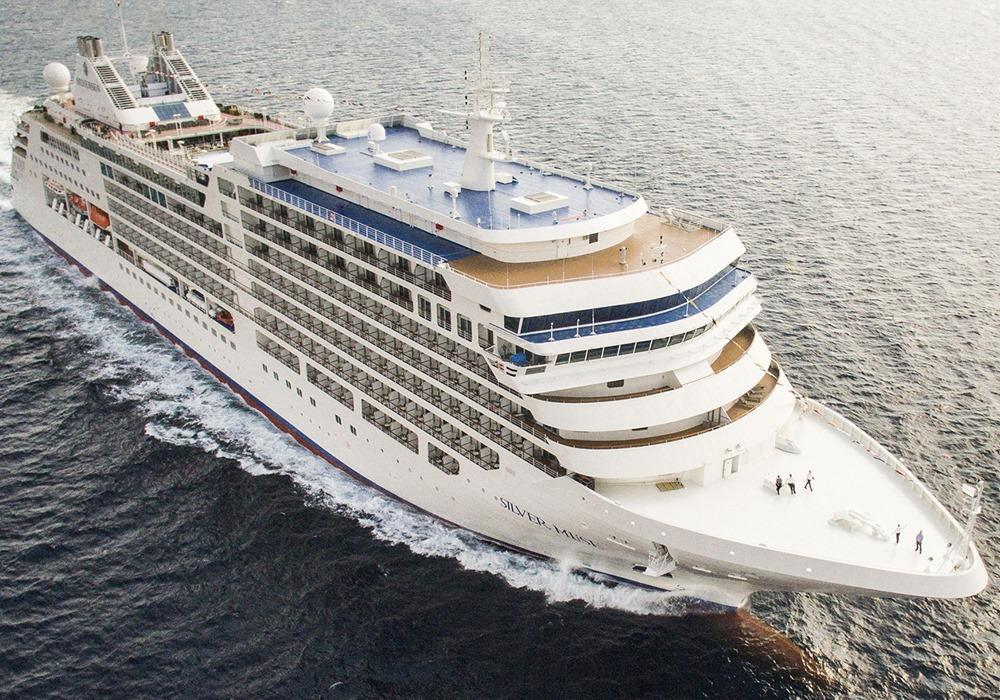
Your ship: Silver Dawn
Explore Silver Dawn's cabins, dining and onboard facilities.