
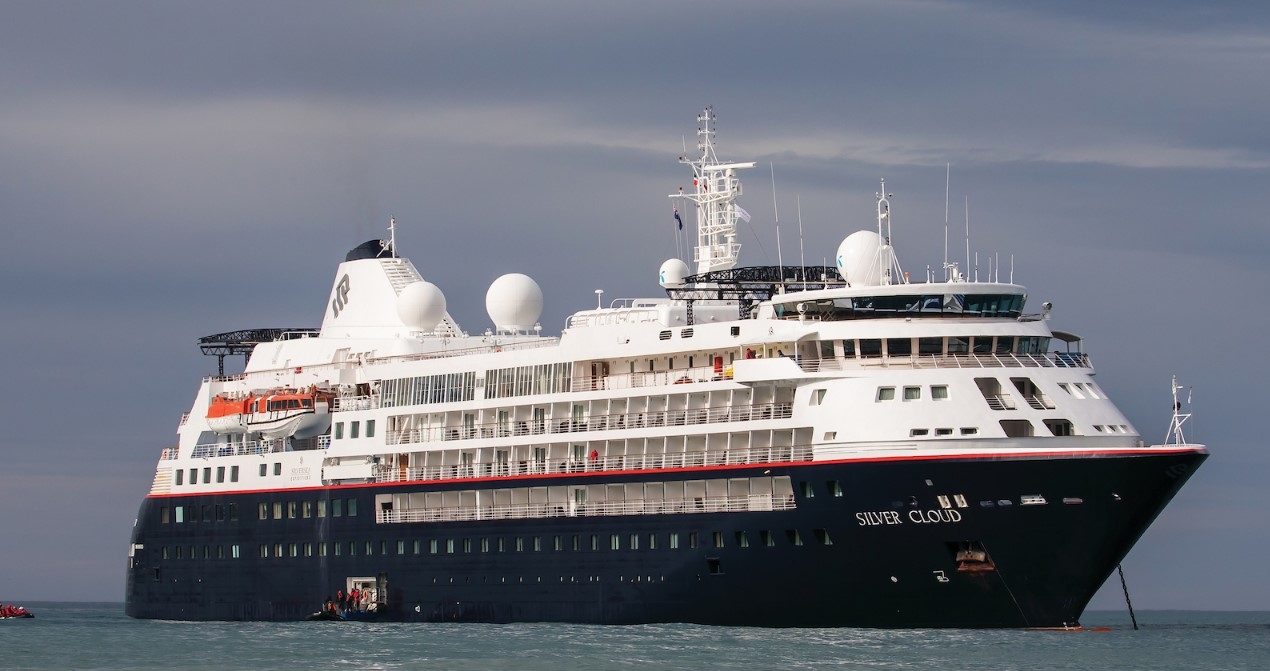
52 nightsFrom Papeete31 ports of call
Exploring Southeast Asia & Polynesia Papeete (Tahiti) to Singapore
Silversea · Silver Cloud
Overview
A 52-night voyage aboard Silver Cloud, departing Papeete on 3 Apr 2028 and arriving in Singapore, calling at 31 destinations along the way.
PapeeteRaiateaBora BoraAitutakiPalmerston, Cook IslandsNeiafuEuaiki IslandLevuka, OvalauLeleuviaLautokaAmbrym Island, VanuatuPentecost Island, VanuatuSanta AnaKennedy IslandRabaul, Papua New GuineaGarove Island (Witu Islands)MadangAli IslandKororu, PalauBoholManilaBoholBitungPulaKalabahi (Takpala)Alor, IndonesiaKomodo IslandPink Beach, KomodoKarimunjawaBelitung Islands, IndonesiaSingapore
Cabin prices
Live prices per person based on two sharing. Select a grade to see its fare options.
Loading live cabin prices…
Itinerary
52 nights · 59 ports of call- 1
Day 1 ·Papeete (Tahiti)Embark
3 Apr 2028Depart 18:00Formed by two ancient volcanoes and joined at the isthmus of Taravao, Tahiti is the largest island of the Society Archipelago and the economic heart of French Polynesia. Ever since the famous French impressionist painter Paul Gauguin immortalized Tahitian maidens in vibrant colors on his canvasses, Tahiti has had a mysterious allure and still summons up all the romance of the South Pacific as a tropical paradise.
Rising in the center, Mount Orohena and Mount Aorai are the highest points; deep valleys radiate in all directions from these central peaks. Steep slopes drop abruptly from the high plateaus to coastal plains. The northeast coast is rugged and rocky without a barrier reef, and thus exposed to intense, pounding surf. Villages lie on a narrow strip between mountains and ocean. The south coast is broad and gentle with large gardens and coconut groves; a barrier reef shields it from the sea. - 2
Day 2 ·Raiatea
4 Apr 2028Arrive 07:00Depart 20:00The largest of the Leeward Islands, Raiatea is totally surrounded by a reef but has several navigable passes and the only navigable river in French Polynesia. Raiatea shares a protected lagoon with the island of Taha'a; legends tell how the two islands were cut apart by a mythical eel. Although it has no beaches, there are picture-postcard motus (flat reef islets) with nice beaches in the lagoon. One of the nicest things about Raiatea is that it remains "undiscovered" by most visitors to French Polynesia. Before European encroachment, Raiatea was the religious, cultural and political center of Tahiti-Polynesia. It was also Captain Cook's favorite island. The last resistance to the French takeover on the island lasted until 1897, when French troops and warships used arms to conquer the island. The native leader of the resistance, Teraupoo, was deported to New Caledonia. Raiatea is an archaeologist's delight. Scientists have unearthed artifacts linking the island with Hawaii. Local tradition says Raiatea was the great jumping-off point for ancient Polynesian mariners. There are a significant number of marae (Tahitian temples), including Taputapuatea. Considered the most important temple in the Society Islands, it is a national monument. In Uturoa, the main port, the colorful market is most crowded on Wednesday and Friday mornings when the Tahaa people arrive by motorized canoe to sell their products. Behind Uturoa, you can climb Tapioi Hill, one of the easiest and best climbs in Tahiti-Polynesia, and get a great view of four islands. Near the village of Pufau, Mount Temehani is the highest point on the island and the only home in the world of the Tiare Apetahi flower. - 3
Day 3 ·Bora Bora (Society Islands)
5 Apr 2028Arrive 06:00Depart 17:30If you have ever dreamt up your ideal island holiday, we suspect it goes something like this: Soapy blue seas? Check. Sparkling white beaches? Check. Thatched wooden huts, gently sloping palm trees and kaleidoscopic marine life? Check, check and check. And yet, even by ticking every box, first time viewing of Bora Bora still beggars belief. This tropical hideaway less than 12 m2 in the heart of the South Pacific has been toping travel wish lists for years.
Long considered the realm of honeymooners – spectacularly romantic sunsets are a speciality – Bora Bora is not just for wandering with your love. If the prismatic shades of blue of the world’s most beautiful lagoon do not fill you up, then perhaps underwater scooters and aqua Safaris will charge your batteries. If exploring Bora Bora’s lush hinterland is more your glass of tequila sunrise, then trips around the island (often stopping off at the celebrity haunt Bloody Mary Restaurant & Bar) are a must. Bora Bora’s peaceful ambience has not always been the case. The island was a US supply base, known as “Operation Bobcat” during WWII. During this time, Bora Bora was home to nine ships, 20,000 tons of equipment and nearly 7,000 men. Eight massive 7-inch naval cannons were installed around the island, all but one of which is still in place. Although little is known of the history of the island, it is known that Bora Bora was called Vava’u in ancient times. This supports belief that the island was colonised by Tongans prior to French annex in 1888. - 4
Day 4 ·At Sea
6 Apr 2028 - 5
Day 5 ·Aitutaki , Cook Islands
7 Apr 2028Arrive 06:30Depart 18:00When Lonely Planet co-founder describes somewhere as “the world’s most beautiful island” you can be sure that you are in for a treat. Incredible Aitutaki, inspiring Aitutaki, unbelievable, idyllic and unimaginable, there are simply not enough superlatives to describe quite how amazing Aitutaki is. Brought to light in 1779 by Captain Bligh, the Mutiny on the Bounty meant that Aitutaki has something of a bloodthirsty history.
While Europeans missionaries eventually settled on the island in the 19th century (evidenced by the white, coral-encrusted walls of the many churches) the island’s Polynesian history dates to around 900AD. Traditional songs and dances from this period still exist (although Christian hymns, known as “imene metua” are also popular), and are performed by islanders with gusto and much pride. The island is part of the Cook Islands, one of the most secluded and romantic archipelagos in the world. With its powder white sand, warm turquoise waters and sense of casual luxury, it is easy to see why the island has earnt itself the moniker of honeymooner’s island. However, there is much more to Aitutaki than just fun in the sun. With a reef that completely encompasses a large turquoise lagoon, Aitutaki is considered one of the most spectacular diving and snorkelling destinations in the world. Added to the tropical excitement is that when entering the main village via Zodiac along a narrow channel – travellers will be greeted by a traditional and customary warrior challenge. - 6
Day 6 ·Palmerston Island
8 Apr 2028Arrive 08:30Depart 18:30The low-lying atoll of Palmerston is inhabited by three families, all descendants of William Marsters (1831-1899). Members of the community are known to greet visitors and guide small boats and Zodiacs into the lagoon through a maze of coral reef to reach the only inhabited islet –commonly called “Home”. Once ashore, the whole community generally turns out to meet visitors as it is a rare occurrence. View less
The island’s highlights include a church, the oldest house, the cemetery, the school, the underground gardens and “Duke’s Pool,” inviting for a swim or snorkel. In the lagoon’s waters it is possible to find colorful reef-fish, sea cucumbers, rays, and sea turtles. Overhead there is birdlife including tropicbirds, boobies, noddies, frigatebirds and terns. - 7
Day 7 ·At Sea
9 Apr 2028 - 8
Day 8 ·At Sea
10 Apr 2028 - 9
Day 9 ·Date Line lose a day
11 Apr 2028 - 10
Day 10 ·Neiafu, Vava'u Group
12 Apr 2028Arrive 07:30Depart 13:00With a population of 6,000, Neiafu is the capital of the Vava’u Group and the second largest municipality in the Polynesian nation of Tonga (a 169-island archipelago in the South Pacific). The city is situated next to a deep- water harbor (Port of Refuge) on the south coast of Vava’u, the main island of the Vava’u archipelago in northern Tonga. The waters of this region are known for their clarity and beauty, and the area attracts many humpback whales between June and November. View less
A popular destination in Neiafu is the ‘Ene’io Botanical Garden, a bird sanctuary that promotes the survival of exotic and native bird species as well as supports and conserves a diverse array of plant life. - 11
Day 11 ·Euaiki Island
12 Apr 2028Arrive 14:30Depart 18:30 - 11
Day 11 ·At Sea
13 Apr 2028 - 12
Day 12 ·Levuka, Ovalau, Fiji
14 Apr 2028Arrive 06:00Depart 12:30Levuka highlights both the historical and natural aspects of Fiji. The small island of Ovalau is located off the east coast of Viti Levu. The quaint town of Levuka has the honour of having been Fiji’s very first capital where King Cakobau reigned and where the deed of cession to Queen Victoria was signed in 1874. Many of the old buildings in the town have remained nearly unchanged since the late 1800s. View less
Here one can find Fiji’s first government school, the popular Ovalau Club, and the “Cession Stone” commemorating the signing of the Deed of Cession. Just outside the city, it is possible to hike through pristine rainforest and take in the magnificent natural beauty of the surrounding area. - 13
Day 13 ·Leleuvia Island
14 Apr 2028Arrive 14:30Depart 18:30Leleuvia is a small low-lying island southeast of Ovalau with a length of barely 500 meters. Situated between the chiefly island of Bau, Moturiki and Ovalau, almost equidistant from Ovalau and the Central Eastern coast of Viti Levu, this lush, green island hosts a small resort. An easily accessible reef with many colorful reef fish 10 meters off of Leleuvia’s western beach invites to be explored. Resident sea kraits are often seen resting ashore north of the small pier. View less
Despite its small size and the resort on its southern side, the island still has quite an extensive forest of tamanu (Alexandrian laurel), lantern trees, fish-poison trees and beach gardenia. There are also local clusters of beach hibiscus, beach heliotrope and Pacific rosewood where Sacred Kingfishers, Orange-breasted Honeyeaters, and Pacific Swallows have been recorded. - 13
Day 13 ·Lautoka
15 Apr 2028Arrive 07:00Lautoka is often described as the sugar city. Sugar cane is the major industry of Fiji and Lautoka is its main base. Here are the industries' headquarters, the largest sugar mill, modern loading facilities and a large wharf. It features 70 miles of roads, almost all paved, a wonderful botanical garden and royal palm trees decorating the city's main street, Vitogo Parade. The municipal market is another attraction from both outside and inside.
Fiji typifies the image of paradise. The people here live as they have done for centuries, retaining their ancient traditions and simple and carefree lifestyle supported by the harvest of a generous land and bountiful sea. - 14
Day 14 ·At Sea
16 Apr 2028 - 16
Day 16 ·Ambrym Island, Vanuatu
17 Apr 2028Arrive 12:00Depart 19:00Unlike Espiritu Santo with its raised coral reefs and white sand, Ambrym is a volcanically active island with dark sand beaches. Ambrym is known as the island of magic and is the source of five local languages that all evolved on Ambrym. This handful of languages contributes to the well over 100 languages of Vanuatu. Some of Ambrym’s magic takes place in the lush greenery of the local community of Ranon. Here the people perform a very special and traditional ‘Rom’ dance.
Participants prepare their masks and costumes in secrecy and the dance is reserved for special occasions. - 16
Day 16 ·Pentecost Island
18 Apr 2028Arrive 06:30Depart 18:00Pentecost Island is a lush mountainous, tropical island stretching over 37 miles from north to south. It was named after the day on which the first European, Louis Antoine de Bougainville, sighted it on 22 May 1768. There are no towns on Pentecost - most of the islanders live in small villages and grow their own food in small gardens. Local traditions are strong, including the age-old ritual of land diving. This unique ritual was first given international exposure by David Attenborough in 1960. View less
Later, in the 1980s, New Zealander AJ Hackett used the idea to invent bungee jumping. Every harvest season from April to June, the people of southern Pentecost construct the towers around a lopped tree, using saplings and branches held together with forest vines. It can take up to five weeks to complete. Each young man who jumps must carefully select his own liana vine. Men and boys as young as seven jump from platforms at different heights (between30 and 90 feet) with only those vines attached to their ankles. The intention is to touch the ground with their heads or shoulders. This ceremony is believed to ensure a good yam harvest. It is also a fertility rite for men. - 17
Day 17 ·At Sea
19 Apr 2028 - 18
Day 18 ·Santa Ana, Solomon Islands
20 Apr 2028Arrive 06:00Depart 11:00Port Mary is the name of the bay adjacent to Ghupuna, the main village in Santa Ana. A bright white sand beach with huge shade-giving trees runs along the shoreline in front of the tidy village. The houses here are made with local materials and most are built on stilts. Islanders generally welcome visitors with traditional songs and dances performed by members of the three different villages on Santa Ana. Some local people will also set up stands offering souvenirs for purchase. View less
The Solomons are best known for strings of traditional shell money and elegant carvings based on local stories and legends. - 20
Day 20 ·At Sea
21 Apr 2028Arrive 14:00Depart 18:00 - 20
Day 20 ·Kennedy Island, Solomon Islands
22 Apr 2028Arrive 07:00Depart 17:00Kennedy Island is a small uninhabited island in the Solomon Islands that was named after John F. Kennedy, following an incident involving Kennedy during his World War II naval career. Kennedy Island lies 15 minutes by boat from Gizo, the provincial capital of the Solomon Islands' Western Province. - 21
Day 21 ·At Sea
23 Apr 2028 - 22
Day 22 ·Rabaul, Papua New Guinea
24 Apr 2028Arrive 07:00Depart 22:30If surreal and unique experiences are your thing, then the Papua New Guinean town of Rabaul should tick your travel boxes. Found on the north eastern tip of New Britain Island (the largest island off mainland PNG) Rabaul, the former provincial capital, has quite a remarkable location. The town is inside the flooded caldera of a giant volcano and several sub-vents are still quite active today! The lively city was almost entirely devastated by Mount Tavurvur in 1994, covering the city in ashfall, but thankfully costing no lives. View less
Since then, thanks to Rabaul’s deep-water port, commerce has been on the up, and a few shops and hotels have managed to find an audience. However, Rabaul’s remote location together with the volcano still being one of the most active and dangerous in Papua New Guinea means tourism in not rife. Rabaul has an impressive WWII history which includes a 300-mile network of tunnels dug by Japanese POW designed to conceal munitions and stores. After the Pearl Harbour bombings, the Japanese used Rabaul as their South Pacific base for the last four years of WWII, and by 1943 there were about 110,000 Japanese troops based in Rabaul. Post war, the island was returned to Australia, before it was granted independence in 1975. It should be noted that patience is a virtue here. However, that is not all bad. The slow pace of transportation allows travellers to marvels at the quite astonishing landscape. Divers will also be richly rewarded – the marine life of the island is extraordinary. - 24
Day 24 ·Garove Island, Papua New Guinea
25 Apr 2028Arrive 13:00Depart 18:00The volcanic island of Garove is part of the Witu Islands and once had a 5-kilometer-wide (3.1 miles) caldera. The island was historically used to produce copra and cocoa, and in fact, still is today. Most of the villages are located around the exterior of the volcano. Steep cliffs explain why there is only one area settled on the inside. A promontory at the entrance’s southwestern corner is taken up by the school and the catholic church of the village of Widu, the only village inside the caldera. - 25
Day 25 ·Madang, Papua New Guinea
26 Apr 2028Arrive 13:00Depart 18:00The eastern half of the island of New Guinea - second largest in the world - was divided between Germany (north) and the UK (south) in 1885. The latter area was transferred to Australia in 1902, which occupied the northern portion during World War I and continued to administer the combined areas until independence in 1975. A nine-year secessionist revolt on the island of Bougainville ended in 1997 after claiming some 20,000 lives. - 26
Day 26 ·Ali Island
27 Apr 2028Arrive 13:30Depart 18:00Ali Island is one of the four islands located close to Aitape, off the northern coast of Papua New Guinea. The eastern shore of Ali Island has a beautiful white sandy beach and offers swimming and snorkeling. The five villages on the island connect via well-maintained trails that lead to the school and Catholic church closer to the northern end of the island. - 26
Day 26 ·At Sea
28 Apr 2028 - 27
Day 27 ·At Sea
29 Apr 2028 - 28
Day 28 ·Koror, Palau, Micronesia
30 Apr 2028Arrive 08:00Koror is the state comprising the main commercial centre of the Republic of Palau. It consists of several islands, the most prominent being Koror Island. The state of Koror contains about 65% of the population of the country. - 29
Day 29 ·Koror, Palau, Micronesia
1 May 2028Depart 16:00Koror is the state comprising the main commercial centre of the Republic of Palau. It consists of several islands, the most prominent being Koror Island. The state of Koror contains about 65% of the population of the country. - 30
Day 30 ·At Sea
2 May 2028 - 31
Day 31 ·Sohoton Bay
3 May 2028Arrive 08:30Depart 18:30 - 32
Day 32 ·Bohol (Tagbilaran), Philippines
4 May 2028Arrive 07:00Depart 18:00Bohol is an island province consisting of Bohol Island and 75 minor surrounding islands. Its capital is Tagbilaran City. With a land area of 1,589.7 sq mi and a coastline 162 mi, Bohol is the tenth largest island of the Philippines. In the 1600’s, the Jesuits introduced Christianity to the region. They built huge churches, which were declared heritage sites in the early 2000’s. Unfortunately most of these churches were heavily damaged by the 7.2 magnitude earthquake of 2013. Today, some of these churches are being restored. - 33
Day 33 ·San Luis
5 May 2028Arrive 08:30Depart 18:00 - 35
Day 35 ·Apo Reef
6 May 2028Arrive 12:30Depart 18:00 - 35
Day 35 ·Manila
7 May 2028Arrive 07:00The city sprawls eastward from Manila Bay. Its streets range from multi-lane boulevards to maze-like alleys. In this metropolis of 12 million, the contrast between spacious well-maintained elite communities like Forbes Park and overcrowded slum areas such as Tondo is immense. Occupied over the decades by the Spanish, Americans, British and Japanese, East now meets West, giving the city its unique character. The Walled City, a medieval fortified town, was the heart and soul of the country for more than 300 years. This city fortress, surrounded by moats and turreted walls 30 feet thick, was known as Intramuros. Only members of the Castilian upper class, friars, soldiers and government administrators were privileged to live inside the walls; natives had to live in the outlying boroughs. - 37
Day 37 ·Apo Reef
8 May 2028Arrive 13:00Depart 18:00 - 38
Day 38 ·Kalanggaman Private Island
9 May 2028Arrive 14:00Depart 18:00 - 38
Day 38 ·Bohol (Tagbilaran), Philippines
10 May 2028Arrive 07:30Depart 18:00Bohol is an island province consisting of Bohol Island and 75 minor surrounding islands. Its capital is Tagbilaran City. With a land area of 1,589.7 sq mi and a coastline 162 mi, Bohol is the tenth largest island of the Philippines. In the 1600’s, the Jesuits introduced Christianity to the region. They built huge churches, which were declared heritage sites in the early 2000’s. Unfortunately most of these churches were heavily damaged by the 7.2 magnitude earthquake of 2013. Today, some of these churches are being restored. - 39
Day 39 ·Sohoton Bay
11 May 2028Arrive 07:30Depart 18:00 - 40
Day 40 ·At Sea
12 May 2028 - 41
Day 41 ·Bitung, Sulawesi
13 May 2028Arrive 08:30Depart 18:00Bitung is a city on the northern coast of the island of Sulawesi in Indonesia. It is in the province of North Sulawesi, and faces Lembeh Island and the Lembeh Strait, which is known for its colourful marine life, in particular sea slugs. - 42
Day 42 ·At Sea
14 May 2028Arrive 06:30Depart 11:00 - 43
Day 43 ·Pula
14 May 2028Arrive 12:30Depart 17:00Pula is the largest city in Istria, Croatia, at the southern tip of that peninsula. Like most of the region, it is known for its mild climate and unspoiled nature. The city has a long tradition of wine making, fishing, shipbuilding, and tourism and has been Istria's administrative centre since ancient Roman days. - 44
Day 44 ·Pula
15 May 2028Arrive 14:30Depart 18:00Pula is the largest city in Istria, Croatia, at the southern tip of that peninsula. Like most of the region, it is known for its mild climate and unspoiled nature. The city has a long tradition of wine making, fishing, shipbuilding, and tourism and has been Istria's administrative centre since ancient Roman days. - 44
Day 44 ·At Sea
16 May 2028 - 46
Day 46 ·Kalabahi (for Takpala)
17 May 2028Arrive 14:00Depart 18:00Kalabahi is the capital and main seaport of Alor Island, the largest landmass in the Alor archipelago. Roughly 60,000 inhabitants call Kalabahi home and enjoy a wide variety of goods and services available here. Kalabahi has grown as a town in part because it is situated on some of the only level ground on the volcanic and rugged island of Alor. Inland from Kalabahi is the small traditional village of Takpala. View less
The attractive rustic homes of the village are open and airy, and the Abui people living here harvest, dry, roast and grind their coffee by hand. The traditional dances and welcome ceremonies express a close-knit society cultivated in this tranquil setting. - 46
Day 46 ·Alor Island, Indonesia
18 May 2028Arrive 07:30Depart 18:00Kalabahi is the capital and main seaport of Alor Island, the largest landmass in the Alor archipelago. Roughly 60,000 inhabitants call Kalabahi home and enjoy a wide variety of goods and services available here. Kalabahi has grown as a town in part because it is situated on some of the only level ground on the volcanic and rugged island of Alor. Inland from Kalabahi is the small traditional village of Takpala. - 47
Day 47 ·At Sea
19 May 2028 - 48
Day 48 ·Komodo Island
20 May 2028Arrive 06:30Depart 12:00Komodo, the volcanic island of giant lizards, lies 320 miles (515 kilometres) east of Bali. Komodo is 25 miles (40 kilometres) long and 12 miles (19 kilometres) wide; its parched hills ascend to a height of 2,410 feet (734 metres). Komodo is home to a community of some 2000 people who make their living primarily from fishing. The island is the centrepiece of the Komodo National Park, where you will find the most tangible legacy left behind from the Jurassic Era. View less
Komodo Island was little-known and the Komodo dragons were only a myth until the giant lizards were scientifically described in 1912 . Extinct almost everywhere else, the island attracts thousands of visitors from all over the world who come to see the Komodo dragons in their natural habitat. Komodo National Park has been declared a UNESCO World Heritage Site and Biosphere Reserve. The Komodo dragon’s great bulk and weight are its most unique characteristics; even hatchlings average 20 inches (51 centimetres) in length. The adult male can reach 10 feet (3 metres) and weigh up to 330 pounds (150 kilos). Females attain only two-thirds of this size, and lay up to 30 eggs at a time. With their saw-like teeth, these fierce creatures are able to rip apart a deer, goat or wild pig. The animals have an uncanny sense of smell, and are considered among the world's most intelligent reptiles. They are quite agile over short distances, and can move swiftly to capture their prey. The Indonesian Directorate of Nature Conservation (PPA) administers Komodo National Park. Park Rangers must escort all visitors; independent exploration of the park is not permitted. - 49
Day 49 ·Pink Beach, Komodo, Indonesia
20 May 2028Arrive 13:30Depart 18:00Pink Beach earned its name for the way the beach can appear to have a rosy hue in certain lights. The color comes from small flecks of red coral mixed in with the fine white reef sand. With a few trees along the beach for shade, this stretch of coast makes a fine place to relax or enjoy a snorkel or dive in the crystal clear waters. View less
It is possible to spot a striped clown fish nestled among the protective tentacles of its sea anemone host, or to see a grouper lazily swimming by a flamboyant soft coral. The reef here is now protected by law and the maturing corals are a joy to behold. - 49
Day 49 ·Pulau Satonda
21 May 2028Arrive 06:30Depart 13:00 - 50
Day 50 ·Kenanga Village, Indonesia
21 May 2028Arrive 14:30Depart 18:30 - 50
Day 50 ·At Sea
22 May 2028 - 51
Day 51 ·Karimunjawa, Indonesia
23 May 2028Arrive 06:30Depart 13:00Covered by coconut trees and surrounded by white sandy beaches, Menyawakan Island lies some 64 nautical miles off Java’s coast in the Karimunjawa archipelago. This tranquil and secluded setting offers tropical and laid back ambiance and good snorkeling. - 53
Day 53 ·Belitung Islands, Indonesia
24 May 2028Arrive 12:30Depart 18:30The island of Belitung is large, measuring roughly 4,500 square kilometer (1740 square miles). Along with neighbouring Bangka and the many other surrounding small islands this is not just an archipelago, but a substantial province of Indonesia. Belitung used to have many tin mines, but today the island is better known for its nature. The most distinct features of Belitung’s many beaches are the fascinating granite rock formations along the shallow shores. These rocks can reach the size of houses and lie in bold contrast to the white sand.
Swimming and snorkeling in the crystal clear waters reveals healthy corals and hundreds of fish. - 53
Day 53 ·At Sea
25 May 2028 - 54
Day 54 ·SingaporeDisembark
26 May 2028Arrive 08:00Advanced, airy and elevated, Singapore is a spectacular, futuristic vision of utopian city life. A healthy population of almost six million call it home, but this is a city designed with space to breathe, and gorgeous outdoor parks, massive indoor greenhouses and beautiful recreational spaces spread between the City of Gardens' skyscrapers and soaring structures. Once a quiet fishing village, now a glistening island city-state and an international beacon of science, education and technology. View less
Singapore is almost intimidatingly clean - and the hyper-efficient public transport system whips residents and visitors across the city's neighbourhoods in a heartbeat. Glorious fountains and audacious skyscrapers loom up - nodding to traditional feng shui beliefs - and putting on dazzling illuminated displays after dark. The lush green botanical gardens are a spectacular UNESCO World Heritage Site, covering 52 hectares and decorated with impressive colourful orchids. Or breathe in more of the freshest air by heading up to wander the canopy strung bridges of MacRitchie Reservoir Park. Head for the iconic Marina Bay - a landmark of the city crowned by three interconnected towers, which watch out over island sprinkled waters. Jaunt between Little India and the atmospheric Chinatown in minutes, where beautiful temples - like the Chinese Thian Hock Keng Temple and Hindu Sri Mariamman Temple add rich cultural intrigue. Singapore's cuisine is a mouthwatering fusion of its Indian, Chinese, Indonesian, and Malay influences, taking and enhancing the best of each. Enjoy dishes in towering restaurants, or toast the glowing skyline with the city's eponymous gin-soaked cocktail - a Singapore Sling.
Your ship: Silver Cloud
Explore Silver Cloud's cabins, dining and onboard facilities.