
44 nightsFrom Papeete19 ports of call
South Pacific & Antarctica: Exploring Easter Island
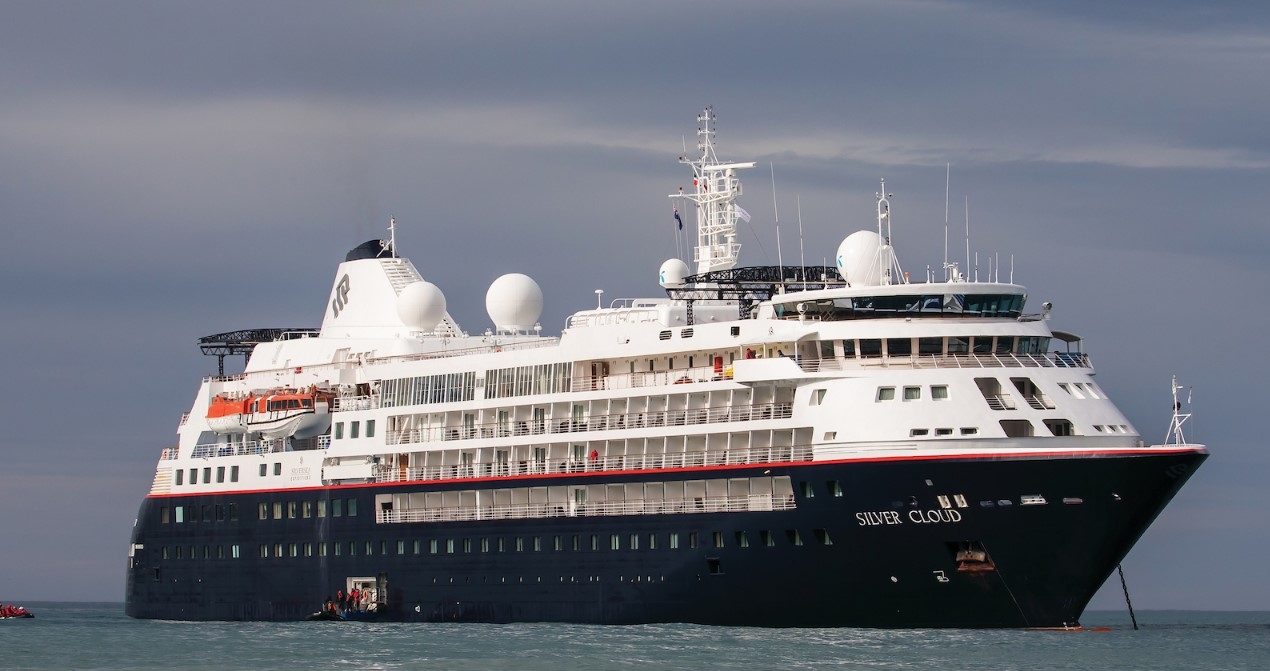
Silversea · Silver Cloud
Overview
A 44-night voyage aboard Silver Cloud, departing Papeete on 23 Oct 2028 and arriving in Puerto Williams, Chile, calling at 19 destinations along the way.
PapeeteMooreaFakarava, Tuamotu IslandsTahuata, Marquesas IslandsHanavave (Fatu Hiva)Rikitea, Mangareva Island, Gambier IslandsAdamstown, Pitcairn IslandsEaster IslandAlexander Selkirk Island, ChileRobinson Crueso IslandValparaisoPuerto MonttTortelPunta Arenas, ChileUshuaia, ArgentinaSouth Shetland IslandsAntarcticaSouth Shetland IslandsPuerto Williams, Chile
Cabin prices
Live prices per person based on two sharing. Select a grade to see its fare options.
Loading live cabin prices…
Itinerary
44 nights · 46 ports of call- 1
Day 1 ·Papeete (Tahiti)Embark
23 Oct 2028Arrive 07:00Depart 21:00Formed by two ancient volcanoes and joined at the isthmus of Taravao, Tahiti is the largest island of the Society Archipelago and the economic heart of French Polynesia. Ever since the famous French impressionist painter Paul Gauguin immortalized Tahitian maidens in vibrant colors on his canvasses, Tahiti has had a mysterious allure and still summons up all the romance of the South Pacific as a tropical paradise.
Rising in the center, Mount Orohena and Mount Aorai are the highest points; deep valleys radiate in all directions from these central peaks. Steep slopes drop abruptly from the high plateaus to coastal plains. The northeast coast is rugged and rocky without a barrier reef, and thus exposed to intense, pounding surf. Villages lie on a narrow strip between mountains and ocean. The south coast is broad and gentle with large gardens and coconut groves; a barrier reef shields it from the sea. - 2
Day 2 ·Moorea Island
24 Oct 2028Arrive 06:30Depart 13:00Tahiti's heart-shaped sister island Moorea is located only nine miles across the Sea of the Moon from Tahiti. While Bora Bora and Tahiti are the destinations most prominently advertised, it is Moorea, the Magical Island that is the best-kept secret of the trio of famous French Polynesian islands. In fact, Moorea has often been likened to James Michener's mythological island of Bali Hai - and it is easy to see why. Picture perfect lagoons and gleaming white beaches are surrounded by jagged mountains and volcanic spires. Its six mountains include Mount Rotui. From its summit there are spectacular views of Opunohu Bay and the island.
Captain Samuel Wallis was the European discoverer of the Windward Island in 1767. After leaving Tahiti, he passed along the north coast of Moorea without landing. The first European visitors to the island include botanist Joseph Banks and some sailors sent ashore by Captain Cook in 1769. Captain Cook himself anchored in Opunohu Bay for one week in 1777, but never visited the bay that now bears his name. - 3
Day 3 ·Fakarava, Tuamotu Archipelago
25 Oct 2028Arrive 08:30Depart 18:30Fakarava is oblong shaped and has an almost continuous string of reef and motu stretching for 40 km (25 mi) on its eastern edge. It's the second largest of the Tuamotu atolls, located 450 km (280 mi) northeast of Tahiti, and 120 km (75 mi) southeast of Rangiroa. It's renowned for the drift diving in its two passes—Garuae (also spelled Ngarue) in the north near the main town of Rotoava (and the airport) and Tamakohua Pass, 48 km (30 mi) across the lagoon in the south.
The tiny village of Tetamanu, situated by the southern pass, was once the capital of the Tuamotus and houses the first church built in the archipelago in 1874. In 2006 the entire atoll was deemed an UNESCO biosphere reserve; to preserve the lagoon no overwater bungalows have been built in it. Fakarava was "discovered" by Russian explorer Fabian Gottlieb Von Bellingshausen in 1820; some 20 years later missionaries arrived, in the guise of fanatical Catholic priest Honore Laval, and began building churches. - 4
Day 4 ·At Sea
26 Oct 2028 - 5
Day 5 ·Tahuata, Marquesas Islands
27 Oct 2028Arrive 08:30Depart 18:00 - 6
Day 6 ·Hanavave, Fatu Hiva
28 Oct 2028Arrive 06:30Depart 18:00 - 7
Day 7 ·At Sea
29 Oct 2028 - 8
Day 8 ·At Sea
30 Oct 2028 - 9
Day 9 ·Mangareva (Gambier Islands)
31 Oct 2028Arrive 06:30Depart 13:00In the Gambier Islands of French Polynesia, Mangareva is the largest island with a population of over 1,200 people. Most live in Rikitea, the largest village on the island. A high central ridge runs the length of Mangareva peaking with Mt. Duff, which rises over 440 meters from the sea on the island's south coast. The island has a large lagoon sprinkled with coral reefs whose tropical fish and the black-lip oysters have helped islanders survive much more successfully than on other nearby islands. View less
Small ships are able to enter the lagoon of Mangareva. Ashore visitors can walk through the town, see the remains of the massive stone and coral buildings dating back to the 19th century or climb up Mt. Duff. The highlights in town include the cathedral with its mother-of-pearl shell altar and objects designed and built in the 1830s and 1840s and partially restored by the students of Rikitea’s school just a few years ago. - 11
Day 11 ·Adamstown (Pitcairn Island)
1 Nov 2028Arrive 13:30Home to the original mutineers of the Bounty, Adamstown’s is today the capital of all four Pitcairn Islands. The islands – the last British Overseas Territory in the Pacific – include the namesake Pitcairn Island itself, plus the uninhabited Oeno, Henderson and Ducie. Pitcairn is the archipelago’s only inhabited island, with the population of just 50 centred in Adamstown.
It is no surprise that the nine mutineers along with six Tahitian men, 12 Tahitian women and one child stopped on Pitcairn in 1790; with its sloped and varied landscape, lush tropical promise and equidistant location between Peru and New Zealand, Pitcairn would have seemed an ideal hiding spot for the mutineers to settle. The ship was burnt to avoid detection (the ballast stone remains of the wreck in Bounty Bay). However, the ideal bucolic life that mutineer leader Fletcher Christian had envisaged was not to be. Poor treatment of the Tahitian men led to alcoholism, chaos and carnage and by 1800 only John Adams – who had recently discovered Christianity – remained. Adams taught the women and children to read and write from the bible. The capital is named after him. Not only had the island been misplaced on early maps of the region, but it can also be very difficult to come ashore as large breakers tend to build up just in front of the small harbour of Bounty Bay. The local museum houses the HMS Bounty Bible, the same bible that Adams taught the women and children to read and write from in the early 19th century. - 11
Day 11 ·Adamstown (Pitcairn Island)
2 Nov 2028Depart 18:00Home to the original mutineers of the Bounty, Adamstown’s is today the capital of all four Pitcairn Islands. The islands – the last British Overseas Territory in the Pacific – include the namesake Pitcairn Island itself, plus the uninhabited Oeno, Henderson and Ducie. Pitcairn is the archipelago’s only inhabited island, with the population of just 50 centred in Adamstown.
It is no surprise that the nine mutineers along with six Tahitian men, 12 Tahitian women and one child stopped on Pitcairn in 1790; with its sloped and varied landscape, lush tropical promise and equidistant location between Peru and New Zealand, Pitcairn would have seemed an ideal hiding spot for the mutineers to settle. The ship was burnt to avoid detection (the ballast stone remains of the wreck in Bounty Bay). However, the ideal bucolic life that mutineer leader Fletcher Christian had envisaged was not to be. Poor treatment of the Tahitian men led to alcoholism, chaos and carnage and by 1800 only John Adams – who had recently discovered Christianity – remained. Adams taught the women and children to read and write from the bible. The capital is named after him. Not only had the island been misplaced on early maps of the region, but it can also be very difficult to come ashore as large breakers tend to build up just in front of the small harbour of Bounty Bay. The local museum houses the HMS Bounty Bible, the same bible that Adams taught the women and children to read and write from in the early 19th century. - 12
Day 12 ·At Sea
3 Nov 2028 - 13
Day 13 ·At Sea
4 Nov 2028 - 14
Day 14 ·At Sea
5 Nov 2028 - 15
Day 15 ·Easter Island, Chile
6 Nov 2028Arrive 09:00Easter Island, the easternmost settled island of Polynesia, received its European name in 1722 when the island was seen by a Dutch expedition under Roggeveen on Easter Sunday. The triangular-shaped island of 163 square kilometers is famous for the hundreds of statues known locally as moai. Rolling hills covered in grassland, eucalyptus forest and a rocky shore surround Hangaroa, the island’s only village on the southwestern coast.
This is where Captain Cook landed in 1774, where missionaries built the first church and where ships find the best protection from winds and swells. Small beaches and transparent waters invite swimmers and snorkelers, but it is the cultural aspect which attracts visitors. Since 1935 the island has been a National Historic Monument and today 43.5% of the island is a national park administered by the Chilean National Forest Corporation and Mau Henua, a local community group. The island’s national park has been declared a UNESCO World Heritage Site in 1995. Found slightly more than 3,500 kilometers west of Chile, the island was annexed in 1888. Used as a sheep ranch for many decades, the island was opened in 1965 and an airstrip was built. The US Air Force set up a base to record the behavior of the earth's outer atmosphere and by 1987 NASA had the runway extended as an emergency runway for the space shuttle. This never happened, but tourism benefitted from this improvement and today the island receives more than 100,000 visitors a year. - 16
Day 16 ·Easter Island, Chile
7 Nov 2028Depart 14:30Easter Island, the easternmost settled island of Polynesia, received its European name in 1722 when the island was seen by a Dutch expedition under Roggeveen on Easter Sunday. The triangular-shaped island of 163 square kilometers is famous for the hundreds of statues known locally as moai. Rolling hills covered in grassland, eucalyptus forest and a rocky shore surround Hangaroa, the island’s only village on the southwestern coast.
This is where Captain Cook landed in 1774, where missionaries built the first church and where ships find the best protection from winds and swells. Small beaches and transparent waters invite swimmers and snorkelers, but it is the cultural aspect which attracts visitors. Since 1935 the island has been a National Historic Monument and today 43.5% of the island is a national park administered by the Chilean National Forest Corporation and Mau Henua, a local community group. The island’s national park has been declared a UNESCO World Heritage Site in 1995. Found slightly more than 3,500 kilometers west of Chile, the island was annexed in 1888. Used as a sheep ranch for many decades, the island was opened in 1965 and an airstrip was built. The US Air Force set up a base to record the behavior of the earth's outer atmosphere and by 1987 NASA had the runway extended as an emergency runway for the space shuttle. This never happened, but tourism benefitted from this improvement and today the island receives more than 100,000 visitors a year. - 17
Day 17 ·At Sea
8 Nov 2028 - 18
Day 18 ·At Sea
9 Nov 2028 - 19
Day 19 ·At Sea
10 Nov 2028 - 20
Day 20 ·At Sea
11 Nov 2028 - 21
Day 21 ·Alexander Selkirk Island, Chile
12 Nov 2028Arrive 09:30Depart 18:00Think of Daniel Defoe’s classic novel Robinson Crusoe and you will be picturing an intrepid castaway, marooned on a paradisiacal island. That image might be ideal for movie lovers, but the actual inspiration for Robinson Crusoe was a salty Scottish seadog who went by the name of Alexander Selkirk. Selkirk was marooned in Chile’s Juan Fernandez archipelago for four years and four months, rescued by a British private warship. Despite Selkirk’s slightly chequered past, he was greeted as a celebrity upon his return to England.
His adventures were given a gloss and immortalised in the much loved 18th century classic. Alejandro Selkirk Island is located 165 kilometres west of the other islands in the archipelago, for a surface area of just under 50 m2. The island was renamed from its Spanish name Isla Más Afuera in 1966 by the Chilean government in homage to the sailor. The topography is very different form the Caribbean dream that Defoe writes about, think dense woodland, rugged coast and peaks, shrouded (more often than not) in cloud. Sandy beaches can be found to the north of the island. Throughout much of its history, the island has been uninhabited, although there is a former penal settlement on the middle of the east coast, which operated from 1909 to 1930. During the summer months, Selkirk welcomes a small community of lobster fishermen and their families who come from Robinson Crusoe. As part of the Chilean National Park, it also holds the UNESCO World Biosphere Reserve title. - 22
Day 22 ·Robinson Crusoe Island
13 Nov 2028Arrive 06:30Depart 13:00The friendly English-speaking population offers a unique blend of African, Spanish, Paya Indian and British cultures. British and Spanish settlers invaded the Paya as their respective countries fought over possession of Roatan in the 16th century. Soon after, pirates numbering nearly 5,000, including Henry Morgan, claimed Roatan as their stronghold. During the height of the slave trade, Roatan became a dumping ground for rebellious slaves that the British could no longer control. These marooned slaves, now called Maroons or Garifuna, form a present day ethnic group near the town of Punta Gorda. This unique mix of people and cultures, presently controlled by Honduras, has created a population that is rich in tradition yet welcoming to visitors. - 24
Day 24 ·Valparaiso, Chile
14 Nov 2028Arrive 17:30Since time immemorial Valparaiso has inspired writers, poets, musicians and artists alike. If the city is still a little rough around the edges, this only adds to its bohemian ambience; the architecture, style, street art, nightlife, and live music scenes of Valparaiso are some of the best in the world. Add colourful clifftop homes to the mix and you'll soon see why Valpariaso is many people's favourite Chilean city. The city was founded in 1536 by Spanish conquistador Juan de Saavedra, who named the city after his birthplace. View less
Many of the colonial buildings he implemented are still standing today, despite the rain, wind, fire and several earthquakes (one of which almost levelled the city in 1906). Quirky architecture also abounds; poetry lovers and amateur architects will no doubt want to make the 45 km trip south to Chilean poet laureate (and Nobel Prize winner) Pablo Neruda’s ship-shaped house and museum for a taste of the extraordinary. The city and region are also extremely well known for their love of good food and wine. The vineyards of the nearby Casablanca Valley - first planted in the early 1980s - have earned worldwide recognition in a relatively short space of time. However, Chile’s viticulture history does date back much farther than that. De Saavedra brought grape vines on his voyage to South America in order to make his own wine and this led to a new grape brandy being created, Pisco. Today give any Chilean a Pisco and wherever they are in the world, they will be home. - 24
Day 24 ·Valparaiso, Chile
15 Nov 2028Since time immemorial Valparaiso has inspired writers, poets, musicians and artists alike. If the city is still a little rough around the edges, this only adds to its bohemian ambience; the architecture, style, street art, nightlife, and live music scenes of Valparaiso are some of the best in the world. Add colourful clifftop homes to the mix and you'll soon see why Valpariaso is many people's favourite Chilean city. The city was founded in 1536 by Spanish conquistador Juan de Saavedra, who named the city after his birthplace. View less
Many of the colonial buildings he implemented are still standing today, despite the rain, wind, fire and several earthquakes (one of which almost levelled the city in 1906). Quirky architecture also abounds; poetry lovers and amateur architects will no doubt want to make the 45 km trip south to Chilean poet laureate (and Nobel Prize winner) Pablo Neruda’s ship-shaped house and museum for a taste of the extraordinary. The city and region are also extremely well known for their love of good food and wine. The vineyards of the nearby Casablanca Valley - first planted in the early 1980s - have earned worldwide recognition in a relatively short space of time. However, Chile’s viticulture history does date back much farther than that. De Saavedra brought grape vines on his voyage to South America in order to make his own wine and this led to a new grape brandy being created, Pisco. Today give any Chilean a Pisco and wherever they are in the world, they will be home. - 25
Day 25 ·At Sea
16 Nov 2028 - 27
Day 27 ·Puerto Montt, Chile
17 Nov 2028Arrive 13:30Depart 19:30Located on the northern tip of the vast Reloncavi Bay, Puerto Montt is the gateway to the Chilean Lake District. Crowding the harbor are vessels that ply the route between Cape Horn and Puerto Montt, finding shelter here from the storms of the Pacific.
The first German colonists arrived in this area in 1852; their descendants have remained a small but influential percentage of the 130,000 inhabitants. The town spreads along a narrow seaboard and climbs the slopes that enclose Puerto Montt to the north. Since 1985, the city has experienced considerable growth and development. In addition to some 30 salmon farms, fishing and forestry industries, there are service companies, new hotels, restaurants, cafés and a variety of shops. For the visitor, the town itself offers scant attractions apart from shingle-roofed houses around a flowered central square. It is its proximity to the lake and mountain region that makes Puerto Montt a sought after starting point for many travelers.
A short distance from the pier is the small fishing port of Angelmo. Its row of stalls lining both sides of the street offers a wide variety of regional handicrafts and souvenir items. - 28
Day 28 ·Puerto Cisnes
18 Nov 2028Arrive 13:30Depart 19:30 - 28
Day 28 ·At Sea
19 Nov 2028 - 29
Day 29 ·Tortel, Chile
20 Nov 2028Arrive 07:00Depart 18:00Tortel is a commune located in Southern Patagonia, a spectacular wilderness region of rugged mountains, glaciers, rivers and forests of infinite beauty. The uneven geography of Tortel shapes a unique landscape, characterized by an archipelagic area with numerous islands and channels. View less
Tortel is known as the “footbridge city” for the unique beauty of its wooden walkways that connect the piers and houses of this quaint place through bridges and stairs, built from cypress wood, that run for four and a half miles around the cove and that respect the rich vegetation that grows under them. Even though it is the sixth largest commune in Chile, it has the lowest population of all with roughly 531 people. The history of the town dates back to 1520 when it was inhabited by nomadic Kawesqar, now extinct. Its definitive foundation was in 1955, after numerous attempts to populate the area. In 2001, it was declared by the Chilean government as a Picturesque Zone of National Heritage. - 30
Day 30 ·Cruise English Narrows
21 Nov 2028Arrive 07:00Depart 08:00English Narrows refers to a narrow passage at the southern end of the Messier Channel in Chile’s Region XI, Aysen del General Carlos Ibanez del Campos. The region is Chile’s least populated and a few kilometers south of English Narrows is Puerto Eden, the only settlement along the entire Chilean Inside Passage. With Wellington Island to the west and surrounded by Chile’s largest national park, Bernardo O’Higgins National Park, the narrow passage is at times 180 meters wide, while the entire length is given as 18 kilometers.
Low-lying islands and steep mountains are seen on both sides and the Magellanic subpolar forest with its evergreen trees of the genus Nothofagus has taken hold where possible. The strong currents require to pass English Narrows at slack tide and although most of the Messier Channel leading to English Narrows is quite deep, a shipwreck sitting on a bank some 20 kilometers north of the entrance to English Narrows shows why pilots are required by law in Chile. - 31
Day 31 ·Cruising Pio Xi Glacier
21 Nov 2028Arrive 13:30Depart 18:30Within Bernardo O’Higgins National Park the Pio XI Glacier (also known as Brüggen Glacier after the German geologist Johannes Brüggen) is found at the terminus of the 23 nautical miles long Eyre Fjord, one of the fjords coming from the northeast and the Southern Patagonian Ice Field. The fjord and its shores were formerly used by the nomadic Kaweskar to hunt, while the glacier was one of their sacred sites.
Pio XI Glacier is the largest western outflow of the Southern Patagonian Ice Field and is South America’s longest glacier and the largest in the Southern Hemisphere outside of Antarctica. One of the few advancing glaciers, its front has a width of 4.5 kilometers, a height of approximately 80 meters and shows several central moraines, indicating that Greve Glacier and Occidental Glacier to the north once joined the glacial tongue. Approaching the glacier by ship and by Zodiac safe distances will be maintained, as the glacier shows extensive mudflats on its southeastern side leading to Exmouth Fjord and calvings can always occur. The rocky shore shows signs of Nothofagus trees and the temperate Magellanic rain forest where the extremely rare and endangered South Andean deer, locally known as the huemul, has been sighted. Chilean and Peale’s dolphins and the endangered southern river otters have been recorded, and South American sea lions can be seen. Among the birds expected are Imperial Shags, South American Terns, Brown-hooded Gulls, Kelp Gulls, Kelp Geese, and Fuegian Steamer Ducks. - 31
Day 31 ·Cruise Chilean Fjords
22 Nov 2028Winding through the vast expanses of the Chilean Fjords will reveal mountains looming on both sides, waterfalls, and the marvel of hardy flora clinging to barren rocks. Seals and dolphins patrol the length of these uninhabited fjords as they have done for millennia. Small fishing-boats come out of Punta Arenas luring fish and trapping for king crab, while terns dip and glide coaxing their own small fish out of the deep, dark fjord waters amongst tiny islands thick with vegetation. - 32
Day 32 ·Aguila Glacier
23 Nov 2028Arrive 06:30Depart 17:30 - 33
Day 33 ·Punta Arenas, Chile
24 Nov 2028Arrive 06:30Depart 14:30As we head back towards land, a statue of fellow explorer Ferdinand Magellan greets us. Located on the western side of the Strait of Magellan, Punta Arenas is the capital of Chile's Magallanes Region and the bustling centre base for South Atlantic fishing boats and Antarctic research vessels. This busy port town is a melding of cultures from the English sheep ranchers to Portuguese sailors, all of which are a symbol of Chile's rich history. Punta Arenas' city centre features impressive mansions dating from the late 19th and early 20th centuries.
In 1982, Isla Magdalena was declared a Chilean Natural Monument. Residing in the Magellan Straits, it serves as a bird sanctuary specifically to the Magellanic penguins, who share their nesting area with cormorants amongst other seabirds and sea lions. We explore the island together with our ship staff, and learn more about these naturally curious and untamed creatures. However, simply watching 150,000 burrowing penguins share chores with their lifelong mates is quite amazing. Each morning and afternoon, the fishing penguins return to shore to switch places with their mate who has been taking care of the young. These same penguins return every year between October and March to lay eggs and raise their young. - 35
Day 35 ·Ushuaia, Argentina
25 Nov 2028Arrive 12:00Depart 19:00A southerly frontier - on the cusp of wild nature and extraordinary adventures - the excitement in Ushuaia is palpable. Prepare for memorable exploits amid the extremes of this southerly location - as you adventure into the colossal scenery of the fractured Tierra del Fuego and beyond. Known as the 'End of the World' Ushuaia looks out across the Beagle Channel, and is surrounded by the Martial Mountains to the north. Despite its remote location, Ushuaia is a surprisingly busy and lively resort, with lots to keep its visitors entertained. View less
For many people, Ushuaia is their last glimpse of anything resembling a city, before they jump off the map into the wilderness, to answer the call of immense national parks or Antarctic expeditions. One of the most dramatic landscapes on the planet - Argentina's land of fire, National Park Tierra del Fuego, is a place of titanic natural forces and limitless beauty. Snow-covered mountains poke the sky, while glaciers spill down between peaks, and gaping fjords open up. With incredible wildlife - from penguins to whales - the park offers some of South America's most amazing hiking opportunities and panoramas. When it comes to food in Ushuaia, locals cook up fierce flavours using the freshest ingredients. King crab is one of the most popular dishes, while sea bass - hauled freshly from the waters - and mounds of meaty mussels - known as cholgas - are also on the menu here. - 35
Day 35 ·Drake Passage
26 Nov 2028Arrive 00:01Sailing the legendary Drake Passage is an experience that few are ever lucky enough to experience. The southern tip of the Americas already feels like a wild enough environment – but the sensation of watching the distant cliffs of the peninsular known as the ‘End of the World’ fade into the horizon, is one that’s equal parts epic, eerie and magical. Set sail, to slowly drop off the bottom of the map from Cape Horn, and voyage on an expedition down into the icy underworld of Antarctica.
Drake Passage is an extraordinary voyage of romantic ocean faring legend, as you aim for Antarctica’s icy realm. On arrival, skyscraper sized icebergs salute you, as you traverse the waters of this continent where snow and ice dwelling creatures like penguins and whales roam undisturbed. Your first sight of this most-unexplored place will most likely be the South Shetland Islands. Walk in the footsteps of some of history’s greatest and bravest explorers as you explore famed, snow-covered landmasses like Elephant and Deception Island. If the journey across Drake Passage sounds daunting, don’t worry – even in rough seas you’re never alone, and will often be accompanied on this spine-tingling adventure by soaring albatrosses and maybe even a protective pod of humpbacks and hourglass dolphins or two. Converging warm and cool ocean currents attract some spectacular animal life to the passage. If this is your first visit to this magical continent, you’ll also want to familiarise yourself with our blog for first timers to Antarctica. - 36
Day 36 ·Drake Passage
27 Nov 2028Depart 23:59Sailing the legendary Drake Passage is an experience that few are ever lucky enough to experience. The southern tip of the Americas already feels like a wild enough environment – but the sensation of watching the distant cliffs of the peninsular known as the ‘End of the World’ fade into the horizon, is one that’s equal parts epic, eerie and magical. Set sail, to slowly drop off the bottom of the map from Cape Horn, and voyage on an expedition down into the icy underworld of Antarctica.
Drake Passage is an extraordinary voyage of romantic ocean faring legend, as you aim for Antarctica’s icy realm. On arrival, skyscraper sized icebergs salute you, as you traverse the waters of this continent where snow and ice dwelling creatures like penguins and whales roam undisturbed. Your first sight of this most-unexplored place will most likely be the South Shetland Islands. Walk in the footsteps of some of history’s greatest and bravest explorers as you explore famed, snow-covered landmasses like Elephant and Deception Island. If the journey across Drake Passage sounds daunting, don’t worry – even in rough seas you’re never alone, and will often be accompanied on this spine-tingling adventure by soaring albatrosses and maybe even a protective pod of humpbacks and hourglass dolphins or two. Converging warm and cool ocean currents attract some spectacular animal life to the passage. If this is your first visit to this magical continent, you’ll also want to familiarise yourself with our blog for first timers to Antarctica. - 37
Day 37 ·South Shetland Islands
28 Nov 2028Arrive 00:01Depart 23:59The ice-coated Antarctic Peninsula forms perhaps the most accessible region of mainland Antarctica, lying a mere 480-miles away from South America, across the fabled waters of Drakes Passage. Lying close to the northwestern tip of the Antarctic Peninsula, separated by the Bransfield Strait, the South Shetland Islands fall under the jurisdiction of the Antarctic Treaty, suspending claims on their sovereignty. View less
Several countries maintain research bases here, and with plump elephant seals, and crowds of Gentoo, Chinstrap and Adelie Penguins also calling the islands home, it can even feel a little crowded at times. King George Island is the largest and most hospitable island, hosting the majority of the research stations - some of which are populated all-year-round by tiny, hardy crews. Don’t be fooled though, these islands offer extraordinary adventure in one of the most remote locations on earth. The triple peaks of Mount Foster tower above the archipelago, and you’ll feel your heart pumping a little quicker, as you sail into the core of Deception Island’s magnificent collapsed volcano caldera. Hike the luna landscapes within, and even dip into the improbably warm, geothermally-heated waters of Pendulum Cove. Elephant Island, meanwhile, is written deep into the annals of Antarctic expedition legend, as the site where Ernest Shackleton and the stricken crew of the Endurance miraculously survived a harsh Antarctic winter, in 1916. Discover even more reasons to visit this incredible icy kingdom and find out why many consider the South Shetland Islands to be the jewel in Antarctica’s Crown, by reading our blog. - 38
Day 38 ·Antarctic Peninsula, Antarctica
29 Nov 2028Arrive 05:00The Antarctic Peninsula unravels upwards towards South America, reaching out a beckoning finger to the adventurous, who dare to explore this untamed realm. Stretching up from the heart of the world’s southernmost continent, the Antarctic Peninsula lies a mere 620 mile from Tierra del Fuego and, for many, offers a spectacular first taste of the snow-blanketed landscapes and colossal ice sculptures, which make up Earth’s least-explored continent.
Unseen by humans until 1820 - a blink of an eye ago in relative terms - this is an adventure sure to make your hairs stand on end, as you experience the thrill of the truly unknown and extraordinary. The vast peninsula is sprinkled with research bases, which are at the frontline of human scientific endeavour, pushing to study and understand this unique landscape, its exceptional wildlife, and the impact that humans are having on this pristine continent. Witness cathedral-sized icebergs up close, and blue-hued glaciers, slowly slipping from imposing locations like Hope Bay. Blanched mountain peaks cover the peninsula, and you’ll find thousands of adorable Adelie penguin pairs thriving undisturbed in this peninsula’s unique setting. - 39
Day 39 ·Antarctic Peninsula, Antarctica
30 Nov 2028The Antarctic Peninsula unravels upwards towards South America, reaching out a beckoning finger to the adventurous, who dare to explore this untamed realm. Stretching up from the heart of the world’s southernmost continent, the Antarctic Peninsula lies a mere 620 mile from Tierra del Fuego and, for many, offers a spectacular first taste of the snow-blanketed landscapes and colossal ice sculptures, which make up Earth’s least-explored continent.
Unseen by humans until 1820 - a blink of an eye ago in relative terms - this is an adventure sure to make your hairs stand on end, as you experience the thrill of the truly unknown and extraordinary. The vast peninsula is sprinkled with research bases, which are at the frontline of human scientific endeavour, pushing to study and understand this unique landscape, its exceptional wildlife, and the impact that humans are having on this pristine continent. Witness cathedral-sized icebergs up close, and blue-hued glaciers, slowly slipping from imposing locations like Hope Bay. Blanched mountain peaks cover the peninsula, and you’ll find thousands of adorable Adelie penguin pairs thriving undisturbed in this peninsula’s unique setting. - 40
Day 40 ·Antarctic Peninsula, Antarctica
1 Dec 2028The Antarctic Peninsula unravels upwards towards South America, reaching out a beckoning finger to the adventurous, who dare to explore this untamed realm. Stretching up from the heart of the world’s southernmost continent, the Antarctic Peninsula lies a mere 620 mile from Tierra del Fuego and, for many, offers a spectacular first taste of the snow-blanketed landscapes and colossal ice sculptures, which make up Earth’s least-explored continent.
Unseen by humans until 1820 - a blink of an eye ago in relative terms - this is an adventure sure to make your hairs stand on end, as you experience the thrill of the truly unknown and extraordinary. The vast peninsula is sprinkled with research bases, which are at the frontline of human scientific endeavour, pushing to study and understand this unique landscape, its exceptional wildlife, and the impact that humans are having on this pristine continent. Witness cathedral-sized icebergs up close, and blue-hued glaciers, slowly slipping from imposing locations like Hope Bay. Blanched mountain peaks cover the peninsula, and you’ll find thousands of adorable Adelie penguin pairs thriving undisturbed in this peninsula’s unique setting. - 41
Day 41 ·Antarctic Peninsula, Antarctica
2 Dec 2028Depart 23:59The Antarctic Peninsula unravels upwards towards South America, reaching out a beckoning finger to the adventurous, who dare to explore this untamed realm. Stretching up from the heart of the world’s southernmost continent, the Antarctic Peninsula lies a mere 620 mile from Tierra del Fuego and, for many, offers a spectacular first taste of the snow-blanketed landscapes and colossal ice sculptures, which make up Earth’s least-explored continent.
Unseen by humans until 1820 - a blink of an eye ago in relative terms - this is an adventure sure to make your hairs stand on end, as you experience the thrill of the truly unknown and extraordinary. The vast peninsula is sprinkled with research bases, which are at the frontline of human scientific endeavour, pushing to study and understand this unique landscape, its exceptional wildlife, and the impact that humans are having on this pristine continent. Witness cathedral-sized icebergs up close, and blue-hued glaciers, slowly slipping from imposing locations like Hope Bay. Blanched mountain peaks cover the peninsula, and you’ll find thousands of adorable Adelie penguin pairs thriving undisturbed in this peninsula’s unique setting. - 43
Day 43 ·South Shetland Islands
3 Dec 2028Arrive 18:30Depart 23:59The ice-coated Antarctic Peninsula forms perhaps the most accessible region of mainland Antarctica, lying a mere 480-miles away from South America, across the fabled waters of Drakes Passage. Lying close to the northwestern tip of the Antarctic Peninsula, separated by the Bransfield Strait, the South Shetland Islands fall under the jurisdiction of the Antarctic Treaty, suspending claims on their sovereignty. View less
Several countries maintain research bases here, and with plump elephant seals, and crowds of Gentoo, Chinstrap and Adelie Penguins also calling the islands home, it can even feel a little crowded at times. King George Island is the largest and most hospitable island, hosting the majority of the research stations - some of which are populated all-year-round by tiny, hardy crews. Don’t be fooled though, these islands offer extraordinary adventure in one of the most remote locations on earth. The triple peaks of Mount Foster tower above the archipelago, and you’ll feel your heart pumping a little quicker, as you sail into the core of Deception Island’s magnificent collapsed volcano caldera. Hike the luna landscapes within, and even dip into the improbably warm, geothermally-heated waters of Pendulum Cove. Elephant Island, meanwhile, is written deep into the annals of Antarctic expedition legend, as the site where Ernest Shackleton and the stricken crew of the Endurance miraculously survived a harsh Antarctic winter, in 1916. Discover even more reasons to visit this incredible icy kingdom and find out why many consider the South Shetland Islands to be the jewel in Antarctica’s Crown, by reading our blog. - 43
Day 43 ·Drake Passage
4 Dec 2028Arrive 00:01Depart 23:59Sailing the legendary Drake Passage is an experience that few are ever lucky enough to experience. The southern tip of the Americas already feels like a wild enough environment – but the sensation of watching the distant cliffs of the peninsular known as the ‘End of the World’ fade into the horizon, is one that’s equal parts epic, eerie and magical. Set sail, to slowly drop off the bottom of the map from Cape Horn, and voyage on an expedition down into the icy underworld of Antarctica.
Drake Passage is an extraordinary voyage of romantic ocean faring legend, as you aim for Antarctica’s icy realm. On arrival, skyscraper sized icebergs salute you, as you traverse the waters of this continent where snow and ice dwelling creatures like penguins and whales roam undisturbed. Your first sight of this most-unexplored place will most likely be the South Shetland Islands. Walk in the footsteps of some of history’s greatest and bravest explorers as you explore famed, snow-covered landmasses like Elephant and Deception Island. If the journey across Drake Passage sounds daunting, don’t worry – even in rough seas you’re never alone, and will often be accompanied on this spine-tingling adventure by soaring albatrosses and maybe even a protective pod of humpbacks and hourglass dolphins or two. Converging warm and cool ocean currents attract some spectacular animal life to the passage. If this is your first visit to this magical continent, you’ll also want to familiarise yourself with our blog for first timers to Antarctica. - 45
Day 45 ·Puerto Williams, Chile
5 Dec 2028Arrive 22:00Puerto Williams is a town on Navarino Island in the Beagle Channel in Chile’s far south. Part of the Tierra del Fuego archipelago, it’s known as a starting point for trips around Cape Horn. It’s also a gateway to trails around the jagged peaks of the nearby Dientes de Navarino. In town, the Martin Gusinde Anthropological Museum traces the history of the region’s former inhabitants, the indigenous Yaghan people. - 45
Day 45 ·Puerto Williams, ChileDisembark
6 Dec 2028Puerto Williams is a town on Navarino Island in the Beagle Channel in Chile’s far south. Part of the Tierra del Fuego archipelago, it’s known as a starting point for trips around Cape Horn. It’s also a gateway to trails around the jagged peaks of the nearby Dientes de Navarino. In town, the Martin Gusinde Anthropological Museum traces the history of the region’s former inhabitants, the indigenous Yaghan people.
Your ship: Silver Cloud
Explore Silver Cloud's cabins, dining and onboard facilities.