
28 nightsFrom Reykjavik, Iceland12 ports of call
Arctic: Exploring Greenland, Iceland & Canada
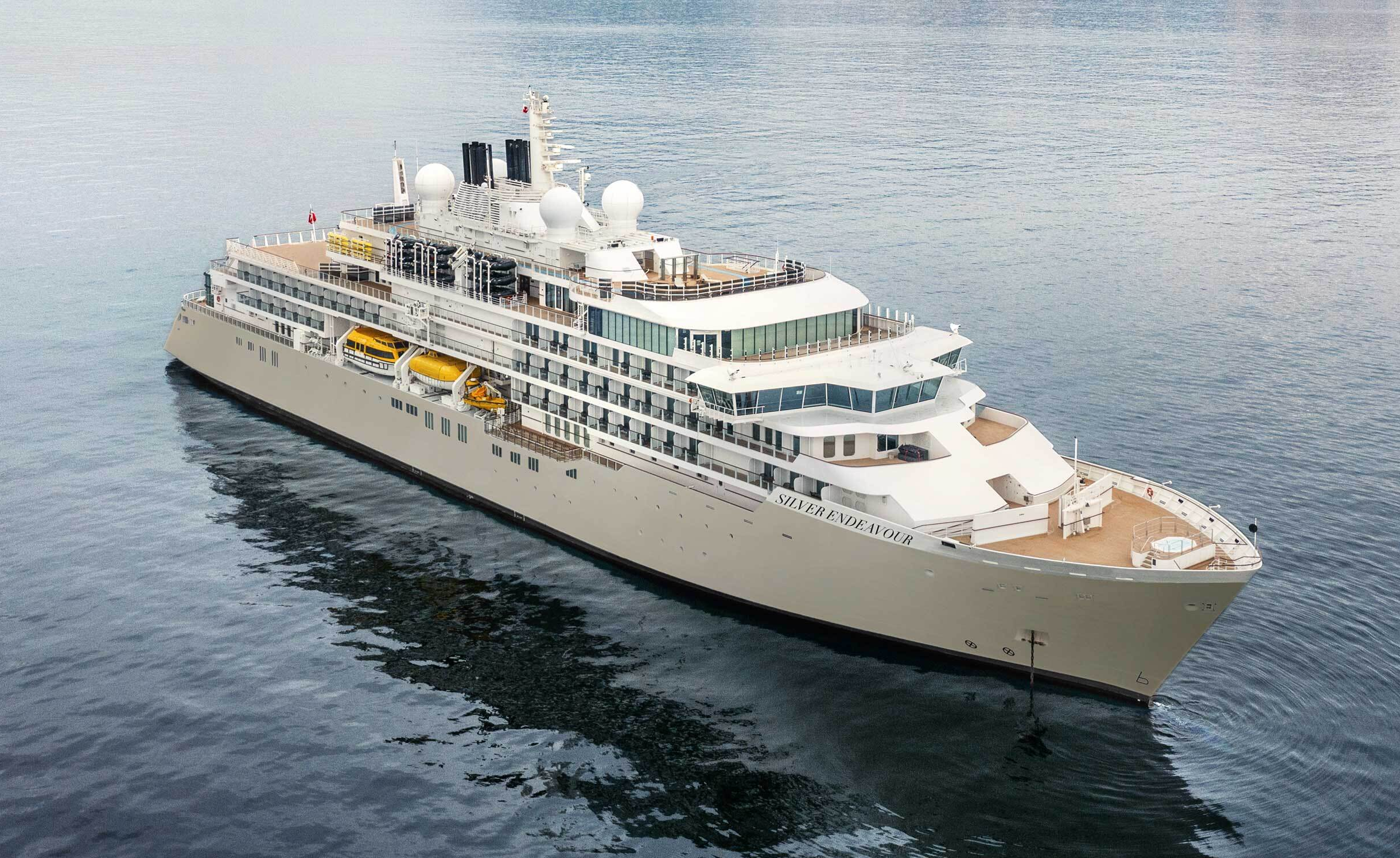
Silversea · Silver Endeavour
Overview
A 28-night voyage aboard Silver Endeavour, departing Reykjavik, Iceland on 20 Aug 2028 and arriving in Montreal, calling at 12 destinations along the way.
Reykjavik, IcelandScorsbysundIttoqqortoormiitIsafjordurReykjavik, IcelandTorngat Mountain National ParkRed Bay, LabradorPort Menier, Anicosti IslandHavre St. Pierre (Quebec), CanadaBaie-Commeau, Quebec, CanadaQuebec City, CanadaMontreal
Cabin prices
Live prices per person based on two sharing. Select a grade to see its fare options.
Loading live cabin prices…
Itinerary
28 nights · 29 ports of call- 1
Day 1 ·Reykjavik, IcelandEmbark
20 Aug 2028Depart 18:00The fire, frost and water symbolized by the red, white and blue of Iceland's flag are manifested by the ice and snow of its glaciers, the hot mud pools, geysers and glowing lava flows in the country's volcanic regions.
The island's settlement dates back to 874 when a Norwegian named Ingolf Arnarson arrived at present-day Reykjavik. In 930, the settlers formed a legislature, the Alting, which was the beginning of the Commonwealth of Iceland. From the 10th to the 14th centuries, Iceland developed a literary form, the Icelandic Saga, which spread throughout the Nordic culture and into the English and German languages. It was used to spin stories of the gods, record historic events and glorify heroes.
As Iceland's capital and main center of the country's population, the city of Reykjavik is a fascinating blend of the traditional and modernism. Just as Iceland is a unique country – rugged and remote, yet technically advanced and enjoying Nordic standards of affluence – Reykjavik is a highly unusual capital city. It dominates the life of Iceland in almost every way. More than half of the country's total population of 270,000 is living in and around the capital, and the economy of the entire nation depends on Reykjavik. Nearly 60 percent of Iceland's imports are received and distributed, and 40 percent of the country's exports are loaded for shipment via the port of Reykjavik. It is also the headquarters of what is probably the world's most advanced seafood industry, which counts for Iceland's number one export. - 2
Day 2 ·At Sea
21 Aug 2028 - 3
Day 3 ·Kong Oscar Fjord
22 Aug 2028Arrive 10:00 - 4
Day 4 ·Kong Oscar Fjord
23 Aug 2028Depart 17:30 - 6
Day 6 ·Scoresby Sund
24 Aug 2028Arrive 12:30 - 6
Day 6 ·Scoresby Sund
25 Aug 2028 - 7
Day 7 ·Scoresby Sund
26 Aug 2028Depart 22:00 - 8
Day 8 ·Ittoqqortoormiit
27 Aug 2028Arrive 06:30Depart 12:00In the 1920s the sparsely settled coast of East Greenland had too many families living in Ammassalik (today’s Tasiilaq) for the hunting grounds available and in 1925 Scoresbysund was chosen to start a new settlement with some 70 Inuit from Ammassalik and four families from West Greenland. Less than 10 kilometers from the entrance to the Scoresbysund system, Ittoqqortoormiit (“Big House Dwellers”) lies on the southern tip of Liverpool Land, a low and rounded area compared to the steeper mountains further south or into the fjord system. View less
Some 460 inhabitants call Ittoqqortoormiit, one of Greenland’s most isolated settlements, their home. Not counting the military and civilian researchers at Daneborg, Northeast Greenland, their closest neighbors actually live in Iceland. Although Greenland’s hottest hot springs are located some 8 kilometers south of Ittoqqortoormiit, the village is frozen in some nine months of the year and access to other parts of the country can only be done via the Nerlerit Inaat Airport at Constable Point some 38 km to the north with flights to Iceland and West Greenland. The former village’s shop serves as a small museum and features historic photographs and costumes and shows what a typical hunter’s home from the 1960s looked like. Today hunting narwhals, seals, polar bears and muskoxen is still an important part of the life, but tourism is gaining importance. - 9
Day 9 ·Isafjordur, Iceland
28 Aug 2028Arrive 07:00Depart 18:00The town of Ísafjördur is the municipal centre of the West Fjords peninsula. The West Fjords are Iceland's least populated region, with 9,600 inhabitants in the area of nearly 6,000 square miles (9,520 sq km). Ísafjörður, with a present population of approximately 3,500, was formerly one of Iceland's main trading posts and as such, was granted municipal status in 1886. Some of Iceland's oldest and best-preserved buildings, dating from the 18th century, are located in Ísafjördur.
The town is still predominantly a fishing centre. A vigorous and varied cultural and artistic scene flourishes as well. Mountains surround Ísafjördur on the three sides and the sea on the other. The ancient settlement site of Eyri downtown is enclosed by the narrow Skutulsfjordur fjord, which shelters the harbour in all weathers. - 10
Day 10 ·Dynjandi Waterfalls
29 Aug 2028Arrive 07:00Depart 18:00 - 11
Day 11 ·Reykjavik, Iceland
30 Aug 2028Arrive 07:00The fire, frost and water symbolized by the red, white and blue of Iceland's flag are manifested by the ice and snow of its glaciers, the hot mud pools, geysers and glowing lava flows in the country's volcanic regions.
The island's settlement dates back to 874 when a Norwegian named Ingolf Arnarson arrived at present-day Reykjavik. In 930, the settlers formed a legislature, the Alting, which was the beginning of the Commonwealth of Iceland. From the 10th to the 14th centuries, Iceland developed a literary form, the Icelandic Saga, which spread throughout the Nordic culture and into the English and German languages. It was used to spin stories of the gods, record historic events and glorify heroes.
As Iceland's capital and main center of the country's population, the city of Reykjavik is a fascinating blend of the traditional and modernism. Just as Iceland is a unique country – rugged and remote, yet technically advanced and enjoying Nordic standards of affluence – Reykjavik is a highly unusual capital city. It dominates the life of Iceland in almost every way. More than half of the country's total population of 270,000 is living in and around the capital, and the economy of the entire nation depends on Reykjavik. Nearly 60 percent of Iceland's imports are received and distributed, and 40 percent of the country's exports are loaded for shipment via the port of Reykjavik. It is also the headquarters of what is probably the world's most advanced seafood industry, which counts for Iceland's number one export. - 12
Day 12 ·At Sea
31 Aug 2028 - 14
Day 14 ·Cruise Prince Christian Sound
1 Sept 2028Arrive 15:30Depart 19:30 - 14
Day 14 ·At Sea
2 Sept 2028 - 16
Day 16 ·Torngat Mountains National Park
3 Sept 2028Arrive 14:30Torngat Mountains National Park is a Canadian national park located on the Labrador Peninsula in the province of Newfoundland and Labrador. The park encompasses 9,700 km² of mountainous terrain between Northern Québec and the Labrador Sea. - 16
Day 16 ·Torngat Mountains National Park
4 Sept 2028Torngat Mountains National Park is a Canadian national park located on the Labrador Peninsula in the province of Newfoundland and Labrador. The park encompasses 9,700 km² of mountainous terrain between Northern Québec and the Labrador Sea. - 17
Day 17 ·Torngat Mountains National Park
5 Sept 2028Depart 19:30Torngat Mountains National Park is a Canadian national park located on the Labrador Peninsula in the province of Newfoundland and Labrador. The park encompasses 9,700 km² of mountainous terrain between Northern Québec and the Labrador Sea. - 18
Day 18 ·Hebron Fjord, Canada
6 Sept 2028Arrive 06:30Depart 18:00 - 19
Day 19 ·At Sea
7 Sept 2028 - 20
Day 20 ·Indian Harbour, Canada
8 Sept 2028Arrive 06:30Depart 19:00 - 22
Day 22 ·Red Bay, Labrador, Canada
9 Sept 2028Arrive 12:30Depart 17:30Newfoundland and Labrador form the most easterly province of Canada. On Newfoundland island, the Norse archaeological site L'Anse aux Meadows is the reputed settlement of Viking explorer Leif Erikson. Gros Morne National Park, on the Gulf of St Lawrence, has cliffs, waterfalls and glacial fjords. Southeastern capital city St. John’s is known for the 17th-century Signal Hill citadel, with a hillside walking - 22
Day 22 ·Harrington Harbour, Quebec, Canada
10 Sept 2028Arrive 09:30Depart 17:30 - 23
Day 23 ·Baie de la Tour, Anticosti Island, Canada
11 Sept 2028Arrive 08:30Depart 17:30 - 24
Day 24 ·Port Menier, Anicosti Island
12 Sept 2028Arrive 08:00Depart 17:30Port-Menier, Quebec is a small fishing town located on the western end of Anticosti Island, Quebec, Canada, part of the L'Île-d'Anticosti municipality. The port village was built during the late 19th century by French chocolate maker Henri Menier. The village is the hub of Anticosti Island. - 25
Day 25 ·Havre St. Pierre (Quebec)
13 Sept 2028Arrive 07:00Depart 14:00"The otherworldly, limestone structures of the Mingan Archipelago await at Havre St. Pierre, Quebec's most northerly call. Perched on the northern shore of the mighty St Lawrence River's gaping jaws - and looking out across the vast stretch of water to the distant Anticosti Island - where white-tailed deer stalk dense forests - Havre St. Pierre is a feast of staggering scenery and diverse wildlife. View less
The Mingan Archipelago's monolith treasures have been carefully, painstakingly sculpted by Mother Nature's hand - using ocean, wind and ice erosion to create towering rock outcrops, which stand improbably counterweighted and precariously balanced over the waters. Sail between the scattered array of islands and formations, and keep your eyes peeled - you may be joined by pods of friendly minke whales as you weave between skerries and rocky isles. Look out for eagles soaring overhead too, and the colourful puffins which nest on the sheer cliffs. Back at Havre St. Pierre, stroll isolated river beaches, and wander the wooden boardwalk to soak in panoramas of the world's largest estuary - which lures the world's mightiest animal, the blue whale, to feast in its krill-rich depths. A walk out to the quaint lighthouse which crowns the shore is a pleasant way to spend an afternoon, or you can take some time to learn a little more about the culture and traditions of the region's Inuit people." - 27
Day 27 ·Baie-comeau,quebec
14 Sept 2028Arrive 13:00Depart 18:00Baie-Comeau is a city located approximately 420 kilometres north-east of Quebec City in the Côte-Nord region of the province of Quebec, Canada. It is located on the shores of the Saint Lawrence River near the mouth of the Manicouagan River, and is the seat of Manicouagan Regional County Municipality. - 28
Day 28 ·Cruising Saguenay River
15 Sept 2028Arrive 12:30Depart 16:30 - 28
Day 28 ·Quebec City
16 Sept 2028Arrive 09:30Depart 17:00For centuries, a native Iroquois village occupied the cliff-top site of what is now Quebec City. The first permanent European settlement began in 1608 when Samuel de Champlain established a fur trading post. By 1663, New France had become a royal province, administered by a council appointed directly by the crown and answerable to the king's council in France. Long-brewing European struggles between England and France spilled over into the colonies, prompting the construction of Quebec's formidable fortifications. The Seven Years War put an end to French reign and left the city in English hands. The English successfully warded off an American attack in 1775, and for the next century Quebec quietly earned its livelihood as a center for shipbuilding and timber trade.
By 1840, when it was declared the provincial capital of Lower Canada, the accessible supplies of timber had run out. The final blow came with the appearance of steamships that could travel as far as Montreal, while sailing ships found it difficult to proceed beyond Quebec City. Losing its importance as a major port, the city experienced a decline but remained a center of small industry and local government. Later years saw a tremendous rise as tourism made use of Quebec's fantastic location and appearance. Being Canada's most historic city and the only walled city in North America earned it the classification of World Heritage Treasure by UNESCO in 1985. Today, the visitor is greeted by an authentic, profoundly French city, where 95% of its half million people are French-speaking. Both parts of the city - Haute-Ville and Basse-Ville (Upper and Lower Town) - feature winding, cobbled streets flanked by 17th- and 18th-century stone houses and churches, graceful parks and squares and countless monuments. Croissants and steaming cups of coffee at sidewalk cafés conjure images and aromas of Paris.
Great emphasis has been placed on Quebec nationalism; as a result the city has become a symbol of the glory of French heritage. The motto "Je me souviens" (I remember) is inscribed above the entrance to the Parliament Building and on the license plates of Quebec cars. As you come ashore, endless pleasures await you in this marvelous city. - 29
Day 29 ·MontrealDisembark
17 Sept 2028Arrive 08:30The island of Montréal was first occupied by the St. Lawrence Iroquois, whose small village of Hochelaga, or ‘Place of the Beaver’, was situated at the base of Mont Royal. French explorer Jacques Cartier arrived here in 1535 while on an expedition searching for a northwest route to Asia. The soldiers of Paul de Chomedy, who had been ordered by France to ‘bring about the glory of God and the salvation of the Indians’, established the first settlement. Attempts to follow these instructions resulted in bloody conflicts with the Iroquois, until a treaty in 1701 guaranteed that the settlement was to be the main embarkation point for the fur and lumber trade.
Your ship: Silver Endeavour
Explore Silver Endeavour's cabins, dining and onboard facilities.