
26 nightsFrom Split23 ports of call
The Mediterranean & the British Isles: Exploring Iberia
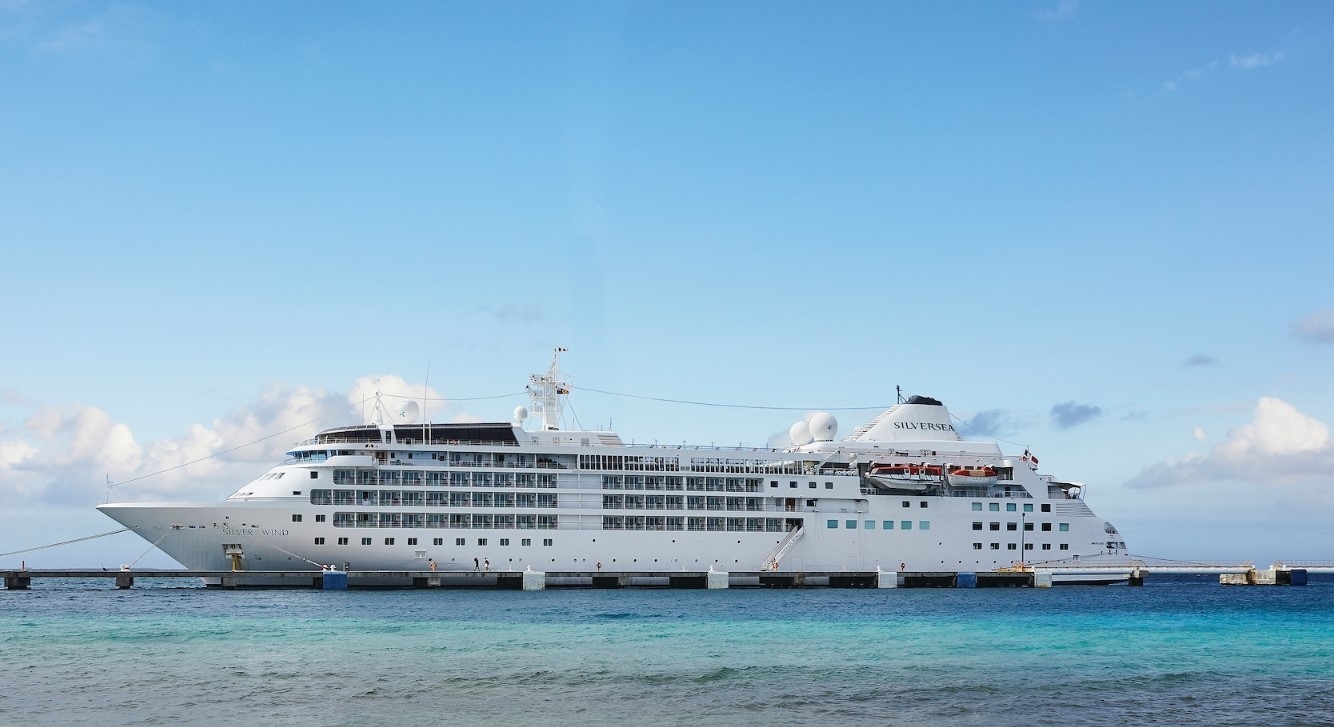
Silversea · Silver Wind
Overview
A 26-night voyage aboard Silver Wind, departing Split on 17 May 2028 and arriving in Belfast, calling at 23 destinations along the way.
SplitZadar, CroatiaKorculaSarandeGiardini Naxos, SicilyBejaiaAlgiers, AlgeriaSevilleLisbonTresco, Isles of ScillySt. Mary's, Isles of ScillyPort St Mary, Isle of ManPort Ellen, ScotlandSt. Kilda, United KingdomKirkwall, ScotlandShiant Islands, Scotland, United KingdomLoch EweTobermory, ScotlandIsle of MullIonaLunga, Trishnish IslandPortrushBelfast
Cabin prices
Live prices per person based on two sharing. Select a grade to see its fare options.
Loading live cabin prices…
Itinerary
26 nights · 33 ports of call- 1
Day 1 ·Split, CroatiaEmbark
17 May 2028Depart 19:00Split is a busy port with numerous ferries operating to and from nearby islands. It is also a popular resort with beaches, pleasant promenades and good hotels. Venetian Gothic and Renaissance houses and several medieval churches add architectural interest. As a major cultural center, Split does not lack in museums and art galleries. However, the city's principal attraction is Diocletian's Palace. It occupies an area of 34,680 square yards and was constructed to serve as a residence and a fortified military camp. By the Middle Ages, the palace had been enclosed within a strong wall with square corner towers, enclosing a town with narrow house-lined alleys. As the city grew, people gradually moved outside the walls and the city center shifted westward. - 2
Day 2 ·Zadar, Croatia
18 May 2028Arrive 07:30Depart 17:30Croatia’s Capital of Cool, Zadar is a dazzling mesh of influences and creativity. Romans founded the city before the Venetians, Austrians, French and Italians all had their say, leaving a wealth of architectural interest. Glorious turquoise-water beaches and heavenly waterfalls also lie within easy reach of this energetic city of festivals and outdoor fun. See the old town, with its robust city walls, boasting decorative stone gateways and marble streets. View less
The church of St Donatus, was built from stones pillaged from the Roman forum, while Zadar Cathedral - Dalmatia's biggest - stands among the many architectural treats of this city, which was once an impenetrable stronghold of Venice’s republic. Head for the ‘pillar of shame’ with its chains to humiliate the criminals of a bygone time - or succumb to the tempting treats of shopping in the market. The sparkling Adriatic’s waters calls you, and Kolovare Beach is a mere ten-minute stroll from the old town. A day trip to Kornat National Park - which incorporates the Zadar Archipelago's immaculate scattering of beach-fringed islands - or to the divine waterfalls of Plitvice Lakes National Park, will introduce you to more of Croatia’s thrilling natural beauty. The sea truly does sing here in Zadar, thanks to a unique waterfront artwork, which encapsulates the city’s playful spirit. Designed to make music when the waves wash over it, the ebb and flow of the Adriatic, plays the Sea Organ instrument like a maestro. Not far away, the Monument to the Sun is a 22-metre-wide disc, which gathers the sun’s rays during the sunny days, and releases the solar energy in the form of a magical light show after dark. Sit and admire the artwork coming to life, as one of the city’s famous sunsets plays out before you. - 3
Day 3 ·Korcula, Croatia
19 May 2028Arrive 10:00Depart 17:00Croatia's fractured Adriatic coast is scattered with hundreds of islands - but few can match the elegant beauty of lovely Korčula. Tucked away behind bustling Hvar, Croatia’s sixth-largest island is a little harder to reach, making for a more peaceful affair. Decorated with beautiful medieval fortifications, time stands still as you stroll narrow paths, cutting between the stone facades of Gothic and Renaissance architecture. Hear the stomps of feet and clacks of swords rattling off of the walls, during traditional Moreška performances - an enchanting, authentic sword dance. View less
Revelin Tower looms over the grand entrance to the walled old town - nicknamed Little Dubrovnik - which was built and fortified in 1485 to protect Korčula. The island is also said to be the birthplace of Marco Polo, and his former house contains a narrow staircase leading to Marco Polo Tower, which peeks above the tight streets. The majestic Cathedral of St. Mark also rises high, and you'll spot the gorgeous vaulted bell tower, framed between narrow alleyways. Climb to the top for views of the red roof cluster, and sparkling Adriatic below. A beautiful island to explore, its dark blanket of pine tree forest led to the Greek's naming the island, Korkyra Melaina - or Black Corfu. Explore the gorgeous ring of coastline, which is lined with pebble beaches, sandy bays and hidden coves. Or, indulge in the island's tastes - like luxurious olive oils and white wines grown from grapes including posip, and grk - cultivated only on this island. - 5
Day 5 ·Sarande, Albania
20 May 2028Arrive 12:30Depart 18:00 - 6
Day 6 ·Giardini Naxos (Sicily)
21 May 2028Arrive 14:00Depart 20:00Hugging a long, sweeping bay, Giardini Naxos welcomes you ashore to some of Sicily’s most scenic and historic sites. Naxos was the first Greek settlement on Sicily, and it is surrounded by remarkable remains and swirling mythology. With a long arc of sun-soaked golden sand, you can kick back by the waves - and cool off with a dip into the sea's refreshing embrace. Up above the seaside revelry, the spectacular Taormina hillside town perches - containing rich Roman and Greek history. View less
Visit to encounter one of Sicily’s best views, as you look down over the rejuvenating blue of the sea, and the looming backdrop of Mount Etna rising in the distance. The majestic, honey-coloured Greek theatre is a highlight, standing before the distant loom of the volcano. Head towards the puffs of cloud, and wisps of smoke, that gather around the peak of Sicily’s mighty volcano, which is among the most active in Europe. Arrive through vineyards, thriving in this fertile soil, before taking the 1,737-metre incline to the summit of the legendary mountain of fire, across fields of solidified lava flows. Known to the Greeks as the home of the God of Fire, and the one-eyed Cyclops, the mountain continues to amaze and awe with its restless power. Vineyards carpet the scenery - interrupted by occasional cactai and citrus groves – and produce some of Sicily’s most refined flavors. Enjoy a glass of wine on Giardini Naxos’ seafront, and toast your time on these rich Sicilian shores. - 6
Day 6 ·At Sea
22 May 2028 - 7
Day 7 ·At Sea
23 May 2028 - 8
Day 8 ·Bejaia, Algeria
24 May 2028Arrive 08:00Depart 20:00About 250 km east of Algiers lies Bejaia. Far from the beaten track of Algeria’s tourist hotspots, this pretty seaside port is also one Algeria’s best. Overlooked by Yemma Gouraya – the mountain that take its name from its shape of a sleeping woman, and bordered by the Mediterranean Sea, this largish city has a deep and interesting history. As is the often the case with ancient cities, Bejaia is built on legend.
The story is that Hercules, before travelling to Gibraltar to build Tangiers (and lay the foundations to which he left his name) lived in the large cave above the village. The townspeople of Bejaia, wanting him gone, prepared him a dish of spicy beans, so spicy that he had to descend the mountain to quench his thirst and disapeer into the sea. Whether or not you choose to believe that Bejaia featured in Hercules’ 12 labours is up to you, but what is certain is that Bejaia’s (recorded) history can be traced to the founding by the Carthaginians in the 1st century BC. The city was known as Saldae under Roman rule (200-500), and later became the capital of the Berber Hammadid dynasty. French colonial rule came in 1833 until independence in 1962. Bejaia’s old town is one of Algeria’s finest. A walking tour will reveal both Byzantine history and French colonial rule. A 16th-century mosque bears testament to the city’s Muslim past, as well as a Spanish fortress, also from the 16th century, and an old Kasbah. The Pic des Singes (Monkey Mountain) is another great day out. - 9
Day 9 ·Algiers
25 May 2028Arrive 06:00Algiers is the capital city of Algeria, on the country’s Mediterranean coast. It’s known for the whitewashed buildings of the Kasbah, a medina with steep winding streets, Ottoman palaces and a ruined citadel. The 17th-century Ketchaoua Mosque is flanked by 2 large minarets. The Great Mosque has marble columns and arches. The clifftop Catholic basilica of Notre-Dame d'Afrique features a large silver dome and mosaics. - 10
Day 10 ·Algiers
26 May 2028Depart 20:00Algiers is the capital city of Algeria, on the country’s Mediterranean coast. It’s known for the whitewashed buildings of the Kasbah, a medina with steep winding streets, Ottoman palaces and a ruined citadel. The 17th-century Ketchaoua Mosque is flanked by 2 large minarets. The Great Mosque has marble columns and arches. The clifftop Catholic basilica of Notre-Dame d'Afrique features a large silver dome and mosaics. - 11
Day 11 ·At Sea
27 May 2028 - 12
Day 12 ·Cruise Guadalquivir River, Spain
28 May 2028Arrive 09:30Depart 16:30 - 13
Day 13 ·Sevilla
28 May 2028Arrive 17:30Whether you pronounce it Seville or Sevilla, this gorgeous Spanish town is most certainly the stuff of dreams. Over 2,200 years old, Seville has a mutli-layered personality; home to Flamenco, high temperatures and three UNESCO-World Heritage Sites, there is a noble ancestry to the southern Spanish town. Not forgetting that it is the birthplace of painter Diego Velazquez, the resting place of Christopher Columbus, the inspiration for Bizet’s Carmen and a location for Game of Thrones filming, Seville is truly more than just a sum of its parts. View less
This city is a full on experience, a beguiling labyrinth of centuries old streets, tiny tapas restaurants serving possibly the best dishes you’ll taste south of Madrid and a paradise of Mudejar architecture and tranquil palm trees and fountain-filled gardens. - 13
Day 13 ·Sevilla
29 May 2028Depart 18:00Whether you pronounce it Seville or Sevilla, this gorgeous Spanish town is most certainly the stuff of dreams. Over 2,200 years old, Seville has a mutli-layered personality; home to Flamenco, high temperatures and three UNESCO-World Heritage Sites, there is a noble ancestry to the southern Spanish town. Not forgetting that it is the birthplace of painter Diego Velazquez, the resting place of Christopher Columbus, the inspiration for Bizet’s Carmen and a location for Game of Thrones filming, Seville is truly more than just a sum of its parts. View less
This city is a full on experience, a beguiling labyrinth of centuries old streets, tiny tapas restaurants serving possibly the best dishes you’ll taste south of Madrid and a paradise of Mudejar architecture and tranquil palm trees and fountain-filled gardens. - 14
Day 14 ·At Sea
30 May 2028 - 15
Day 15 ·Lisbon
31 May 2028Arrive 07:00Lisbon, the capital of Portugal, is a city open to the sea and carefully planned with 18th-century elegance. Its founder is said to be the legendary Ulysses, but the theory of an original Phoenician settlement is probably more realistic. Known in Portugal as Lisboa, the city was inhabited by the Romans, Visigoths and, beginning in the 8th century, the Moors. Much of the 16th century was a period of great prosperity and overseas expansion for Portugal. Tragedy struck on All Saints' Day in 1755 with a devastating earthquake that killed about 40,000 people. The destruction of Lisbon shocked the continent. As a result, the Baixa (lower city) emerged in a single phase of building, carried out in less than a decade by the royal minister, the Marques de Pombal. His carefully planned layout of a perfect neo-classical grid survived to this day and remains the heart of the city. Evidence of pre-quake Lisbon can still be seen in the Belém suburb and the old Moorish section of the Alfama that sprawls below the Castle of St. George.
Lisbon is a compact city on the banks of the Tagus River. Visitors find it easy to get around as many places of interest are in the vicinity of the central downtown area. There is a convenient bus and tram system and taxis are plentiful. Rossio Square, the heart of Lisbon since medieval times, is an ideal place to start exploring. After a fire destroyed parts of the historic neighborhood behind Rossio in 1988, many of the restored buildings emerged with modern interiors behind the original façades.
The city boasts a good many monuments and museums, such as the Jeronimos Monastery, Tower of Belém, the Royal Coach Museum and the Gulbenkian Museum. High above the Baixa is the Bairro Alto (upper city) with its teeming nightlife. The easiest way to connect between the two areas is via the public elevator designed by Gustave Eiffel.
Cruising up the Tagus River to the ship's berth, you can already spot three of Lisbon's famous landmarks: the Monument to the Discoveries, the Tower of Belém and the Statue of Christ, which welcomes visitors from its hilltop location high above Europe's longest suspension bridge. - 16
Day 16 ·At Sea
1 Jun 2028 - 17
Day 17 ·At Sea
2 Jun 2028 - 18
Day 18 ·Tresco, Isles of Scilly
3 Jun 2028Arrive 06:30Depart 12:00For many visitors Tresco is the most attractive of the Isles of Scilly. This is especially due to its Abbey Garden, which is home to thousands of exotic plant species from around 80 different countries. Plant collector Augustus Smith began the gardens in the 1830s on the site of an old Benedictine Abbey by channelling the weather up and over a network of walled enclosures built around the Priory ruins. He had three terraces carved from the rocky south slope and maximised Tresco’s mild Gulf Stream climate. View less
Even in mid-winter there still are hundreds of plants flowering here. Another surprising attraction at the Abbey Garden is the collection of figureheads from ships that wrecked among the Isles of Scilly. - 19
Day 19 ·St Mary's (Isles of Scilly)
3 Jun 2028Arrive 13:30Depart 18:30Scattered 30 miles offshore from England’s most south-westerly point – Land’s End – the Isles of Scilly are home to rich wildlife, and green land sloping to powdery white beaches. The Isles of Scilly’s biggest island harbours around 1,600 people – roughly three-quarters of the total population - and is one of five occupied islands. Isolated and serene, life here hums along at its own pace in this archipelago's bubble, which enjoys the UK’s mildest climate, and some of its most spectacular beaches. View less
Hugh Town is the centre of St Mary’s, and you’ll be warmly welcomed by the incredibly tight-knit local community. A peaceful place, watch out when the waters are suddenly parted by the competition of gig racing – the island’s sporting pride and joy - which sees teams competing in colourful rowboats. Elsewhere, catch sight of Atlantic seals and seabirds like puffins and fulmars, along nine miles of coastline. You can also spot the ghostly shipwrecks strewn around the island’s waters, and the 140 islands and skerries that have made treacherous sailing historically. There's a dense collection of historical sites that belies the islands’ small size – from a former prime minster’s grave to star-shaped fortresses. Tresco Abbey Garden is one of the UK’s most vibrant gardens, with diverse plants bathing in the warmer climate and over 300 species on display. Taste the rewards of the mild weather with a glass of wine from England’s most south-westerly vineyard. - 20
Day 20 ·Port St Mary, Isle of Man
4 Jun 2028Arrive 13:45Depart 20:00 - 20
Day 20 ·Port Ellen, Islay Island, Scotland
5 Jun 2028Arrive 08:00Depart 18:00 - 21
Day 21 ·St. Kilda, United Kingdom
6 Jun 2028Arrive 07:00Depart 13:30Gloriously remote, St. Kilda is an archipelago 50 miles off the Isle of Harris. Although the four islands are uninhabited by humans, thousands of seas birds call these craggy cliffs home, clinging to the sheer faces as if by magic. Not only is St. Kilda home to the UK’s largest colony of Atlantic Puffin (almost 1 million), but also the world largest colony Gannets nests on Boreray island and its sea stacks. View less
The islands also home decedents of the world’s original Soay sheep as well as having a breed of eponymously named mice. The extremely rare St. Kilda wren unsurprisingly hails from St. Kilda, so birders should visit with notebook, binoculars and camera to hand. While endemic animal species is rife on the island, St. Kilda has not been peopled since 1930 after the last inhabitants voted that human life was unsustainable. However, permanent habitation had been possible in the Medieval Ages, and a vast National Trust for Scotland project to restore the dwellings is currently being undertaken. The islands even enjoyed a status as being an ideal holiday destination in the 19th century. Today, the only humans living on the islands are passionate history, science and conservation scholars. One of the caretakers even acts as shopkeeper and postmaster for any visitors who might like to send a postcard home from St. Kilda. It should be noted that St. Kilda is the UKs only (and just one of 39 in the world) dual World Heritage status from UNESCO in recognition of its Natural Heritage and cultural significance. - 22
Day 22 ·Boreray Island cruising
6 Jun 2028Arrive 15:00Depart 16:00 - 22
Day 22 ·Kirkwall, Orkney Islands, Scotland
7 Jun 2028Arrive 08:30Depart 17:30Scattered just off the northern tip of Scotland, Kirkwall is the capital of the Orkney Islands - a scenic archipelago of fascinating, dual heritage. The Viking influence is deep, while a prehistoric past and World War history adds to the endless stories that these dramatic islands have to tell. Sparse and beautiful, let the sweeping seascapes of frothing waves, and dance of the northern lights, enchant you as you explore. Windswept beaches are inhabited by whooping swans, while grassy cliffs hide puffins amid their wavy embrace. View less
Sea caves and crumbling castles - and the dramatic meeting of the North Sea and the Atlantic Ocean add to the romantic beauty of these lands, which may be physically close to the UK, but feel an entire world away. The sandstone St. Magnus Cathedral is the centrepiece of Orkney's main town - a place of winding lanes and atmospheric walks - and Britain's northernmost cathedral is a masterpiece that took 300 years to complete. Started in 1137, the beautiful cathedral is adorned with mesmerising stain-glass windows and has been evocatively named as the Light of the North. Look down over the ruined Bishop’s and Earl’s Palaces nearby from the tip of the cathedral's tower. Or, test out the islands' history-rich distilleries, which produce smokey single malts - said to be the best in the world. You can also venture out to Europe's best-preserved Stone Age Village, at the extraordinary World Heritage Site of Skara Brae, which offers an unparalleled vision into prehistoric life. - 23
Day 23 ·Shiant Islands, Scotland
8 Jun 2028Arrive 06:30Depart 12:00 - 24
Day 24 ·Loch Ewe
8 Jun 2028Arrive 15:15Depart 20:00Loch Ewe is the only north facing Loch in Scotland, with an interesting history and a fine scenic landscape this area has a true natural beauty. During WW2 the loch was a convoy collecting point with a strong naval presence; it was therefore protected by light and heavy aircraft guns, a boom net and mine defence system helped to shield this precious settlement - 24
Day 24 ·Tobermory, Isle of Mull
9 Jun 2028Arrive 07:30Depart 12:00You'll always receive a welcome to remember, as the colourful cafes, houses and shops that line Tobermory's picturesque harbour salute your arrival. Located on the craggy Scottish Inner Hebrides, Tobermory serves as the capital of the Isle of Mull. There's a high chance you'll recognise the town’s colourfully-daubed buildings, as their charming exteriors have featured in countless TV shows - most notably in the children’s favourite, Balamory. - 25
Day 25 ·Duart, Isle Of Mull, Hebrides
9 Jun 2028Arrive 14:30Depart 20:00Duart Castle, or Caisteal Dhubhairt in Scottish Gaelic, is a castle on the Isle of Mull, off the west coast of Scotland, within the council area of Argyll and Bute. The castle dates back to the 13th century and is the seat of Clan MacLean. - 25
Day 25 ·Iona
10 Jun 2028Arrive 06:30Depart 13:30If tiny islands that resonate with peace and tranquillity are your idea of travel heaven, then welcome to Iona. Almost 200 miles east of Edinburgh, set in Scotland’s Inner Hebrides, this magical island has a spiritual reputation that precedes it. And luckily, more than lives up to. The island is miniscule. Just three miles long and only one and a half miles wide, this is not a place that hums with urban attractions. View less
120 people call Iona home (this number rises significantly if the gull, tern and Kittiwake population is added), although residential numbers do go up (to a whopping 175) in summer. The beautiful coastline is lapped by the gulf stream and gives the island a warm climate with sandy beaches that look more Mediterranean than Scottish! Add to that a green field landscape that is just beautiful, and you’ll find that Iona is a place that stays with you long after you leave. Iona’s main attraction is of course its abbey. Built in 563 by Saint Columbia and his monks, the abbey is the reason why Iona is called the cradle of Christianity. Not only is the abbey (today an ecumenical church) one of the best – if not the best – example of ecclesiastical architecture dating from the Middle Ages, but it also serves as an important site of spiritual pilgrimage. St. Martin’s Cross, a 9th century Celtic cross that stands outside the abbey, is considered as the finest example of Celtic crosses in the British Isles. Rèilig Odhrain, or the cemetery, allegedly contains the remains of many Scottish kings. - 26
Day 26 ·Lunga
10 Jun 2028Arrive 15:30Depart 20:00The stunning Isle of Lunga is the largest island in the Treshnish archipelago. With volcanic origin the isle was populated until the 19th Century, and remains of black houses can be seen around this magnificent coastal jewel. Abundant plant life and exotic birdlife are now the main inhabitants of the area. Fortunate visitors view the magnificent array of birds, especially the great puffins that breed on the islands plateau. One can sit within just a few feet away without disturbing the avian ambassador’s peace. View less
The 81 hectare island is home to many rare and endangered plants such as, primroses and orchids. Views over the landscape and across the ocean can be seen from the 300 foot high cliffs. - 26
Day 26 ·Portrush, UK
11 Jun 2028Arrive 07:00Depart 17:00Portrush is adjacent to the stunning North Antrim coastline. Here lies the medieval Dunluce Castle ruins. Perched picturesquely at the edge of a rocky outcropping high above the sea, the castle is dramatically surrounded by terrifyingly steep drops, which the early Christians and Vikings would have considered a very important security feature. The castle and surrounding areas have been frequently used for the filming of “Game of Thrones”. - 27
Day 27 ·BelfastDisembark
12 Jun 2028Arrive 06:00Reborn as a cool, modern city, Belfast has successfully left its troubles behind, emerging as a hotbed of culture and architecture, where the comfort of a cosy pub is never far away. Take a voyage of discovery in its maritime quarter, home to a celebrated museum dedicated to the most famous ship ever built, which was constructed right here in the city’s shipyards. A walk across the Lagan Weir Footbridge brings you to Belfast’s fascinating Titanic District – an area of the city devoted to its rich ship-building heritage.
The state-of-the-art Titanic Museum brings the story of the doomed vessel to life, and is the largest museum dedicated to the infamously ‘unsinkable’ ship. Wind up a nautical-themed ramble along the Maritime Mile with a visit to SS Nomadic, the smaller cousin of the Titanic, and a ship which serves as a fascinating time capsule back to the pomp and grandeur of the Titanic, while also telling its own stories of service in both World Wars. There’s just enough time to give the 10-metre long Salmon of Knowledge sculpture a quick peck for luck, before continuing to explore. A stark barbed wire and graffitied sheet metal barrier marks an abrupt scar through the city’s residential areas. The Peace Line was constructed during the height of the Troubles, when Belfast was plagued by sectarian divisions between Protestants and Catholics. Nowadays, you can jump in a black taxi tour to see the colourful murals and living history of the walls, which stand as a stark reminder of the fragility of peace. After exploring the city’s historic divisions, a reminder of Belfast’s uniting creativity can be found at the Metropolitan Arts Centre – a seven-storey tall building, which invites light to gloriously cascade inside. The Cathedral Quarter is a cobbled blend of flower-adorned pubs, restaurants and theatres, and venues where music spills out onto the streets at night, and many a pint is cheerily shared.
Your ship: Silver Wind
Explore Silver Wind's cabins, dining and onboard facilities.