
13 nightsFrom Las Palmas,Gran Canaria12 ports of call
Las Palmas to Valletta
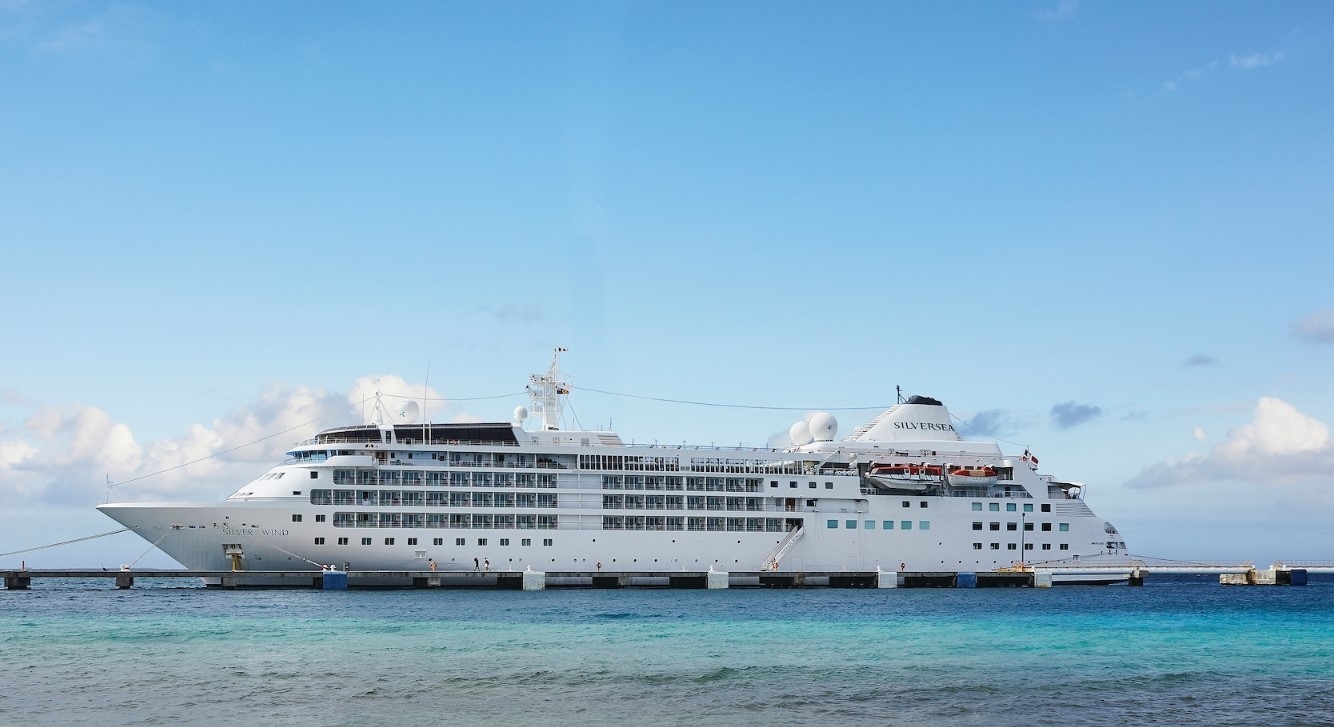
Silversea · Silver Wind
Overview
A 13-night voyage aboard Silver Wind, departing Las Palmas,Gran Canaria on 14 Apr 2028 and arriving in Malta, calling at 12 destinations along the way.
Las Palmas,Gran CanariaPuerto Del Rosario, FuerteventuraSafi (Morroco)CasablancaOran, AlgeriaAlgiers, AlgeriaBejaiaTrapani (Sicily)PantelleriaSyracuse,ItalyGiardini Naxos, SicilyMalta
Cabin prices
Live prices per person based on two sharing. Select a grade to see its fare options.
Loading live cabin prices…
Itinerary
13 nights · 14 ports of call- 2
Day 2 ·Las Palmas, Canary Islands, SpainEmbark
14 Apr 2028Arrive 19:00Depart 20:00Las Palmas, with a population of about 350,000, is the largest city in the archipelago, situated on the northeast tip of the island. As befits a modern, active city, Las Palmas boasts a number of museums, lovely parks, beaches, and a lively nightlife, providing perfect diversions for the many visitors who flock here. The most important sites are found in Vegueta, the historical center in the southern part of Las Palmas. Among the attractions here are stately old homes with balconies facing narrow streets, of which the most prominent is the Casa de Colon, residence of the first governors of the island. From the south, the city hugs the coast up to the bustling areas of Puerto de la Luz and Santa Catalina, considered to be the modern hub of the city. Las Palmas also serves as the starting point to the spectacular interior as well as to the southern part of the island, where bustling resorts line popular beaches, and the famous sand dunes are found at Maspalomas. - 3
Day 3 ·Puerto Del Rosario
15 Apr 2028Arrive 13:00Depart 14:00Puerto del Rosario emerged at the end of the 18th century as a small cattle-raising center on the current bay. The city, known then as Puerto de Cabras (port of goats), was transformed in the middle of the 18th century into a prosperous commercial port, a fact which favored it being declared capital of Fuerteventura in 1860, a status which until then was held by Betancuria. - 4
Day 4 ·Safi, Morocco
16 Apr 2028Arrive 19:30Depart 20:30Lying in a natural harbour to the west of Morocco, Safi (formerly Asafi) carries the weight of legend. As one of the oldest cities in Morocco, it is thought to have been founded by Hanno the Navigator in the 5th or 6th century BC. The etymology of the city’s name allegedly comes from a sailor who got lost and sighed as he passed Safi’s coastline (Safi meaning “oh my regret”). However, there could be another, more literal translation. View less
In Berber, the word Asafi means to spill or flood, undoubtedly referring to the rich sea that makes Safi one of the biggest and safest seaports in the country. The city has been - and still is - a major player in Morocco’s trading industry. Its port has seen everything from gold in the 11th century to today’s principal export, sardines. Portuguese rule in the 1500s saw the Castelo do Mar be built, an imposing fortress that still presides over the city today. Under Portuguese rule, other Europeans came and by the mid-16th century, Safi was Morocco’s principal trading hub. This would all cease however under Sultan Mohammed ben Abdallah in the mid-18th century, who would order that all foreign trade must take place in his newly built city of Mogador (Essaouira). Famous for its pottery of all shapes and sizes, Safi is one destination where you will want to support the local economy. The potter’s quarter, just out of the city walls, boasts the country’s oldest kilns and is a mecca for all those who love both ceramics and tradition. - 5
Day 5 ·Casablanca, Morocco
17 Apr 2028Arrive 17:00Depart 18:00Immortal lines from the silver screen may have imprinted a warm, fuzzy visage of old Casablanca into our minds, but this thriving city is a curious example of what Morocco’s modernity looks like. Glistening white art deco buildings line the wide pathways that sweep through Casablanca, as the sea sparkles like a thin mirage on the horizon. There’s an aura of creativity amid Casablanca’s culture and chaos, helping to make the city one of Morocco’s most curious and compelling.
The Hassan II Mosque took a staggering seven years and 10,000 artists to craft its legacy as the country's largest mosque, and to bring the world's tallest minaret to sky-high reality. A vision of cool to the touch marble, cavernous prayer rooms and intricate inlays, the mosque is extraordinary in scale and ambition. Retractable roofs let the sun flood in, while dizzying glass floors dazzle, and the blue Atlantic waves surge below your feet. After that humbling visit, stroll along La Corniche - where surfers glide across rough and tumble waves, and chic cafes offer front-row seats for sweet peppermint teas with a side of people-watching. Casablanca is a diner's city - boulevards laced with French-fusion restaurants, buzzy beachfront joints, and raw seafood bars provide gem-like offerings fresh from the boat. Those seeking a slice of that golden-age Hollywood romance can wander through the medina, with its unabashed ramshackle feel, and maze of alleyways punctuated with busy barber shops and butchers. - 5
Day 5 ·At Sea
18 Apr 2028 - 7
Day 7 ·Oran
19 Apr 2028Arrive 15:00Depart 16:00 - 7
Day 7 ·Algiers
20 Apr 2028Algiers is the capital city of Algeria, on the country’s Mediterranean coast. It’s known for the whitewashed buildings of the Kasbah, a medina with steep winding streets, Ottoman palaces and a ruined citadel. The 17th-century Ketchaoua Mosque is flanked by 2 large minarets. The Great Mosque has marble columns and arches. The clifftop Catholic basilica of Notre-Dame d'Afrique features a large silver dome and mosaics. - 9
Day 9 ·Algiers
21 Apr 2028Arrive 21:00Depart 22:00Algiers is the capital city of Algeria, on the country’s Mediterranean coast. It’s known for the whitewashed buildings of the Kasbah, a medina with steep winding streets, Ottoman palaces and a ruined citadel. The 17th-century Ketchaoua Mosque is flanked by 2 large minarets. The Great Mosque has marble columns and arches. The clifftop Catholic basilica of Notre-Dame d'Afrique features a large silver dome and mosaics. - 10
Day 10 ·Bejaia, Algeria
22 Apr 2028Arrive 12:30Depart 13:30About 250 km east of Algiers lies Bejaia. Far from the beaten track of Algeria’s tourist hotspots, this pretty seaside port is also one Algeria’s best. Overlooked by Yemma Gouraya – the mountain that take its name from its shape of a sleeping woman, and bordered by the Mediterranean Sea, this largish city has a deep and interesting history. As is the often the case with ancient cities, Bejaia is built on legend.
The story is that Hercules, before travelling to Gibraltar to build Tangiers (and lay the foundations to which he left his name) lived in the large cave above the village. The townspeople of Bejaia, wanting him gone, prepared him a dish of spicy beans, so spicy that he had to descend the mountain to quench his thirst and disapeer into the sea. Whether or not you choose to believe that Bejaia featured in Hercules’ 12 labours is up to you, but what is certain is that Bejaia’s (recorded) history can be traced to the founding by the Carthaginians in the 1st century BC. The city was known as Saldae under Roman rule (200-500), and later became the capital of the Berber Hammadid dynasty. French colonial rule came in 1833 until independence in 1962. Bejaia’s old town is one of Algeria’s finest. A walking tour will reveal both Byzantine history and French colonial rule. A 16th-century mosque bears testament to the city’s Muslim past, as well as a Spanish fortress, also from the 16th century, and an old Kasbah. The Pic des Singes (Monkey Mountain) is another great day out. - 11
Day 11 ·Trapani
23 Apr 2028Arrive 23:00Depart 23:59Surrounded by glowing turquoise waters and rugged coastline, Trapani invites you to explore western Sicily's ruins, intense flavours, and sun-soaked leisure pursuits. Built on salt and tuna exports, Trapani is experiencing a renaissance, having been lovingly spruced up as a sailing capital, and an international airport bringing in visitors from far and wide. The town looks out over the Egadi Islands, gazing west to witness some of Siciliy's most evocative sunset displays. View less
Start exploring Trapani from its historic core, a dense network of alleys hosting a collection of small shops, restaurants and wine bars. You’ll encounter the Cathedral of San Lorenzo – where colourful artworks are spread below sweeping arches and a beautiful domed roof. Sicily feels like an island on the cusp of continents, and Trapani practically has one foot in Africa, as you soak in its pretty whitewash houses and fusion of foods and arts. Discover the Ancient Greek influence by venturing to rich archaeological sites nearby, like Selinus and Segesta, where the treasures from the past have been unearthed and displayed. Pyramids of white salt rise up at the Riserva Naturale Saline di Trapani e Paceco. These salt marshes and windmills are a symbol of Trapani, and although sea salt production is much less important today, the small white hills remain a Trapani landmark. Look out for the pink flamingos wading in the salt pans below. For beach days, the Egadi Islands can be easily reached from Trapani - Favignana is the largest and most popular. - 12
Day 12 ·Pantelleria
24 Apr 2028Arrive 17:00Depart 18:00 - 13
Day 13 ·Siracusa
25 Apr 2028Arrive 21:00Depart 22:00Honey-coloured Siracusa is a staggering UNESCO World Heritage Site, and an extraordinary Sicilian city of immense ancient history. The modern population is a fraction of what it was at the city’s heyday around 400 BC, when Athens’ might was successfully challenged and faced down, reinforcing the city’s incredible power and status. Siracusa’s historical nucleus waits to be discovered on the compact islet of Ortygia. The city was founded here, but grew over time, spreading across to the mainland. View less
A small channel separates the two, which is now spanned by twin bridges. Wander the atmospheric streets of this time warp, to reach the shining elegance of Piazza Duomo. The Baroque cathedral rises like a giant sandcastle, and you can settle opposite to cradle a glass of wine and enjoy the view over the immaculate square - people watching before the glorious baroque façade. Dig deep into its history at the mainland's archaeological park. Here you can wander between the remains of a Greek theatre, constructed in the 5th century BC, and now used as a grandiose, atmospheric venue for events and performances. You’ll also encounter a Roman Amphitheatre - where gladiators battled brutally, and the spectacular ear-shaped cave, which is famed for its extraordinary, secret-revealing acoustics. It was given its name - the Ear of Dionysius - by Caravaggio. Visit the legendary Fonte Arethusa, or lose yourself in the Ortygia Market – you’ll find everything here, from fresh fish, to spices and local bottles of wines. Look out for a flavour-filled jar of real Sicilian u strattu - an intense tomato paste that is the secret ingredient to many Sicilian recipes. The local ingredients are imbued with flavour by this volcanic land’s fertile soils and the firepower of Europe’s most active volcano Mount Etna, waits just to the north. - 14
Day 14 ·Giardini Naxos (Sicily)
26 Apr 2028Arrive 17:00Depart 18:00Hugging a long, sweeping bay, Giardini Naxos welcomes you ashore to some of Sicily’s most scenic and historic sites. Naxos was the first Greek settlement on Sicily, and it is surrounded by remarkable remains and swirling mythology. With a long arc of sun-soaked golden sand, you can kick back by the waves - and cool off with a dip into the sea's refreshing embrace. Up above the seaside revelry, the spectacular Taormina hillside town perches - containing rich Roman and Greek history. View less
Visit to encounter one of Sicily’s best views, as you look down over the rejuvenating blue of the sea, and the looming backdrop of Mount Etna rising in the distance. The majestic, honey-coloured Greek theatre is a highlight, standing before the distant loom of the volcano. Head towards the puffs of cloud, and wisps of smoke, that gather around the peak of Sicily’s mighty volcano, which is among the most active in Europe. Arrive through vineyards, thriving in this fertile soil, before taking the 1,737-metre incline to the summit of the legendary mountain of fire, across fields of solidified lava flows. Known to the Greeks as the home of the God of Fire, and the one-eyed Cyclops, the mountain continues to amaze and awe with its restless power. Vineyards carpet the scenery - interrupted by occasional cactai and citrus groves – and produce some of Sicily’s most refined flavors. Enjoy a glass of wine on Giardini Naxos’ seafront, and toast your time on these rich Sicilian shores. - 15
Day 15 ·Valletta, MaltaDisembark
27 Apr 2028Arrive 18:00Depart 19:00Perched high on the imposing Sciberras Peninsula, Valletta immediately presents its massive, protective walls and vertical bastions to visitors arriving by sea. Rising to 47 metres in places, the fortifications protect lavish palaces, grand domes and illustrious gardens. Built by the Knights of St John on the narrow peninsular, Valletta is a compact, richly historical treasure trove of Baroque wonders. Ascend to reach the restful, flower-filled Upper Barrakka Gardens, where cannons fire and boom in salute at noon each day, sending echoing cracks of noise out across the waves below. View less
Recognised as 2018’s European Capital of Culture, Valletta is a fascinating and dense haven of history and intrigue. A busy, bustling capital, the breathtaking St John’s Cathedral - commissioned in 1572 - is almost concealed among its narrow streets. The relatively modest exterior is counterpointed by a staggeringly opulent, gold-leaf bathed interior, containing a Caravaggio masterpiece - the shadowy vision of the Beheading of St John. Cinematic and magnificent, Valletta has served as a filming location for Game of Thrones - but real epic history abounds on this rocky isle too. From the prehistoric and megalithic sites of the Hypogeum of Paola and Tarxien, to the fascinating War Museum at Fort St Elmo. Mdina also waits nearby, and the former medieval capital is a striking contrast to the island’s main city. Cars are barred from its streets, and it offers endlessly atmospheric old-time wanders. With a strategic positioning in the Mediterranean, Malta is a jewel that many have wrestled for over the centuries. Independence from Britain was finally achieved in 1964, but the close allegiance remains evident, with English recognised as an official language, cars driving on the left, and red post boxes and telephone gleaming in Malta’s sunshine.
Your ship: Silver Wind
Explore Silver Wind's cabins, dining and onboard facilities.