
23 nightsFrom Darwin, Australia16 ports of call
Darwin to Lautoka
Silversea · Silver Cloud
Overview
A 23-night voyage aboard Silver Cloud, departing Darwin, Australia on 20 Sept 2028 and arriving in Lautoka, calling at 16 destinations along the way.
Darwin, AustraliaPulau Nai, IndonesiaKri Island, Raja AmpatPulau BiakVanimoAli IslandMadangGarove Island (Witu Islands)Rabaul, Papua New GuineaGizoKennedy IslandMbili Island, FijiSanta AnaChampagne Bay, VanuatuAmbrym Island, VanuatuLautoka
Cabin prices
Live prices per person based on two sharing. Select a grade to see its fare options.
Loading live cabin prices…
Itinerary
23 nights · 28 ports of call- 2
Day 2 ·Darwin, AustraliaEmbark
20 Sept 2028Arrive 19:00Depart 20:00"Australia's capital of the north is a uniquely tropical city, and a historically isolated outpost of this vast, diverse country. Reaching up towards the equator, a full 2,000 miles from Sydney and Melbourne, the city was named in honour of Charles Darwin by the British settlers who established a frontier outpost here. With a unique history, beautiful islands nearby, and a palette of sizzling Pacific flavours, colourful Darwin is an enchanting and exotic Australian destination. Crocodiles patrol the jungled waterways and tropical rainforests around Australia's gateway to the Top End.
Explore via airboat to look down on the veiny waterways of the mist-laced Kakadu National Park. The sounds of chattering birdlife and the gentle splash of fountains and waterfalls will fill your ears in George Brown Darwin Botanic Gardens. Soak it all in, before kicking back and relaxing with a picnic and a crackling barbecue. The sunshine and famous tropical pink sunsets mean many visitors naturally gravitate to the city's soft sands to relax at spots like pretty Mindil Beach, as evening approaches. The adjoining market is filled with souvenirs and crafts stands and is the perfect great place to enjoy some fiery Asian flavours. Stroll the stalls, grab some food, and crack open an ice-frosted beer as the sunset show begins. It may be remote, but Darwin found itself on the front line during the Pacific War, as the Japanese air force unloaded their bombs onto the city in 1942. This relaxed unassuming city has a deeply resilient backbone, however, and you can explore the museums to learn more of the war's impact on Darwin, as well as the devastating effects of one of Australia's worst natural disasters, Cyclone Tracy in 1973." - 2
Day 2 ·At Sea
21 Sept 2028 - 3
Day 3 ·Tual
22 Sept 2028Arrive 10:30Depart 11:00 - 4
Day 4 ·Pulau Nai
22 Sept 2028Arrive 18:00Depart 18:30 - 5
Day 5 ·Misool Island, Raja Ampat
23 Sept 2028Arrive 18:00Depart 19:00 - 5
Day 5 ·Yenwapunor,Gam Island
24 Sept 2028Arrive 11:00Depart 11:30 - 6
Day 6 ·Kri Island, Raja Ampat, Indonesia
24 Sept 2028Arrive 18:00Depart 18:30he Raja Ampat region of West Papua, with its multiple islands and intricate system of reefs lies in the heart of the Coral Triangle. This region has been called the most biodiverse area of ocean on the planet. One of the four larger islands is Misool, and the mystery and beauty of the deep aqua lagoons and mysterious vertical jutting rock formations defy description. Underwater surrounding Misool are steep coral walls and drop-offs that are festooned with table corals, staghorn corals, and orange and purple sea squirts. - 7
Day 7 ·Pulau Swande
25 Sept 2028Arrive 18:00Depart 18:30 - 8
Day 8 ·Kwatisore, Cenderawasih Bay, Indonesia
26 Sept 2028Arrive 18:00Depart 18:30Kwatisore Bay is a 2 km wide bay located west of Kwatisore Peninsula at the southwestern end of the wide Cenderawasih (bird of paradise) Bay. An area of 1,453,500 hectares, a great part of the bay, has been declared a national park. Within the national park is Indonesia’s largest marine national park. Some dive companies claim that Cenderawasih Bay is the whale shark capital of the world, and the area near Kwatisore Bay is one of the few places in the world where encounters can almost be guaranteed. View less
The whale sharks seem to be permanent residents of the protected marine park and as the locals believe whale sharks are under the protection of spirits and will bring good luck, not only has fishing them been traditionally prohibited, the fishermen actively encourage their presence by feeding them small amounts of their catch. Therefor the best places and time to look for the whale sharks –and to swim or dive with them- are the local fishing pontoons during the early morning hours. - 8
Day 8 ·Aisandami Village, Indonesia
27 Sept 2028Arrive 11:00Depart 11:30 - 9
Day 9 ·Pulau Rouw, Indonesia
27 Sept 2028Arrive 18:00Depart 18:30 - 10
Day 10 ·Pulau Biak
28 Sept 2028Arrive 18:00Depart 18:30Biak is a small island located in Cenderawasih Bay near the northern coast of Papua, an Indonesian province, and is just northwest of New Guinea. Biak is the largest island in its small archipelago, and has many atolls, reefs, and corals. The largest population centre is at Kota Biak on the south coast. - 10
Day 10 ·At Sea
29 Sept 2028 - 12
Day 12 ·Vanimo, Papua New Guinea
30 Sept 2028Arrive 19:00Depart 19:30Only about 30 kilometers (19 miles) from the Indonesian border, Vanimo is the capital of the Sandaun (or Sundown) Province. It is one of only two towns in this remote region of Papua New Guinea. Although the Sepik River originates in the province, it bypasses Vanimo far to the south. The Sandaun Province is relatively undeveloped, but Vanimo has lovely beaches and some picturesque villages in the vicinity. The interior is covered in rainforest and logging is an important activity putting to use Vanimo’s port and protected bay. - 13
Day 13 ·Ali Island
1 Oct 2028Arrive 12:30Depart 13:00Ali Island is one of the four islands located close to Aitape, off the northern coast of Papua New Guinea. The eastern shore of Ali Island has a beautiful white sandy beach and offers swimming and snorkeling. The five villages on the island connect via well-maintained trails that lead to the school and Catholic church closer to the northern end of the island. - 14
Day 14 ·Madang, Papua New Guinea
2 Oct 2028Arrive 19:00Depart 20:00The eastern half of the island of New Guinea - second largest in the world - was divided between Germany (north) and the UK (south) in 1885. The latter area was transferred to Australia in 1902, which occupied the northern portion during World War I and continued to administer the combined areas until independence in 1975. A nine-year secessionist revolt on the island of Bougainville ended in 1997 after claiming some 20,000 lives. - 15
Day 15 ·Garove Island
3 Oct 2028Arrive 18:00Depart 18:30 - 16
Day 16 ·Rabaul, Papua New Guinea
4 Oct 2028Arrive 23:00Depart 23:30If surreal and unique experiences are your thing, then the Papua New Guinean town of Rabaul should tick your travel boxes. Found on the north eastern tip of New Britain Island (the largest island off mainland PNG) Rabaul, the former provincial capital, has quite a remarkable location. The town is inside the flooded caldera of a giant volcano and several sub-vents are still quite active today! The lively city was almost entirely devastated by Mount Tavurvur in 1994, covering the city in ashfall, but thankfully costing no lives. View less
Since then, thanks to Rabaul’s deep-water port, commerce has been on the up, and a few shops and hotels have managed to find an audience. However, Rabaul’s remote location together with the volcano still being one of the most active and dangerous in Papua New Guinea means tourism in not rife. Rabaul has an impressive WWII history which includes a 300-mile network of tunnels dug by Japanese POW designed to conceal munitions and stores. After the Pearl Harbour bombings, the Japanese used Rabaul as their South Pacific base for the last four years of WWII, and by 1943 there were about 110,000 Japanese troops based in Rabaul. Post war, the island was returned to Australia, before it was granted independence in 1975. It should be noted that patience is a virtue here. However, that is not all bad. The slow pace of transportation allows travellers to marvels at the quite astonishing landscape. Divers will also be richly rewarded – the marine life of the island is extraordinary. - 16
Day 16 ·At Sea
5 Oct 2028 - 17
Day 17 ·Gizo, Solomon Islands
6 Oct 2028Arrive 10:00Depart 10:15Gizo is the capital of the Western Province in Solomon Islands. With a population of 6,154, it is the second largest town in the country. It is situated on Ghizo Island approximately 380 kilometres west-northwest of the capital, Honiara, and is just southwest of the larger island of Kolombangara. - 18
Day 18 ·Kennedy Island, Solomon Islands
6 Oct 2028Arrive 18:00Depart 18:30Kennedy Island is a small uninhabited island in the Solomon Islands that was named after John F. Kennedy, following an incident involving Kennedy during his World War II naval career. Kennedy Island lies 15 minutes by boat from Gizo, the provincial capital of the Solomon Islands' Western Province. - 19
Day 19 ·Mbili Island, Fiji
7 Oct 2028Arrive 13:00Depart 13:30 - 20
Day 20 ·Port Mary, Santa Ana Island, Soloman Islands
8 Oct 2028Arrive 18:00Depart 18:30Port St Mary is a village district in the south-west of the Isle of Man. The village takes its name from the former Chapel of St Mary which is thought to have overlooked Chapel Bay in the village. Its population is 1,953 according to the 2011 census. In the 19th century it was sometimes called Port-le-Murray. - 20
Day 20 ·At Sea
9 Oct 2028 - 22
Day 22 ·Champagne Beach, Vanuatu
10 Oct 2028Arrive 16:30Depart 17:00As world famous beaches go, Champagne Beach is one of the big hitters. In 2003, CNN ranked it number nine in its list of top 100 beaches and independent travel specialists permanently include it on their list of 50 best beaches worldwide. It’s one of the world’s greatest natural beauties: picture-perfect beach white sand, turquoise water and nothing – save for the occasional cow or curious turtle - around.
With only coconut plantations and a few friendly locals to keep you company, this might just be the island of your dreams. The glorious name “Champagne Beach” was given to the island in the 17th century, when Pedro de Quirós believed he had reached the famous unknown southern land or the “Tierra Australis Incognita” (or Australia as we now know it). He believed the effervescent bubbles of volcanic origin that bubble up from the crystal clear waters were reminiscent of the bubbles of Champagne. Additionally, the coastline is shaped like an art deco Champagne saucer, so the name stuck! The beach is located on the largest yet least populated island in the 40-island Vanuatu archipelago, near the village of Hog Harbor on Espiritu Santo Island. If you want to venture beyond the beach, then Espiritu Santu is also famed for its blue holes. The island is home to some of the clearest waters on Earth, benefiting from natural filtering from underground limestone caves. Ride or paddle your way through emerald green rainforest amid the sound of birdsong for an experience that will make your soul sing. - 23
Day 23 ·Ambrym Island, Vanuatu
11 Oct 2028Arrive 13:00Depart 13:30Unlike Espiritu Santo with its raised coral reefs and white sand, Ambrym is a volcanically active island with dark sand beaches. Ambrym is known as the island of magic and is the source of five local languages that all evolved on Ambrym. This handful of languages contributes to the well over 100 languages of Vanuatu. Some of Ambrym’s magic takes place in the lush greenery of the local community of Ranon. Here the people perform a very special and traditional ‘Rom’ dance.
Participants prepare their masks and costumes in secrecy and the dance is reserved for special occasions. - 23
Day 23 ·At Sea
12 Oct 2028 - 25
Day 25 ·LautokaDisembark
13 Oct 2028Arrive 17:00Depart 18:00Lautoka is often described as the sugar city. Sugar cane is the major industry of Fiji and Lautoka is its main base. Here are the industries' headquarters, the largest sugar mill, modern loading facilities and a large wharf. It features 70 miles of roads, almost all paved, a wonderful botanical garden and royal palm trees decorating the city's main street, Vitogo Parade. The municipal market is another attraction from both outside and inside.
Fiji typifies the image of paradise. The people here live as they have done for centuries, retaining their ancient traditions and simple and carefree lifestyle supported by the harvest of a generous land and bountiful sea.
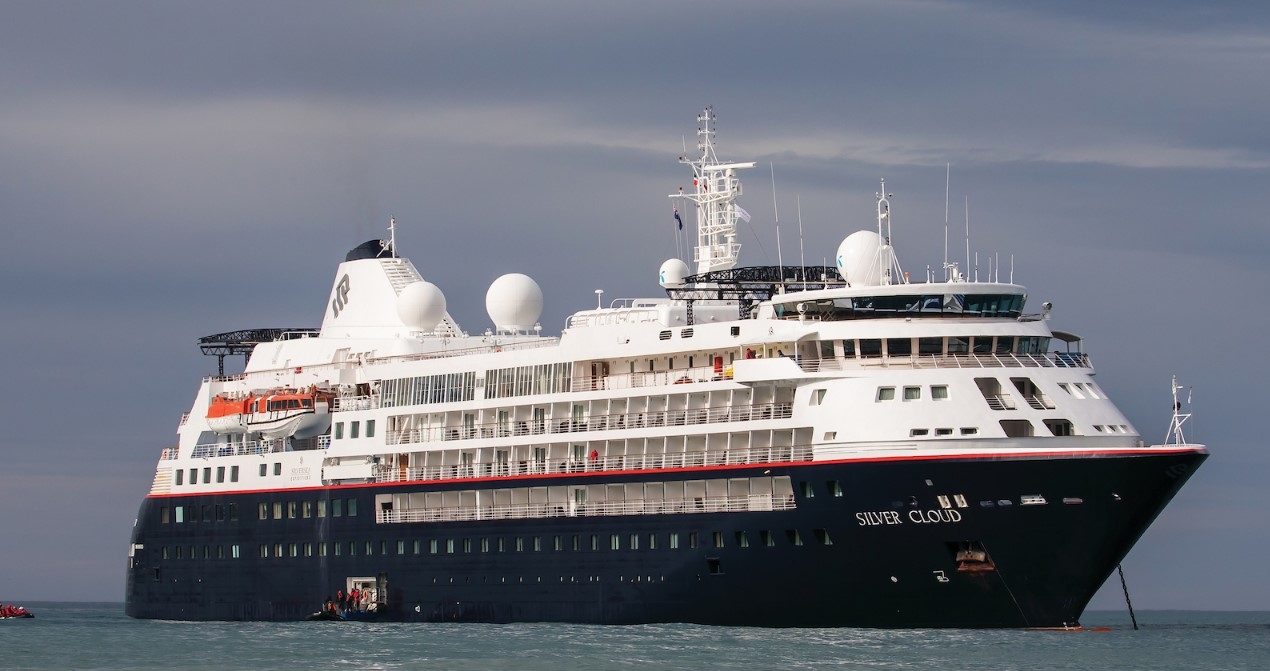
Your ship: Silver Cloud
Explore Silver Cloud's cabins, dining and onboard facilities.