
11 nightsFrom Lautoka6 ports of call
Lautoka to Papeete, Tahiti
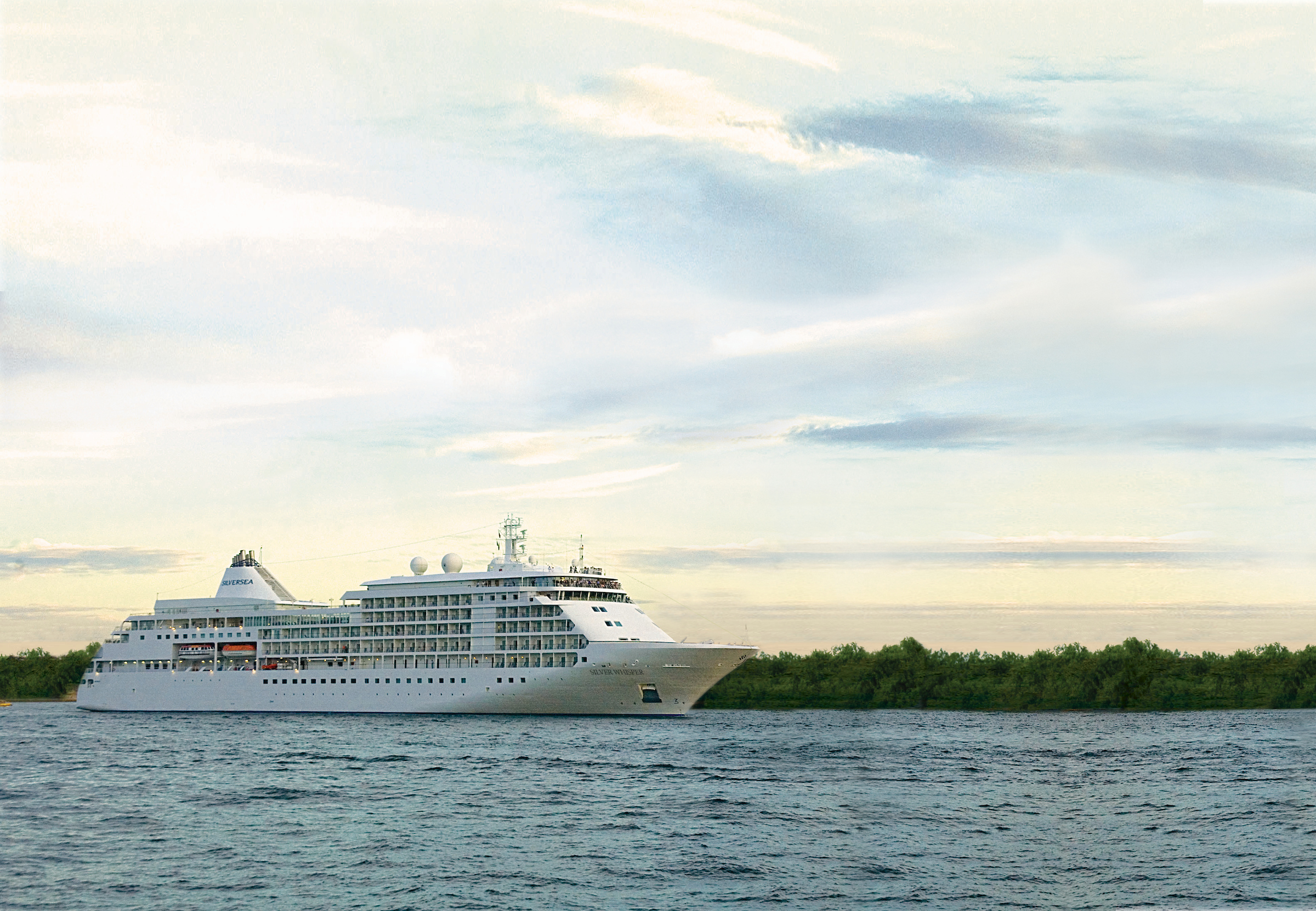
Silversea · Silver Whisper
Overview
A 11-night voyage aboard Silver Whisper, departing Lautoka on 22 Oct 2028 and arriving in Papeete, calling at 6 destinations along the way.
LautokaApiaPago PagoRarotongaBora BoraPapeete
Cabin prices
Live prices per person based on two sharing. Select a grade to see its fare options.
Loading live cabin prices…
Itinerary
11 nights · 14 ports of call- 1
Day 1 ·LautokaEmbark
22 Oct 2028Arrive 08:30Depart 19:00Lautoka is often described as the sugar city. Sugar cane is the major industry of Fiji and Lautoka is its main base. Here are the industries' headquarters, the largest sugar mill, modern loading facilities and a large wharf. It features 70 miles of roads, almost all paved, a wonderful botanical garden and royal palm trees decorating the city's main street, Vitogo Parade. The municipal market is another attraction from both outside and inside.
Fiji typifies the image of paradise. The people here live as they have done for centuries, retaining their ancient traditions and simple and carefree lifestyle supported by the harvest of a generous land and bountiful sea. - 2
Day 2 ·At Sea
23 Oct 2028 - 3
Day 3 ·At Sea
24 Oct 2028 - 4
Day 4 ·Apia
25 Oct 2028Arrive 08:00Depart 19:00As the first independent state of Polynesia, Samoa is considered the cradle of the nation, a place where the Earth and the heart fuse seamlessly fuse together. Incidentally, were one to translate the word “Samoa” into the traditional Polynesia dialect, they would find that the words “Sa” and “Moa” mean exactly that: earth and centre. Apia, Samoa’s only town, is found central north coast of Upolu, Samoa’s second largest island. Originally a tiny village of just over 300 inhabitants (c. View less
1800), the town’s population has grown to be just shy of 40,000. While a population of such size might mean forgetting traditional roots in favour of modern life, this has not been the case (too much) in Apria. The Samoan way of life is still very much the order of the day; traditional open-sided houses with thatched roofs on platforms of coral or concrete, also known as ‘fales’, can be seen everywhere and nearly all of the population (including the policemen) wear the typical local dress; skirts, or ‘lavalavas’ for men, and long, mumu-style dresses for women. The markets are bursting with culture and colour, selling everything from handicrafts to cuisine and local produce. If the idyllic setting of aquamarine pools of bluey green water, framed by low fringed palms and huge umbrella trees seems familiar, that’s because it probably is. The island, and notably the southern resort of Lefaga, was used in the 1953 Gary Cooper classic Return to Paradise Beach. It is also the last place on Earth to see each day’s sunset. - 4
Day 4 ·Date Line gain a day
25 Oct 2028 - 5
Day 5 ·Pago Pago , American Samoa
26 Oct 2028Arrive 07:00Depart 18:00The high, volcanic islands of American Samoa sit along the Pacific Ring of Fire; their cone-shaped mountains rise with abrupt steepness. These islands are stunningly green, the windward hillsides carpeted thickly with coconut palms, breadfruit and mango, while the leeward side is punctuated by steep cliffs. Pago Pago (pronounced Pahngo Pahngo), on the island of Tutuila, boasts one of the world's most beautiful natural harbors that thrusts as a fjordlike arm deep into the land. - 6
Day 6 ·At Sea
27 Oct 2028 - 7
Day 7 ·At Sea
28 Oct 2028 - 8
Day 8 ·Rarotonga
29 Oct 2028Arrive 08:00Depart 19:00The Cook Islands are scattered like tiny jewels over a large stretch of sea between Tahiti and Samoa, lying virtually in the center of the Polynesian Triangle of the South Pacific. The first settlers arrived around the 8th century from the Society Islands, Samoa and the Marquesas, while the first Europeans made contact at the turn of the 16th century. In 1824, a Russian cartographer put the islands on the map, naming them after Captain Cook, who discovered five of the islands in the Southern Group in the 1770s.
The natural beauty of Rarotonga, the principal island of the Cook archipelago, is profound and overwhelming. Its forest-covered mountains, deep valleys, fertile slopes of red soil and sparkling aquamarine lagoons make it a likely Eden. - 9
Day 9 ·At Sea
30 Oct 2028 - 10
Day 10 ·Bora Bora (Society Islands)
31 Oct 2028Arrive 08:00Depart 16:00If you have ever dreamt up your ideal island holiday, we suspect it goes something like this: Soapy blue seas? Check. Sparkling white beaches? Check. Thatched wooden huts, gently sloping palm trees and kaleidoscopic marine life? Check, check and check. And yet, even by ticking every box, first time viewing of Bora Bora still beggars belief. This tropical hideaway less than 12 m2 in the heart of the South Pacific has been toping travel wish lists for years.
Long considered the realm of honeymooners – spectacularly romantic sunsets are a speciality – Bora Bora is not just for wandering with your love. If the prismatic shades of blue of the world’s most beautiful lagoon do not fill you up, then perhaps underwater scooters and aqua Safaris will charge your batteries. If exploring Bora Bora’s lush hinterland is more your glass of tequila sunrise, then trips around the island (often stopping off at the celebrity haunt Bloody Mary Restaurant & Bar) are a must. Bora Bora’s peaceful ambience has not always been the case. The island was a US supply base, known as “Operation Bobcat” during WWII. During this time, Bora Bora was home to nine ships, 20,000 tons of equipment and nearly 7,000 men. Eight massive 7-inch naval cannons were installed around the island, all but one of which is still in place. Although little is known of the history of the island, it is known that Bora Bora was called Vava’u in ancient times. This supports belief that the island was colonised by Tongans prior to French annex in 1888. - 11
Day 11 ·Motu Tapu (Bora Bora), French Polynesia
31 Oct 2028Arrive 16:01Depart 23:59 - 11
Day 11 ·Bora Bora (Society Islands)
1 Nov 2028Arrive 00:01Depart 16:00If you have ever dreamt up your ideal island holiday, we suspect it goes something like this: Soapy blue seas? Check. Sparkling white beaches? Check. Thatched wooden huts, gently sloping palm trees and kaleidoscopic marine life? Check, check and check. And yet, even by ticking every box, first time viewing of Bora Bora still beggars belief. This tropical hideaway less than 12 m2 in the heart of the South Pacific has been toping travel wish lists for years.
Long considered the realm of honeymooners – spectacularly romantic sunsets are a speciality – Bora Bora is not just for wandering with your love. If the prismatic shades of blue of the world’s most beautiful lagoon do not fill you up, then perhaps underwater scooters and aqua Safaris will charge your batteries. If exploring Bora Bora’s lush hinterland is more your glass of tequila sunrise, then trips around the island (often stopping off at the celebrity haunt Bloody Mary Restaurant & Bar) are a must. Bora Bora’s peaceful ambience has not always been the case. The island was a US supply base, known as “Operation Bobcat” during WWII. During this time, Bora Bora was home to nine ships, 20,000 tons of equipment and nearly 7,000 men. Eight massive 7-inch naval cannons were installed around the island, all but one of which is still in place. Although little is known of the history of the island, it is known that Bora Bora was called Vava’u in ancient times. This supports belief that the island was colonised by Tongans prior to French annex in 1888. - 12
Day 12 ·Papeete (Tahiti)Disembark
2 Nov 2028Arrive 05:00Depart 22:00Formed by two ancient volcanoes and joined at the isthmus of Taravao, Tahiti is the largest island of the Society Archipelago and the economic heart of French Polynesia. Ever since the famous French impressionist painter Paul Gauguin immortalized Tahitian maidens in vibrant colors on his canvasses, Tahiti has had a mysterious allure and still summons up all the romance of the South Pacific as a tropical paradise.
Rising in the center, Mount Orohena and Mount Aorai are the highest points; deep valleys radiate in all directions from these central peaks. Steep slopes drop abruptly from the high plateaus to coastal plains. The northeast coast is rugged and rocky without a barrier reef, and thus exposed to intense, pounding surf. Villages lie on a narrow strip between mountains and ocean. The south coast is broad and gentle with large gardens and coconut groves; a barrier reef shields it from the sea.
Your ship: Silver Whisper
Explore Silver Whisper's cabins, dining and onboard facilities.