
12 nightsFrom Athens (Piraeus), Greece12 ports of call
Piraeus (Athens) to Fusina (Venice)
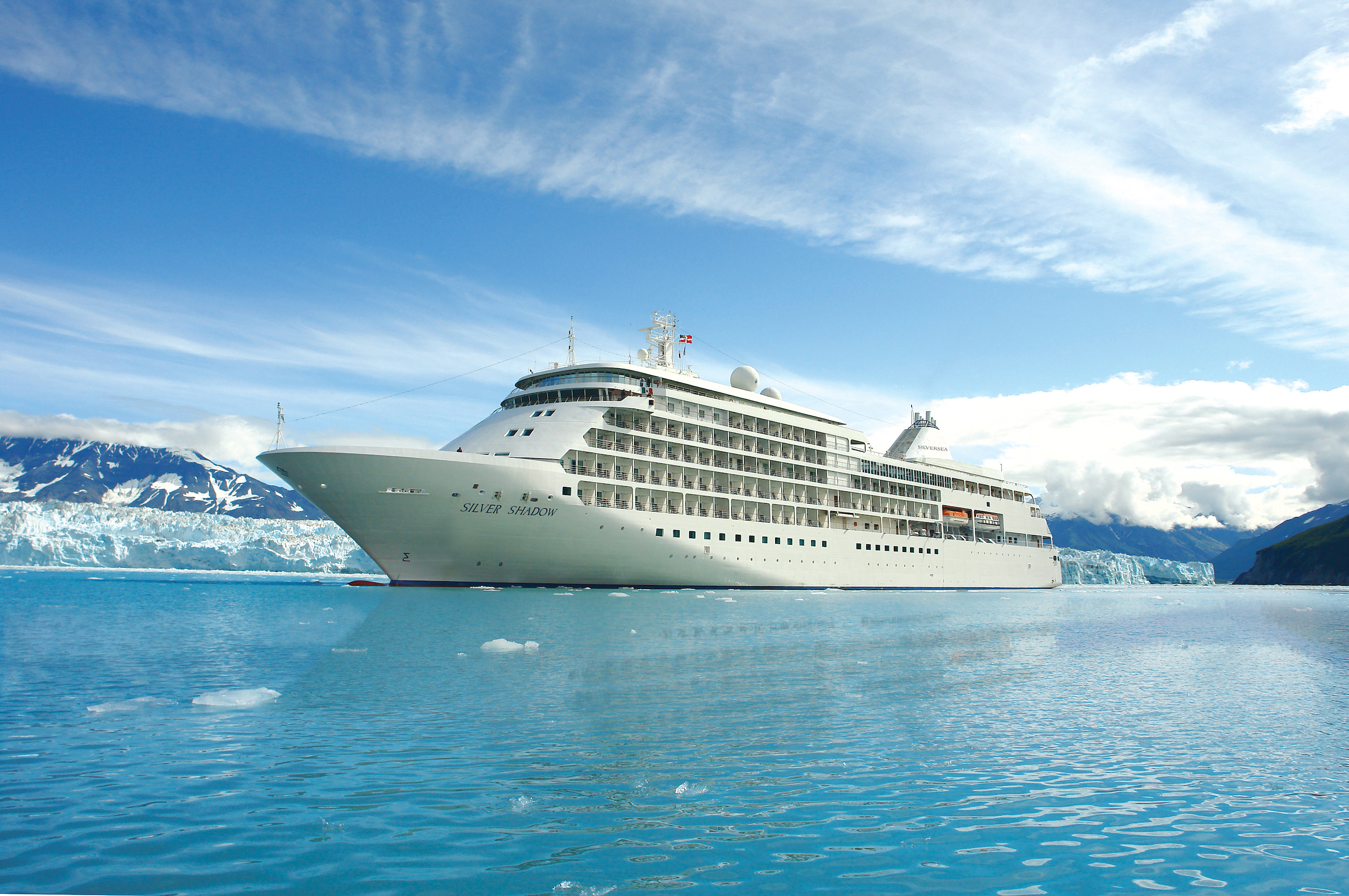
Silversea · Silver Shadow
Overview
A 12-night voyage aboard Silver Shadow, departing Athens (Piraeus), Greece on 13 Sept 2028 and arriving in Venice (Fusina), Italy, calling at 12 destinations along the way.
Athens (Piraeus), GreeceGiardini Naxos, SicilyParos, GreeceSantoriniAgios Nikolaos, GreeceOlympia (Katakolon), GreeceSarandeDubrovnikSplitRavenna, ItalyRovinj, CroatiaVenice (Fusina), Italy
Cabin prices
Live prices per person based on two sharing. Select a grade to see its fare options.
Loading live cabin prices…
Itinerary
12 nights · 13 ports of call- 1
Day 1 ·PiraeusEmbark
13 Sept 2028Arrive 07:00Depart 18:00Piraeus, is a port city within the Athens urban area, in the Attica region of Greece. It is located in the Athens Riviera, 8 kilometres southwest of Athens’ city centre, along the east coast of the Saronic Gulf. - 2
Day 2 ·Giardini Naxos (Sicily)
14 Sept 2028Arrive 08:00Depart 22:00Hugging a long, sweeping bay, Giardini Naxos welcomes you ashore to some of Sicily’s most scenic and historic sites. Naxos was the first Greek settlement on Sicily, and it is surrounded by remarkable remains and swirling mythology. With a long arc of sun-soaked golden sand, you can kick back by the waves - and cool off with a dip into the sea's refreshing embrace. Up above the seaside revelry, the spectacular Taormina hillside town perches - containing rich Roman and Greek history. View less
Visit to encounter one of Sicily’s best views, as you look down over the rejuvenating blue of the sea, and the looming backdrop of Mount Etna rising in the distance. The majestic, honey-coloured Greek theatre is a highlight, standing before the distant loom of the volcano. Head towards the puffs of cloud, and wisps of smoke, that gather around the peak of Sicily’s mighty volcano, which is among the most active in Europe. Arrive through vineyards, thriving in this fertile soil, before taking the 1,737-metre incline to the summit of the legendary mountain of fire, across fields of solidified lava flows. Known to the Greeks as the home of the God of Fire, and the one-eyed Cyclops, the mountain continues to amaze and awe with its restless power. Vineyards carpet the scenery - interrupted by occasional cactai and citrus groves – and produce some of Sicily’s most refined flavors. Enjoy a glass of wine on Giardini Naxos’ seafront, and toast your time on these rich Sicilian shores. - 3
Day 3 ·Paros
15 Sept 2028Arrive 08:00Depart 19:00As one of the lesser known islands in the Aegean Sea, Paros enjoys its reputation as being the underdog of the Cyclades. Often overshadowed by Mykonos to the north, or Santorini to the south, the savvy traveller knows this island paints one of the finest pictures of Greece that you’re ever likely to find. Arrival in Paros is postcard perfect and exactly as you imagine it. Cafes and tavernas line the pretty port, bougainvillea covers narrow streets, brightly painted fishing boats bob gently in the harbour. View less
If you arrive early enough, you’ll find the catches of the day being sold for pennies. All the touch points are there: evocative blue shuttered, white-washed houses, windmills and domed churches on the horizon, arid hillside above an azure bay that homes promise of fresh figs, olives and the seductive lullaby of cicadas. This image might seem clichéd but in Paros, it’s reality. If strolling the cobbled streets that snake into the village does not sustain your love of Greek history, then head for the Archaeological Museum in the centre of town. Paros has been inhabited since 3200 BC and has a past of maritime battles, followed by economic development and cultural flourishing. The island was well known for its fabulous marble, a fine example of which is the lovely Town Hall in Lefkes village (notably Venus de Milo was also crafted from Parian marble). Literary lovers will also know that Paros was the birthplace of Greek lyrical poet Archilochus, statues of whom can be found all over the island. - 4
Day 4 ·Santorini, Greece
16 Sept 2028Arrive 08:00Depart 19:00Of all the Cyclades Islands, Santorini is often considered the most dramatic. Once an active volcano, in approximately 1620 BC, the volcano erupted with such force that the center of the island literally exploded, leaving a submerged crater. The island's small villages were preserved in the ashes giving a fascinating view of everyday life from 3,600 years ago.
Santorini's landscape offsets its simple buildings, which shine in the brilliant sunlight. The rich volcanic soil is ideal for grapes and the local vines produce a crop known for its "special volcanic taste." - 5
Day 5 ·Aghios Nikolaos, Crete
17 Sept 2028Arrive 08:00Depart 00:20 - 6
Day 6 ·At Sea
18 Sept 2028 - 7
Day 7 ·Katakolon (Olympia), Greece
19 Sept 2028Arrive 08:00Depart 18:00The tiny port of Katakolon serves primarily as the starting point for an excursion to the archaeological site of ancient Olympia. Adjacent to the port is the small village of Katakolon with a few souvenir shops and typical local restaurants. Ancient Olympia, the great Panhellenic sanctuary, is located 21 miles from the port.
The site of ancient Olympia spreads out at the foot of wooded Mount Kronos. Excavations began in 1875; they are considered one of archaeology's great achievements. A direct consequence was the revival of the Olympic Games by Baron Pierre de Coubertin.
Today's visitors walk among the ruins and reflect on their significance. Don't miss the site where the Olympic flame is lit even today for the modern games. - 8
Day 8 ·Sarande, Albania
20 Sept 2028Arrive 07:15Depart 17:30 - 9
Day 9 ·Dubrovnik, Croatia
21 Sept 2028Arrive 08:00Depart 22:00Croatia’s crowning glory rears up vertically from the tranquil waters of the Adriatic, and Dubrovnik’s daunting fortresses town is a truly imposing sight to behold. Encircled by chunky stone walls so thick and dramatic they could have been purpose-built as a film set, this city’s unmatched old town is the setting for countless films and shows - from Star Wars to Robin Hood, Game of Thrones and every production in-between seeking a truly authentic medieval flavour.
This fantasy fortress’s walls - which are no less than 12-metres thick at places - are certainly not just for show, however. They kept Dubrovnik safe when it was a maritime republic and they were besieged as recently as 1991, when Serbian and Montenegrin forces attacked, as Yugoslavia broke apart. Fully restored now, the stone streets of the city take you through a beautiful mosaic of architectural splendour, baroque churches and splashing fountains. Tapering alleys rocket up from the central boulevard of Stradun, offering spectacular views down, but you’ll need to walk the city walls to appreciate the fortress city’s full scale. Banking up sharply to the rear, you can gaze across an ocean of terracotta roofs and church spires, clamouring together before the sparkling Adriatic. Visit the neighbouring fort of Lovrijenac, for another perspective, or swing up to Srd fortress’s glorious panorama on a cable car. Dubrovnik’s streets are crammed with eateries and candlelit tables, where couples splash wine into glasses and enjoy gnocchi mixed with creamy truffle sauces. Nearby beaches like Banje are also close by, and hidden bays reward the intrepid who venture out beyond the old town. Take sunset drinks to sit back and watch as flotillas of sea kayaks roll by, or sail on the pristine waters to explore island gems like Lokrum - where peacocks are the only permanent residents. - 10
Day 10 ·Split, Croatia
22 Sept 2028Arrive 08:00Depart 17:00Split is a busy port with numerous ferries operating to and from nearby islands. It is also a popular resort with beaches, pleasant promenades and good hotels. Venetian Gothic and Renaissance houses and several medieval churches add architectural interest. As a major cultural center, Split does not lack in museums and art galleries. However, the city's principal attraction is Diocletian's Palace. It occupies an area of 34,680 square yards and was constructed to serve as a residence and a fortified military camp. By the Middle Ages, the palace had been enclosed within a strong wall with square corner towers, enclosing a town with narrow house-lined alleys. As the city grew, people gradually moved outside the walls and the city center shifted westward. - 11
Day 11 ·Ravenna, Italy
23 Sept 2028Arrive 08:00Depart 18:00Ravenna is a city in Emilia-Romagna, Italy. It's known for the colorful mosaics adorning many of its central buildings, like the octagonal Basilica di San Vitale, the 6th-century Basilica di Sant'Apollinare Nuovo and the cross-shaped Mausoleo di Galla Placidia. North of the center, the Mausoleo di Teodorico built in the 6th century for King Theodoric the Great, is a Gothic, circular stone tomb with a monolithic dome - 12
Day 12 ·Rovinj, Croatia
24 Sept 2028Arrive 08:00Depart 19:00The first documented mention of Rovinj was in the 5th century. However, it is very likely that Rovinj is much older, emerging somewhere at the turn of the 3rd and the 4th centuries. During this period, Istria was occupied by the Romans who stayed there until 476. Later came the Ostrogoths, Franks and the Venetians. During the Venetian times, Rovinj was developing into a strong fishing, shipbuilding and maritime center, especially in the 17th and 18th century when they had the precedence over Istria. At the time that the town walls were secured, the town started to expand to the mainland and in 1763 the channel between the mainland and the island was covered up and Rovinj became a peninsula.
In 1797 the Venetian republic lost its power and for a short time and Istria fell under Austrian and then under Napoleon's rule.
In 1813, Rovinj became part of the Austor-Hungarian Empire and a period of industrial and urban development started.
Rovinj fell to fascist Italy until the end of World War II and in the second half of the 20th century was a part of Yugoslavia, as was all of Croatia, until 1991.
In the past 40 years Rovinj has developed from a fishing village into a real tourist center thanks to its picturesque surroundings, its pleasant Mediterranean climate and its cultural-historical values. - 13
Day 13 ·Fusina (Venice)Disembark
25 Sept 2028Arrive 07:00Depart 19:00Losing none of its allure over the years, this floating city of canals, bridges and masks is a place of eternal beauty and enduring elegance. The lagoon of more than 100 islands is a heavenly sight, transporting visitors on a journey through time - from its Roman inception, through centuries of trade to the modern face we see today. Navigate Venice’s sparkling waterways by romantic gondola, or on cruises along wide canal boulevards. Span the Grand Canal over its iconic original crossing, the Rialto Bridge, which - with its parade of tiny shops - gives some of the city’s most endearing views. If the crowds unsettle you at any point, take two turns away from the main thoroughfares to find peace alone, amid the city's labyrinth of tiny streets. Hurry to Piazza San Marco to be immersed in Venice’s elegant glory. Basilica San Marco transports you back to the wealthy days of the Doges, who ruled for over 1,000 years. Initially their private chapel, it’s now decorated with beautiful Byzantine mosaics. Nearby the Campanile di San Marco bell tower offers views over the higgledy-piggledy rooftops of times gone by. Just a hop skip and a jump around the corner is the Doge’s Palace, where the levels of opulence ramp up even further. Justice was meted out in this stunning Palace, with the guilty walking to the cells across the covered Bridge of Sighs. Vaporetto trips to local islands offer even more adventures to float your boat, whether it’s Murano with its world-famous glass, Torcello with its amazing Cathedrals, or Burano with its handmade lace and delightfully colourful painted houses.
Your ship: Silver Shadow
Explore Silver Shadow's cabins, dining and onboard facilities.