
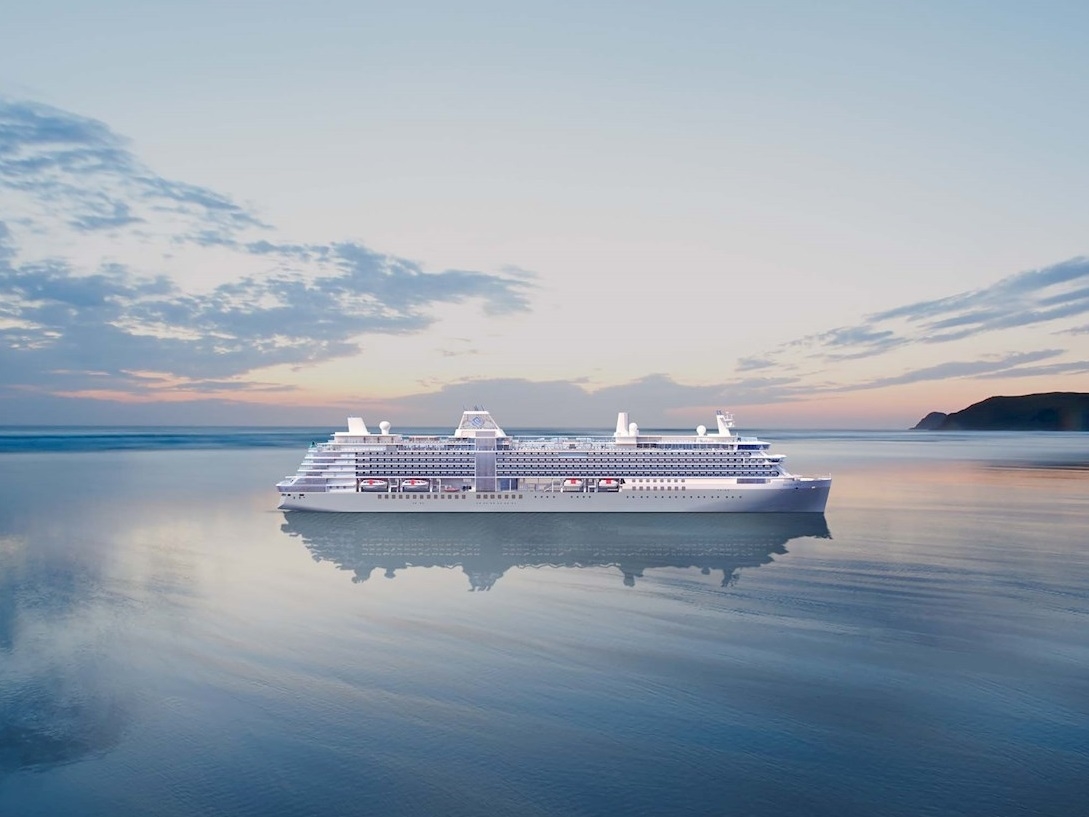
12 nightsFrom Lisbon10 ports of call
Lisbon to Lisbon
Silversea · Silver Nova
Overview
A 12-night voyage aboard Silver Nova, departing Lisbon on 24 Sept 2028 and arriving in Gibraltar, calling at 10 destinations along the way.
LisbonCadizMotril, GranadaCartagena, SpainPalma de MallorcaValenciaSan Cristobal Island, Galapagos IslandsAlicanteMelillaGibraltar
Cabin prices
Live prices per person based on two sharing. Select a grade to see its fare options.
Loading live cabin prices…
Itinerary
12 nights · 13 ports of call- 1
Day 1 ·LisbonEmbark
24 Sept 2028Arrive 07:00Depart 18:00Lisbon, the capital of Portugal, is a city open to the sea and carefully planned with 18th-century elegance. Its founder is said to be the legendary Ulysses, but the theory of an original Phoenician settlement is probably more realistic. Known in Portugal as Lisboa, the city was inhabited by the Romans, Visigoths and, beginning in the 8th century, the Moors. Much of the 16th century was a period of great prosperity and overseas expansion for Portugal. Tragedy struck on All Saints' Day in 1755 with a devastating earthquake that killed about 40,000 people. The destruction of Lisbon shocked the continent. As a result, the Baixa (lower city) emerged in a single phase of building, carried out in less than a decade by the royal minister, the Marques de Pombal. His carefully planned layout of a perfect neo-classical grid survived to this day and remains the heart of the city. Evidence of pre-quake Lisbon can still be seen in the Belém suburb and the old Moorish section of the Alfama that sprawls below the Castle of St. George.
Lisbon is a compact city on the banks of the Tagus River. Visitors find it easy to get around as many places of interest are in the vicinity of the central downtown area. There is a convenient bus and tram system and taxis are plentiful. Rossio Square, the heart of Lisbon since medieval times, is an ideal place to start exploring. After a fire destroyed parts of the historic neighborhood behind Rossio in 1988, many of the restored buildings emerged with modern interiors behind the original façades.
The city boasts a good many monuments and museums, such as the Jeronimos Monastery, Tower of Belém, the Royal Coach Museum and the Gulbenkian Museum. High above the Baixa is the Bairro Alto (upper city) with its teeming nightlife. The easiest way to connect between the two areas is via the public elevator designed by Gustave Eiffel.
Cruising up the Tagus River to the ship's berth, you can already spot three of Lisbon's famous landmarks: the Monument to the Discoveries, the Tower of Belém and the Statue of Christ, which welcomes visitors from its hilltop location high above Europe's longest suspension bridge. - 2
Day 2 ·At Sea
25 Sept 2028 - 3
Day 3 ·Cadiz, Spain
26 Sept 2028Arrive 08:00Depart 18:00More than a hundred watchtowers gaze out across the waves surrounding this ancient Andalusian city. Sprinkled with evocative cobbled side streets, you’ll explore 3,000 years’ worth of history, while stumbling across palm-tree lined plazas of shaded coffee sippers. Cadiz claims the mantle of Western Europe’s oldest city, and every piece of architecture - and every wrong turn - offers a chance to discover fascinating new tales. Founded by the Phoenicians in 1100BC, Christopher Columbus used the city as a base for his exploratory, map-defining voyages of 1493 and 1502.
The port grew in importance and wealth as Cadiz’s strategic location close to Africa’s northern tip helped it blossom into a centre for New World trade. Catedral de Cádiz, is a display of the city’s wealth and importance, looming spectacularly over the Atlantic’s waves, with cawing seagulls sweeping between its twin bell towers. Inside, treasures from the city’s trading exploits in the West Indies and beyond - which helped fuel the growth of this historically prosperous city – are on display. Enveloped by ocean on almost every side, Cadiz has something of an island feel, and you can cool off from southern Spain’s unrelenting sunshine on the sweeping golden sand beach of Playa Victoria. The two towers of the new El Puente de la Constitución de 1812 mark a contemporary landmark in this most ancient of cities, in the form of a spectacular new road bridge. Torre Tavira, meanwhile, is the most famous of Cadiz’s army of watchtowers, and the highest point in the city. Reach the top for a view of the ocean fringing the city’s expanse, and to learn about the towers - constructed so trading merchants could survey the harbour from their lavish homes. The Central Market is a chaotic place of bartering, where flashing knives dissect fresh fish. Stop in at the orbiting bars to enjoy tapas, freshly prepared with the market’s produce. - 4
Day 4 ·Motril
27 Sept 2028Arrive 08:00Depart 18:00Seeing the Alhambra palace sprawling majestically beneath the snow-sprinkled backdrop of the Sierra Nevada's range's peaks is one of Spain’s most enchanting vistas. White sandy beaches welcome you ashore at Motril, and it’s a short jaunt to the legendarily beautiful, sun-soaked setting of Granada - where the famous and lush Moorish palace stands. Fountains sprinkle, archways soar, and intricate mosaics sparkle at the Alhambra - a fairy-tale palace, fortress and treasure of Spain’s Moorish architecture. View less
The best view can be found opposite, at the magical Mirador de San Nicolas viewpoint - but you’ll need your wits about you to find it. The square sits perched amid the steep, historic labyrinth of the Moorish Albaicín district - a fiendishly labyrinthine - and gorgeously authentic quarter. You’ll also find Sacromonte mountain rising opposite, punctuated with cave dwellings. It's here, within these atmospheric caves, where rhythmic claps echo, guitars are stabbed and strummed, and sultry flamenco performances play out by candle-light. They say there’s no such thing as a free lunch, but that’s not entirely the case in Granada - one of the last cities in Spain where you will usually receive a free plate of tapas when ordering. Everything from sandwiches to healthy helpings of carne con salsa – meat in tomato sauce – is dished out accompanying drinks. Enjoy a culinary tour of the city’s many tapas bars before heading back to Motril – no one leaves Granada hungry. - 5
Day 5 ·Cartagena (Spain)
28 Sept 2028Arrive 08:00Depart 18:00On the crossroads of mighty cultures, this Murcian port has endless ancient stories to share. A valuable natural harbour attracted many civilisations to this sun-bathed, southeasterly setting - following its foundation by the Carthaginians in 227 BC. Blending the imprints left by countless cultures on this global junction, the presence of everyone from the Vandals to the Phoenicians and Moors can be felt as you explore, walking between ruins and celebrated modernist architecture along Calle Mayor. Cartagena is crowned by the soaring Castillo de la Concepcion - rise to the stout castle aboard a panoramic lift. Inside, look through reams of archaeological treasures, or admire the rolling views down over the port and across the waters. Watch out for the electric blue peacocks who strut flamboyantly. Cartagena's emergence as a visitor destination coincided with a stunning discovery in 1988 - the bowl of a gloriously preserved Roman Theatre. Enter to sit among the grandiose ancient venue, so evocative, you can't help but imagine the historic performances that have graced its stage. Wander the breezy waterfront, looking across the narrow strait towards Africa's distant haze, and spotting gleaming warships. Cartagena's perfect harbour means it has been one of Spain's oldest strategic navy positions since the 16th century. Settle to enjoy the joys of tapas in lively bars - sampling crisped paella, squid and honeyed-aubergine. Easter's Semana Santa festivities are typically lively here, as hooded processions, lavish floats and sombre fiery displays roll through the streets. - 6
Day 6 ·Palma De Mallorca, Spain
29 Sept 2028Arrive 10:00The Balearics are comprised of 16 islands; the three principal ones are Mallorca, Ibiza and Minorca. Carthaginians, Romans, Vandals and Arabs have invaded these islands over the centuries. Ruins show evidence of the prehistoric Talayot civilization, a megalithic culture that flourished here between 1500 BC and the Roman conquest. Today the islands are besieged by invaders of a different sort - hordes of tourists.
Lying 60 miles (97 km) off the Spanish mainland, the islands' lush and rugged landscape combined with an extremely mild, sunny climate proves irresistible, especially to northern Europeans. As a result, the Balearics boast cosmopolitan resorts with lively nightlife and plenty of sports activities.
Mallorca (also spelled Majorca) is the largest of the islands, with an area of more than 1,400 square miles (3626 sq.km). The scenery is magnificent, with cliffs along indented shorelines jutting out of the sea and mountain ranges sheltering the plains from harsh sea breezes. The fertile plain in the centre is covered with almond and fig trees plus olive groves with some trees more than 1,000 years old. Tall pines, junipers and oaks line the mountain slopes.
Palma de Mallorca is the capital of the archipelago. A cosmopolitan city with sophisticated shops and restaurants, it also offers buildings of spectacular Moorish and Gothic architecture.
In the western part of Mallorca, nestled into the mountains, lies the village of Valldemosa. It is known for its Carthusian Monastery where Frédéric Chopin and George Sand spent the winter of 1838-39. - 7
Day 7 ·Palma De Mallorca, Spain
30 Sept 2028Depart 19:00The Balearics are comprised of 16 islands; the three principal ones are Mallorca, Ibiza and Minorca. Carthaginians, Romans, Vandals and Arabs have invaded these islands over the centuries. Ruins show evidence of the prehistoric Talayot civilization, a megalithic culture that flourished here between 1500 BC and the Roman conquest. Today the islands are besieged by invaders of a different sort - hordes of tourists.
Lying 60 miles (97 km) off the Spanish mainland, the islands' lush and rugged landscape combined with an extremely mild, sunny climate proves irresistible, especially to northern Europeans. As a result, the Balearics boast cosmopolitan resorts with lively nightlife and plenty of sports activities.
Mallorca (also spelled Majorca) is the largest of the islands, with an area of more than 1,400 square miles (3626 sq.km). The scenery is magnificent, with cliffs along indented shorelines jutting out of the sea and mountain ranges sheltering the plains from harsh sea breezes. The fertile plain in the centre is covered with almond and fig trees plus olive groves with some trees more than 1,000 years old. Tall pines, junipers and oaks line the mountain slopes.
Palma de Mallorca is the capital of the archipelago. A cosmopolitan city with sophisticated shops and restaurants, it also offers buildings of spectacular Moorish and Gothic architecture.
In the western part of Mallorca, nestled into the mountains, lies the village of Valldemosa. It is known for its Carthusian Monastery where Frédéric Chopin and George Sand spent the winter of 1838-39. - 8
Day 8 ·Valencia, Spain
1 Oct 2028Arrive 08:00Depart 19:00Valencia is Spain's third largest city and capital of the region. It was originally founded by the Romans on the banks of the river Turia in 138 BC. In 711 AD the Moors arrived and converted the area into a rich agricultural and industrial center, establishing ceramics, paper, silk and leather industries. Muslim rule was briefly interrupted in 1094 by the legendary Castillian knight, El Cid. Valencia boomed in the 15th and 16th centuries, becoming one of the strongest Mediterranean trading centers.
Valencia is a vibrant, friendly and chaotic city that boasts an outstanding fine arts museum and one of the most exciting nightlife scenes in Spain. The city center is about 3 miles inland from the coast. Plaza del Ayuntamiento marks the center of Valencia. Surrounded by flower stalls, it is also home to the town hall and the main post office. The cathedral was begun in the 13th century and finished in 1482. It has many architectural styles, including Gothic, Baroque and Romanesque. The octagonal bell-tower, called Miguelete, is one of the city's landmarks. The small cathedral museum boasts a tabernacle made from 550 pounds of gold, silver, platinum, emeralds and sapphires. It also purports to be the home of the Holy Grail, the cup used by Christ at the Last Supper.
West of the cathedral is the oldest part of the city, known as El Carme. Situated across the river in the Jardines del Real is the Museo de Bellas Artes, the Fine Arts Museum. Works include those by El Greco, Goya and Velázquez. - 9
Day 9 ·San Cristóbal, Galapagos
1 Oct 2028Arrive 16:00An impressive tuff cone has been carved by erosion into an outstanding natural sculpture, being a resting place for marine birds such as blue-footed bobbies and brown pelicans. One of the most beautiful white sand beaches of the Galapagos (swim or snorkel). View sea lions, sally lightfooted crabs, blue-footed bobbies. Behind the dunes, you find a coastal lagoon, which was visited in the past by the locals to extract salt, today it is home to some shorebirds such as stilts and plovers.
The vegetation (as it is one of the oldest islands) shows some endemic species such as Scalesia incisa (flowering plant) only found on this island. - 9
Day 9 ·Alicante, Spain
2 Oct 2028Arrive 08:00Depart 17:00The bustling resort of Alicante serves not only as the port for Madrid, but is also one of the loveliest vacation spots along Spain's sunny Costa Blanca. The latter is primarily due to the pleasant climate. - 10
Day 10 ·Melilla, Spain
3 Oct 2028Arrive 09:30Depart 18:00Melilla is a Spanish autonomous city located on the northwest coast of Africa, sharing a border with Morocco. It has an area of 12.3 km². Melilla, an exclave, is one of two permanently inhabited Spanish cities in mainland Africa, the other being Ceuta. - 11
Day 11 ·Gibraltar
4 Oct 2028Arrive 08:00Depart 19:00Gibraltar is the famous promontory located at the western entrance of the Mediterranean, with Spain to the north and, across the Straits, Morocco to the south. The Straits, a channel 36 miles long that connects the Atlantic with the Mediterranean, are 27 miles wide at the west end, 8 miles at their narrowest and 15 miles between Gibraltar and Almina Point near Ceuta. Africa is clearly visible on a fine day. Gibraltar's airport is known for its unusual runway that bisects the two-mile-long narrow isthmus linking the colony geographically to mainland Spain. - 12
Day 12 ·At SeaDisembark
5 Oct 2028
Your ship: Silver Nova
Explore Silver Nova's cabins, dining and onboard facilities.