
27 nightsFrom Singapore19 ports of call
Japan & Southeast Asia
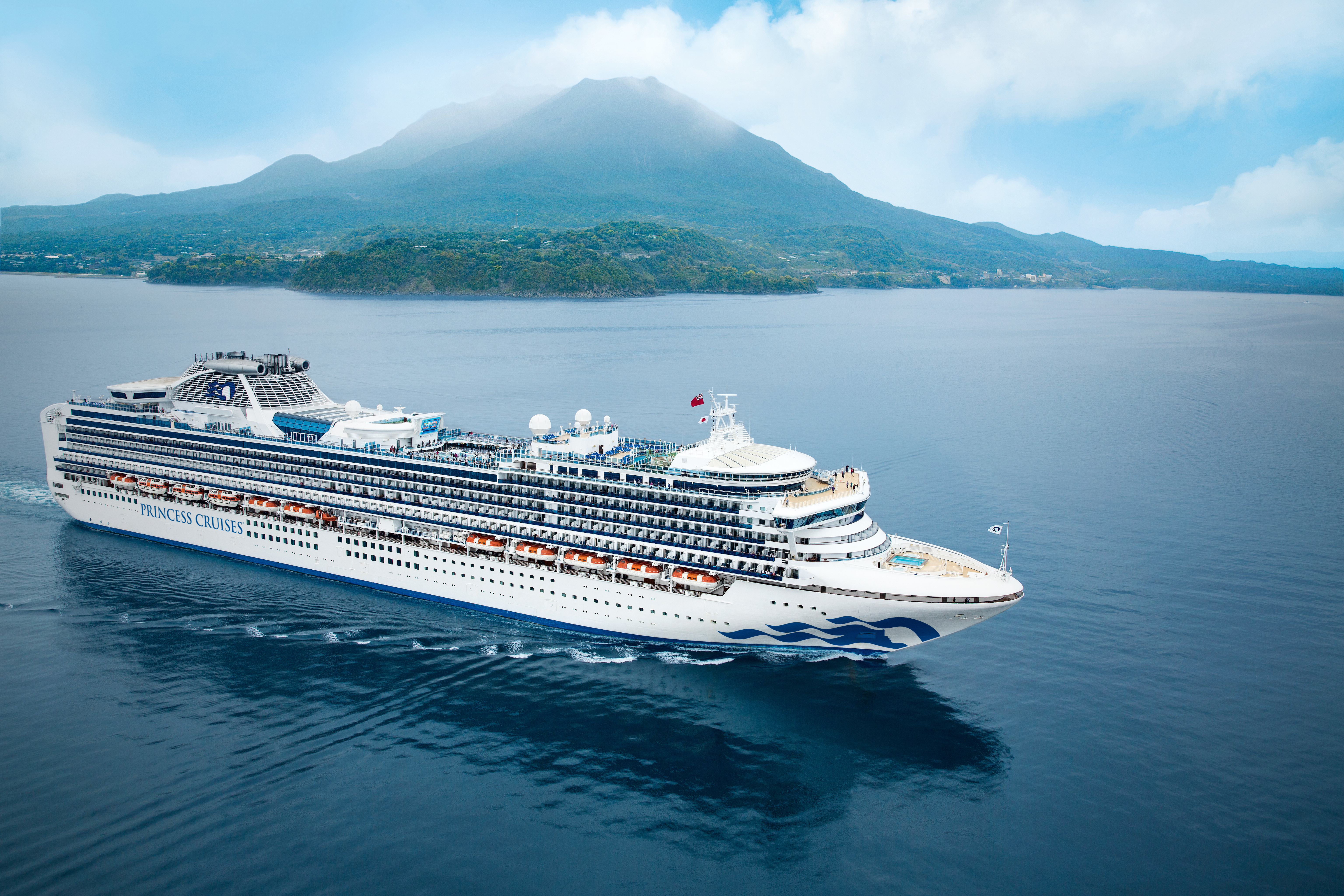
Princess Cruises · Diamond Princess
Overview
A 27-night voyage aboard Diamond Princess, departing Singapore on 16 Feb 2028 and arriving in Tokyo, calling at 19 destinations along the way.
SingaporePhu MyChan MayHong Kong, ChinaTaipeiIshigaki IslandKagoshimaTokyoKagoshimaTaipeiIshigaki IslandMiyake-jima, Tokyo, JapanOkinawaNagasakiKanmon Straits, JapanHiroshimaKochi, JapanShimiju, japanTokyo
Cabin prices
Live prices per person based on two sharing. Select a grade to see its fare options.
Loading live cabin prices…
Itinerary
27 nights · 28 ports of call- 1
Day 1 ·SingaporeEmbark
16 Feb 2028Depart 16:00Singapore - the very name summons visions of the mysterious East. The commercial center of Southeast Asia, this island city-state of four million people is a metropolis of modern high-rise buildings, Chinese shop-houses with red-tiled roofs, sturdy Victorian buildings, Buddhist temples and Arab bazaars. Founded in 1819 by Sir Stamford Raffles of the fabled East India Company, the city is a melting pot of people and cultures. Malay, Chinese, English and Tamil are official languages. Buddhism, Taoism, Islam, Hinduism and Christianity are the major faiths. Singapore is an ever-fascinating island boasting colorful traditions, luxurious hotels and some of the finest duty-free shopping in the world.
Lying just 85 miles north of the Equator at the tip of the Malay Peninsula, the island was a haven for Malay pirates and Chinese and Arab traders. - 2
Day 2 ·At Sea
17 Feb 2028 - 3
Day 3 ·Ho Chi Minh City (Phu My)
18 Feb 2028Arrive 08:00Depart 19:00Over three decades have passed since the Vietnam War ended with the fall of Saigon. Today, the name of this bustling metropolis on the Mekong River is Ho Chi Minh City. Yet, the essence of the city, a major trading center since the 18th century, remains unchanged. The air is filled with the cries of street hawkers and honking horns. Bicycles, motorbikes and automobiles fly down the boulevards at dizzying speeds. And everywhere, friendly faces and warm greetings meet you.
The port of Phu My (pronounced "Foo Me") is your gateway to Ho Chi Minh City and the seaside resort of Vung Tau. - 4
Day 4 ·At Sea
19 Feb 2028 - 5
Day 5 ·Da Nang/Hue (Chan May)
20 Feb 2028Arrive 08:00Depart 19:00The port of Chan May is located halfway between two historic and important cities: Da Nang and Hue. At the height of the Vietnam War, Da Nang was America's major strategic base. And the 1968 Tet Offensive marked a major turning point in that conflict - particularly in the bitter fighting for control of the old imperial capital.
But that was nearly four decades ago. Today Hue is a World Heritage Site. Visitors will long remember its imposing Imperial Citadel and the serene harmony of the Thien Mu Pagoda. Marble Mountain Beach, where American marines stormed ashore in 1965, is now an internationally renowned resort.
The surrounding coast is lined with superb white-sand beaches. Vietnam's major cultural attractions are within an easy drive. - 6
Day 6 ·At Sea
21 Feb 2028 - 7
Day 7 ·Hong Kong
22 Feb 2028Arrive 07:00Depart 23:00Skyscrapers form a glistening forest of steel and glass, junks and sampans ply the busy harbor waters, and the green, dragon-crested hills of Kowloon beckon. Welcome to Hong Kong, one of the world's great travel destinations. Now a semi-autonomous region of China, Hong Kong - literally "Fragrant Harbor" - has lost none of its charm, excitement or exoticism. Modern skyscrapers and luxury hotels climb the slopes of Hong Kong Island. Narrow streets are crammed with noodle vendors, fortunetellers and bonesetters. The endless array of shops offer the visitor everything from hand-tailored suits and ancient porcelain to the latest consumer electronics. And everywhere more than seven million people are moving at a breathtaking pace in one of the world's great monuments to capitalism, commerce and enterprise.
The former Crown Colony has enough attractions to last a lifetime. To take in the entire spectacle, head to Victoria Peak for panoramic views. Enjoy lunch on one of the city's floating restaurants. Walk down one of the crowded streets to take the city's rapid pulse. And whether you think you are in the mood or not - shop. After all, you are in the duty-free capital of the world. - 8
Day 8 ·At Sea
23 Feb 2028 - 9
Day 9 ·Taipei (Keelung)
24 Feb 2028Arrive 07:00Depart 19:00The oldest Chinese reference to Taiwan dates back to the Han Dynasty in the 3rd century B.C. However, it wasn't until the 17th century A.D. that Chinese Hakka traders first settled on the island. These bold merchants were soon followed by European and Asian adventurers seeking to control and colonize the strategic island. The most famous migration of all occurred in 1948, when the government of the Republic of China fled the mainland.
Taipei is one of the world's most important commercial centers. Despite its turbulent history, Taiwan today boasts an economy that is the envy of the world. Modern Taiwan is a world leader in the production of bicycles, computer chips, plastics, chemicals and computer notebooks. Taipei is a sophisticated modern metropolis that has not forgotten its rich traditional past.
The port of Keelung is your gateway to Taiwan. Visit the bustling city of Taipei and other interesting areas surrounding on this fascinating island in the East China Sea. - 10
Day 10 ·Ishigaki
25 Feb 2028Arrive 07:00Depart 19:00The balmy, subtropical climate draws countless visitors to its sandy shores, but Ishigaki offers much more than your typical island getaway. It is the cultural, political and economic center of the Yaeyama Islands, originally founded in 1908 as Yaeyama Village and becoming Ishigaki Town in 1926. Ishigaki was elevated to city status on July 10, 1947. A hilltop Shinto shrine which dates back to 1614 is the perfect place to start your exploration of this lovely town. Noted for its white-sand beaches and turquoise waters to which snorkelers flock for a glimpse of the island's famed manta rays, Ishigaki Island offers many opportunities to commune with nature. Ishigaki has palm forests, mangrove-lined rivers suited for kayaking, and jungle-covered mountains perfect for hiking adventures. Amidst such natural beauty, you'll find an abundance of cultural sites with ties to the island's rich history. The Yaeyama Museum displays historic artifacts as well as traditional cultural items, and a visit to the well-preserved Miyara Dunchi, built in 1819, is a rare example of a samurai-style residence. Be sure to leave time in your busy day to sample some of the sweet island pineapple and to shop for the island's famed black pearls, a most special souvenir.
Note: Ishigaki is an anchorage port. Transportation from ship to shore is via the ship's tender service. - 11
Day 11 ·At Sea
26 Feb 2028 - 12
Day 12 ·Kagoshima
27 Feb 2028Arrive 07:00Depart 16:00From the 12th century to the Meiji Restoration of 1868, Kagoshima was the chief stronghold of the mighty Shimazu clan. The city lies at the top of the Satsuma Peninsula, a mountainous, geothermal wonderland of hot springs and geysers. The area is also rich in modern Japanese history: Saigo Takamori and the Satsuma samurai were leaders of the Meiji Restoration that toppled the shogun and restored the Emperor to power in 1868. In 1877, dissatisfied with the direction of the new government, Saigo led the Satsuma Rebellion, which ended in his death and the final defeat of the samurai.
The symbol of Kagoshima is Sakura Jima - the volcanic island that sits just offshore. The volcano has erupted over 30 times in recorded history. - 13
Day 13 ·At Sea
28 Feb 2028 - 14
Day 14 ·Tokyo
29 Feb 2028Arrive 06:00Depart 16:00 - 15
Day 15 ·At Sea
1 Mar 2028 - 16
Day 16 ·Kagoshima
2 Mar 2028Arrive 08:00Depart 17:00From the 12th century to the Meiji Restoration of 1868, Kagoshima was the chief stronghold of the mighty Shimazu clan. The city lies at the top of the Satsuma Peninsula, a mountainous, geothermal wonderland of hot springs and geysers. The area is also rich in modern Japanese history: Saigo Takamori and the Satsuma samurai were leaders of the Meiji Restoration that toppled the shogun and restored the Emperor to power in 1868. In 1877, dissatisfied with the direction of the new government, Saigo led the Satsuma Rebellion, which ended in his death and the final defeat of the samurai.
The symbol of Kagoshima is Sakura Jima - the volcanic island that sits just offshore. The volcano has erupted over 30 times in recorded history. - 17
Day 17 ·At Sea
3 Mar 2028 - 18
Day 18 ·Taipei (Keelung)
4 Mar 2028Arrive 07:00Depart 19:00The oldest Chinese reference to Taiwan dates back to the Han Dynasty in the 3rd century B.C. However, it wasn't until the 17th century A.D. that Chinese Hakka traders first settled on the island. These bold merchants were soon followed by European and Asian adventurers seeking to control and colonize the strategic island. The most famous migration of all occurred in 1948, when the government of the Republic of China fled the mainland.
Taipei is one of the world's most important commercial centers. Despite its turbulent history, Taiwan today boasts an economy that is the envy of the world. Modern Taiwan is a world leader in the production of bicycles, computer chips, plastics, chemicals and computer notebooks. Taipei is a sophisticated modern metropolis that has not forgotten its rich traditional past.
The port of Keelung is your gateway to Taiwan. Visit the bustling city of Taipei and other interesting areas surrounding on this fascinating island in the East China Sea. - 19
Day 19 ·Ishigaki
5 Mar 2028Arrive 08:00Depart 17:00The balmy, subtropical climate draws countless visitors to its sandy shores, but Ishigaki offers much more than your typical island getaway. It is the cultural, political and economic center of the Yaeyama Islands, originally founded in 1908 as Yaeyama Village and becoming Ishigaki Town in 1926. Ishigaki was elevated to city status on July 10, 1947. A hilltop Shinto shrine which dates back to 1614 is the perfect place to start your exploration of this lovely town. Noted for its white-sand beaches and turquoise waters to which snorkelers flock for a glimpse of the island's famed manta rays, Ishigaki Island offers many opportunities to commune with nature. Ishigaki has palm forests, mangrove-lined rivers suited for kayaking, and jungle-covered mountains perfect for hiking adventures. Amidst such natural beauty, you'll find an abundance of cultural sites with ties to the island's rich history. The Yaeyama Museum displays historic artifacts as well as traditional cultural items, and a visit to the well-preserved Miyara Dunchi, built in 1819, is a rare example of a samurai-style residence. Be sure to leave time in your busy day to sample some of the sweet island pineapple and to shop for the island's famed black pearls, a most special souvenir.
Note: Ishigaki is an anchorage port. Transportation from ship to shore is via the ship's tender service. - 20
Day 20 ·Miyakojima
6 Mar 2028Arrive 07:00Depart 17:00Miyako Island is the largest and the most populous island among the Miyako Islands of Okinawa Prefecture, Japan. Miyako Island is administered as part of the City of Miyakojima, which includes not only Miyako Island, but also five other populated islands. - 21
Day 21 ·Okinawa
7 Mar 2028Arrive 07:00Depart 19:00The largest island in the Ryukyu Archipelago, Okinawa has been a center of trade and a source for conflict through its history. The island has been an independent kingdom, the feudal possession of a Japanese daimyo and a prefecture of Japan following the Meiji Restoration of 1866. Okinawa was the scene of bitter fighting during the closing days of World War II. Over 100,000 civilians perished and the island was left in ruins. A US military possession, Okinawa returned to Japanese rule in 1972. Naha is the island's largest city and the capital of Okinawa Prefecture.
Okinawa is the birthplace of karate. One of the world's most popular martial arts, karate is a fusion of Chinese kung fu and traditional island martial arts. - 22
Day 22 ·At Sea
8 Mar 2028 - 23
Day 23 ·Nagasaki
9 Mar 2028Arrive 07:00Depart 16:00For most travelers, Nagasaki is a symbol of the horror and the inhumanity of war. An estimated 75,000 people perished in 1945 when the city became the second target of a nuclear attack. Today, Nagasaki's Peace Park and Atomic Bomb Museum draw visitors from around the world.
But this beautiful city on Kyushu offers other sights. Often described as the San Francisco of Japan, the city occupies verdant hills surrounded by a deep-water bay. For three centuries, Nagasaki was Japan's sole window on the world. The city is also celebrated as the setting for Puccini's opera "Madame Butterfly." - 24
Day 24 ·Kanmon Straits, Japan
10 Mar 2028Arrive 10:30Depart 12:30The Kanmon Straits or the Straits of Shimonoseki is the stretch of water separating Honshu and Kyushu, two of Japan's four main islands. On the Honshu side of the strait is Shimonoseki and on the Kyushu side is Kitakyushu, whose former city and present ward, Moji, gave the strait its "mon". - 25
Day 25 ·Hiroshima
11 Mar 2028Arrive 07:00Depart 17:00On August 6, 1945, human history was irrevocably altered when the American bomber Enola Gay dropped an atomic bomb on Hiroshima. The bomb was code-named "Little Boy," but its detonation left half the city in ruins and aflame. Today, Hiroshima is a monument not only to the destructive forces harnessed by men but also to the indomitable will of the human spirit to overcome tragedy. At the heart of the city lies Peace Memorial Park and the Atomic Bomb Dome. The gutted walls of the city's old Industry Promotion Hall and the skeletal frame that supported its copper dome, vaporized in the blast, are instantly recognizable symbols of Hiroshima.
Travelers to Hiroshima will discover a more serene note at nearby Miyajima Island. One of the top-three scenic spots of Japan, the island is home to ancient Itsukushima Shrine, a designated National Treasure. - 26
Day 26 ·Kochi, Japan
12 Mar 2028Arrive 09:00Depart 17:00Kochi sits on the broad alluvial plain facing Urado Bay. This city in Shikoku takes its name from the great feudal castle that sits at its very heart. Completed in 1611, Kochi Castle was the seat of Yamauchi Kazutoyo, a noted warrior who supported Tokugawa Ieyasu in his successful quest to become Shogun. Tosa Province and Kochi Castle were Yamauchi's reward for faithful service. There is an historical irony here: 250 years later, a Kochi native son - a former low-ranked samurai and now ronin named Sakamoto Ryoma - played a pivotal role in bringing the Tokugawa Shogunate to an end and restoring the Emperor of Japan to political prominence. The prize once awarded for faithful service had become a hotbed of support for the Meiji Restoration.
Kochi is one of the wettest places in Japan - and a frequent target for cyclonic storms or typhoons. Southeast of the city, warm oceans currents washing against the Aki Mountains create a subtropical landscape of hibiscus, palm and ficus at Muroto-Anan Quasi-National Park. - 28
Day 28 ·Shimizu
13 Mar 2028Arrive 13:00Depart 19:00Sprawling, semi-rural Shimizu Ward is dominated by forested coastal mountains, with hiking trails and ropeway rides to dramatic viewpoints above Suruga Bay. Miho Beach Park is popular for swimming and water sports in summer, and there are baseball and soccer fields nearby, plus an aquarium at the Marine Science Center. - 28
Day 28 ·TokyoDisembark
14 Mar 2028Arrive 06:00
Your ship: Diamond Princess
Explore Diamond Princess's cabins, dining and onboard facilities.