
14 nightsFrom Tokyo13 ports of call
Circle Japan with Summer Festivals
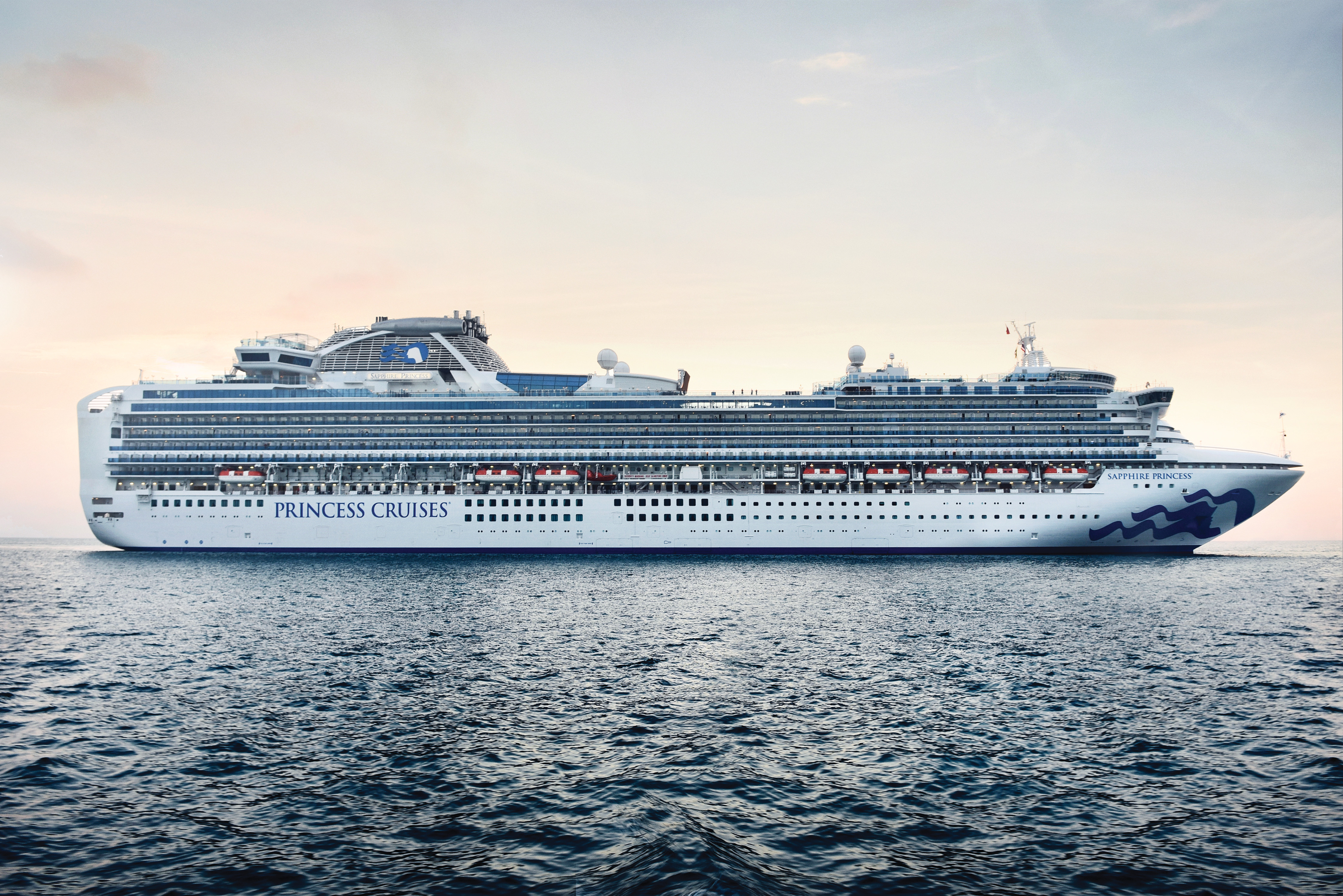
Princess Cruises · Sapphire Princess
Overview
A 14-night voyage aboard Sapphire Princess, departing Tokyo on 12 Aug 2028 and returning to the same port, calling at 13 destinations along the way.
TokyoNagoyaTokushima, JapanOsakaNagasakiBusan, South KoreaTsuruga, JapanNiigata, JapanAkita, JapanHakodateIshinomaki, JapanNikkoTokyo
Cabin prices
Live prices per person based on two sharing. Select a grade to see its fare options.
Loading live cabin prices…
Itinerary
14 nights · 15 ports of call- 1
Day 1 ·TokyoEmbark
12 Aug 2028Depart 16:00 - 2
Day 2 ·Nagoya
13 Aug 2028Arrive 08:00Depart 16:00Nagoya, capital of Japan’s Aichi Prefecture, is a manufacturing and shipping hub in central Honshu. The city’s Naka ward is home to museums and pachinko (gambling machine) parlors. Naka also includes the Sakae entertainment district, with attractions like the Sky-Boat Ferris wheel, which is attached to a mall. - 3
Day 3 ·Tokushima, Japan
14 Aug 2028Arrive 08:00Depart 23:59Born as a 16th century castle town whose remains now lay scattered near a park and museum, Tokushima is best known for its colorful summer dance festival, the Awa Odori. But it may be Mother Nature who garners the most attention. Surrounded by 3,280-foot-tall mountains that hint at the wonders that lie beyond, the city is the perfect gateway to the mesmerizing Naruto whirlpools, the panoramic views from atop Mt. Bizan, and the spectacular gorges and vine bridges of Iya Valley. Whether you're entranced with the ways of the warrior, or under the spell of the extraordinary attractions, Tokushima offers exciting new experiences and unforgettable new adventures. - 4
Day 4 ·Osaka
15 Aug 2028Arrive 08:00Depart 23:00For centuries, Osaka was Japan's cultural and commercial gateway to Asia - the point of entry both for trade goods and, most importantly, cultural influences that shaped Japanese society. From tea to Zen, from art to science and philosophy, Osaka was Japan's contact with the great East Asian cultures that flourished in China and Korea. The city reached its zenith in the late 16th century, when the great feudal lord Toyotomi Hideyoshi made Osaka his capital. Toyotomi was master of Japan, and an immense administrative and commercial center rapidly developed around Osaka Castle. After Toyotomi's death, the nation's seat of power shifted from Osaka to a sleepy little fishing village called Edo - modern Tokyo. While overshadowed by Tokyo, Osaka remains Japan's second largest city and a vital commercial center.
Modern Osaka is home to monuments from Japan's past including Toyotomi's immense castle and the Sumiyoshi Shrine. The city is also your gateway to Kyoto, Japan's ancient imperial capital and the nation's cultural and spiritual center. - 5
Day 5 ·At Sea
16 Aug 2028 - 6
Day 6 ·Nagasaki
17 Aug 2028Arrive 07:00Depart 16:00For most travelers, Nagasaki is a symbol of the horror and the inhumanity of war. An estimated 75,000 people perished in 1945 when the city became the second target of a nuclear attack. Today, Nagasaki's Peace Park and Atomic Bomb Museum draw visitors from around the world.
But this beautiful city on Kyushu offers other sights. Often described as the San Francisco of Japan, the city occupies verdant hills surrounded by a deep-water bay. For three centuries, Nagasaki was Japan's sole window on the world. The city is also celebrated as the setting for Puccini's opera "Madame Butterfly." - 7
Day 7 ·Busan
18 Aug 2028Arrive 07:00Depart 16:00The second largest city in South Korea, Busan is your gateway to a fascinating land whose culture is a unique amalgam of old and new. Modern high-rise towers dwarf ancient Buddhist temples. The city's bustling business district offers a stark contrast to the serene grounds of Yongdusan Park. In short, Busan is a microcosm of South Korea, a nation whose startling economic success often obscures one of Asia's most sophisticated and venerable cultures.
Busan was the scene of bitter fighting during the Korean War. The United Nations Memorial Cemetery marks the final resting place for the troops from 16 nations who gave their lives during the conflict. - 8
Day 8 ·At Sea
19 Aug 2028 - 9
Day 9 ·Tsuruga, Japan
20 Aug 2028Arrive 07:00Depart 16:00The serene calm of this largest city in the Wakasa region of Japan is one steeped in culture and poetic tales. The brilliant, wandering, Edo poet Matsua Basho was inspired to write a haiku about the glimmer of the moonlight over Tsuraga Bay, and the plethora of artisan crafts from lacquerware to washi (Japanese paper) keep the traditions of cultural beauty alive today. The area is home to one of the most picturesque pine groves in the country at Kehi-no-Matsubara, where white-sand beaches fringe the fragrant green boughs of the magnificent pines. The area of Mikata-goko is home to five sparkling, small lakes with colors ranging from turquoise blue to jade green, and the region is home to a number of important, brightly painted shrines. The Kehi-jingu Shrine was reared in 702 and a massive, vermillion, wooden torii gate was re-constructed in 1645. Museums abound, and the Fukui Prefectural Dinosaur Museum is popular with families wanting to explore the origins of the prehistoric world, while the moving Port of Humanity Museum honors the humanitarian work of Chiune Sugihara, credited with saving as many as 6,000 souls from the Nazis. Whether your interests lie in natural scenery, authentic experiences or historic sites, a day spent on these captivating shores will have you writing poetry of your own. - 10
Day 10 ·Niigata
21 Aug 2028Arrive 09:00Depart 18:00Traditionally famous for rice making and sake production, Niigata is the place for gourmet aficionados. It is also well known for the seafood caught from the Sea of Japan. With this variety of the commodity produced locally, Niigata developed from the wealth gained through shipping and trade by Kitamae-bune, which were cargo ships operated along the Sea of Japan between Hokkaido and Osaka from mid-18th century to the end of the 19th century.
To the south of Niigata is the Tsubame-Sanjo area famous today for metalworking. This derives from the production of Japanese nails used for Japanese traditional architecture. To discover Japanese craftsmanship, you will have the chance to visit the Suwada Open Factory. Also nearby is the religious center of Niigata in Yahiko. The Yahiko Shrine has gathered the devotion of the locals for more than a millennium. - 11
Day 11 ·Akita
22 Aug 2028Arrive 07:00Depart 17:00There is a celebratory air in Akita, where year round festivals and street parades are colorfully integrated into daily life. A key city in the Tohoku region since medieval times, Akita was once a castle town of the Satake clan, but today is a vibrant, prosperous city that seamlessly honors its past but embraces its young energetic spirit. Noted for its burgeoning art community, there are several fine museums to explore including The Hirano Masakichi Art Musuem housing a collection of work by Western and Japanese artists, the Akita City Folklore Museum and the Kakunodate Samurai District, a living museum that showcases the samurai way of life. In the neighboring Oga Peninsula, the region's most famous icon, the terrifying Namahage, has it's won cultural center and festival ritual performed in his name. Surrounding the city, fertile farmland and rice fields produce some of the best sake in the country and nature lovers won't know which way to turn – to the west is the picturesque Sea of Japan and to the north, south and east, majestic mountain ranges including the UNESCO World Heritage sight of Shirakami-Sanchi proudly stand. A trip to the revolving observation center Mt. Kanpuzan Observatory solves the dilemma. - 12
Day 12 ·Hakodate
23 Aug 2028Arrive 07:30Depart 16:00It took Commodore Perry and American gunboat diplomacy to open Japan to the outside world after two centuries of self-imposed isolation. In 1859, the port of Hakodate became the first Japanese city fully opened to Westerners under the Treaty of Amity and Commerce. Foreigners soon flocked to Hakodate, and today visitors wandering the cobblestone streets of the city's Motomachi District can view their Western-style frame houses. Hakodate, once a fishing port famed for its high quality fish and shellfish, quickly became Hokkaido's largest city and one of Japan's most important ports. The Great Hakodate Fire of 1934 dealt the city a near fatal blow - a blow from which Hakodate was slow to recover. Today the city is Hokkaido's third largest - surpassed by Sapporo and Asahikawa - but retains its foremost position as the finest Japanese producer of sushi's raw product: the high quality seafood caught in Hokkaido's cold waters.
It may not compare to Tokyo's Tsukiji's Fish Market, but at Hakodate's four-block-long Morning Market, vendors offer a stunning array of fresh fish and shellfish prized for sushi including salmon roe, sea urchin, scallops and crab. Restaurants and food stands prepare a wide arrange of dishes including domburi topped with fresh seafood. - 13
Day 13 ·Ishinomaki, Japan
24 Aug 2028Arrive 10:00Depart 19:00Ishinomaki is enjoying a period of revitalization after being hit by the 2011 earthquake and tsunami. Its lively and colorful urban core showcases its "manga" culture-the art of Japanese comic books and illustrated novels-thanks to famed writer Shotaro Ishinomori, known for his Kamen Rider series. Throughout the city, you'll see comic book artwork and statues. The thriving city of Ishimonaki serves as a gateway to a variety of cultural and historical adventures. Explore exquisite temples from the national treasure Zuiganji Temple, the oldest example of Momoyama architecture in northern Japan, and the decorative paintings, gold-leaf ornamentation and manicured gardens of the Entsuin Temple. Stroll through the UNESCO World Heritage site of Hiraizumi, said to once rival Kyoto in its grandeur, or-for unique gastronomic delights-wander along the stalls of the Shiogama Fish Market, where the catch of the day is only the beginning and you can dine on extraordinarily fresh sushi and rice bowl creations. With magnificent vistas around every turn, you'll delight in Japan's natural beauty while soaking in the warm waters of an ancient hot spring surrounded by spectacular forests and mountain views or on a scenic cruise through sparkling Matsushma Bay, studded with more than 200 pine-covered islands and considered one of Japan's three most picturesque views. - 14
Day 14 ·Hitachinaka (For Nikko)
25 Aug 2028Arrive 07:00Depart 15:00Hitachinaka is a city located in Ibaraki Prefecture, Japan. As of 1 July 2020, the city had an estimated population of 154,663 in 64,900 households and a population density of 1547 persons per km². The percentage of the population aged over 65 was 26.1%. The total area of the city is 99.96 square kilometres. - 15
Day 15 ·TokyoDisembark
26 Aug 2028Arrive 06:00
Your ship: Sapphire Princess
Explore Sapphire Princess's cabins, dining and onboard facilities.