
11 nightsFrom Belfast14 ports of call
11-Day British Isles of Legend
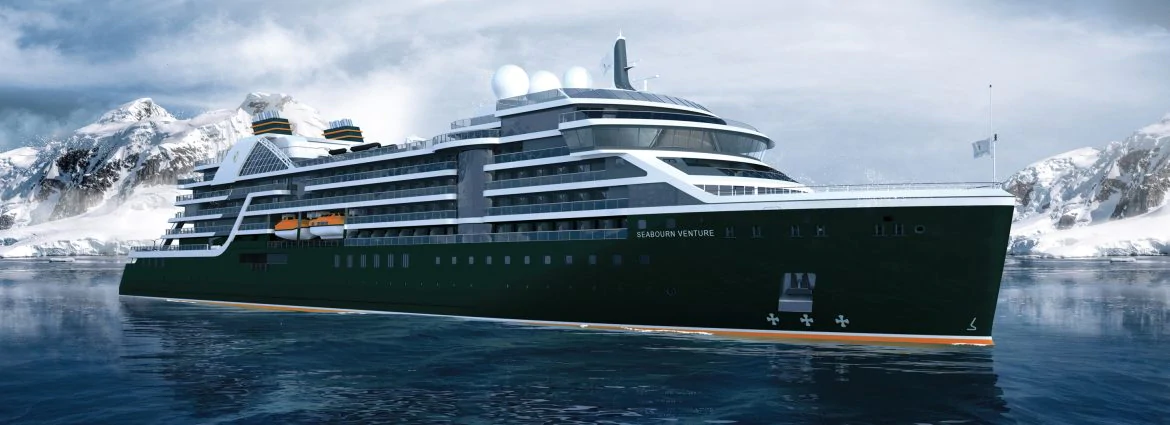
Seabourn · Seabourn Venture
Overview
A 11-night voyage aboard Seabourn Venture, departing Belfast on 6 May 2028 and arriving in Edinburgh, UK, calling at 14 destinations along the way.
BelfastCalf of Man, Isle of ManDouglasBrodickRathlin IslandBaile Mor, Isle of Iona, UKStaffaTobermory, ScotlandIsle of EiggSt. Kilda, United KingdomStornoway (Isle of Lewis), United KingdomKirkwall, ScotlandCopinsay Island, ScotlandEdinburgh, UK
Cabin prices
Live prices per person based on two sharing. Select a grade to see its fare options.
Loading live cabin prices…
Itinerary
11 nights · 16 ports of call- 1
Day 1 ·Belfast, Northern IrelandEmbark
6 May 2028Depart 22:00Belfast, Northern Ireland's largest urban area is situated on Ireland's eastern coast. To the northwest, the city is flanked by hills, including Cavehill, thought to be Jonathan Swift's inspiration for his novel, "Gulliver's Travels." Belfast's location is ideal for the shipbuilding industry that once made it famous. The Titanic was built here in 1912, at the largest shipyard in the world. Until the Good Friday Agreement of 1998 was reached, the worst of Ireland's "troubles" was experienced in Belfast, which suffered almost half the conflict's resulting deaths. Since that time, however, Belfast's city center has emerged into an attractive pedestrian-oriented environment with street musicians and the like, and a revitalized river front. - 2
Day 2 ·Calf of Man, Isle of Man
7 May 2028Arrive 07:00Depart 12:00 - 3
Day 3 ·Douglas, Isle of Man
7 May 2028Arrive 14:00Depart 20:00Douglas is the capital of the Isle of Man. Mann, as it is also called, is a British Crown Dependency, with its own parliament and postage stamps (a popular souvenir). Here visitors can sample means of transport ranging from horse-drawn trams, to steam trains and the high-speed motorcycles that compete in the renowned Isle of Man TT races. In summer the town maintains much of the seaside resort charm of an earlier period, including the Victorian-era Grand Union Camera Obscura, now restored for your amusement. - 3
Day 3 ·Brodick, Isle of Arran
8 May 2028Arrive 07:00Depart 18:00Brodick is the main village on the Isle of Arran, in the Firth of Clyde, Scotland. It is halfway along the east coast of the island, in Brodick Bay below Goat Fell, the tallest mountain on Arran. The name is derived from the Norse "breda-vick" meaning "Broad Bay". - 4
Day 4 ·Rathlin Island
9 May 2028Arrive 07:00Depart 17:00Rathlin Island is an island and civil parish off the coast of County Antrim in Northern Ireland. It is Northern Ireland's northernmost point. - 5
Day 5 ·Baile Mor
10 May 2028Arrive 07:00Depart 12:00 - 6
Day 6 ·Staffa, Scotland, UK
10 May 2028Arrive 14:00Depart 20:00The tiny island of Staffa, part of the Inner Hebrides, is celebrated for its stunning geology. Vikings named it Stafyi-øy meaning ‘stave island,’ as its rock formations reminded them of the vertically placed logs used to construct their houses. Staffa is made up completely of hexagonal columnar basalt. Sixty-five million years ago, erupting lava cooled quickly, forming these distinctive shapes. Hexagons are most often associated with honeycombs in beehives, however, they are also characteristic in volcanic formations. Over time, a weakness in the rock was eroded by fierce Atlantic waves, creating legendary Fingal’s Cave. It was once known as ‘The Musical Cave’ for the wonderful sounds of the sea water reverberating against the sides of its large cavern.
The island was first promoted by Sir Joseph Banks, who was Captain James Cook’s naturalist in 1772. In the 19th century, Jules Verne, William Wordsworth, John Keats, Alfred Lord Tennyson, Queen Victoria, Prince Albert, the artist JMW Turner and 19-year old Felix Mendelssohn also visited Staffa - 6
Day 6 ·Tobermory, Scotland, UK
11 May 2028Arrive 07:00Depart 14:00Tiny, tidy Tobermory welcomes you to the Isle of Mull, largest of the Inner Hebrides. The colorful town is curved around its harbor, and the Mull Museum is a good place to start discovering more about the island, as well as its maritime and crofting background. Iona Abbey is an atmospheric relic of ancient times, with a Gothic and Romanesque nave. Nearby Duart Castle is one of the oldest inhabited castle in Ireland, the seat of Clan MacClean. The central keep was built in 1360. Glengorm Castle is scenically situated overlooking the sea and the distant Outer Hebrides. Retire to the small Tobermory Distillery, one of Scotland’s earliest, for a taste of single malt whisky, then keep an eye out for a glimpse of the magnificent white-tailed sea eagles recently re-introduced on the island. - 7
Day 7 ·Isle of Eigg
11 May 2028Arrive 15:00Depart 19:00 - 7
Day 7 ·Am Baile, St Kilda, Scotland, United Kingdom
12 May 2028Arrive 07:00Depart 17:00The St Kilda volcanic archipelago has the highest sea cliffs in Britain and the most important seabird breeding colonies in northwestern Europe. The entire archipelago is owned by the National Trust for Scotland and is one of the few UNESCO World Heritage Sites chosen for both its natural and cultural qualities. In spite of its extreme isolation, some 40 miles (64 km) off of the remote Hebrides, there has been permanent habitation here for 2,000 years. The one-time population of hardy Kildians were finally forced to leave because of starvation. Their abandoned stone huts stand as silent witnesses to past settlement, but two of their ancient sheep species, dating from the Neolithic and Iron Ages, continue to thrive here.
Some one million nesting seabirds breed in St Kilda, including the largest colony of guillemots on earth, and the largest colony of gannets, fulmars, Leach's petrels and Atlantic puffins in Britain. The St Kilda wren and the St Kilda field mouse are species found only here. - 8
Day 8 ·Scenic cruising Isles of St. Kilda
12 May 2028Arrive 17:30Depart 19:30 - 8
Day 8 ·Stornoway (Isle of Lewis), UK
13 May 2028Arrive 07:00Depart 17:00Stornoway, on the Isle of Lewis in the Outer Hebrides, was founded by Vikings in the 9th century. But the Hebridean culture goes back much further, as testified by the circles of standing stones that are found on the island, and shards of pottery dated from at least 5,000 years in the past. There are remnants of various historic periods to be seen here, including traditional blackhouses, an ancient design, some of which were incredibly still in use into the 1970s. Lews Castle, which overlooks the town, is a more modern copy of a Tudor manse, which was built by a former owner of the island. Latta’s Mill, a 19th century overshot water mill, has been reconstructed and operates as an attraction. The main occupations on Lewis are fishing, farming, and production of Harris Tweed, a traditional cloth named for another nearby Hebrides isle. - 9
Day 9 ·Kirkwall
14 May 2028Arrive 07:00Depart 22:00Kirkwall is the largest town of Orkney, an archipelago to the north of mainland Scotland. The name Kirkwall comes from the Norse name Kirkjuvágr, which later changed to Kirkvoe, Kirkwaa and Kirkwall. - 10
Day 10 ·Copinsay Island, Scotland
15 May 2028Arrive 07:00Depart 15:00 - 11
Day 11 ·Leith (Edinburgh), UK
16 May 2028Arrive 08:45Two miles distant from its ancient seaport of Leith lies Edinburgh, Scotland's national capital. The Scottish capital since the 15th century, Edinburgh is comprised of two distinct areas - the Old Town, dominated by a medieval fortress, and the neoclassical New Town, whose development from the 18th century onwards had a far-reaching influence on European urban planning. The harmonious juxtaposition of these two contrasting historic areas, each with many important buildings, is what gives the city its unique character.
Always favored by geography, Edinburgh is ideally situated on the Firth of Forth, an inlet from the North Sea, and built on extinct volcanoes surrounded by woods, rolling hills and lakes. On a clear day, there are glorious vistas from each of these hilltops. Looming above the city is the striking fairy tale castle built on the site of a 7th-century fortress. Towards the Middle Ages life within the fortress spilled onto the long ridge running to the foot of Arthur's Seat, which crowns Holyrood Park. The city's most legendary citizens are the arch Presbyterian John Knox and Mary Queen of Scots, who dominated the Edinburgh of the late 16th century. Edinburgh's delightful city center is a joy to explore on foot. Every alley reveals impressive steeples, jagged, chimney-potted skylines, or lovely rotund domes. - 12
Day 12 ·Leith (Edinburgh), UKDisembark
17 May 2028Arrive 06:00Two miles distant from its ancient seaport of Leith lies Edinburgh, Scotland's national capital. The Scottish capital since the 15th century, Edinburgh is comprised of two distinct areas - the Old Town, dominated by a medieval fortress, and the neoclassical New Town, whose development from the 18th century onwards had a far-reaching influence on European urban planning. The harmonious juxtaposition of these two contrasting historic areas, each with many important buildings, is what gives the city its unique character.
Always favored by geography, Edinburgh is ideally situated on the Firth of Forth, an inlet from the North Sea, and built on extinct volcanoes surrounded by woods, rolling hills and lakes. On a clear day, there are glorious vistas from each of these hilltops. Looming above the city is the striking fairy tale castle built on the site of a 7th-century fortress. Towards the Middle Ages life within the fortress spilled onto the long ridge running to the foot of Arthur's Seat, which crowns Holyrood Park. The city's most legendary citizens are the arch Presbyterian John Knox and Mary Queen of Scots, who dominated the Edinburgh of the late 16th century. Edinburgh's delightful city center is a joy to explore on foot. Every alley reveals impressive steeples, jagged, chimney-potted skylines, or lovely rotund domes.
Your ship: Seabourn Venture
Explore Seabourn Venture's cabins, dining and onboard facilities.