
16 nightsFrom Reykjavik, Iceland7 ports of call
16-Day Svalbard Expedition & Iceland
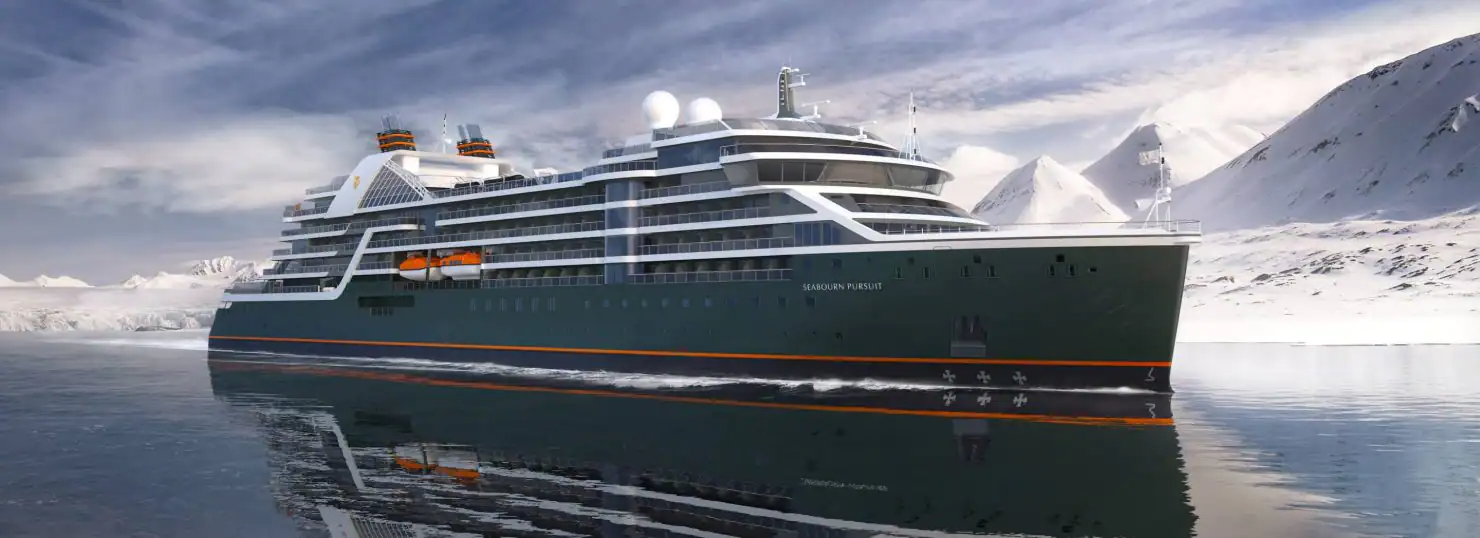
Seabourn · Seabourn Pursuit
Overview
A 16-night voyage aboard Seabourn Pursuit, departing Reykjavik, Iceland on 26 Jun 2028 and returning to the same port, calling at 7 destinations along the way.
Reykjavik, IcelandIsafjordurJan MayenLongyearbyenSiglufjordurPatreksfjordur,IcelandReykjavik, Iceland
Cabin prices
Live prices per person based on two sharing. Select a grade to see its fare options.
Loading live cabin prices…
Itinerary
16 nights · 17 ports of call- 1
Day 1 ·Reykjavik, IcelandEmbark
26 Jun 2028Depart 17:00Warmed by the Gulf Stream as well as by highly active thermal hot springs and volcanoes, Iceland is somewhat misnamed. While it is a stark and barren country with three huge areas of glaciers, one theory is that early Norsemen sought to mislead other potential settlers by giving a pleasant name to fierce, inhospitable Greenland, and a forbidding name to the imminently habitable Iceland. Irish monks and hermits established themselves here in the 8th century, but left a century later when the pagan Norsemen arrived. Europe's first Parliament of General Assembly, the Althing, was established in the year 930 and still functions as the legislative body, although it was suspended by the Danes at the end of the 18th century and not reconvened until 1843. Reykjavik was the site picked by the island's first permanent resident, Ingolfur Arnarson in 874, and is home to more than half of the island's total population. The world's northernmost capital, Reykjavik is proud of its virtual lack of air pollution. Both electrical power and home heating are derived from the geothermal activity on the island. The city's large swimming pools are always warm, and in the countryside exotic fruits such as grapes and bananas are cultivated in greenhouses made cozy with the help of underground hot springs. - 2
Day 2 ·Isafjordur, Iceland
27 Jun 2028Arrive 08:00Depart 18:00Like most Icelandic towns, this one on the northwest coast was started by fisherman and whalers. The name means ice-fjord. It is a perfect place from which to explore the cultural and economic staples of Iceland. An excursion to Sudavik reveals a town started by whalers and nearly destroyed by an avalanche in 1995, now rebuilt out of the path of further slides. Its lovely church was donated by whalers, as well. The own also holds a center for the study of the indigenous arctic foxes. The Maritime Museum in Isafjordur illustrates the lifestyles of the early inhabitants, including many implements of their trades, and also a wall of accordions, one of the few forms of entertainment on bygone days. Another option is a boat ride to nearby Vigur island, a nesting site for many species of seabirds, including eider ducks, whose down is yet another example of local economy based on the surrounding seas. - 3
Day 3 ·At Sea
28 Jun 2028 - 4
Day 4 ·Jan Mayen
29 Jun 2028Arrive 07:00Depart 17:00Remote and isolated, Jan Mayen is dominated by 2,277 meter (7,470’) high Beerenberg Volcano and its large ice cap. The island has two parts: larger northeast Nord-Jan and smaller southwest Sør-Jan, linked by a 2.5 kilometer (1.6 mile) wide isthmus. The League of Nations gave jurisdiction of Jan Mayen to the Kingdom of Norway in 1921. Except for being used as a meteorological, radio and navigation aid for shipping in the Atlantic, the island has remained untouched, its only inhabitants are 18 military personnel.
In 2010 Jan Mayen was declared a nature reserve for the protection of its wildlife and is recognized as one of the most important breeding sites for over 250,000 seabirds in the North Atlantic. It supports large colonies of northern fulmars, little auks and thick-billed guillemots. Polar bears found here are genetically distinguishable from those found elsewhere.
Although ‘officially’ discovered by the Dutch whaling captain Fopp Gerritsz in 1614, it may have been sighted by exploring Irish monks as early as A.D. 400. - 5
Day 5 ·At Sea
30 Jun 2028 - 6
Day 6 ·Longyearbyen, Norway
1 Jul 2028Arrive 10:00Depart 19:00Longyearbyen, the seat of the Governor of Svalbard, is located in a narrow valley along the shores of Adventfjorden a small tributary of Isfjord, the largest fjord system in Svalbard. It extends 100 kilometers (60 miles) into the island of Spitsbergen. Nine large tidewater glaciers, with a combined ice-front of 21 kilometers (13 miles), as well as dozens hanging glaciers drain into the fjord.
The town’s 2,100 inhabitants exist in one of the most northern settlements on Earth, making their living by a combination of coal mining, education and tourism. Because of the town’s extreme isolation, proximity to wildlife, and Svalbard’s pristine environment, unique laws exist that are found in few other places. All individuals venturing outside of town are required to carry a rifle for protection against polar bears, possessing a cat is illegal, no one is allowed to be buried here and how much alcohol can be purchased each month is restricted.
Longyearbyen was named after the American industrialist John Longyear whose Arctic Coal Company began mining here in 1906. - 7
Day 7 ·The Svalbard Experience
2 Jul 2028Arrive 07:00Depart 17:00 - 8
Day 8 ·The Svalbard Experience
3 Jul 2028Arrive 07:00Depart 17:00 - 9
Day 9 ·The Svalbard Experience
4 Jul 2028Arrive 07:00Depart 17:00 - 10
Day 10 ·The Svalbard Experience
5 Jul 2028Arrive 07:00Depart 17:00 - 11
Day 11 ·The Svalbard Experience
6 Jul 2028Arrive 07:00Depart 17:00 - 12
Day 12 ·The Svalbard Experience
7 Jul 2028Arrive 07:00Depart 17:00 - 13
Day 13 ·At Sea
8 Jul 2028 - 14
Day 14 ·At Sea
9 Jul 2028 - 15
Day 15 ·Siglufjordur, Iceland
10 Jul 2028Arrive 08:00Depart 18:00Siglufjörður is the northernmost town on the Icelandic mainland, a small fishing village of some 1,200 people. Founded in 1918, it was in the past the capital of the North Atlantic herring fishing industry. The Síldarminjasafnið Herring Era Museum, one of Iceland's largest seafaring and industrial museums, houses three different areas where one can learn about both the traditional and the modern herring industry. A collection of many historic fishing vessels and artifacts is proudly displayed by the people of Siglufjörður, detailing how herring was salted, processed and collected. The small harbor with its colorful fishing boats and the red-roofed steeple of the Lutheran church dominate the village-scape.
The natural beauty of the area includes high mountains that rim the fjord, freshwater lakes, the Hólsá river, black sand beaches, and a wealth of birdlife all around. This northernmost region of Iceland is renowned for some of the largest and most dramatic waterfalls in the country. - 16
Day 16 ·Patreksfjordur, Iceland
11 Jul 2028Arrive 08:00Depart 18:00 - 17
Day 17 ·Reykjavik, IcelandDisembark
12 Jul 2028Arrive 07:00Warmed by the Gulf Stream as well as by highly active thermal hot springs and volcanoes, Iceland is somewhat misnamed. While it is a stark and barren country with three huge areas of glaciers, one theory is that early Norsemen sought to mislead other potential settlers by giving a pleasant name to fierce, inhospitable Greenland, and a forbidding name to the imminently habitable Iceland. Irish monks and hermits established themselves here in the 8th century, but left a century later when the pagan Norsemen arrived. Europe's first Parliament of General Assembly, the Althing, was established in the year 930 and still functions as the legislative body, although it was suspended by the Danes at the end of the 18th century and not reconvened until 1843. Reykjavik was the site picked by the island's first permanent resident, Ingolfur Arnarson in 874, and is home to more than half of the island's total population. The world's northernmost capital, Reykjavik is proud of its virtual lack of air pollution. Both electrical power and home heating are derived from the geothermal activity on the island. The city's large swimming pools are always warm, and in the countryside exotic fruits such as grapes and bananas are cultivated in greenhouses made cozy with the help of underground hot springs.
Your ship: Seabourn Pursuit
Explore Seabourn Pursuit's cabins, dining and onboard facilities.