
26 nightsFrom Reykjavik, Iceland17 ports of call
26-Day Greenland, Labrador Coast & Atlantic Crossing
Seabourn · Seabourn Pursuit
Overview
A 26-night voyage aboard Seabourn Pursuit, departing Reykjavik, Iceland on 6 Sept 2028 and arriving in Oranjestad, Aruba, calling at 17 destinations along the way.
Reykjavik, IcelandHeimaey - Vestman Islands, IcelandPrins Christian SundKangikitsokQaqortoq, GreenlandHvalseyQassiarsuq (Brattalihd)Nain, CanadaNachvak FjordHopedale,Indian HarbourRed Bay, LabradorNorris PointHalifaxHamilton, USASan Juan, Puerto RicoOranjestad, Aruba
Cabin prices
Live prices per person based on two sharing. Select a grade to see its fare options.
Loading live cabin prices…
Itinerary
26 nights · 30 ports of call- 1
Day 1 ·Reykjavik, IcelandEmbark
6 Sept 2028Depart 17:00Warmed by the Gulf Stream as well as by highly active thermal hot springs and volcanoes, Iceland is somewhat misnamed. While it is a stark and barren country with three huge areas of glaciers, one theory is that early Norsemen sought to mislead other potential settlers by giving a pleasant name to fierce, inhospitable Greenland, and a forbidding name to the imminently habitable Iceland. Irish monks and hermits established themselves here in the 8th century, but left a century later when the pagan Norsemen arrived. Europe's first Parliament of General Assembly, the Althing, was established in the year 930 and still functions as the legislative body, although it was suspended by the Danes at the end of the 18th century and not reconvened until 1843. Reykjavik was the site picked by the island's first permanent resident, Ingolfur Arnarson in 874, and is home to more than half of the island's total population. The world's northernmost capital, Reykjavik is proud of its virtual lack of air pollution. Both electrical power and home heating are derived from the geothermal activity on the island. The city's large swimming pools are always warm, and in the countryside exotic fruits such as grapes and bananas are cultivated in greenhouses made cozy with the help of underground hot springs. - 2
Day 2 ·Exploring The Outer Islands of Heimaey
7 Sept 2028Arrive 07:00Depart 11:00 - 3
Day 3 ·Heimaey, Westman Islands, Iceland
7 Sept 2028Arrive 12:00Depart 19:00 - 3
Day 3 ·At Sea
8 Sept 2028 - 5
Day 5 ·Prins Christian Sund, Greenland
9 Sept 2028Arrive 16:00 - 5
Day 5 ·Prins Christian Sund, Greenland
10 Sept 2028Depart 12:00 - 6
Day 6 ·Kangikitsok, Greenland
10 Sept 2028Arrive 15:00Depart 20:00 - 6
Day 6 ·Qaqortoq, Greenland
11 Sept 2028Arrive 08:00Depart 14:00The largest town in South Greenland with over 3,500 citizens, Qaqortoq was founded in 1775 and still reveals some examples of colonial-period architecture. There is not infrastructure to support shore excursions here, but guests can explore the town and its museum, or possibly arrange a visit to a nearby hot springs. Like other towns in Greenland, there are also possibilities to buy examples of traditional Inuit arts and crafts, including items crafted of bone, soapstone and wild-harvested furs. - 7
Day 7 ·Hvalsey, Greenland
11 Sept 2028Arrive 15:00Depart 20:00Twelve miles by Zodiac up the Hvalseyjarfjord from Qaqortoq, the largest community in South Greenland, lies the most prominent Norse archaeological site in Greenland. The so-called Eastern Settlement lasted from the 10th until the mid-15th century. Your expedition team archaeologist can interpret for you the ruins of the great halls and church at Hvalsey that hint of a prospering medieval farmstead. The site evokes an era when the Norse were trading with the indigenous Thule people of the area for furs and ivory, which were a prized commodities in Europe. A wedding held in the church in 1408 comprises the last written record of the Norse adventure in Greenland. Within a few years, Hvalsey and the rest of other Norse communities of Greenland withered as immigrants returned to the more established communities in Iceland and Norway. The site’s meadows of wildflowers sloping up from the fjord give a sense of the peaceful community that existed here in that long-ago summer. - 7
Day 7 ·Brattahlid (Qassiarsuk), Greenland
12 Sept 2028Arrive 07:00Depart 12:00 - 8
Day 8 ·At Sea
13 Sept 2028 - 9
Day 9 ·Nain, Labrador, Canada
14 Sept 2028Arrive 07:00Depart 16:00 - 10
Day 10 ·Nachvak Fiord, Torngat Mts, Canada
15 Sept 2028Arrive 09:00Depart 17:00 - 11
Day 11 ·Eclipse Channel, Labrador, Canada
16 Sept 2028Arrive 07:00Depart 17:00 - 12
Day 12 ·Saglek Fjord, Labrador, Canada
17 Sept 2028Arrive 07:00Depart 17:00 - 13
Day 13 ·Hopedale, Labrador, Canada
18 Sept 2028Arrive 10:00Depart 19:00 - 14
Day 14 ·Indian Harbour, NL, Canada
19 Sept 2028Arrive 07:00Depart 17:00 - 15
Day 15 ·L Anse aux Meadows, Newfoundland, Canada
20 Sept 2028Arrive 09:00Depart 18:00Located at the most northerly tip of Newfoundland, L'Anse aux Meadows is nestled near the fishing village of St. Anthony. It is the site of the first European settlement in the New World, approximately 500 years before Columbus' arrival. Other Norse groups had relocated from their homelands to the New World. In 1961, explorer and writer Helge Instad discovered a group of large mounds in the countryside. These mounds were excavated revealing the remains of a Norse settlement. This site became L'Anse aux Meadows National Historic Park in 1977 and is noted on the UNESCO World Heritage List of important cultural properties. The site at L'Anse aux Meadows has been completely excavated allowing visitors to see the remains of the homes, a smithy, and various worksheds. The park's interpretive center displays Norse artifacts from the excavation which include iron rivets, a flywheel and the floorboard of a boat. Researchers still debate as to whether the site at L'Anse aux Meadows is Leif Eriksson's 'Vinland,' a lush, beautiful area where he settled in for the winter around the year 1000.
Parks Canada will greet you on disembarking the ship and you may explore at leisure this first settlement of the New World. - 16
Day 16 ·Red Bay, Labrador, Canada
21 Sept 2028Arrive 07:00Depart 17:00Red Bay is a National Historic Site of Canada, and has been nominated by Canada for inclusion as a UNESCO World Heritage Site. One of the reasons is the importance of the Basque whaling activity that thrived here in the 16th and early 17th centuries. Sunken Basque galleons and smaller boats from the period have been discovered just offshore. Although the whale population is much diminished today, it is still a popular activity to watch them, as well as the icebergs that float down from the seas further north. - 17
Day 17 ·Norris Point, Newfoundland, Canada
22 Sept 2028Arrive 07:00Depart 17:00 - 18
Day 18 ·At Sea
23 Sept 2028 - 19
Day 19 ·Halifax, Nova Scotia
24 Sept 2028Arrive 08:30Depart 18:00With its exceptionally delightful harbor side setting, early Europeans were first attracted to Halifax in 1749 with the establishment here of a military outpost by Colonel Cornwallis. The ports natural advantages of a well-protected harbor and close proximity to major fishing grounds resulted in its growth into a major military base and sea port. The peninsula has had several major immigrations during its history; English, French, German, Irish and Scottish have come in substantial numbers at various times. Travelers familiar with the South Pacific will find it interesting to know that Captain James Cook, whose explorations defined most of the Pacific Basin for Europeans, also spent four years in Halifax charting Nova Scotia and the waters of the St. Lawrence. A college town, Halifax has an exhilarating and youthful air about it, as evidenced by many bicyclists and skateboarders. The heart of Halifax offers wonderful restaurants and shopping, galleries, museums, and sites of historic interest including the Naval Dockyard, which dates from 1757, and St. Paul's Church. Heading out of town, the wonders of nature are to be found in the form of the sea, with the smell of salty air, cool ocean breezes, and the powerful force of waves crashing against the rugged shoreline. - 20
Day 20 ·At Sea
25 Sept 2028 - 21
Day 21 ·At Sea
26 Sept 2028 - 22
Day 22 ·Hamilton, Bermuda
27 Sept 2028Arrive 08:00Depart 17:00Of the 300 coral atolls which comprise the British crown colony of Bermuda, only 20 are inhabited. Extremely treacherous coral reefs surround the area, as indicated by the 300 shipwrecks lying offshore. Self-governed in internal affairs since 1968, Bermuda remains under the protective umbrella of Great Britain for defense and external affairs. Hamilton, in particular, is decidedly British in atmosphere and tradition. Dazzling beaches, beds of Bermuda lilies, almost luminescent bougainvillea vines and clusters of oleander provide a most inviting backdrop for the island's luxury hotels, elegant boutiques and fine restaurants. Daytime activities abound, while exciting entertainment beckons you ashore in the evening. Welcome to Bermuda. - 23
Day 23 ·At Sea
28 Sept 2028 - 24
Day 24 ·At Sea
29 Sept 2028 - 25
Day 25 ·San Juan, Puerto Rico
30 Sept 2028Arrive 07:00Depart 17:00Puerto Rico has been voluntarily associated with the United States since it was ceded by Spain in 1898. In 1952, this island country became a self-governing commonwealth territory of the United States. The capital, San Juan, is a teeming city of over 1.5 million. Remnants of colonial architecture stand side by side with the most modern high rises in this city of contrasts. The 7-square-block area, which contains the historic zone of Old San Juan, was once completely encircled by city walls and is still guarded by the impressive forts of El Morro and San Cristobal, which loom over the harbor as reminders of the centuries of Spanish rule. El Yunque rainforest, on the northeastern side of the island, is just one of many distinctive geographical features found here. Mountain lakes, waterfalls, teak forests, and three magnificent phosphorescent bays offer the visitor a variety of diversions. - 26
Day 26 ·At Sea
1 Oct 2028 - 27
Day 27 ·Oranjestad, ArubaDisembark
2 Oct 2028Arrive 07:00Although no written record of the island's discovery by Europeans exists, it was in 1499 that Alonso de Ojeda landed in Aruba and claimed the island for Spain. Over the years, possession changed from the Spanish to the Dutch to the British and back to the Dutch, with independence promised by 1996. Aruba is one of only a few Caribbean islands where the indigenous Indian population was not decimated by invading Europeans. The native Aruban today is a mixture of Arawak Indian, and Spanish and Dutch colonizers. The official language is Dutch, with both English and Spanish widely spoken. The local population's everyday tongue is Papiamento, a mixture of all of the above plus a few words left over from the days of the Arawak. The countryside is dotted with cottages surrounded by cactus fences and bright splashes of bougainvillea, oleander and hibiscus. During our call, enjoy a stroll through the capital, Oranjestad. Colorful Wilhelminastraat is lined with typical Aruban buildings of the Dutch Colonial style, and plenty of shops offering duty-free goods.
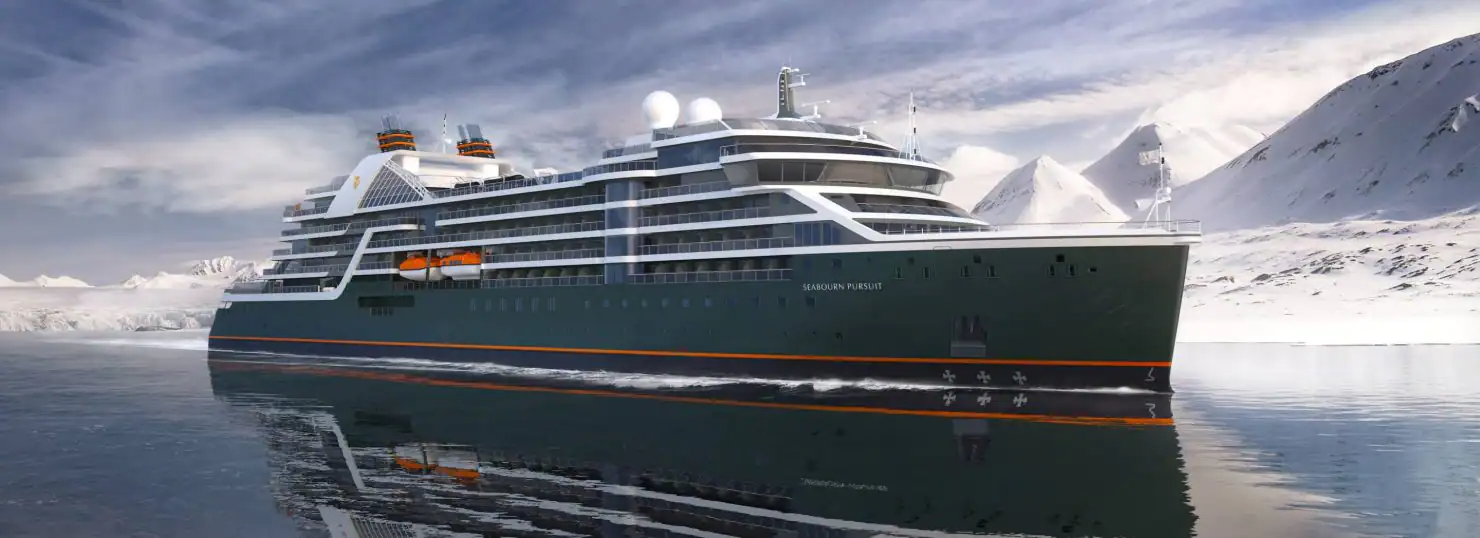
Your ship: Seabourn Pursuit
Explore Seabourn Pursuit's cabins, dining and onboard facilities.