
12 nightsFrom Singapore8 ports of call
Singapore to Bangkok (Laem Chabang)
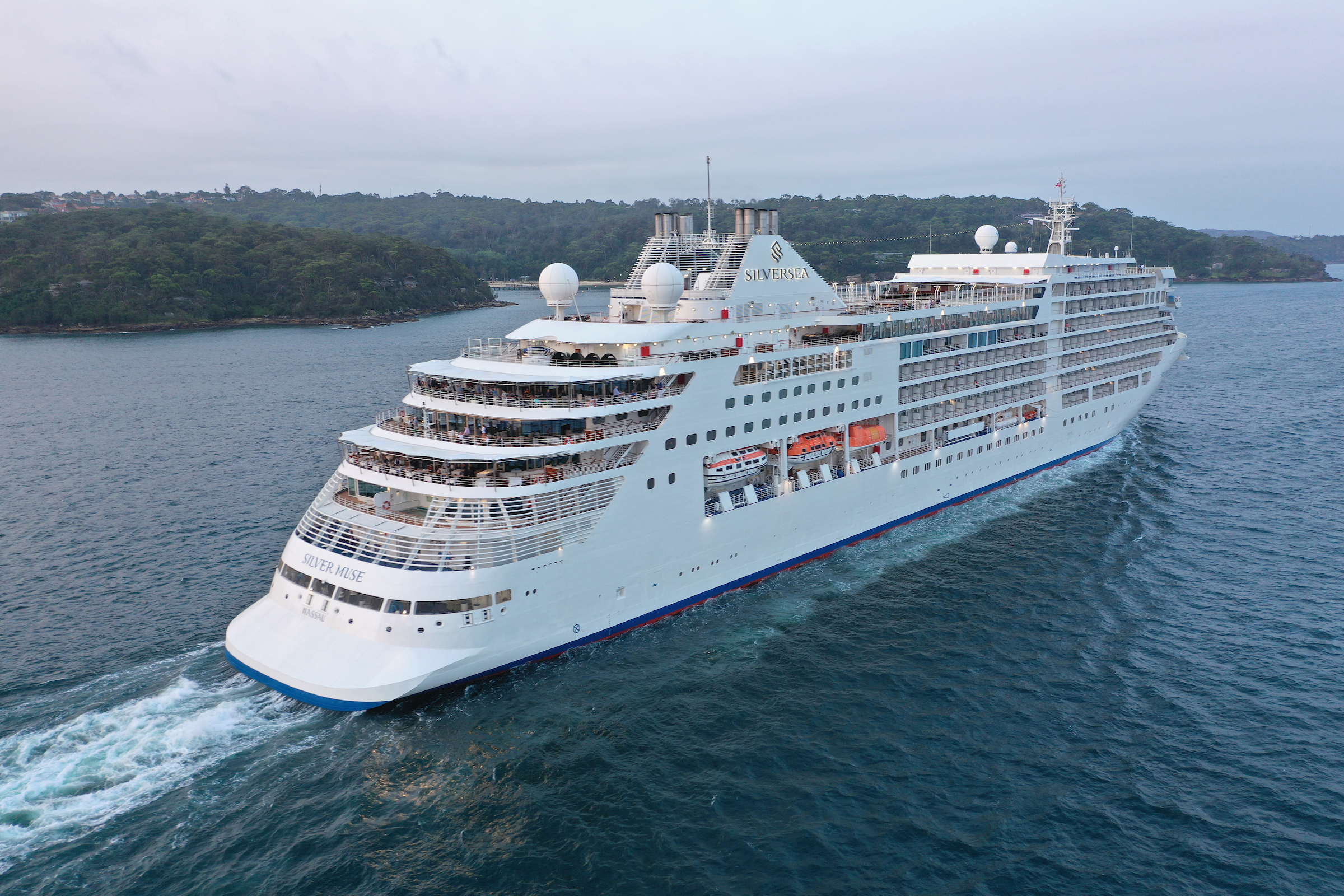
Silversea · Silver Muse
Overview
A 12-night voyage aboard Silver Muse, departing Singapore on 11 Feb 2028 and arriving in Bangkok, calling at 8 destinations along the way.
SingaporePhuketLangkawiGeorgetown, PenangPort Kelang, Kuala LumpurMalaccaKo SamuiBangkok
Cabin prices
Live prices per person based on two sharing. Select a grade to see its fare options.
Loading live cabin prices…
Itinerary
12 nights · 13 ports of call- 1
Day 1 ·SingaporeEmbark
11 Feb 2028Depart 19:00Advanced, airy and elevated, Singapore is a spectacular, futuristic vision of utopian city life. A healthy population of almost six million call it home, but this is a city designed with space to breathe, and gorgeous outdoor parks, massive indoor greenhouses and beautiful recreational spaces spread between the City of Gardens' skyscrapers and soaring structures. Once a quiet fishing village, now a glistening island city-state and an international beacon of science, education and technology. View less
Singapore is almost intimidatingly clean - and the hyper-efficient public transport system whips residents and visitors across the city's neighbourhoods in a heartbeat. Glorious fountains and audacious skyscrapers loom up - nodding to traditional feng shui beliefs - and putting on dazzling illuminated displays after dark. The lush green botanical gardens are a spectacular UNESCO World Heritage Site, covering 52 hectares and decorated with impressive colourful orchids. Or breathe in more of the freshest air by heading up to wander the canopy strung bridges of MacRitchie Reservoir Park. Head for the iconic Marina Bay - a landmark of the city crowned by three interconnected towers, which watch out over island sprinkled waters. Jaunt between Little India and the atmospheric Chinatown in minutes, where beautiful temples - like the Chinese Thian Hock Keng Temple and Hindu Sri Mariamman Temple add rich cultural intrigue. Singapore's cuisine is a mouthwatering fusion of its Indian, Chinese, Indonesian, and Malay influences, taking and enhancing the best of each. Enjoy dishes in towering restaurants, or toast the glowing skyline with the city's eponymous gin-soaked cocktail - a Singapore Sling. - 2
Day 2 ·At Sea
12 Feb 2028 - 3
Day 3 ·Phuket, Thailand
13 Feb 2028Arrive 08:00Thailand's only island province is connected to the mainland by the Thep Krasettree Causeway. Known as the "Pearl of Thailand," Phuket offers pristine beaches, lush vegetation, traditional villages and seascapes of huge limestone pillars that rise above the turquoise waters of Phang Nga Bay. With a land area of 215 square miles, Phuket Island is Thailand's largest island and about the same size as Singapore. Arab and Indian navigators have called here since the end of the 9th century, while the first Europeans arrived in the 16th century. - 4
Day 4 ·Phuket, Thailand
14 Feb 2028Depart 18:00Thailand's only island province is connected to the mainland by the Thep Krasettree Causeway. Known as the "Pearl of Thailand," Phuket offers pristine beaches, lush vegetation, traditional villages and seascapes of huge limestone pillars that rise above the turquoise waters of Phang Nga Bay. With a land area of 215 square miles, Phuket Island is Thailand's largest island and about the same size as Singapore. Arab and Indian navigators have called here since the end of the 9th century, while the first Europeans arrived in the 16th century. - 5
Day 5 ·Langkawi
15 Feb 2028Arrive 08:00Depart 19:00Langkawi is the main island in a group of 104 islands that comprise the Langkawi archipelago, which is located where the Straits of Melaka meet the waters of the Andaman Sea. Once a sanctuary for pirates, Langkawi Island was a well-kept secret until it was made a duty-free port in 1987. Since then, the construction of modern amenities has created an idyllic Malaysian getaway. Its natural beauty and intriguing past make Langkawi a treasure trove for visitors to discover. The name is coined from the Malay words Lang, a brown eagle, and Kawi, a local manganese stone. - 6
Day 6 ·Penang, George Town
16 Feb 2028Arrive 08:00Depart 19:00An incredible, disorientating collage of cultures and heritage, Georgetown is a fascinating layered city of countless influences. Taking its name from King George III, Malaysia’s cultural capital, Georgetown, has long been a trading hub and outward-looking city. Grand colonial architecture mixes with Chinese, Indian and British influences, forming an artsy, exotic melting pot of food, colour and extraordinary heritage. Quirky coffee shops hum, while the fragrances of incense and sounds of gong strikes reverberate from temples. View less
Rickshaws trundle through its streets, as modern street art adds interest to every spare wall. Shophouses, passed down through generations, add more colour to the rich mosaic of life on show here. Bright pagodas, layered with deities rise up, while multi-coloured paintwork shimmers in the sunshine of this UNESCO World Heritage Site city’s historic streets. The fragrant spices of Little India offer a slice of Delhi - although if you’re feeling hungry, Chulia Street’s feast of street food is also a good starting point – try wonton noodles with soft pork. The Blue Mansion – another World Heritage Site – is a sky-coloured insight into the city’s rich history and a star of the silver screen. The other World Heritage Site, the Clan Jetties, form a fascinating wander, as you climb across stilted boardwalk piers of over-water wooden villages. These fascinating floating villages were created by Chinese immigrant communities in the 19th century. Escape the city into the green rainforest of Penang Hill, or to Penang National Park - where trails slice through dense jungle and open up to pearly white beaches. Monkeys roam the trees, and giant lizards crawl, in this small but stunning national park. - 7
Day 7 ·Port Klang (Kuala Lumpur)
17 Feb 2028Arrive 08:00Depart 23:00Towered over by the world's most famous architectural siblings - the Petronas Twin Towers - Kuala Lumpur is a staggering melting pot of influences. These twin towers stand 451 metres over the city and bathe in bright lights as night's cloak descends. The glittering skyline mingles with colonial architecture and ornate temples, which decorate lush hillsides around the city. Haggle your way through humming markets, visit cultural treasures and historic sites, and dive headfirst into this city, where tradition collides head-on with modernity. View less
The capital of Malaysia, Kuala Lumpur, is a multicultural metropolis of lively markets and tongue-tantalising street food. Globe-trot between different streets and influences in minutes, as you discover diverse architectural treasures all over the city. Evenings are spent shopping in air-conditioned malls and bustling streets filled with sprawling outdoor markets. Fill up on fragrant coconut rice of nasi lemak and sink ice-cold beers to soak up the lively atmosphere. Malaysia achieved independence in Merdeka Square in 1957, when the Union Jack was lowered, and Malaysia’s flag was hoisted high into the sky. One of Malaysia’s most visited attractions is Batu Caves, an awe-inspiring, colourful journey into a sacred void in these immense limestone cliffs. Huge statues tower over the brightly-hued steps, as you climb to the unique cave temple, in this most dramatic of locations. The golden onion dome of the National Palace, Istana Negara, is a spectacular sight, where horses clop and white-robed soldiers wait patiently. Look for the Malaysian flag fluttering before it – if it’s present, the King and Queen of Malaysia are in residence. - 8
Day 8 ·Malacca
18 Feb 2028Arrive 08:00Depart 18:00Malacca City (also spelled Melaka) is the capital of the coastal state of Malacca, in southwestern Malaysia. At its center, Jonker Street, Chinatown’s main thoroughfare, is known for antique shops and its night market. Nearby, the 17th-century Chinese Cheng Hoon Teng temple has ornate decorations and multiple prayer halls. A green, 3-tiered roof tops the 18th-century, Javanese-influenced Kampung Kling Mosque. ― Google - 9
Day 9 ·At Sea
19 Feb 2028 - 10
Day 10 ·At Sea
20 Feb 2028 - 11
Day 11 ·Koh Samui
21 Feb 2028Arrive 08:00Depart 18:00 - 13
Day 13 ·Bangkok (Laem Chabang)
22 Feb 2028Arrive 13:00Bangkok, also known as the City of Angels and Venice of the East thrills with energy. There's such a vast array of sightseeing, shopping, and eating possibilities that you'll have little time to rest. When you do find a moment, pamper yourself with spa treatments, skyline-view bars, luxurious hotels, and excellent restaurants. The city is a mesmerizing blend of old and new, East and West, and dizzying contradictions.
Temples and red-light districts, languid canals and permanent gridlock, streetside vendors and chic upscale eateries, all make their home together, all at the same time. Bangkok rarely fails to make an impression, and yes, you might need to go spend a few days on the beach to recover from it all. Although Bangkok is not known for jaw-dropping tourist attractions, it does have an endless supply of worthwhile pilgrimages. The Grand Palace, Wat Phra Kaew, and the Emerald Buddha are tops on every visitor's itinerary, and lesser-known temples, such as Wat Benjamabophit, the golden stupa of Wat Sakhet, and Wat Suthat, are all worthy of a stop. Besides temples, there are plenty of other interesting niches and touring possibilities to fit just about every interest. Take in a venom extraction and python feeding show at the Queen Saowapha Snake Farm, or go to the nearby Jim Thompson House to learn all about the famed Thai silk industry. If architecture is your forte, there is the Suan Pakkard Palace with its antique teak house collection, and the even more astounding Vimanmek Palace, which contains the world's largest golden teak building. Bangkok's Chinatown merits at least a day on every travel itinerary—be sure to check out the sprawling labyrinthine Flower and Thieves markets. Thai food is unrivaled for spice, taste, and variation. From multicourse meals to small street vendors, the one constant here is fresh and delicious at every level. You can have superlative roast duck or wonton noodles on a street corner for lunch and then be dining on world-class chef creations in the Oriental or Shangri-La hotels for supper. It doesn't have to be all spicy Thai either, as Bangkok is home to excellent French, Italian, and other world cuisines, and you need a few years just to make a dent in all the options that are available. The Old City is a major destination for travelers, as it's home to opulent temples like Wat Po and Wat Phra Kaew. Across the river is Thonburi, a mostly residential neighborhood, where you can find Wat Arun. At the northern tip of the Old City is Banglamphu, one of Bangkok's older residential neighborhoods. It's best known now for Khao San Road, a backpacker hangout, though the neighborhood has much more to offer, especially when it comes to street food. North of Banglamphu is Dusit, the royal district since the days of Rama V. East of the Old City is Chinatown, a labyrinth of streets with restaurants, shops, and warehouses. Farther down the Chao Phraya River is bustling Silom Road, one of the city's major commercial districts. Patpong, the city's most famous of several red-light districts, is also here. Bang Rak is home to some of the city's leading hotels: the Mandarin Oriental, the Peninsula, the Royal Orchid Sheraton, and the Shangri-La. To the north of Rama IV Road is Bangkok's largest green area, Lumphini Park. Continue north and you reach Sukhumvit Road, once a residential area. More recently, Thong Lor, farther east along Sukhumvit, has become the "in" neighborhood for those want to see and be seen. The Nana and Asok areas of Sukhumvit are now home to the even busier red-light entertainment districts (Nana and Soi Cowboy) than Patpong. - 13
Day 13 ·Bangkok (Laem Chabang)Disembark
23 Feb 2028Bangkok, also known as the City of Angels and Venice of the East thrills with energy. There's such a vast array of sightseeing, shopping, and eating possibilities that you'll have little time to rest. When you do find a moment, pamper yourself with spa treatments, skyline-view bars, luxurious hotels, and excellent restaurants. The city is a mesmerizing blend of old and new, East and West, and dizzying contradictions.
Temples and red-light districts, languid canals and permanent gridlock, streetside vendors and chic upscale eateries, all make their home together, all at the same time. Bangkok rarely fails to make an impression, and yes, you might need to go spend a few days on the beach to recover from it all. Although Bangkok is not known for jaw-dropping tourist attractions, it does have an endless supply of worthwhile pilgrimages. The Grand Palace, Wat Phra Kaew, and the Emerald Buddha are tops on every visitor's itinerary, and lesser-known temples, such as Wat Benjamabophit, the golden stupa of Wat Sakhet, and Wat Suthat, are all worthy of a stop. Besides temples, there are plenty of other interesting niches and touring possibilities to fit just about every interest. Take in a venom extraction and python feeding show at the Queen Saowapha Snake Farm, or go to the nearby Jim Thompson House to learn all about the famed Thai silk industry. If architecture is your forte, there is the Suan Pakkard Palace with its antique teak house collection, and the even more astounding Vimanmek Palace, which contains the world's largest golden teak building. Bangkok's Chinatown merits at least a day on every travel itinerary—be sure to check out the sprawling labyrinthine Flower and Thieves markets. Thai food is unrivaled for spice, taste, and variation. From multicourse meals to small street vendors, the one constant here is fresh and delicious at every level. You can have superlative roast duck or wonton noodles on a street corner for lunch and then be dining on world-class chef creations in the Oriental or Shangri-La hotels for supper. It doesn't have to be all spicy Thai either, as Bangkok is home to excellent French, Italian, and other world cuisines, and you need a few years just to make a dent in all the options that are available. The Old City is a major destination for travelers, as it's home to opulent temples like Wat Po and Wat Phra Kaew. Across the river is Thonburi, a mostly residential neighborhood, where you can find Wat Arun. At the northern tip of the Old City is Banglamphu, one of Bangkok's older residential neighborhoods. It's best known now for Khao San Road, a backpacker hangout, though the neighborhood has much more to offer, especially when it comes to street food. North of Banglamphu is Dusit, the royal district since the days of Rama V. East of the Old City is Chinatown, a labyrinth of streets with restaurants, shops, and warehouses. Farther down the Chao Phraya River is bustling Silom Road, one of the city's major commercial districts. Patpong, the city's most famous of several red-light districts, is also here. Bang Rak is home to some of the city's leading hotels: the Mandarin Oriental, the Peninsula, the Royal Orchid Sheraton, and the Shangri-La. To the north of Rama IV Road is Bangkok's largest green area, Lumphini Park. Continue north and you reach Sukhumvit Road, once a residential area. More recently, Thong Lor, farther east along Sukhumvit, has become the "in" neighborhood for those want to see and be seen. The Nana and Asok areas of Sukhumvit are now home to the even busier red-light entertainment districts (Nana and Soi Cowboy) than Patpong.
Your ship: Silver Muse
Explore Silver Muse's cabins, dining and onboard facilities.