
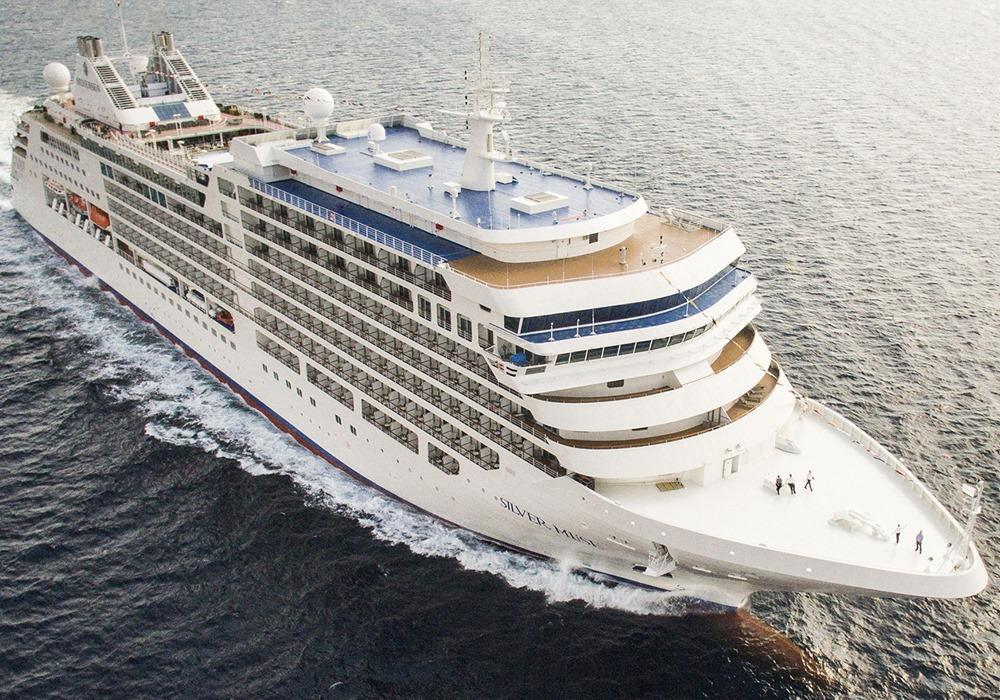
40 nightsFrom Miami, Florida16 ports of call
Miami, FL to Papeete (Tahiti)
Silversea · Silver Dawn
Overview
A 40-night voyage aboard Silver Dawn, departing Miami, Florida on 21 Dec 2026 and arriving in Papeete, calling at 16 destinations along the way.
Miami, FloridaCartagena, ColombiaPuntarenas, Costa RicaPuerto QuetzalPuerto Vallarta, MexicoSan Diego, CaliforniaLos Angeles, CANawiliwili, KauaiKahuluiHiloHonoluluNuku Hiva, French PolynesiaRangiroaMooreaMoto Iriru, RaiateaPapeete
Cabin prices
Live prices per person based on two sharing. Select a grade to see its fare options.
Loading live cabin prices…
Itinerary
40 nights · 41 ports of call- 1
Day 1 ·Miami, FL , United StatesEmbark
21 Dec 2026Depart 19:00Miami, officially the City of Miami, is a metropolis located in southeastern Florida in the United States. It is the third most populous metropolis on the East coast of the United States, and it is the seventh largest in the country. Wikipedia - 2
Day 2 ·At Sea
22 Dec 2026 - 3
Day 3 ·At Sea
23 Dec 2026 - 4
Day 4 ·At Sea
24 Dec 2026 - 5
Day 5 ·Cartagena, Colombia
25 Dec 2026Arrive 08:00Get your sunglasses ready, because Cartagena is a riot of colour, charisma and Caribbean charm. The best way of seeing the city is by foot and soaking up the uniquely South American atmosphere. Stroll through the jumble of cobbled streets, step back in time, and enjoy one of the Caribbean’s loveliest destinations. Cartagena was declared a UNESCO World Heritage Site in 1984 as a shining example of an extensive and complete system of military fortifications in South America. The city’s strategic location, on a secluded bay facing the Caribbean Sea, meant that it was an essential stop from Europe to the West Indies during the time of commercial and naval exploration. Vestiges of this time are still to be found on the walls of several of the beautiful buildings lining the streets of the old town. The magnificent city is a walled fortress that stretches for 11 kilometres, dating from 1533 and once played host to Sir Francis Drake, who passed through in 1586 (and set fire to 200 buildings during his visit). Despite its 16th century roots, Cartagena today is a modern and glorious riot of colour. Fuchsia pink bougainvillea tumbles down from turquoise painted balconies, while well-preserved colonial buildings painted in vibrant colours line the streets. Take shelter from the heat and enjoy the sensual atmosphere that is so exclusively Colombian by grabbing a seat in a local bar, ordering a plate of Empanadas and enjoying a Guaro—the colloquial name for aguardiente — the country’s national spirit. - 6
Day 6 ·Cartagena, Colombia
26 Dec 2026Depart 12:30Get your sunglasses ready, because Cartagena is a riot of colour, charisma and Caribbean charm. The best way of seeing the city is by foot and soaking up the uniquely South American atmosphere. Stroll through the jumble of cobbled streets, step back in time, and enjoy one of the Caribbean’s loveliest destinations. Cartagena was declared a UNESCO World Heritage Site in 1984 as a shining example of an extensive and complete system of military fortifications in South America. The city’s strategic location, on a secluded bay facing the Caribbean Sea, meant that it was an essential stop from Europe to the West Indies during the time of commercial and naval exploration. Vestiges of this time are still to be found on the walls of several of the beautiful buildings lining the streets of the old town. The magnificent city is a walled fortress that stretches for 11 kilometres, dating from 1533 and once played host to Sir Francis Drake, who passed through in 1586 (and set fire to 200 buildings during his visit). Despite its 16th century roots, Cartagena today is a modern and glorious riot of colour. Fuchsia pink bougainvillea tumbles down from turquoise painted balconies, while well-preserved colonial buildings painted in vibrant colours line the streets. Take shelter from the heat and enjoy the sensual atmosphere that is so exclusively Colombian by grabbing a seat in a local bar, ordering a plate of Empanadas and enjoying a Guaro—the colloquial name for aguardiente — the country’s national spirit. - 7
Day 7 ·Panama Canal Transit
27 Dec 2026Arrive 06:00Depart 18:30Enter the mighty Panama Canal, one of history’s most ambitious and spectacular stretches of waterway. Connecting the Atlantic and Pacific oceans, and slicing through the heart of a continent, the canal is a staggering engineering triumph, eliminating the need to traverse the treacherous waters of South America and Cape Horn. Sail one of the world’s great canals to appreciate the true scale of this achievement, as your ship manoeuvres between its vast, gushing locks and huge lakes. View less
The French began construction in 1881, but the costly project was left abandoned and unfinished until the United States finally completed the work in 1914. Following the path of the Panama Railway of 1855, locks raise ships large and small 26 metres up above sea level to the canal’s elevated channel. New locks have recently been added, which allow the canal to accommodate ever bigger ships. Leaving the confinement of the locks, you will enter the canal’s channel, to sail through Panama’s core. Wide lakes are linked by painstakingly chiselled wedges of canal, which slice through the lush scenery. Look out for the Culebra Cut section, the most challenging stretch of the entire route to construct. The Bridge of the Americas is a vast arched landmark, which sweeps across the Pacific Entrance and was completed in 1962. It’s one of several huge bridges that you will sail below on the 51-mile journey, including the much newer Centennial Bridge, and the Atlantic Bridge, which spans the entrance close to Colon. - 8
Day 8 ·At Sea
28 Dec 2026 - 9
Day 9 ·Puntarenas, Costa Rica
29 Dec 2026Arrive 06:30Depart 18:00Costa Rica's major Pacific port on the Gulf of Nicoya is renowned for its unspoiled nature and beautiful scenery, and is a convenient departure point for trips into Costa Rica's interior. Volcanic beaches along the coast give way to verdant jungle and coffee plantations further inland. - 10
Day 10 ·At Sea
30 Dec 2026 - 11
Day 11 ·Puerto Quetzal, Guatemala
31 Dec 2026Arrive 08:00Depart 18:00
Fishing and farming villages emerged on Guatemala's Pacific coast as early as 2000 BC. They were the forerunners of the great Maya civilization that dominated Central America for centuries. By 250 AD great temple cities were beginning to be built in the Guatemalan highlands. Today Guatemala is the most populous of the Central American republics and the only one largely Indian in language and culture. Only about two-thirds of the country is populated with still large areas of unoccupied land. Its two coastlines are along the Pacific and the Caribbean. Puerto Quetzal is the port for the town of San Jose, which used to be the country's second largest port. Most ships however had to stay at anchor and cargo discharge had to be done by lighter. Puerto Quetzal was built to accommodate ships alongside.
Our call to Puerto Quetzal will provide you with the opportunity of visiting one of Guatemala's two best-known Mayan ruins plus the old capital city, Antigua.
- 12
Day 12 ·At Sea
1 Jan 2027 - 13
Day 13 ·At Sea
2 Jan 2027 - 14
Day 14 ·Puerto Vallarta
3 Jan 2027Arrive 09:00Depart 23:00Located in the center of Mexico's Pacific coast, Puerto Vallarta is one of the country's most picturesque cities and holiday destinations. Its cobblestone streets and red-roofed, white adobe-style buildings nestle between palm-covered mountains and the vast Banderas Bay. Stretches of white sand beaches are among the best in Mexico and the climate is consistently warm and sunny. For years, vacationers who had discovered the beauty of Puerto Vallarta tried to keep the "good news" from spreading. The arrival of a major film company and two of the world's best-known stars, Elizabeth Taylor and Richard Burton, changed Puerto Vallarta from a laid-back town to a famous getaway destination almost overnight.
In addition to its visual appeal, Puerto Vallarta offers a variety of cultural entertainment and a lively nightlife. Take time to see the sights of the city. Downtown spreads around the small Isla Cuale, which lies in the middle of the Cuale River; the heart of the city is a few blocks north around the Municipal Square. A crown-topped cathedral, dedicated to the Virgin of Guadalupe, rises behind the square; a wide seaside promenade, known as the Malecon, hugs the oceanfront. A seahorse statue welcomes visitors to the downtown beach area. The statue and the prominent church tower have become symbols of Puerto Vallarta, or PV as locals call their town for short.
Puerto Vallarta grew from an existing fishing village with a history dating back some 100 years. Because of its veritable heritage as a Mexican pueblo, the town tends to offer more of the country's artistic and cultural tradition than other Mexican resorts. The origin of the charro (traditional costume), the national beverage tequila and the typical music of the mariachi bands are credited to Puerto Vallarta. It is considered the most Mexican of all the country's resort towns. - 15
Day 15 ·At Sea
4 Jan 2027 - 16
Day 16 ·At Sea
5 Jan 2027 - 17
Day 17 ·At Sea
6 Jan 2027 - 18
Day 18 ·San Diego, California , United States
7 Jan 2027Arrive 08:00Depart 21:30Free from smog and jungle-like freeways, San Diego sits gracefully around a beautiful curving bay. Although affluent and conservative, this second largest city in California is also amiable and easygoing. San Diego has a vibrant and active downtown area, and since the late 1970s several blocks of early 20th century architecture have been stylishly renovated, while the sleek modern bank buildings symbolize the city's growing economic significance on the Pacific Rim.
San Diego is the birthplace of California. Portuguese explorer Juan Rodrigues Cabrillo landed here in 1542; since then, San Diego has been under Spanish, Mexican and after 1846, American rule. The city really took off with the arrival of the Santa Fe Railroad in the 1880s, but in terms of trade and significance it has long played second fiddle to Los Angeles. However, during World War II the U.S. Navy made San Diego their Pacific Command Center and the military continue to dominate the local economy, along now with tourism.
Within easy reach of the downtown area, encompassing 1,400 acres of cultural, recreational and environmental delights, San Diego's Balboa Park is a sumptuous place with trees, gardens, traffic-free promenades and a large concentration of Spanish-colonial style buildings. The Hillcrest area is the lively and artsy center of the city, and Old Town San Diego is now a historical park where the city's Spanish and Mexican history and heritage are most evident. The Gaslamp Quarter, once the heart of frontier San Diego, is today filled with smart streets lined with chic cafés, antique stores, art galleries and gas lamps (powered by electricity). Most of the eastern part of the county is taken up by the 600,000-acre Anza-Borrego Desert. Another must-see is the city's most famous attraction, the San Diego Zoo. - 19
Day 19 ·Los Angeles, California
8 Jan 2027Arrive 07:00Los Angeles, L.A. and City of Angels are all names for this sprawling Southern California megalopolis known for its glamour, its ethnic diversity and its dynamic energy. The largest city in the state of California and the second largest in the United States, Los Angeles is a relatively young city. In 1820, it was a bicultural community of just 650 American and Mexican residents. After the completion of the transcontinental railroads in the 1880s, it began to grow. The old ranches were subdivided; the symbol of the city became the suburban house, set amid the orange groves in a glorious land of sunshine. The real boom came with the mushrooming aeronautics business, and the film and television industries.
L.A.'s colourful melange of shopping malls, palm trees and swimming pools is at once bafflingly strange and startlingly familiar thanks to the celluloid self-image that has spread all over the world. Los Angeles is glitz and glamour, but also rich in artistic creativity as evident in its architecture, from Mission Revival and Art Deco to the latest in post-modern designs. You can see it in paintings and sculptures, and it can be experienced in the performing arts that extend well beyond the city's international fame for film, television and recorded music. Add fine dining, iconic beaches and countless attractions, and you have found the appeal of this great destination. - 20
Day 20 ·At Sea
9 Jan 2027 - 21
Day 21 ·At Sea
10 Jan 2027 - 22
Day 22 ·At Sea
11 Jan 2027 - 23
Day 23 ·At Sea
12 Jan 2027 - 24
Day 24 ·At Sea
13 Jan 2027 - 25
Day 25 ·Nawiliwili, Kauai, Hawaii
14 Jan 2027Arrive 09:00Depart 19:00Nawiliwili Beach Park is a beach park and port on the south-east coast of the island of Kauai in the Hawaiian Islands. - 26
Day 26 ·Kahului, Hawaii
15 Jan 2027Arrive 08:00Depart 21:00 - 27
Day 27 ·Hilo, Hawaii , United States
16 Jan 2027Arrive 08:00Depart 18:00Hilo on the Big Island's east coast is Hawaii's charming capital and its largest town. Frequent rainfall in the area around Hilo accounts for an abundance of tropical plants and has earned Hilo the nickname “City of Rainbows”.
Hawaii, which lends its name to the rest of the Aloha State, is called the “Big Island” because it is larger than the next three largest Hawaiian Islands combined. The island continues to grow due to the seemingly endless lava flowing from Kilauea, the world's most active volcano.
More of “Old Hawaii” survives on the Big Island than on any of the others. All across the island one can find sleepy old towns, little changed for a century. This was the birthplace of King Kamehameha, and the base from which he ruled all of the Hawaiian Islands. - 28
Day 28 ·Honolulu, Oahu, Hawaii , United States
17 Jan 2027Depart 18:00Honolulu's setting on the Pacific Ocean, backed by dramatic cliffs and the extinct volcanoes of Punchbowl and Diamond Head, is spectacular. Three-quarters of Hawaii's population live on the island of Oahu and 80 percent of visitors to Hawaii arrive in Honolulu. Some remain here for their entire vacation; others use it as gateway to the other islands.
Until the arrival of Europeans, Honolulu was just a small, laid-back town. As more and more foreign ships arrived and used adjacent Pearl Harbour, King Kamehameha declared Honolulu the capital. - 29
Day 29 ·Honolulu, Oahu, Hawaii , United States
18 Jan 2027Depart 18:00Honolulu's setting on the Pacific Ocean, backed by dramatic cliffs and the extinct volcanoes of Punchbowl and Diamond Head, is spectacular. Three-quarters of Hawaii's population live on the island of Oahu and 80 percent of visitors to Hawaii arrive in Honolulu. Some remain here for their entire vacation; others use it as gateway to the other islands.
Until the arrival of Europeans, Honolulu was just a small, laid-back town. As more and more foreign ships arrived and used adjacent Pearl Harbour, King Kamehameha declared Honolulu the capital. - 30
Day 30 ·At Sea
19 Jan 2027 - 31
Day 31 ·At Sea
20 Jan 2027 - 32
Day 32 ·At Sea
21 Jan 2027 - 33
Day 33 ·At Sea
22 Jan 2027 - 34
Day 34 ·At Sea
23 Jan 2027 - 35
Day 35 ·Nuku Hiva, Marquesas Islands
24 Jan 2027Arrive 08:00Depart 18:30Think of French Polynesia and you are automatically transported to the white sands of Tahiti, the blue seas of Bora Bora or, at the very least, the iconic statues of Easter Island. Now, imagine a place that is home to that majestic trinity, but has no crowds and is full of island authenticity that is rare in these global times. You have just imagined Nuku Hiva. The island is the second largest after Tahiti in the archipelago, but is yet to be discovered by tourism. - 36
Day 36 ·At Sea
25 Jan 2027 - 37
Day 37 ·Rangiroa, French Polynesia
26 Jan 2027Arrive 08:00Depart 17:30Rangiroa, meaning ‘Vast Sky’ in Puamotu, is the largest atoll in the Tuamotu Archipelago and one of the largest in the world. Surrounded by two legendary bodies of water, Moana-tea (Peaceful Ocean) and Moana-uri (Wild Ocean), the atoll consists of about 250 islets and sandbars, with approximately 100 narrow passages in the fringing reef. The lagoon covers 618 square miles (1,600 square km), large enough that it has its own horizon. - 38
Day 38 ·Moorea Island
27 Jan 2027Arrive 08:00Depart 22:00Tahiti's heart-shaped sister island Moorea is located only nine miles across the Sea of the Moon from Tahiti. While Bora Bora and Tahiti are the destinations most prominently advertised, it is Moorea, the Magical Island that is the best-kept secret of the trio of famous French Polynesian islands. In fact, Moorea has often been likened to James Michener's mythological island of Bali Hai - and it is easy to see why. Picture perfect lagoons and gleaming white beaches are surrounded by jagged mountains and volcanic spires. Its six mountains include Mount Rotui. From its summit there are spectacular views of Opunohu Bay and the island.
Captain Samuel Wallis was the European discoverer of the Windward Island in 1767. After leaving Tahiti, he passed along the north coast of Moorea without landing. The first European visitors to the island include botanist Joseph Banks and some sailors sent ashore by Captain Cook in 1769. Captain Cook himself anchored in Opunohu Bay for one week in 1777, but never visited the bay that now bears his name. - 39
Day 39 ·Moto Iriru, Raiatea, French Polynesia
28 Jan 2027Arrive 08:00Depart 23:00Raiatea is the second largest of the Society Islands, after Tahiti, in French Polynesia. The island is widely regarded as the "centre" of the eastern islands in ancient Polynesia and it is likely that the organised migrations to the Hawaiian Islands, New Zealand and other parts of East Polynesia started at Raiatea. - 40
Day 40 ·Papeete (Tahiti)
29 Jan 2027Arrive 08:00Formed by two ancient volcanoes and joined at the isthmus of Taravao, Tahiti is the largest island of the Society Archipelago and the economic heart of French Polynesia. Ever since the famous French impressionist painter Paul Gauguin immortalized Tahitian maidens in vibrant colors on his canvasses, Tahiti has had a mysterious allure and still summons up all the romance of the South Pacific as a tropical paradise.
Rising in the center, Mount Orohena and Mount Aorai are the highest points; deep valleys radiate in all directions from these central peaks. Steep slopes drop abruptly from the high plateaus to coastal plains. The northeast coast is rugged and rocky without a barrier reef, and thus exposed to intense, pounding surf. Villages lie on a narrow strip between mountains and ocean. The south coast is broad and gentle with large gardens and coconut groves; a barrier reef shields it from the sea. - 41
Day 41 ·Papeete (Tahiti)Disembark
30 Jan 2027Formed by two ancient volcanoes and joined at the isthmus of Taravao, Tahiti is the largest island of the Society Archipelago and the economic heart of French Polynesia. Ever since the famous French impressionist painter Paul Gauguin immortalized Tahitian maidens in vibrant colors on his canvasses, Tahiti has had a mysterious allure and still summons up all the romance of the South Pacific as a tropical paradise.
Rising in the center, Mount Orohena and Mount Aorai are the highest points; deep valleys radiate in all directions from these central peaks. Steep slopes drop abruptly from the high plateaus to coastal plains. The northeast coast is rugged and rocky without a barrier reef, and thus exposed to intense, pounding surf. Villages lie on a narrow strip between mountains and ocean. The south coast is broad and gentle with large gardens and coconut groves; a barrier reef shields it from the sea.
Your ship: Silver Dawn
Explore Silver Dawn's cabins, dining and onboard facilities.