
28 nightsFrom Tokyo21 ports of call
28-Day Japan's Plum & Cherry Blossoms Exploration
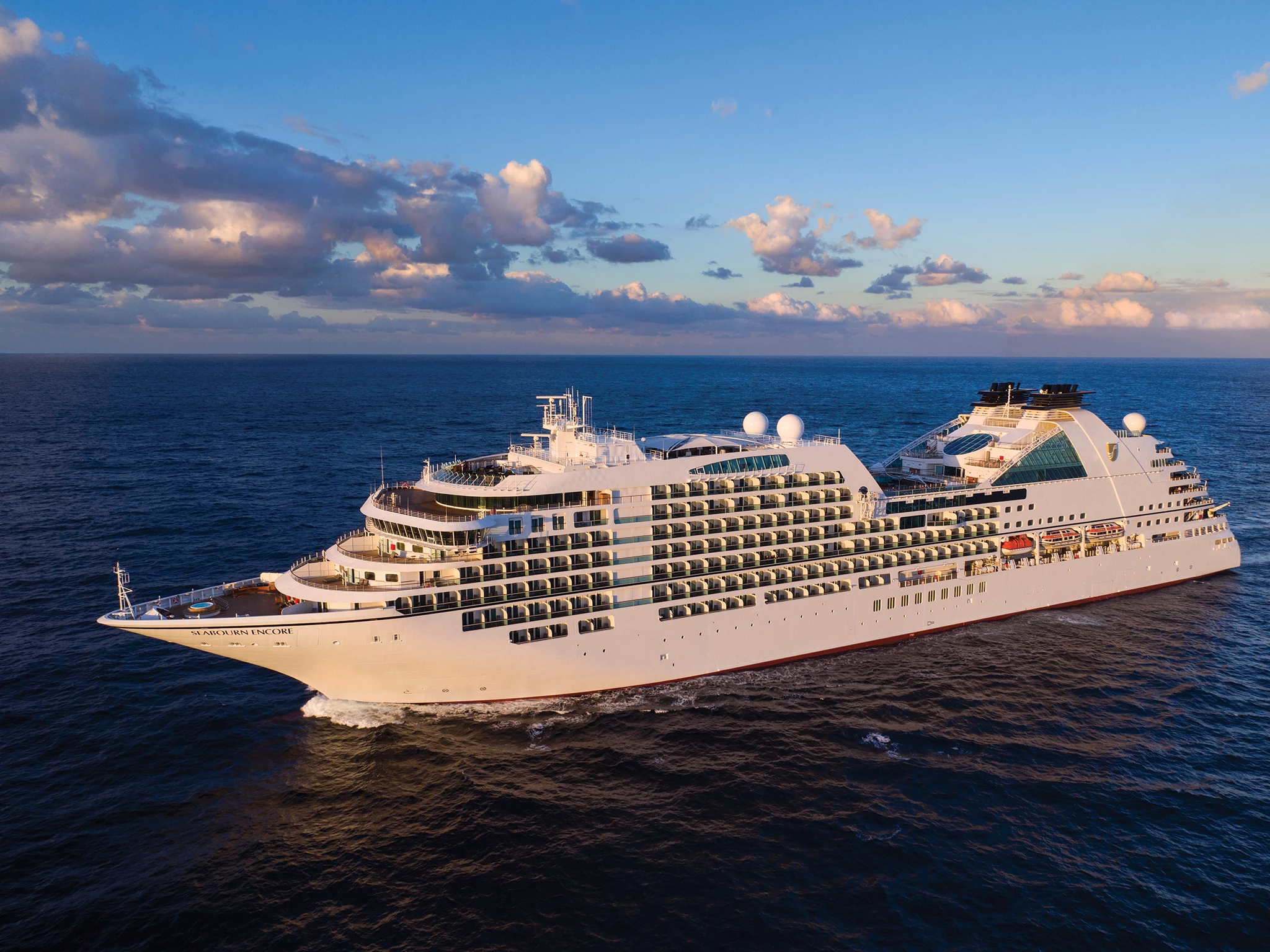
Seabourn · Seabourn Encore
Overview
A 28-night voyage aboard Seabourn Encore, departing Tokyo on 26 Feb 2028 and returning to the same port, calling at 21 destinations along the way.
TokyoOsakaBusan, South KoreaSakaiminatoKanazawaNiigata, JapanAkita, JapanAomoriMiyako,Iwate, JapanSendai, JapanHitachinaka, JapanTokyoMatsuyamaHiroshimaFukuokaYeosu, South KoreaNagasakiKagoshimaOsakaShimiju, japanTokyo
Cabin prices
Live prices per person based on two sharing. Select a grade to see its fare options.
Loading live cabin prices…
Itinerary
28 nights · 30 ports of call- 1
Day 1 ·Tokyo, JapanEmbark
26 Feb 2028Depart 19:00 - 2
Day 2 ·At Sea
27 Feb 2028 - 3
Day 3 ·Osaka
28 Feb 2028Arrive 07:00Depart 21:00 - 4
Day 4 ·Scenic Cruising Kanmon Straits
29 Feb 2028 - 5
Day 5 ·Busan (Pusan), South Korea
1 Mar 2028Arrive 07:00Depart 16:00Busan is the second largest city in South Korea, and the country's seaside connection to Japan and the West. Lovely urban scenery, the Pusan International Film Festival, and near-by hot springs has made Busan a popular leisure destination. Busan has the sophistication of a major city, as well as famous beaches that lure visitors from all over the world. The city is a microcosm of South Korea, a nation whose economic success often obscures, to Westerners, one of Asia's most sophisticated and venerable cultures. - 6
Day 6 ·Sakaiminato, Japan
2 Mar 2028Arrive 09:00Depart 18:00Renowned for its bounty of fresh seafood, Sakaiminato is a fishing town backed by mountains in the Honshu region. Izumo Grand Shrine is one of Japan’s most important Shinto temples, and the six-story, black Matsue Castle is one of the oldest surviving Tokugawa Samurai castles. View the snow-capped Mount Daisen, the vermilion, elaborately carved Hinomisaki temples or soak in the Kaike Onsen hot springs by the sea. The Adachi Museum holds a collection of modern Japanese art, while the Tottori Flower Road is a 124-acre flower garden. On the streets, a number of statues commemorate the Yokai figures created by the locally-born manga artist Mizuki Shigeru. - 7
Day 7 ·Kanazawa, Japan
3 Mar 2028Arrive 08:00One of Japan’s best-preserved cities, Kanazawa escaped war damage and natural disasters to reward visitors with a wealth of architecture as an important clan castle town from the mid-17th century until the middle of the 19th. The mighty Kanazawa Castle did not survive intact, but its famous Ishikawa Gate, the Sunjikken Longhouse and lavish Kenrokuen Garden hint at the grandeur. Of special note are the surviving Higashi Geisha District and Samurai District streets. The Temple area holds the Myoryuji Temple with its hidden passages and secret doors giving it the nickname the Ninja Temple. The Oyamajinja Shrine is a later addition, its three-story gate with impressive stained glass windows reveal a Dutch influence. Museums worth exploring include the Kanazawa Yasue Gold Leaf Museum, with examples of the arts and crafts using the pure gold decoration for which the region is famous. Another museum celebrates the Buddhist philosopher D. T. Suzuki, credited with introducing Zen philosophy to the West, and a striking 21st Century Museum of Contemporary Art. Nearby Mt. Utatsu is renowned for its Three Shrines.
VIEW CRUISES - 8
Day 8 ·Kanazawa, Japan
4 Mar 2028Depart 18:00One of Japan’s best-preserved cities, Kanazawa escaped war damage and natural disasters to reward visitors with a wealth of architecture as an important clan castle town from the mid-17th century until the middle of the 19th. The mighty Kanazawa Castle did not survive intact, but its famous Ishikawa Gate, the Sunjikken Longhouse and lavish Kenrokuen Garden hint at the grandeur. Of special note are the surviving Higashi Geisha District and Samurai District streets. The Temple area holds the Myoryuji Temple with its hidden passages and secret doors giving it the nickname the Ninja Temple. The Oyamajinja Shrine is a later addition, its three-story gate with impressive stained glass windows reveal a Dutch influence. Museums worth exploring include the Kanazawa Yasue Gold Leaf Museum, with examples of the arts and crafts using the pure gold decoration for which the region is famous. Another museum celebrates the Buddhist philosopher D. T. Suzuki, credited with introducing Zen philosophy to the West, and a striking 21st Century Museum of Contemporary Art. Nearby Mt. Utatsu is renowned for its Three Shrines.
VIEW CRUISES - 9
Day 9 ·Niigata
5 Mar 2028Arrive 08:00Depart 18:00 - 10
Day 10 ·Akita, Japan
6 Mar 2028Arrive 08:00Depart 18:00 - 11
Day 11 ·Aomori, Japan
7 Mar 2028Arrive 08:00Depart 18:00Located on the northernmost harbor of Japan’s main island of Honshu, Aomori is the traditional departure point for Hokkaido Island. It is famous for its summer Nebuta Matsuri festival, and has a museum that recaptures the color and pageantry for those who visit in other seasons. Explore the earliest prehistoric cultures of Japan at the Sannai Maruyama archaeological site, or visit the Aomori Museum of Art for a look at more contemporary works. Nearby Hirosaki boasts a 17th Century castle. Visit either the Auga or the Furukawa public fish market, where you can create your own version of a donburi rice bowl with pristinely fresh local seafood. - 12
Day 12 ·Miyako, Japan
8 Mar 2028Arrive 08:00Depart 18:00 - 13
Day 13 ·Sendai, Japan
9 Mar 2028Arrive 08:00Depart 18:00 - 14
Day 14 ·Hitachinaka, Japan
10 Mar 2028Arrive 07:00Depart 17:00 - 15
Day 15 ·Tokyo, Japan
11 Mar 2028Arrive 08:00Depart 19:00 - 16
Day 16 ·At Sea
12 Mar 2028 - 17
Day 17 ·Matsuyama
13 Mar 2028Arrive 10:00Depart 23:00 - 18
Day 18 ·Hiroshima, Japan
14 Mar 2028Arrive 07:00Depart 16:00Hiroshima means “wide island” in Japanese. The city was established in the 16th Century on Japan’s largest island, Honshu, and grew into an important shipping center and prefecture capital, boasting a fine castle. Although it was an important city in Japan throughout the imperial period, its reputation in the greater world was burned into history when it became to target of the first atomic bombing of a civilian target in August of 1945. The United States airplane Enola Gay dropped a nuclear device nicknamed “Little Boy” on the city that morning, obliterating everything within a two-kilometer radius and directly killing 80,000 people. Approximately 70 percent of Hiroshima’s buildings were destroyed. Within a year, injury and radiation illness had killed an additional 90, 000 to 116,000 citizens. The attacks on Hiroshima and nearby Nagasaki quickly led to the surrender of Japan and effectively precipitated the end of World War II in Asia. Within a few years, Hiroshima had begun to rebuild, and the city became the focus of an international movement to eliminate nuclear weapons from future wars. Relics of its past such as the impressive Hiroshima Castle and the tranquil Shukkeien Garden were rebuilt, and the city undertook the construction of a Memorial Peace Park, which today attracts visitors from around the world. The park, which holds a museum and a memorial “Atomic Dome” constructed on the closest remaining building to the blast site, is a moving and impactful place of pilgrimage in this re-born City of Peace. One notable feature is a colorful memorial to Sadako Sasaki, a young woman whose dying wishes for world peace were recounted in the story A Thousand Paper Cranes. - 18
Day 18 ·Scenic Cruising Kanmon Straits
14 Mar 2028 - 19
Day 19 ·Fukuoka Hakata, Japan
15 Mar 2028Arrive 09:00Depart 18:00Located on the northern tip of Japan’s Kyushu Island, Hakata harbor’s location close to the Asian mainland made it an important port from very ancient times, serving the early administrative center at Dazaifu near by. In the 13th century, the Mongol Kublai Khan tried twice to subdue the city, but his attacks were both foiled by typhoons, which earned the last one the name Kamikaze, meaning “Divine Wind.” In the late 19th century, Hakata and the nearby samurai city of Fukuoka were merged. Today Fukuoka is a large, modern and eminently livable city that still benefits from its proximity to Korea and other “Asian Tiger” economies. Attractions for visitors include a park surrounding the ruins of the samurai Fukuoka Castle; the Shokufuji Temple, Japan’s first Zen temple; and the Japanese Garden and Gokoku Shrine in Ohori Park. The Genko Historical Museum holds displays of Japanese and Mongol armor from the period of the Mongol invasions. Modern highlights include the shopping and entertainment complex of Canal City and the waterfront Momochi Seaside Park development. Near by, the old 7th Century city of Dazaifu offers the Dazaifu Tenmangu Shrine with 6,000 flowering plum trees, the tranquil Komyozenji Temple with a lovely Zen garden, and the impressive, modern Kyushu National Museum. - 20
Day 20 ·Yeosu, South Korea
16 Mar 2028Arrive 07:00Depart 17:00Old Yeosu City, founded in 1949, and Yeocheon City, founded in 1986, were merged into a new city in 1998. The city of Yeosu consists of the Yeosu peninsula as well as 317 islands (49 inhabited, 268 uninhabited). Lying about midway along the southern coast of South Korea, it is separated from Namhae County in South Gyeongsang Province to the east by a natural waterway. Yeosu translates to "Beautiful Waters." - 21
Day 21 ·Nagasaki, Japan
17 Mar 2028Arrive 08:00Depart 18:00Nagasaki is situated on the West Coast of Kyushu on a scenic bay. Located closest to the Asian mainland, it has historically been an important trading center and highly influenced by Chinese culture. When Japan chose to isolate itself from the Western world for two hundred years starting in the mid 1600's, Nagasaki was the only port open to foreign vessels. In recent history, Nagasaki was the second city after Hiroshima to be destroyed by an atomic bomb, bringing an end to World War II. - 22
Day 22 ·Yatsushiro, Japan
18 Mar 2028Arrive 08:00Depart 18:00 - 23
Day 23 ·Kagoshima, Japan
19 Mar 2028Arrive 08:00Depart 18:00Capital of Japan's southernmost prefecture, Kagoshima faces the Kinko-wan Bay and the active Sakurajima Volcano. Kagoshima played an important role in Japanese history, starting in the early 7th century when Bounotsu Port was a base for trading with China and other Asian nations. The region, formerly known as Satsuma was dominated by 29 generations Shimazu lords for over 700 years until the 1867 Meiji Restoration. Between the 9th and 15th centuries, Satsuma was an important trading port with the countries of east Asia, as well as Europe, becoming one of Japan’s earliest points of contact with the West. - 24
Day 24 ·At Sea
20 Mar 2028 - 25
Day 25 ·Osaka
21 Mar 2028Arrive 08:00 - 26
Day 26 ·Osaka
22 Mar 2028Depart 19:00 - 27
Day 27 ·At Sea
23 Mar 2028 - 28
Day 28 ·Shimizu, Japan
24 Mar 2028Arrive 08:00Depart 18:00Sprawling, semi-rural Shimizu Ward is dominated by forested coastal mountains, with hiking trails and ropeway rides to dramatic viewpoints above Suruga Bay. Miho Beach Park is popular for swimming and water sports in summer, and there are baseball and soccer fields nearby, plus an aquarium at the Marine Science Center. Busy fisheries supply sushi bars and seafood markets with local specialties like sakura shrimp. - 29
Day 29 ·Tokyo, JapanDisembark
25 Mar 2028Arrive 08:00
Your ship: Seabourn Encore
Explore Seabourn Encore's cabins, dining and onboard facilities.