
20 nightsFrom Tokyo17 ports of call
Grand Circle Japan Cherry Blossoms
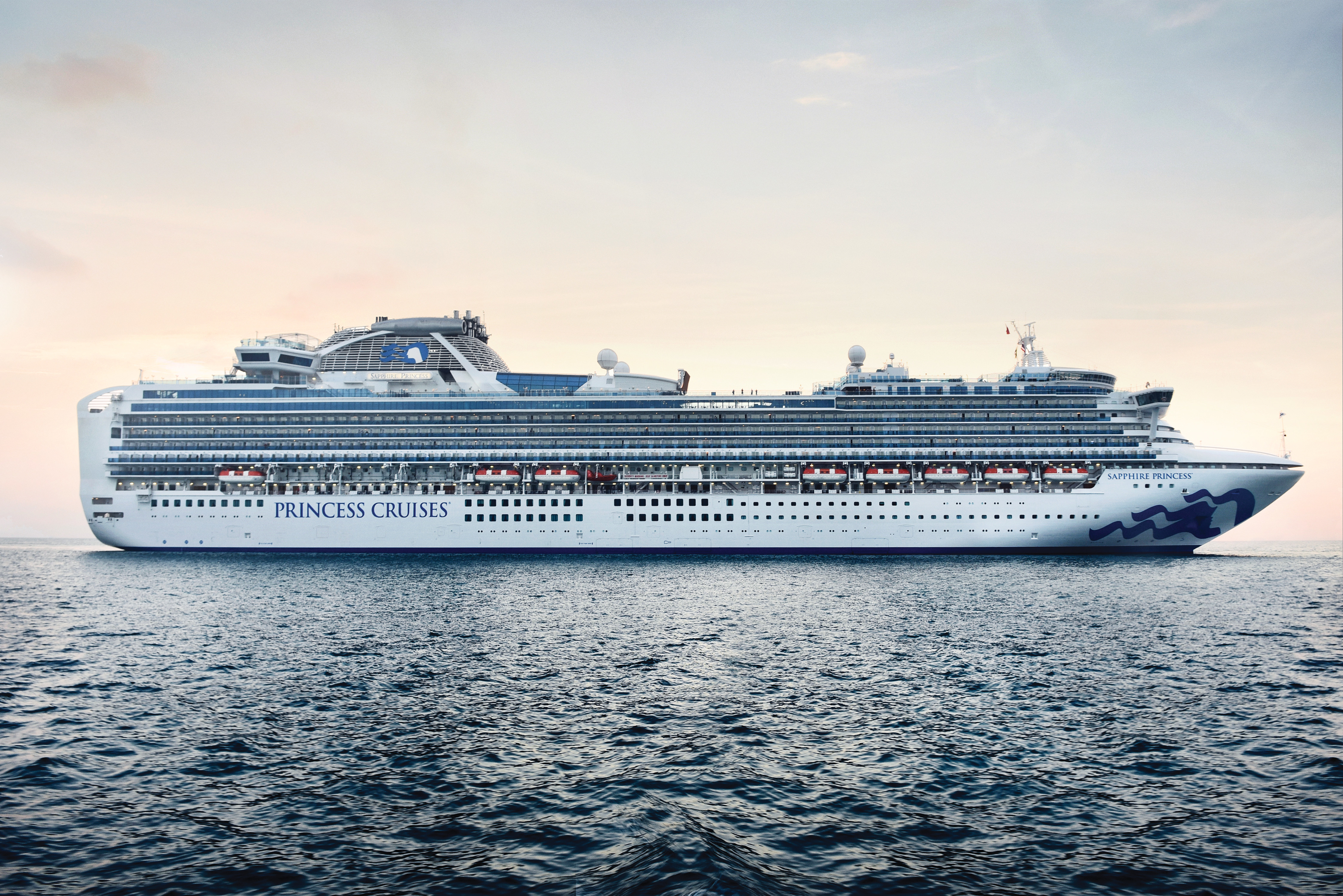
Princess Cruises · Sapphire Princess
Overview
A 20-night voyage aboard Sapphire Princess, departing Tokyo on 8 Apr 2028 and returning to the same port, calling at 17 destinations along the way.
TokyoToba, JapanNagasakiBusan, South KoreaSakaiminatoKanazawaSakata, JapanHakodateMiyako,Iwate, JapanNikkoTokyoAomoriMuroran, JapanHakodateBusan, South KoreaNagasakiTokyo
Cabin prices
Live prices per person based on two sharing. Select a grade to see its fare options.
Loading live cabin prices…
Itinerary
20 nights · 21 ports of call- 1
Day 1 ·TokyoEmbark
8 Apr 2028Depart 16:00 - 2
Day 2 ·Toba
9 Apr 2028Arrive 07:00Depart 16:00Toba, located at the northeastern end of the Shima-hanto Peninsula in Mie, flourished as the castle town of the Kuki family who ruled this region from the 16th century. It was also a landing spot for visitors on the sea route to Ise-jingu Shrine and belongs to Ise-Shima National Park. - 3
Day 3 ·At Sea
10 Apr 2028 - 4
Day 4 ·Nagasaki
11 Apr 2028Arrive 07:00Depart 16:00For most travelers, Nagasaki is a symbol of the horror and the inhumanity of war. An estimated 75,000 people perished in 1945 when the city became the second target of a nuclear attack. Today, Nagasaki's Peace Park and Atomic Bomb Museum draw visitors from around the world.
But this beautiful city on Kyushu offers other sights. Often described as the San Francisco of Japan, the city occupies verdant hills surrounded by a deep-water bay. For three centuries, Nagasaki was Japan's sole window on the world. The city is also celebrated as the setting for Puccini's opera "Madame Butterfly." - 5
Day 5 ·Busan
12 Apr 2028Arrive 07:00Depart 16:00The second largest city in South Korea, Busan is your gateway to a fascinating land whose culture is a unique amalgam of old and new. Modern high-rise towers dwarf ancient Buddhist temples. The city's bustling business district offers a stark contrast to the serene grounds of Yongdusan Park. In short, Busan is a microcosm of South Korea, a nation whose startling economic success often obscures one of Asia's most sophisticated and venerable cultures.
Busan was the scene of bitter fighting during the Korean War. The United Nations Memorial Cemetery marks the final resting place for the troops from 16 nations who gave their lives during the conflict. - 6
Day 6 ·Sakaiminato
13 Apr 2028Arrive 07:00Depart 17:00Wedged between sea, sky and mountains, this small fishing port has been esteemed for centuries for its superb seafood. Here, the Sea of Japan yields up both crab and hon-maguro, the prized Bluefin tuna esteemed by gourmets around the world. Sakaiminato is also your gateway to a very ancient region of Honshu. West of the city lies Izumo-taisha, one of the oldest and holiest shrines in Shinto. This area is dotted with burial mounds from Japan's Bronze Age. The town of Matsue boasts the celebrated "Black Castle," a six-story, black-walled castle that home to a clan of the mighty Tokugawa dynasty that ruled Japan for over 250 years. And to the east rises the great snow-capped summit of Mt. Daisen, considered one of the four most scenic mountains in all Japan. - 7
Day 7 ·Kanazawa
14 Apr 2028Arrive 07:00Depart 16:00Kanazawa is the capital of Ishikawa Prefecture, on Japan’s central Honshu Island. It's known for well-preserved Edo-era districts, art museums and regional handicrafts. Kenrokuen Garden, begun in the 17th century, is celebrated for its classic landscape designs incorporating ponds and streams. - 8
Day 8 ·Sakata, Japan
15 Apr 2028Arrive 08:00Depart 17:00Sakatais a medium-sized city in Yamagata Prefecture. Sakata is located in the fertile Shonai Plain that is known for its high-quality rice. The city grew as an important stop along the coastal shipping route that connected Hokkaido with Osaka via ports along the Sea of Japan and Seto Inland Sea during the Edo Period.
A local merchant family, the Honma clan, came to dominate trade in the city and accrued a vast fortune that made them wealthier than some of the country's feudal lords. Due to their power and influence, the clan developed close ties with the local lords and had a number of lavish buildings built. Some of these buildings still stand today along with museums and other attractions. - 9
Day 9 ·Hakodate
16 Apr 2028Arrive 07:30Depart 17:30It took Commodore Perry and American gunboat diplomacy to open Japan to the outside world after two centuries of self-imposed isolation. In 1859, the port of Hakodate became the first Japanese city fully opened to Westerners under the Treaty of Amity and Commerce. Foreigners soon flocked to Hakodate, and today visitors wandering the cobblestone streets of the city's Motomachi District can view their Western-style frame houses. Hakodate, once a fishing port famed for its high quality fish and shellfish, quickly became Hokkaido's largest city and one of Japan's most important ports. The Great Hakodate Fire of 1934 dealt the city a near fatal blow - a blow from which Hakodate was slow to recover. Today the city is Hokkaido's third largest - surpassed by Sapporo and Asahikawa - but retains its foremost position as the finest Japanese producer of sushi's raw product: the high quality seafood caught in Hokkaido's cold waters.
It may not compare to Tokyo's Tsukiji's Fish Market, but at Hakodate's four-block-long Morning Market, vendors offer a stunning array of fresh fish and shellfish prized for sushi including salmon roe, sea urchin, scallops and crab. Restaurants and food stands prepare a wide arrange of dishes including domburi topped with fresh seafood. - 10
Day 10 ·Miyako, Japan
17 Apr 2028Arrive 07:00Depart 16:00A pretty prefecture located on the northeastern coast of Honshu, Japan's main island, Miyako, Iwate, is situated along the Pacific coast surrounded by stunning scenery of Sanriku Fukko National Park and a sandy coastline defined by dramatic rock formations carved by the pounding surf. This iconic landscape invokes images of the 'Pure Land,' a Buddhist concept of paradise, and is best appreciated from the deck of a cruise boat on the waters of Jodogahama. The city's natural wonders are woven within its cultural highlights, and a visit to Kamaishi Daikannon Statue, a towering statue of the Buddhist 'Goddess of Mercy,' showcases sparkling Kamaishi Bay, while the historic Rokando Cave, is home to "the waterfall of the heavenly cave," an underground cascade. No visit to Miyako's shores would be complete without paying reverence to the tragedy that occurred on March 11, 2011, when a powerful earthquake triggered a devastating 17-meterhigh tsunami. The Taro Kanko Hotel Tsunami Remains is a testament to the power of the community's resiliency and serves as commemorative site, an important destination for those lucky enough to visit the island as it blooms with renewal. - 11
Day 11 ·Hitachinaka (For Nikko)
18 Apr 2028Arrive 08:00Depart 16:00Hitachinaka is a city located in Ibaraki Prefecture, Japan. As of 1 July 2020, the city had an estimated population of 154,663 in 64,900 households and a population density of 1547 persons per km². The percentage of the population aged over 65 was 26.1%. The total area of the city is 99.96 square kilometres. - 12
Day 12 ·Tokyo
19 Apr 2028Arrive 06:00Depart 16:00 - 13
Day 13 ·At Sea
20 Apr 2028 - 14
Day 14 ·Aomori
21 Apr 2028Arrive 08:00Depart 18:00The capital of the Aomori Prefecture in northern Japan, Aomori derives much of its beauty from the apple orchards and cherry blossoms that encompass its landscape and the snow-covered Hakkoda Mountains that look on from a distance. Throughout its history, the city has been stricken with misfortune time and time again - in 1910, a fire destroyed Aomori, and during World War II, the city was left in ruins following an air raid - yet it always prevails.
Aomori is cherished by many who believe a local legend that the grave of Jesus Christ lies within the southern part of Aomori prefecture. However, Aomori is perhaps best known for its renowned Nebuta Festival, an elaborate yearly event in which participants illuminate giant paper representations of samurai warriors, animals, and popular cartoon characters while parading them through the streets. - 15
Day 15 ·Muroran
22 Apr 2028Arrive 07:00Depart 19:00Located on the southwest part of the island of Hokkaido, Muroran is a major industrial center and your gateway to Hokkaido's natural beauty. This island's unhurried pace is a welcome contrast from the hustle and bustle of Honshu and Kyushu. Relatively uncrowded and unspoiled, Hokkaido offers dramatic landscapes ranging from dense forests and hot springs to active volcanoes and calm lakes nestled in calderas. - 16
Day 16 ·Hakodate
23 Apr 2028Arrive 07:30Depart 16:00It took Commodore Perry and American gunboat diplomacy to open Japan to the outside world after two centuries of self-imposed isolation. In 1859, the port of Hakodate became the first Japanese city fully opened to Westerners under the Treaty of Amity and Commerce. Foreigners soon flocked to Hakodate, and today visitors wandering the cobblestone streets of the city's Motomachi District can view their Western-style frame houses. Hakodate, once a fishing port famed for its high quality fish and shellfish, quickly became Hokkaido's largest city and one of Japan's most important ports. The Great Hakodate Fire of 1934 dealt the city a near fatal blow - a blow from which Hakodate was slow to recover. Today the city is Hokkaido's third largest - surpassed by Sapporo and Asahikawa - but retains its foremost position as the finest Japanese producer of sushi's raw product: the high quality seafood caught in Hokkaido's cold waters.
It may not compare to Tokyo's Tsukiji's Fish Market, but at Hakodate's four-block-long Morning Market, vendors offer a stunning array of fresh fish and shellfish prized for sushi including salmon roe, sea urchin, scallops and crab. Restaurants and food stands prepare a wide arrange of dishes including domburi topped with fresh seafood. - 17
Day 17 ·At Sea
24 Apr 2028 - 18
Day 18 ·Busan
25 Apr 2028Arrive 08:00Depart 17:00The second largest city in South Korea, Busan is your gateway to a fascinating land whose culture is a unique amalgam of old and new. Modern high-rise towers dwarf ancient Buddhist temples. The city's bustling business district offers a stark contrast to the serene grounds of Yongdusan Park. In short, Busan is a microcosm of South Korea, a nation whose startling economic success often obscures one of Asia's most sophisticated and venerable cultures.
Busan was the scene of bitter fighting during the Korean War. The United Nations Memorial Cemetery marks the final resting place for the troops from 16 nations who gave their lives during the conflict. - 19
Day 19 ·Nagasaki
26 Apr 2028Arrive 07:00Depart 15:00For most travelers, Nagasaki is a symbol of the horror and the inhumanity of war. An estimated 75,000 people perished in 1945 when the city became the second target of a nuclear attack. Today, Nagasaki's Peace Park and Atomic Bomb Museum draw visitors from around the world.
But this beautiful city on Kyushu offers other sights. Often described as the San Francisco of Japan, the city occupies verdant hills surrounded by a deep-water bay. For three centuries, Nagasaki was Japan's sole window on the world. The city is also celebrated as the setting for Puccini's opera "Madame Butterfly." - 20
Day 20 ·At Sea
27 Apr 2028 - 21
Day 21 ·TokyoDisembark
28 Apr 2028Arrive 06:00
Your ship: Sapphire Princess
Explore Sapphire Princess's cabins, dining and onboard facilities.