
40 nightsFrom Hong Kong, China27 ports of call
40-Day Shanghai Nights, Taiwan Lanterns & Japan In-Depth
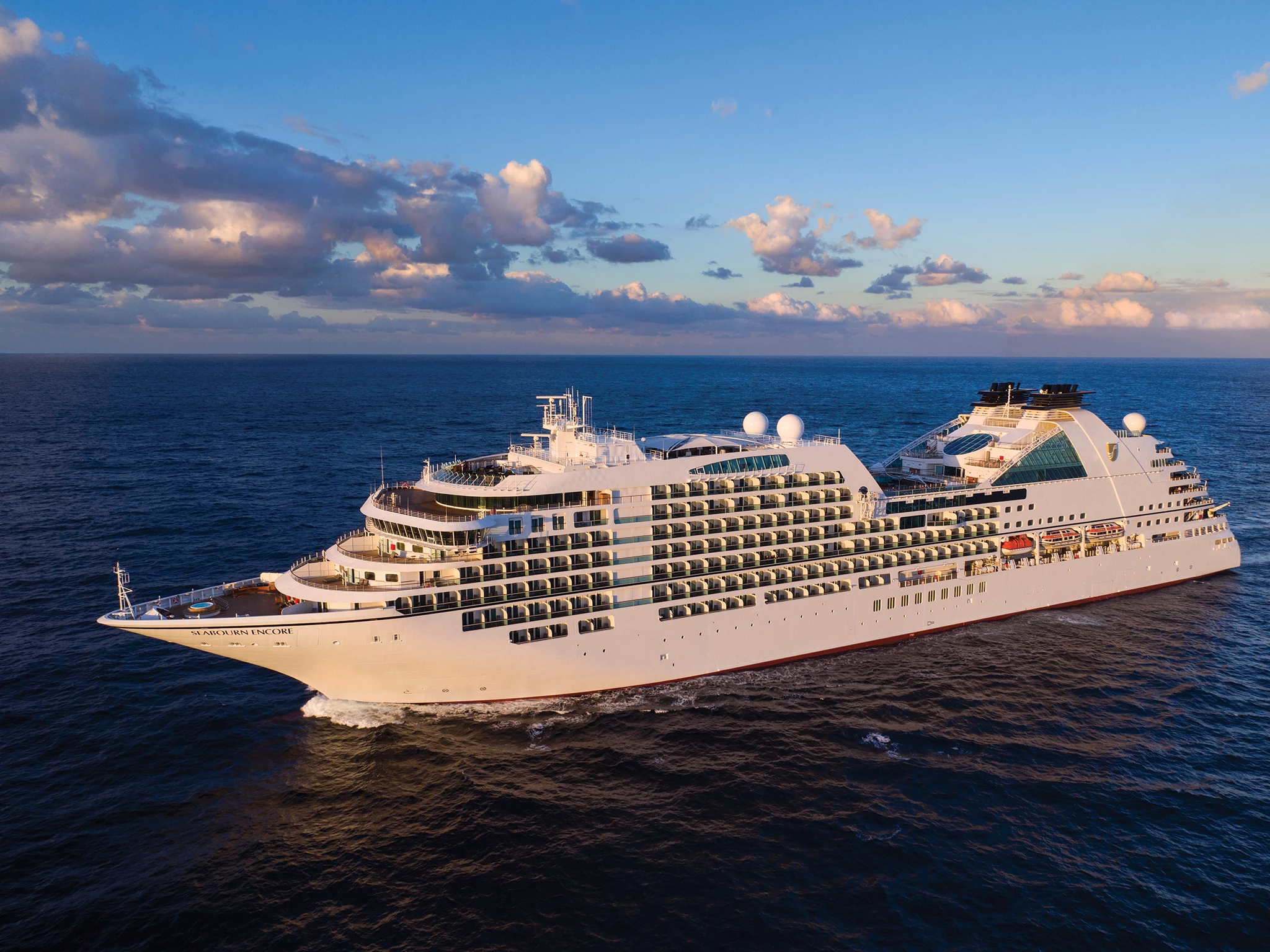
Seabourn · Seabourn Encore
Overview
A 40-night voyage aboard Seabourn Encore, departing Hong Kong, China on 31 Jan 2028 and arriving in Tokyo, calling at 27 destinations along the way.
Hong Kong, ChinaBaoshan (Shanghai)Naha (Okinawa Is.)Miyakojima, Okinawa, JapanHualien, TaiwanTaichungHong Kong, ChinaTaichungIshigaki IslandNaha (Okinawa Is.)Aburatsu (Japan)Kochi, JapanOsakaShingu, JapanShimiju, japanTokyoOsakaBusan, South KoreaSakaiminatoKanazawaNiigata, JapanAkita, JapanAomoriMiyako,Iwate, JapanSendai, JapanHitachinaka, JapanTokyo
Cabin prices
Live prices per person based on two sharing. Select a grade to see its fare options.
Loading live cabin prices…
Itinerary
40 nights · 41 ports of call- 1
Day 1 ·Hong Kong, ChinaEmbark
31 Jan 2028Depart 21:00Hong Kong is divided into four sections: Hong Kong Island, Kowloon, the New Territories, and the numerous outlying islands. One hundred sixty-four square miles of dense real estate dominate Hong Kong Island, including enormous skyscrapers with futuristic architecture, opulent hotels, residential compounds on Victoria Peak, and some of the oldest Chinese communities in the region. All these elements create one of the most exotic and exciting ports of call in the world; one that is universally loved by tourists and its own enterprising citizens. - 2
Day 2 ·At Sea
1 Feb 2028 - 3
Day 3 ·At Sea
2 Feb 2028 - 5
Day 5 ·Shanghai, China
3 Feb 2028Arrive 12:00"Paris of China" and "Pearl of the Orient," the vibrant city of Shanghai is a shining symbol of the economic emergence of the world's largest nation. A comfortable jumble of old and new, it is a city in seemingly unstoppable transition. Like the rest of China, Shanghai is undergoing one of the fastest economic expansions the world has ever seen, yet has striven to retain its historical roots. Today's Shanghai is a montage of stunning architecture, mixed with noble reminders of long-gone eras. Shanghai, as you soon discover, has many faces. - 5
Day 5 ·Shanghai, China
4 Feb 2028Depart 18:00"Paris of China" and "Pearl of the Orient," the vibrant city of Shanghai is a shining symbol of the economic emergence of the world's largest nation. A comfortable jumble of old and new, it is a city in seemingly unstoppable transition. Like the rest of China, Shanghai is undergoing one of the fastest economic expansions the world has ever seen, yet has striven to retain its historical roots. Today's Shanghai is a montage of stunning architecture, mixed with noble reminders of long-gone eras. Shanghai, as you soon discover, has many faces. - 6
Day 6 ·At Sea
5 Feb 2028 - 7
Day 7 ·Naha, Japan
6 Feb 2028Arrive 08:00Depart 18:00Okinawa’s capital was heavily damaged during World War II. Its most famous landmark, the Chinese-style Shuri Castle, is a reconstruction, but well worth visiting, especially its impressive Shureimon gate, a UNESCO Heritage Site. Just nearby, a couple of relic sites remain: the stone houses and cobbled walkways of the Shrikinjocho Stone-Path Road, and the tranquil Shikina-en Garden. The Okinawa Prefecture Museum and Art Museum reveals a great deal of the local history. Okinawa has long been famous for a distinctive style of ceramic wares, which are still made in Naha’s Tsuboya neighborhood. Visit the Tsuboya Pottery Museum to earn about the craft, then stroll the shops along Yachimun Street to pick up some examples as souvenirs. - 8
Day 8 ·Miyakojima (Hirara), Japan
7 Feb 2028Arrive 08:00Depart 16:00Miyako Island is 300 km south of Okinawa island, and is famous for its beaches, said to be Japan’s most beautiful. Maehama beach is for swimmers, while Yoshino has great coral reefs for snorkelers and the white-sand Sunayama has dramatic rock formations. Cape Higashi-Hennazaki is a long, narrow cape with the picturesque lighthouse at the end. The city’s Botanical Garden boasts over 1600 tropical varieties. Nakasone Tuyumya was an important leader of Miyako and the Okinawan people in the 16th century. Near the port in Hirara is memorial to him and his descendants, a designated national cultural asset. At the island’s north end, the graceful Ikema Ohashi bridge leads to the small Ikema Island. - 9
Day 9 ·Hualien, Taiwan, Province of China
8 Feb 2028Arrive 08:00Depart 21:00Located on the Pacific coast of Taiwan island, where the Hualien River enters the sea, Hualien is a gateway to the island’s most spectacular natural splendors. It was here that Portuguese sailors in the 16th century caught a first glimpse of the grandeur and named the island Formosa. For a first visit nothing could beat a tour to the Taroko National Park, a swathe of mountain peaks, deep-cut canyons, rivers and waterfalls that is simply breathtaking. The rivers here have carved deep gorges into the marble cliffs, and attractions such as the Tunnel of Nine Turns make it even more dramatic. This path leads through marble-walled tunnels, interrupted by natural windows that let the light stream down from above, culminating in a rushing waterfall. - 10
Day 10 ·Keelung (Taipei), Taiwan
9 Feb 2028Arrive 08:00Depart 22:00Keelung is the second largest port in Taiwan, and a booming trade industry has turned it into a very prosperous city and international seaport. However, the main reason for calling here is to travel inland to visit the contemporary metropolis of Taipei. Not long ago, the scenic valley of the Tanshui River was home to rice and vegetable farmers, but today it is the site of Taiwan's bustling center of culture, commerce and government. - 11
Day 11 ·Taichung
10 Feb 2028Arrive 09:00Depart 18:00 - 12
Day 12 ·At Sea
11 Feb 2028 - 13
Day 13 ·Hong Kong, China
12 Feb 2028Arrive 07:00Depart 21:00Hong Kong is divided into four sections: Hong Kong Island, Kowloon, the New Territories, and the numerous outlying islands. One hundred sixty-four square miles of dense real estate dominate Hong Kong Island, including enormous skyscrapers with futuristic architecture, opulent hotels, residential compounds on Victoria Peak, and some of the oldest Chinese communities in the region. All these elements create one of the most exotic and exciting ports of call in the world; one that is universally loved by tourists and its own enterprising citizens. - 14
Day 14 ·At Sea
13 Feb 2028 - 15
Day 15 ·Tainan (Anping), Taiwan
14 Feb 2028Arrive 08:00Depart 21:00 - 16
Day 16 ·Taichung
15 Feb 2028Arrive 08:00Depart 18:00 - 17
Day 17 ·Keelung (Taipei), Taiwan
16 Feb 2028Arrive 08:00Depart 18:00Keelung is the second largest port in Taiwan, and a booming trade industry has turned it into a very prosperous city and international seaport. However, the main reason for calling here is to travel inland to visit the contemporary metropolis of Taipei. Not long ago, the scenic valley of the Tanshui River was home to rice and vegetable farmers, but today it is the site of Taiwan's bustling center of culture, commerce and government. - 18
Day 18 ·Ishigaki Island, Japan
17 Feb 2028Arrive 07:00Depart 16:00Closer to Taiwan than to Japan’s main islands, the Yaeyama group is a volcanic archipelago known (though not widely) for its coral reefs and clear waters. Ishigaki is the main hub, and attracts mostly Japanese visitors with inside information about the Caribbean-like appeal of the place. A part of the Okinawa Prefecture, the island is ringed by beaches that vary from sandy expanses to whole strands made up entirely of broken, bleached and tumbled coral. The land itself is mostly given over to palm forests and pineapple plantations. Capes such as Hirakubozaki on the west side, or Uganzaki at the northern tip, are marked by lighthouses and offer nice views. At Kabira Bay no swimming is allowed, due to culture of black pearls, but glass-bottom boats offer views of the colorful sea life. Other beaches welcome snorkelers, swimmers and windsurfers. - 19
Day 19 ·Naha, Japan
18 Feb 2028Arrive 09:00Depart 18:00Okinawa’s capital was heavily damaged during World War II. Its most famous landmark, the Chinese-style Shuri Castle, is a reconstruction, but well worth visiting, especially its impressive Shureimon gate, a UNESCO Heritage Site. Just nearby, a couple of relic sites remain: the stone houses and cobbled walkways of the Shrikinjocho Stone-Path Road, and the tranquil Shikina-en Garden. The Okinawa Prefecture Museum and Art Museum reveals a great deal of the local history. Okinawa has long been famous for a distinctive style of ceramic wares, which are still made in Naha’s Tsuboya neighborhood. Visit the Tsuboya Pottery Museum to earn about the craft, then stroll the shops along Yachimun Street to pick up some examples as souvenirs. - 20
Day 20 ·At Sea
19 Feb 2028 - 21
Day 21 ·Aburatsu (Japan)
20 Feb 2028Arrive 07:30Depart 16:00 - 22
Day 22 ·Kochi, Japan
21 Feb 2028Arrive 07:00Depart 17:00Japan’s Shikoku island is a popular place of pilgrimage among Japanese Buddhists. Kochi has three of the 88 temples on the route. Chikurinji Temple, with its five-story pagoda, is one of them. Located on Mount Godaisan, it also features an adjacent botanical garden. The town is most famous for its castle, originally built in the early 17th century, but largely rebuilt following a fire in the mid-18th century. It is one of only 12 existing feudal-period castles in Japan. South of the town, Katsurahama beach is a popular destination, although swimming is not allowed due to strong currents. A picturesque shrine located on a high point overlooking the sea is the perfect postcard image of rural Japan. The beach is also a good spot to enjoy Katsuo no Tataki, the traditional local dish of lightly grilled and seasoned bonito tuna. - 23
Day 23 ·Osaka
22 Feb 2028Arrive 08:00 - 24
Day 24 ·Osaka
23 Feb 2028Depart 19:00 - 25
Day 25 ·Shingu, Japan
24 Feb 2028Arrive 08:00Depart 17:00 - 26
Day 26 ·Shimizu, Japan
25 Feb 2028Arrive 08:00Depart 18:00Sprawling, semi-rural Shimizu Ward is dominated by forested coastal mountains, with hiking trails and ropeway rides to dramatic viewpoints above Suruga Bay. Miho Beach Park is popular for swimming and water sports in summer, and there are baseball and soccer fields nearby, plus an aquarium at the Marine Science Center. Busy fisheries supply sushi bars and seafood markets with local specialties like sakura shrimp. - 27
Day 27 ·Tokyo, Japan
26 Feb 2028Arrive 08:00Depart 19:00 - 28
Day 28 ·At Sea
27 Feb 2028 - 29
Day 29 ·Osaka
28 Feb 2028Arrive 07:00Depart 21:00 - 30
Day 30 ·Scenic Cruising Kanmon Straits
29 Feb 2028 - 31
Day 31 ·Busan (Pusan), South Korea
1 Mar 2028Arrive 07:00Depart 16:00Busan is the second largest city in South Korea, and the country's seaside connection to Japan and the West. Lovely urban scenery, the Pusan International Film Festival, and near-by hot springs has made Busan a popular leisure destination. Busan has the sophistication of a major city, as well as famous beaches that lure visitors from all over the world. The city is a microcosm of South Korea, a nation whose economic success often obscures, to Westerners, one of Asia's most sophisticated and venerable cultures. - 32
Day 32 ·Sakaiminato, Japan
2 Mar 2028Arrive 09:00Depart 18:00Renowned for its bounty of fresh seafood, Sakaiminato is a fishing town backed by mountains in the Honshu region. Izumo Grand Shrine is one of Japan’s most important Shinto temples, and the six-story, black Matsue Castle is one of the oldest surviving Tokugawa Samurai castles. View the snow-capped Mount Daisen, the vermilion, elaborately carved Hinomisaki temples or soak in the Kaike Onsen hot springs by the sea. The Adachi Museum holds a collection of modern Japanese art, while the Tottori Flower Road is a 124-acre flower garden. On the streets, a number of statues commemorate the Yokai figures created by the locally-born manga artist Mizuki Shigeru. - 33
Day 33 ·Kanazawa, Japan
3 Mar 2028Arrive 08:00One of Japan’s best-preserved cities, Kanazawa escaped war damage and natural disasters to reward visitors with a wealth of architecture as an important clan castle town from the mid-17th century until the middle of the 19th. The mighty Kanazawa Castle did not survive intact, but its famous Ishikawa Gate, the Sunjikken Longhouse and lavish Kenrokuen Garden hint at the grandeur. Of special note are the surviving Higashi Geisha District and Samurai District streets. The Temple area holds the Myoryuji Temple with its hidden passages and secret doors giving it the nickname the Ninja Temple. The Oyamajinja Shrine is a later addition, its three-story gate with impressive stained glass windows reveal a Dutch influence. Museums worth exploring include the Kanazawa Yasue Gold Leaf Museum, with examples of the arts and crafts using the pure gold decoration for which the region is famous. Another museum celebrates the Buddhist philosopher D. T. Suzuki, credited with introducing Zen philosophy to the West, and a striking 21st Century Museum of Contemporary Art. Nearby Mt. Utatsu is renowned for its Three Shrines.
VIEW CRUISES - 34
Day 34 ·Kanazawa, Japan
4 Mar 2028Depart 18:00One of Japan’s best-preserved cities, Kanazawa escaped war damage and natural disasters to reward visitors with a wealth of architecture as an important clan castle town from the mid-17th century until the middle of the 19th. The mighty Kanazawa Castle did not survive intact, but its famous Ishikawa Gate, the Sunjikken Longhouse and lavish Kenrokuen Garden hint at the grandeur. Of special note are the surviving Higashi Geisha District and Samurai District streets. The Temple area holds the Myoryuji Temple with its hidden passages and secret doors giving it the nickname the Ninja Temple. The Oyamajinja Shrine is a later addition, its three-story gate with impressive stained glass windows reveal a Dutch influence. Museums worth exploring include the Kanazawa Yasue Gold Leaf Museum, with examples of the arts and crafts using the pure gold decoration for which the region is famous. Another museum celebrates the Buddhist philosopher D. T. Suzuki, credited with introducing Zen philosophy to the West, and a striking 21st Century Museum of Contemporary Art. Nearby Mt. Utatsu is renowned for its Three Shrines.
VIEW CRUISES - 35
Day 35 ·Niigata
5 Mar 2028Arrive 08:00Depart 18:00 - 36
Day 36 ·Akita, Japan
6 Mar 2028Arrive 08:00Depart 18:00 - 37
Day 37 ·Aomori, Japan
7 Mar 2028Arrive 08:00Depart 18:00Located on the northernmost harbor of Japan’s main island of Honshu, Aomori is the traditional departure point for Hokkaido Island. It is famous for its summer Nebuta Matsuri festival, and has a museum that recaptures the color and pageantry for those who visit in other seasons. Explore the earliest prehistoric cultures of Japan at the Sannai Maruyama archaeological site, or visit the Aomori Museum of Art for a look at more contemporary works. Nearby Hirosaki boasts a 17th Century castle. Visit either the Auga or the Furukawa public fish market, where you can create your own version of a donburi rice bowl with pristinely fresh local seafood. - 38
Day 38 ·Miyako, Japan
8 Mar 2028Arrive 08:00Depart 18:00 - 39
Day 39 ·Sendai, Japan
9 Mar 2028Arrive 08:00Depart 18:00 - 40
Day 40 ·Hitachinaka, Japan
10 Mar 2028Arrive 07:00Depart 17:00 - 41
Day 41 ·Tokyo, JapanDisembark
11 Mar 2028Arrive 08:00
Your ship: Seabourn Encore
Explore Seabourn Encore's cabins, dining and onboard facilities.