
20 nightsFrom Lisbon7 ports of call
Lisbon to Cape Town
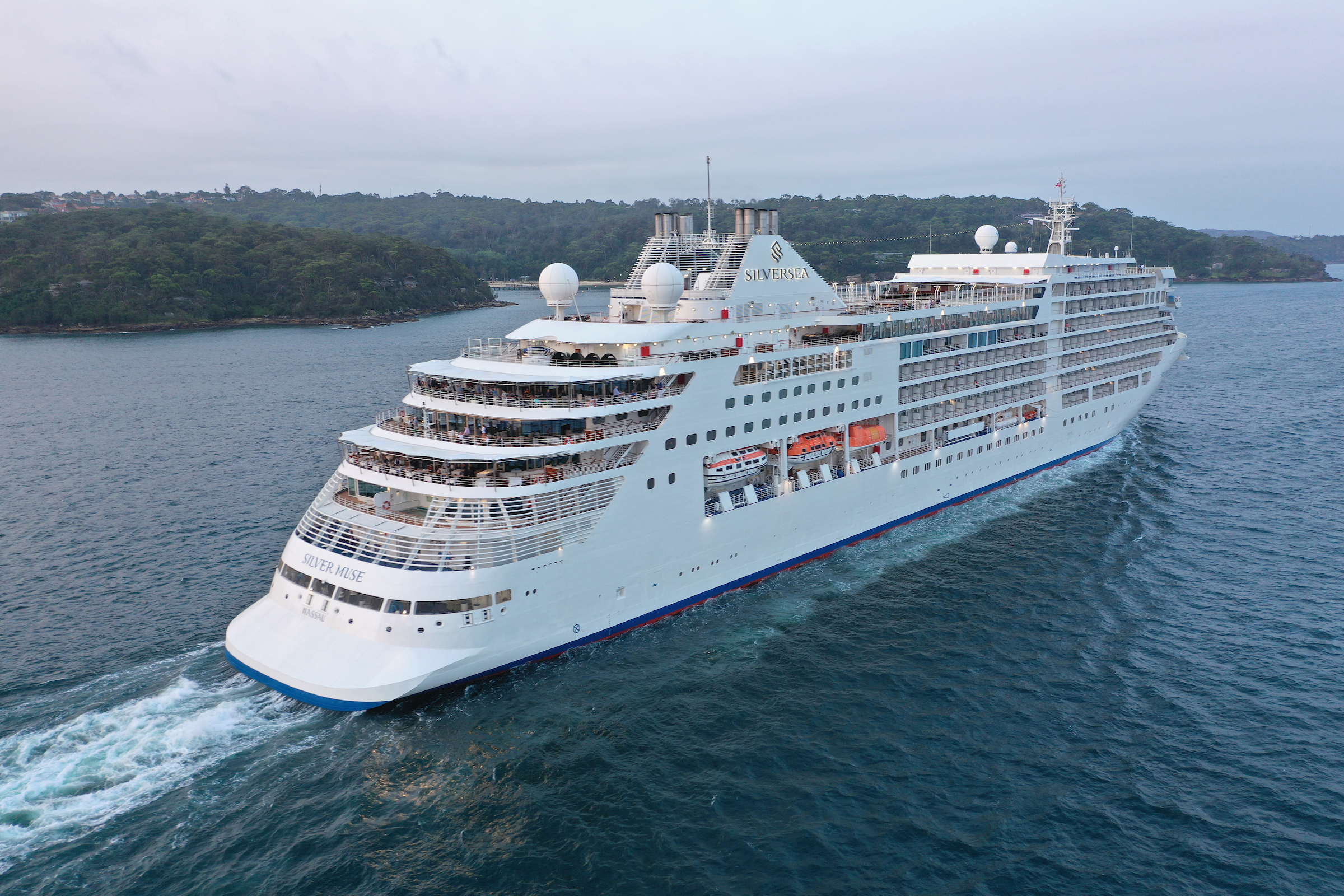
Silversea · Silver Muse
Overview
A 20-night voyage aboard Silver Muse, departing Lisbon on 21 Oct 2026 and arriving in Cape Town, calling at 7 destinations along the way.
LisbonFunchalDakarTakoradiWalvis BayLuderitzCape Town
Cabin prices
Live prices per person based on two sharing. Select a grade to see its fare options.
Loading live cabin prices…
Itinerary
20 nights · 21 ports of call- 1
Day 1 ·LisbonEmbark
21 Oct 2026Depart 18:00Lisbon, the capital of Portugal, is a city open to the sea and carefully planned with 18th-century elegance. Its founder is said to be the legendary Ulysses, but the theory of an original Phoenician settlement is probably more realistic. Known in Portugal as Lisboa, the city was inhabited by the Romans, Visigoths and, beginning in the 8th century, the Moors. Much of the 16th century was a period of great prosperity and overseas expansion for Portugal. Tragedy struck on All Saints' Day in 1755 with a devastating earthquake that killed about 40,000 people. The destruction of Lisbon shocked the continent. As a result, the Baixa (lower city) emerged in a single phase of building, carried out in less than a decade by the royal minister, the Marques de Pombal. His carefully planned layout of a perfect neo-classical grid survived to this day and remains the heart of the city. Evidence of pre-quake Lisbon can still be seen in the Belém suburb and the old Moorish section of the Alfama that sprawls below the Castle of St. George.
Lisbon is a compact city on the banks of the Tagus River. Visitors find it easy to get around as many places of interest are in the vicinity of the central downtown area. There is a convenient bus and tram system and taxis are plentiful. Rossio Square, the heart of Lisbon since medieval times, is an ideal place to start exploring. After a fire destroyed parts of the historic neighborhood behind Rossio in 1988, many of the restored buildings emerged with modern interiors behind the original façades.
The city boasts a good many monuments and museums, such as the Jeronimos Monastery, Tower of Belém, the Royal Coach Museum and the Gulbenkian Museum. High above the Baixa is the Bairro Alto (upper city) with its teeming nightlife. The easiest way to connect between the two areas is via the public elevator designed by Gustave Eiffel.
Cruising up the Tagus River to the ship's berth, you can already spot three of Lisbon's famous landmarks: the Monument to the Discoveries, the Tower of Belém and the Statue of Christ, which welcomes visitors from its hilltop location high above Europe's longest suspension bridge. - 2
Day 2 ·At Sea
22 Oct 2026 - 3
Day 3 ·Funchal, Madeira
23 Oct 2026Arrive 08:00Bedecked with dramatic cliffs, fertile mountains and sun-gorged beaches, Madeira is a lush, colourful island of plants, paradise and Portuguese-flavoured pleasures. Bathing in year-round sunshine, Funchal - the lowkey capital of Madeira - is perfect for slowing the pace, and toasting the thrilling scenery with a bottle of the island's famous wine. Narrow, cobblestone streets line the old town, where whitewash buildings, iron-wrought balconies, and tiled patterns carry echoes of Lisbon. Rua de Santa Maria is the city's oldest street, and the doors have been vividly painted by local artists.
Sit for a drink, to sample your choice of Madeira's renowned wines - Boal is the ideal option for those with a sweeter tooth. You'll also find Corpo Santo Chapel here, one of the few remaining buildings to have survived from the 15th century. Blossoming parks and gardens splash colour around, and the sweet smell of pollen lingers in Parque de Santa Catarina. Look out over Funchal harbour between the fountains and blooming flower beds, as ducks and swans enjoy leisurely days on the lake. Madeira Botanical Garden waits in the hills over the city, along with Palhero Garden – a sophisticated and elegantly landscaped English garden, 500 meters above sea level. For an even more dramatic view of this gorgeous setting, head up to Cap Girao – a rusty-red cliff with a cable car strung up to its sheer drop. The cliff falls away vertically to the vivid blue waters below. Or head down to the sea, to enjoy Funchal's gorgeous pebble beaches rustling, framed by colossal, craggy cliffs. - 4
Day 4 ·Funchal, Madeira
24 Oct 2026Depart 13:30Bedecked with dramatic cliffs, fertile mountains and sun-gorged beaches, Madeira is a lush, colourful island of plants, paradise and Portuguese-flavoured pleasures. Bathing in year-round sunshine, Funchal - the lowkey capital of Madeira - is perfect for slowing the pace, and toasting the thrilling scenery with a bottle of the island's famous wine. Narrow, cobblestone streets line the old town, where whitewash buildings, iron-wrought balconies, and tiled patterns carry echoes of Lisbon. Rua de Santa Maria is the city's oldest street, and the doors have been vividly painted by local artists.
Sit for a drink, to sample your choice of Madeira's renowned wines - Boal is the ideal option for those with a sweeter tooth. You'll also find Corpo Santo Chapel here, one of the few remaining buildings to have survived from the 15th century. Blossoming parks and gardens splash colour around, and the sweet smell of pollen lingers in Parque de Santa Catarina. Look out over Funchal harbour between the fountains and blooming flower beds, as ducks and swans enjoy leisurely days on the lake. Madeira Botanical Garden waits in the hills over the city, along with Palhero Garden – a sophisticated and elegantly landscaped English garden, 500 meters above sea level. For an even more dramatic view of this gorgeous setting, head up to Cap Girao – a rusty-red cliff with a cable car strung up to its sheer drop. The cliff falls away vertically to the vivid blue waters below. Or head down to the sea, to enjoy Funchal's gorgeous pebble beaches rustling, framed by colossal, craggy cliffs. - 5
Day 5 ·At Sea
25 Oct 2026 - 6
Day 6 ·At Sea
26 Oct 2026 - 7
Day 7 ·Dakar, Senegal
27 Oct 2026Arrive 08:00Depart 18:00Capital of Senegal, and a major gateway to Western Africa, the former colonial trading post of Dakar stamps the Cap-Vert peninsular with glorious surf-fringed beaches. Enjoy the thrum of markets - where colourful textiles are exchanged - and wander streets where jazz, sambar and mbalax spill from every ajar door. Offering tropical island-style beaches in an incongruous urban setting, Dakar is a wild and urgent experience for the senses. Watch on as surfers revel in consistent rollers on this, the most westerly peninsula of continental Africa.
Scuba divers can explore worlds below the surface in Dakar's diving areas, or you can head to sandy beaches like Plage des Mamelles' cove, which provide endless options for cooling off. Looking for a little more activity, loosen up and play on golf courses that unroll along the sun-kissed Senegalese coastline, or visit startling natural sites like the vivid pink water of the salty pink Lake Retba. Cultural relevance abounds in Dakar - those wanting to delve a little deeper into the dark history of Senegal should visit the House of Slaves on the UNESCO World Heritage Site listed Goree Island, or duck into the Theodore Monod Museum to pour over an incredible collection of masks, artefacts, and treasures. Sandaga Market is a full-on experience of choreographed chaos, sound and flavours. Tear into fish fresh off the boat, and don't be afraid to get your hands a little greasy while handling Dibi - the national street food - soft mutton, simmered with onions and zesty orange spice. - 8
Day 8 ·At Sea
28 Oct 2026 - 9
Day 9 ·At Sea
29 Oct 2026 - 10
Day 10 ·At Sea
30 Oct 2026 - 11
Day 11 ·Takoradi
31 Oct 2026Arrive 08:00Depart 19:00Ghana's fourth-largest city plays serene beaches against a bustling commercial centre. People from around the world visit the shore, both for its beauty and to enjoy the fresh seafood served right on the sands. Frantic city life awaits a short distance inland, where an economy fuelled by Ghana’s oil industry is most apparent in the maze of vendors at Market Circle. Takoradi is also the gateway to the UNESCO World Heritage sites of Elmina and Cape Coast Castle. - 12
Day 12 ·At Sea
1 Nov 2026 - 13
Day 13 ·At Sea
2 Nov 2026 - 14
Day 14 ·At Sea
3 Nov 2026 - 15
Day 15 ·At Sea
4 Nov 2026 - 16
Day 16 ·At Sea
5 Nov 2026 - 17
Day 17 ·Walvis Bay, Namibia
6 Nov 2026Arrive 07:00Formerly a whaling station, Walvis Bay has become the principal port of entry into Namibia. In 1795, while occupied by the British, Walvis Bay was turned into a naval base in order to monitor and intimidate the empire's European rivals during the so-called "scramble for Africa." When Namibia gained independence in 1990, Walvis Bay and the surrounding enclave remained part of South Africa until February 28, 1994. On this date the enclave was transferred to Namibian control, ending a long disputed claim between the two countries.
The town is very much built for the harbor, with numbered streets forming an unexciting, but easily navigable grid around it. The city center can be covered on foot. Of special note are the municipal buildings, decorated with attractive wood carvings from Namibia's Kavango region. Exhibits at the local museum illustrate the history of the town and the indigenous Topnaar people. The lagoon on the outskirts of Walvis Bay is home to a bird sanctuary. Flocks of flamingoes and pelicans feed here in the nutrient-rich water. The lagoon also supports an important salt industry. - 18
Day 18 ·Walvis Bay, Namibia
7 Nov 2026Depart 16:00Formerly a whaling station, Walvis Bay has become the principal port of entry into Namibia. In 1795, while occupied by the British, Walvis Bay was turned into a naval base in order to monitor and intimidate the empire's European rivals during the so-called "scramble for Africa." When Namibia gained independence in 1990, Walvis Bay and the surrounding enclave remained part of South Africa until February 28, 1994. On this date the enclave was transferred to Namibian control, ending a long disputed claim between the two countries.
The town is very much built for the harbor, with numbered streets forming an unexciting, but easily navigable grid around it. The city center can be covered on foot. Of special note are the municipal buildings, decorated with attractive wood carvings from Namibia's Kavango region. Exhibits at the local museum illustrate the history of the town and the indigenous Topnaar people. The lagoon on the outskirts of Walvis Bay is home to a bird sanctuary. Flocks of flamingoes and pelicans feed here in the nutrient-rich water. The lagoon also supports an important salt industry. - 19
Day 19 ·Luderitz, Namibia
8 Nov 2026Arrive 08:30Depart 19:00The scorched desert that surrounds Luderitz means the city’s collection of German art nouveau architecture couldn't look more unusually placed along the Namibian coastline. This quirkiness is what gives the destination its charm. See gangs of playful penguins skipping across the waves, pink flamingos wading by the coast, and dolphins leaping into the air near Penguin Island and Seal Island. - 20
Day 20 ·At Sea
9 Nov 2026 - 21
Day 21 ·Cape Town, South AfricaDisembark
10 Nov 2026Arrive 07:00Sprawling across endless, staggeringly blue coastline, and watched over by the iconic plane of Table Mountain, Cape Town is without doubt one of the world’s most beautiful cities. A blend of spectacular mountain scenery, multiculturalism and relaxed ocean charm awaits in the Mother City, where you can venture out to rolling vineyards, dine in laid back sea suburbs, or spend days exploring cool urban culture. Cape Town’s natural splendour fully reveals itself as the cable car rears sharply to the top of Table Mountain.
From the summit, 3,500 feet above sea level, you can let the scale of the panoramic vistas of the city rolling down towards the ocean wash over you. Another heavenly perspective waits at the top of Lion's Head’s tapering peak. A sharp hike and an early start is required, but the views of the morning sun painting Table Mountain honey-gold are some of Cape Town’s finest. Cape Town’s glorious sunshine and inviting blue rollers can be a little deceiving - these oceans are anything but warm at times, with nothing between the peninsula’s end and Antarctica’s icy chill. This cool water has upsides though, bringing a colony of adorably cute African penguins to Boulders Beach. Boarded walkways offer the perfect vantage point to see the cute creatures dipping into the sea and lounging in the sun. Nearby, journey to the end of Africa at the Cape of Good Hope, where you can stand at the bottom of this mighty continent, watching out over the merging waves of the Atlantic and Indian Oceans. Cape Town’s beauty is counterpointed by the ominous island form, which sits four miles offshore from the bustling restaurants and lazy seals of the lively V&A Waterfront. A living history lesson, you can sail in the ships that transported prisoners out to Robben Island, before a former prisoner tells of the traumas of life on this offshore prison. Your guide will show you the cramped cells, and render Mandela’s long walk to freedom in heartbreaking, visceral clarity.
Your ship: Silver Muse
Explore Silver Muse's cabins, dining and onboard facilities.