
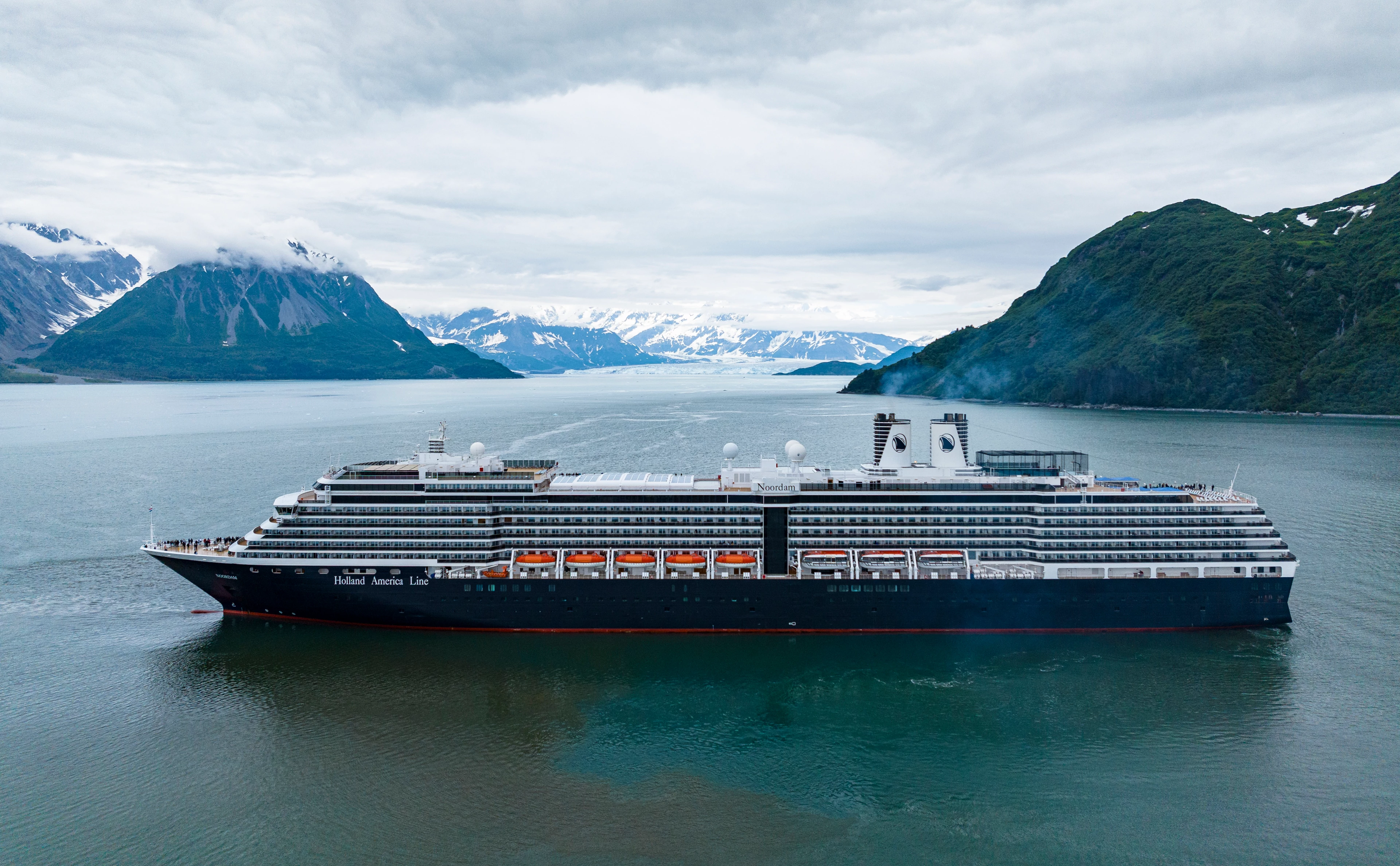
28 nightsFrom Tokyo (Yokohama), Japan23 ports of call
28-Day Circle Japan
Holland America Line · Noordam
Overview
A 28-night voyage aboard Noordam, departing Tokyo (Yokohama), Japan on 26 Mar 2028 and returning to the same port, calling at 23 destinations along the way.
Tokyo (Yokohama), JapanShimiju, japanOsakaHiroshimaBusan, South KoreaSakaiminatoMaizuruKanazawaHakodateMiyako,Iwate, JapanHitachinaka, JapanTokyo (Yokohama), JapanKobeKochi, JapanKagoshimaFukuokaSokcho, South KoreaKanazawaSakata, JapanHakodateAomoriMiyako,Iwate, JapanTokyo (Yokohama), Japan
Cabin prices
Live prices per person based on two sharing. Select a grade to see its fare options.
Loading live cabin prices…
Itinerary
28 nights · 30 ports of call- 1
Day 1 ·TokyoEmbark
26 Mar 2028Depart 19:00Tokyo is the largest city on earth and packed with some of the world’s best shops, museums and restaurants, big and small. While the bright neon lights and the bustle of contemporary Tokyo may be what comes to mind when you think of the city, there is another side. Tokyo's historic gardens and neighborhoods of traditional homes on narrow lanes speak to a timeless Japan that has survived into the 21st century. - 2
Day 2 ·Shimizu
27 Mar 2028Arrive 07:00Depart 15:00A thriving harbor town for centuries, Shimizu is best known for its incredible scenic beauty. Take an excursion to Miho no Matsubara and enjoy stunning views of Mount Fuji and expansive black sand beaches; stroll through the graceful gardens and unique art installations of Tokachi Millennium Forest; and visit Kongofukuji Temple, first built by Kobo-daishi in 822 and rebuilt from 1662. - 3
Day 3 ·Osaka
28 Mar 2028Arrive 10:00Depart 23:59Think of Osaka, Japan (accent on the O), as a combination of Los Angeles and Chicago. It very definitely has L.A.’s second-city complex, but its attitude is pure Chicago. The only business that matters is business, and so what if the Hanshin Tigers, the local baseball team, are frequently the worst professional athletes in the world? They’re the home team. People in Osaka laugh louder, play harder and drink more than Tokyo’s most decadent dreams. Osaka even has its own dialect, one the rest of the country calls “dirty Japanese,” one entirely different than even Kobe’s—and Kobe is an Osaka suburb.
Nothing is old in Osaka. The place was flattened during the war (and then again in 1962 and 1989, by Godzilla). During the reconstruction, they forgot to include much in the way of parks or green space, and the sheer amount of concrete and steel sights can get overwhelming.
But Osaka has its attractions and interesting things to do. Sumo wrestlers wait for trains, reeking of chanko-nabe (traditional sumo food; pure energy and calories), just daring the official railway pushers to push them. Yakuza (Japanese gangsters) get train cars to themselves, but if you get on with them, it’s like you’re invisible. Busy markets, the visual noise of neon and nonstop action on shopping streets offer insight into the energy and ambition of Osaka.
And if all that isn’t enough, Osaka is less than an hour from some of the most beautiful temples, shrines and ancient Japanese tourist attractions in the world—a thousand years of Japanese history—waiting in the old capitals of Kyoto and Nara. - 4
Day 4 ·At Sea
29 Mar 2028 - 5
Day 5 ·Hiroshima, Japan
30 Mar 2028Arrive 08:00Depart 23:59Located in the southwest of Japan, Hiroshima, the main city of the Chugoku region, is set within a striking natural landscape of mountains, sea and rivers. Home to more than one million inhabitants, it’s famous as the site of the explosion of the world’s first atomic bomb, dropped by the U.S. in August 1945. This cataclysm is sensitively documented at the Hiroshima Peace Memorial Park and associated Hiroshima Peace Memorial Museum. The city offers visitors a great deal more than the tragedy of the recent past. In addition to the memorials to the events of World War II, there are an array of shrines and temples, as well as the city’s reconstructed castle, which was originally founded in the 16th century.Nature lovers will be charmed by the historic Shukkei-en Garden, commissioned in 1620, and Miyajima island, one of the most scenic spots in Japan. The city is home to a number of art institutions, including the Hiroshima Museum of Art, which houses a collection of Impressionist and Japanese oil paintings, the Hiroshima City Museum of Contemporary Art and the quirky Mazda Museum. There is also an array of excellent restaurants and bars—the city is known for its okonomiyaki, a type of savory pancake—as well as a popular oyster festival each year. - 6
Day 6 ·Scenic Cruising Kanmon Strait
31 Mar 2028 - 7
Day 7 ·Busan
1 Apr 2028Arrive 08:00Depart 17:00South Korea’s second-largest city (after the capital, Seoul), Busan is located in the southeastern corner of the country along the Sea of Japan. It combines a vibrant, big-city atmosphere with a famously laid-back attitude and subtropical landscapes. Often described as the "San Francisco of Korea," thanks mainly to its hilly terrain and close-knit neighborhoods, it offers visitors a little of everything: fashionable boutiques, dynamic culture and buzzy nightlife, as well as sandy beaches, hot springs and nearby mountains crossed with hiking trails and dotted with temples. Cultural highlights include the Gamcheon Cultural Village; the spectacular Haedong Yonggungsa Temple, built into the side of a cliff; and Art Street in Sinchang-dong, which hosts art competitions, exhibitions and cultural events such as the annual Busan International Film Festival. Those who enjoy hiking can explore the famed cliffs of Taejongdae Park, while the white sand beaches at Gwangalli and Haeundae are ideal places to relax by the seashore. Foodies will love Busan, too, not just for its excellent restaurants but also for the many atmospheric markets: the low-key Millak Hoe Town Market, tourist spots like Jagalchi Fish Market and the market at Haeundae with its ramshackle stalls selling gukpab (a traditional rice soup). - 8
Day 8 ·Sakaiminato, Japan
2 Apr 2028Arrive 08:00Depart 18:00Sakaiminato is home to Shigeru Mizuki, creator of GeGeGe no Kitaro (a character who’s everywhere in contemporary Japan), and gateway to the ancient region of Honshu, site of the famous “Black Castle.” - 9
Day 9 ·Scenic cruising Maizuru Bay
3 Apr 2028 - 9
Day 9 ·Maizuru
3 Apr 2028Arrive 08:00Depart 21:00 - 10
Day 10 ·Kanazawa
4 Apr 2028Arrive 08:00Depart 18:00Kanazawa is the capital of Ishikawa Prefecture, on Japan’s central Honshu Island. It's known for well-preserved Edo-era districts, art museums and regional handicrafts. Kenrokuen Garden, begun in the 17th century, is celebrated for its classic landscape designs incorporating ponds and streams. - 11
Day 11 ·At Sea
5 Apr 2028 - 12
Day 12 ·Hakodate
6 Apr 2028Arrive 08:00Depart 17:00From the lively morning market of Asa-ichi, to the unparalleled views from Mount Hakodate, discover the history of the first Japanese port opened to international trade. Walk the ruins of the star-shaped Fort Goryokaku, the first of its kind in Japan, learn about local Ainu culture or simply feast on the abundance of fresh seafood this city is famous for. - 13
Day 13 ·Miyako, Japan
7 Apr 2028Arrive 08:00Depart 17:00Set against a ruggedly beautiful coastline, Miyako is home to Jodogahama Beach, a picturesque pebble beach with rock outcroppings. Go for a swim then stop at Miyako Fish Market for a tasty lunch. - 14
Day 14 ·Hitachinaka, Japan
8 Apr 2028Arrive 08:00Depart 17:00 - 15
Day 15 ·Tokyo
9 Apr 2028Arrive 08:00Depart 19:00Tokyo is the largest city on earth and packed with some of the world’s best shops, museums and restaurants, big and small. While the bright neon lights and the bustle of contemporary Tokyo may be what comes to mind when you think of the city, there is another side. Tokyo's historic gardens and neighborhoods of traditional homes on narrow lanes speak to a timeless Japan that has survived into the 21st century. - 16
Day 16 ·At Sea
10 Apr 2028 - 17
Day 17 ·Kobe
11 Apr 2028Arrive 08:00Depart 19:00This cosmopolitan port city is known for more than just its world-famous Kobe beef. Discover the boutiques and markets of the Motomashi and Kokashita districts, explore the Fashion Museum or venture out to the Akashi Kaikyo Bridge-the longest suspension bridge in the world. In the Kitano district, tour stately injikan, western-style Victorian and Gothic homes, or enjoy a glass of sake from one of Kobe's famed wineries. - 18
Day 18 ·Kochi, Japan
12 Apr 2028Arrive 08:00Depart 16:00High atop a hill in Kochi sits 17th-century Kochi Castle, once the seat of the Yamauchi lords. Explore this historic site and enjoy panoramic views of the city, then dine on sushi at Hirome Market. - 19
Day 19 ·Kagoshima
13 Apr 2028Arrive 08:00Depart 16:00Situated at the southern tip of Japan, Kagoshima is the capital of the prefecture of the same name and famous for its dramatic views of Sakurajima, an active volcano that smolders across the bay. One of the most popular activities is taking a ferry to Sakurajima and hiking on the 100-year-old lava flow that is now a grassy peninsula. Kagoshima, however, offers much more than the volcano’s almost overwhelming beauty. The food scene provides opportunities to experience the area’s rich culinary culture and features dishes using locally caught fish and regional specialties, like satsuma a’ge (deep-fried fish cake) and shōchū, a traditional beverage made at more than 100 distilleries in Kagoshima alone. Although the city was officially founded in 1889, it has an even longer history that is reflected in the 17th-century gardens of Sengan-en. More recent events are covered at a museum dedicated to the kamikaze pilots who flew out of Kagoshima. Other popular attractions include the City Aquarium, the Museum of the Meiji Restoration with its exhibits exploring local history and the City Museum of Art with its collection that covers both local contemporary and older art. With so much to do, visitors may want to consider the Cute transit card. Available at tourist information offices, one-day Cute cards cover city buses, trams and Sakurajima ferries and also provide discounted admission to several attractions. - 20
Day 20 ·Fukuoka (Hakata), Japan
14 Apr 2028Arrive 08:00Depart 16:00 - 21
Day 21 ·Sokcho, South Korea
15 Apr 2028Arrive 10:00Depart 20:00 - 22
Day 22 ·At Sea
16 Apr 2028 - 23
Day 23 ·Kanazawa
17 Apr 2028Arrive 08:00Depart 17:00Kanazawa is the capital of Ishikawa Prefecture, on Japan’s central Honshu Island. It's known for well-preserved Edo-era districts, art museums and regional handicrafts. Kenrokuen Garden, begun in the 17th century, is celebrated for its classic landscape designs incorporating ponds and streams. - 24
Day 24 ·Sakata, Japan
18 Apr 2028Arrive 09:00Depart 18:00 - 25
Day 25 ·Hakodate
19 Apr 2028Arrive 10:00Depart 21:00From the lively morning market of Asa-ichi, to the unparalleled views from Mount Hakodate, discover the history of the first Japanese port opened to international trade. Walk the ruins of the star-shaped Fort Goryokaku, the first of its kind in Japan, learn about local Ainu culture or simply feast on the abundance of fresh seafood this city is famous for. - 26
Day 26 ·Aomori
20 Apr 2028Arrive 07:00Depart 19:00Most Japanese used to think of Aomori merely as the place you caught the ferry to when you were going to Hokkaido. By the time you’d gotten here, they figured, you were pretty much at the edge of the civilized world. The small Tsugaru Strait that separates Honshu from Hokkaido isn’t big—only about 20 kilometers (12.5 miles) at its narrowest point—but it’s ecologically important: Hokkaido has animals related to northern Asia, whereas Honshu’s are more closely related to southern Asia’s. The strait is also famous for sudden, very rough weather and for no shortage of shipwrecks. The city was flattened in World War II, so there isn’t much history left to see. Still, it’s a lovely area, not much congestion or development, and because the town is still the major gateway to Hokkaido, the city has money to spend on architecture and parks. Its setting on the edge of Mutsu Bay means you will often be surprised by lovely water views through the buildings. The old way of thinking of Aomori is over. Aomori may not be quite what most people think of when they plan a Japan trip, but it is what Japan thinks of when they consider where they got the new century right. - 27
Day 27 ·Miyako, Japan
21 Apr 2028Arrive 08:00Depart 17:00Set against a ruggedly beautiful coastline, Miyako is home to Jodogahama Beach, a picturesque pebble beach with rock outcroppings. Go for a swim then stop at Miyako Fish Market for a tasty lunch. - 28
Day 28 ·At Sea
22 Apr 2028 - 29
Day 29 ·TokyoDisembark
23 Apr 2028Arrive 08:00Tokyo is the largest city on earth and packed with some of the world’s best shops, museums and restaurants, big and small. While the bright neon lights and the bustle of contemporary Tokyo may be what comes to mind when you think of the city, there is another side. Tokyo's historic gardens and neighborhoods of traditional homes on narrow lanes speak to a timeless Japan that has survived into the 21st century.
Your ship: Noordam
Explore Noordam's cabins, dining and onboard facilities.