
12 nightsFrom Lisbon12 ports of call
Lisbon to Civitavecchia
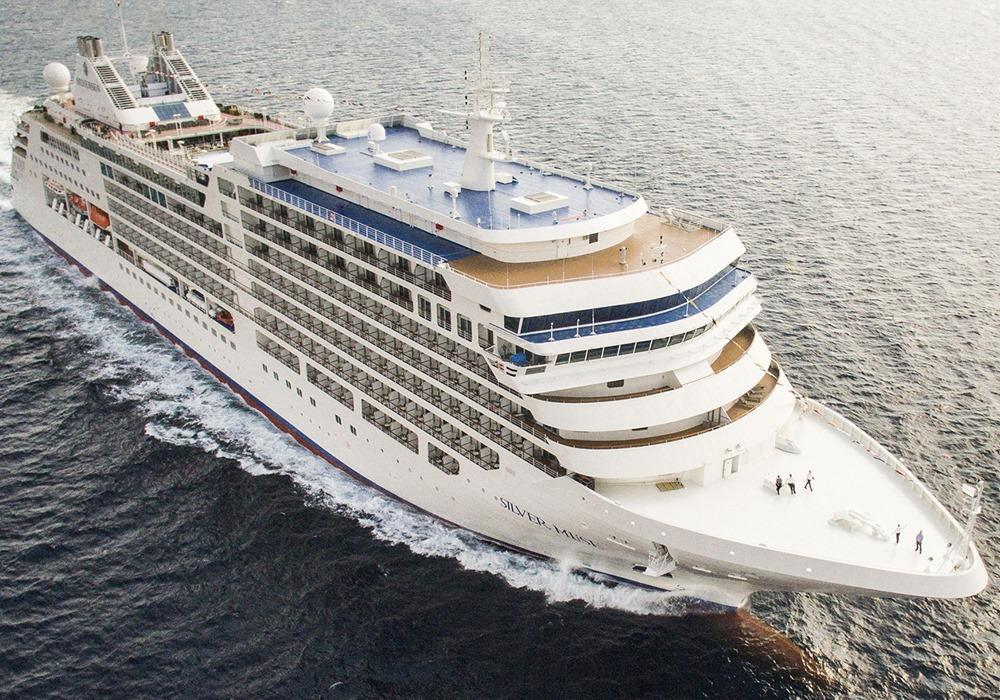
Silversea · Silver Dawn
Overview
A 12-night voyage aboard Silver Dawn, departing Lisbon on 28 Sept 2027 and arriving in Civitavecchia, Rome, calling at 12 destinations along the way.
LisbonLeixoes, PortugalVigoGibraltarMalagaCartagena, SpainPalma de MallorcaAlcudia, Mallorca, SpainMahon, SpainAlgheroAjaccioCivitavecchia, Rome
Cabin prices
Live prices per person based on two sharing. Select a grade to see its fare options.
Loading live cabin prices…
Itinerary
12 nights · 13 ports of call- 1
Day 1 ·LisbonEmbark
28 Sept 2027Depart 18:00Lisbon, the capital of Portugal, is a city open to the sea and carefully planned with 18th-century elegance. Its founder is said to be the legendary Ulysses, but the theory of an original Phoenician settlement is probably more realistic. Known in Portugal as Lisboa, the city was inhabited by the Romans, Visigoths and, beginning in the 8th century, the Moors. Much of the 16th century was a period of great prosperity and overseas expansion for Portugal. Tragedy struck on All Saints' Day in 1755 with a devastating earthquake that killed about 40,000 people. The destruction of Lisbon shocked the continent. As a result, the Baixa (lower city) emerged in a single phase of building, carried out in less than a decade by the royal minister, the Marques de Pombal. His carefully planned layout of a perfect neo-classical grid survived to this day and remains the heart of the city. Evidence of pre-quake Lisbon can still be seen in the Belém suburb and the old Moorish section of the Alfama that sprawls below the Castle of St. George.
Lisbon is a compact city on the banks of the Tagus River. Visitors find it easy to get around as many places of interest are in the vicinity of the central downtown area. There is a convenient bus and tram system and taxis are plentiful. Rossio Square, the heart of Lisbon since medieval times, is an ideal place to start exploring. After a fire destroyed parts of the historic neighborhood behind Rossio in 1988, many of the restored buildings emerged with modern interiors behind the original façades.
The city boasts a good many monuments and museums, such as the Jeronimos Monastery, Tower of Belém, the Royal Coach Museum and the Gulbenkian Museum. High above the Baixa is the Bairro Alto (upper city) with its teeming nightlife. The easiest way to connect between the two areas is via the public elevator designed by Gustave Eiffel.
Cruising up the Tagus River to the ship's berth, you can already spot three of Lisbon's famous landmarks: the Monument to the Discoveries, the Tower of Belém and the Statue of Christ, which welcomes visitors from its hilltop location high above Europe's longest suspension bridge. - 2
Day 2 ·Oporto (Leixoes), Portugal
29 Sept 2027Arrive 09:00Depart 18:00Lively, commercial Oporto is the second largest city in Portugal after Lisbon. Also called Porto for short, the word easily brings to mind the city's most famous product - port wine.
Oporto’s strategic location on the north bank of the Douro River has accounted for the town’s importance since ancient times. The Romans built a fort here where their trading route crossed the Douro, and the Moors brought their own culture to the area. Oporto profited from provisioning crusaders en route to the Holy Land and enjoyed the riches from Portuguese maritime discoveries during the 15th and 16th centuries. - 3
Day 3 ·Vigo (Galicia)
30 Sept 2027Arrive 08:00Depart 17:00Located in in Galicia, in the northwest of Spain on the Portuguese border, Vigo is perhaps the country’s most underrated destination. Considered by many as “just’ an industrial fishing port (meaning the seafood rarely travels further than a mile to your plate), Vigo seduces everyone with its cuisine, landscape and warm Spanish welcomes. Like many of Galicia’s coastal towns, life in Vigo has been dictated by the ocean. View less
The city dates back to Roman times and Romanesque architecture such as the churches of Santa María de Castrelos, Santiago de Bembrive, San Salvador de Coruxo can be found all over the city. From the 16th-18th centuries it became alive with commercial trade and buccaneers looking for sunken treasure. The town still enjoys its status as having sunken treasure in its waters, and debates about who would own this if ever discovered periodically colour local conversations. The old town and fishermen’s quarter are worth exploring, although unfortunately with the port’s rapid expansion in the 20th century, many of the original fishermen’s houses were demolished. However, remnants of the city’s Medieval past are still visible and a trip along the Spanish-Portuguese border will reward you with the beautiful walled Medieval city of Tui and the Velansa Fortress. The 13th century fortress offers a splendid view of the fortified Cathedral of Tui on the opposite side of the River Miño. Mount Castro, a castle fortress actually in the city, commands a magnificent view of Vigo and the bay. - 4
Day 4 ·At Sea
1 Oct 2027 - 5
Day 5 ·Gibraltar
2 Oct 2027Arrive 09:00Depart 19:00Gibraltar is the famous promontory located at the western entrance of the Mediterranean, with Spain to the north and, across the Straits, Morocco to the south. The Straits, a channel 36 miles long that connects the Atlantic with the Mediterranean, are 27 miles wide at the west end, 8 miles at their narrowest and 15 miles between Gibraltar and Almina Point near Ceuta. Africa is clearly visible on a fine day. Gibraltar's airport is known for its unusual runway that bisects the two-mile-long narrow isthmus linking the colony geographically to mainland Spain. - 6
Day 6 ·Malaga (Costa Del Sol)
3 Oct 2027Arrive 07:00Depart 17:30Bathing in the sunshine coast’s stunning subtropical climate, and laying out endless spectacular beaches, it’s no surprise that Malaga is one of Spain’s most popular cities. The already impressive cultural appeal of this holiday city has skyrocketed over recent years, and with a storied old town and Moorish fortifications, Malaga has a lot to offer. Nearby, you can recline on the renowned beaches of the Costa del Sol, or venture inland to discover the Moorish treasures of Granada and Cordoba. View less
La Malagueta beach is Malaga’s spacious urban beach, perfect for a sunbathe and a dip in the warm water, before enjoying seaside cocktails or seafood tapas in the restaurants nearby. Malaga and the Costa del Sol may be best known for glorious weather and beaches, but Malaga can now stake a genuine claim as an artistic powerhouse too. Visit the renowned Picasso museum – housed in the artist’s birthplace – before exploring the freshly opened outpost of the Pompidou Centre. The art also spills out onto the streets in the colourful Soho district – splashed with vibrant street paintings. Known as La Manquita – or the one-armed woman – the city’s cathedral rises over the historic old town. Its huge bell tower stands tall, but an accompanying second tower was never completed - hence the nickname. The Alcazaba fortress palace looms over the waterfront and forms a spectacularly preserved remnant from the era when the Moors controlled the Andalucía region. Discover more of the Arabic influence by visiting Granada’s Alhambra palace, or Cordoba’s La Mezquita mosque. Together with Seville’s converted cathedral, the cities form Andalucía’s Golden Triangle of Moorish wonders. - 7
Day 7 ·Cartagena (Spain)
4 Oct 2027Arrive 09:00Depart 16:00On the crossroads of mighty cultures, this Murcian port has endless ancient stories to share. A valuable natural harbour attracted many civilisations to this sun-bathed, southeasterly setting - following its foundation by the Carthaginians in 227 BC. Blending the imprints left by countless cultures on this global junction, the presence of everyone from the Vandals to the Phoenicians and Moors can be felt as you explore, walking between ruins and celebrated modernist architecture along Calle Mayor. Cartagena is crowned by the soaring Castillo de la Concepcion - rise to the stout castle aboard a panoramic lift. Inside, look through reams of archaeological treasures, or admire the rolling views down over the port and across the waters. Watch out for the electric blue peacocks who strut flamboyantly. Cartagena's emergence as a visitor destination coincided with a stunning discovery in 1988 - the bowl of a gloriously preserved Roman Theatre. Enter to sit among the grandiose ancient venue, so evocative, you can't help but imagine the historic performances that have graced its stage. Wander the breezy waterfront, looking across the narrow strait towards Africa's distant haze, and spotting gleaming warships. Cartagena's perfect harbour means it has been one of Spain's oldest strategic navy positions since the 16th century. Settle to enjoy the joys of tapas in lively bars - sampling crisped paella, squid and honeyed-aubergine. Easter's Semana Santa festivities are typically lively here, as hooded processions, lavish floats and sombre fiery displays roll through the streets. - 8
Day 8 ·Palma De Mallorca, Spain
5 Oct 2027Arrive 09:00Depart 19:00The Balearics are comprised of 16 islands; the three principal ones are Mallorca, Ibiza and Minorca. Carthaginians, Romans, Vandals and Arabs have invaded these islands over the centuries. Ruins show evidence of the prehistoric Talayot civilization, a megalithic culture that flourished here between 1500 BC and the Roman conquest. Today the islands are besieged by invaders of a different sort - hordes of tourists.
Lying 60 miles (97 km) off the Spanish mainland, the islands' lush and rugged landscape combined with an extremely mild, sunny climate proves irresistible, especially to northern Europeans. As a result, the Balearics boast cosmopolitan resorts with lively nightlife and plenty of sports activities.
Mallorca (also spelled Majorca) is the largest of the islands, with an area of more than 1,400 square miles (3626 sq.km). The scenery is magnificent, with cliffs along indented shorelines jutting out of the sea and mountain ranges sheltering the plains from harsh sea breezes. The fertile plain in the centre is covered with almond and fig trees plus olive groves with some trees more than 1,000 years old. Tall pines, junipers and oaks line the mountain slopes.
Palma de Mallorca is the capital of the archipelago. A cosmopolitan city with sophisticated shops and restaurants, it also offers buildings of spectacular Moorish and Gothic architecture.
In the western part of Mallorca, nestled into the mountains, lies the village of Valldemosa. It is known for its Carthusian Monastery where Frédéric Chopin and George Sand spent the winter of 1838-39. - 9
Day 9 ·Alcudia, Mallorca, Spain
6 Oct 2027Arrive 08:00Depart 18:30Nothing if not strategic, Alcúdia is the ideal base for exploring Mallorca's north coast, with the 13-km-long (8-mile-long) beach from Port d'Alcúdia to C'an Picafort and the adjacent Playa de Muro, the bird-watchers' paradise in the S'Albufera wetlands, and the spectacular drive along the corniche to Cap de Formentor. The charming little walled town itself is a capsule version of Mallorcan history: the first city here was a Roman settlement, in 123 BC. - 10
Day 10 ·Porto Mahon, Spain
7 Oct 2027Arrive 08:00Depart 18:00Happy to sit out of the limelight that Ibiza and Majorca bathe in, Menorca lives life at its own pace, offering endless pine-tree fringed beaches and an appealing, mellow approach. The capital of Menorca is a bashful member of Balearic Islands, which wait off of the sunny Spanish coast. With atmospheric old towns, tiny fishing villages, and unspoiled beach coves, this is one of the group’s lesser-known and explored gems – and all the richer for it - 11
Day 11 ·Alghero, Sardinia
8 Oct 2027Arrive 09:00Depart 18:30Encircled by dramatic medieval walls, which rise abruptly from deep-blue waters, Alghero’s defences shelter one of Sardinia’s largest and most spectacular old towns. Uneven cobbled streets, rich history and a fiery Catalan flare provide a real depth of character, and the Coral Riviera’s pristine beaches, which stretch out nearby, help to make Alghero a real highlight of Sardinia. Alghero has changed hands numerous times over its tempestuous history, but it’s the Catalan influence that you’ll feel most acutely, as you explore.
It was the Catalans who upgraded the defensive ramparts of the ‘Sardinian Barcelonetta’ into the spectacular, imposing fortress we see today, enclosing the old town’s evocative knot of narrow streets and rose-gold-coloured masonry. Wander the streets at your leisure, enjoying the cooling shade of the tight, cobblestone streets with lemon-gelato in hand, or enjoying fresh tuna steak at the bustling La Boqueria market. Alghero Cathedral is hidden amid the labyrinth of narrow streets, but it’s the distinctive Baroque-dome of Chiesa di San Michele that you’ll immediately notice peeking ostentatiously over the terracotta roofs of the old town, flaunting its rainbow-coloured patterning. Plush restaurants revel in Alghero’s historical collision of cultures and produce delicious fare like plump clams tangled in tagliatelle, and succulent porcetto pork – slowly roasted to perfection in smoky wood ovens. Wash it down with mirto, a crushed berry liqueur, or sample the fruits of local vineyards, with a platter of Sardinia’s renowned pecorino sheep’s cheese. The city dominates Sardinia’s Coral Riviera – so named because of the red coral found here that’s been used for jewellery since Roman times. Lie back and listen to the waves washing ashore at Spiaggia di Maria Pia beach, breathing in the smell of pine-needles on the breeze. - 12
Day 12 ·Ajaccio (Corsica)
9 Oct 2027Arrive 08:00Depart 17:00Ajaccio is Corsica's largest town. As such, it retains the image of a typical French Mediterranean resort - palm trees, street cafés and a marina full of yachts from around the world. Set in a magnificent bay with a shadowy mountain range as a scenic backdrop, its first image is of yellow-toned buildings and a majestic citadel.
Ajaccio also serves as a popular departure point for trips into Corsica's rugged interior - 13
Day 13 ·Civitavecchia (Rome)Disembark
10 Oct 2027Arrive 07:00All roads lead to Rome, and with good reason - this city is one of the world’s most thrilling, offering unmatched history along every street. An evocative, inspiring and utterly artistic capital of unrivalled cultural impact, Rome is a city of back-to-back landmarks, which will take you on an exhilarating journey through the ages. This may be one of the world’s oldest cities, but it’s well and truly lived in. The ruins are punctuated with murmuring cafes, and the outdoor seating of restaurants sprawls out across piazzas, enticing you to sample tangles of creamy pasta and crispy pizzas. Rome’s incredible Roman Forum is littered with the ruins of its ancient administrations, which have stood firm for 2,000 years, since the times when the area was the centre of the Western world. Few sites are more simultaneously beautiful and haunting than that of the storied Colosseum, which looms deep into Rome’s rich blue sky. Take a tour to learn details of the grisly goings-on within. The best way to experience Rome is to wander its streets, gelato in hand. There is a lot to see here - whether it’s the domed spectacle of the Pantheon, or the elaborate flowing waters and artistry of the Trevi Fountain. Vatican City is an astonishing, colossal display of Catholic grandeur, while the Spanish Steps – crowned by the Trinità dei Monti church – offer a beautiful spot to gather and soak up the lively atmosphere of this humming city. With so much on the to-do list, you’ll relish the breaks you take, enjoying simple pleasures like a strong espresso, or fresh pasta with tomato sauce and ripped basil.
Your ship: Silver Dawn
Explore Silver Dawn's cabins, dining and onboard facilities.