
18 nightsFrom Darwin, Australia13 ports of call
Darwin to Lautoka
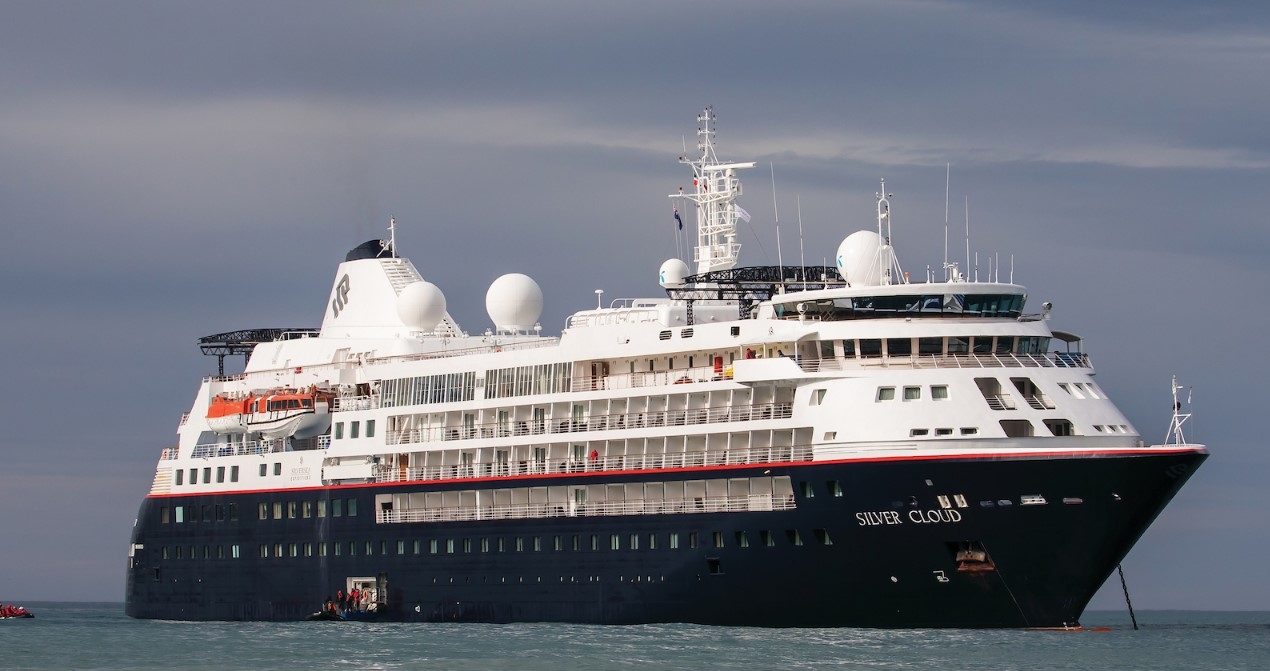
Silversea · Silver Cloud
Overview
A 18-night voyage aboard Silver Cloud, departing Darwin, Australia on 25 Sept 2027 and arriving in Lautoka, calling at 13 destinations along the way.
Darwin, AustraliaCape York, AustraliaThursday IslandAlotau, Papua New GuineaDobu IslandKuiawa Island, Papua New GuineaJacqinot BayRabaul, Papua New GuineaKennedy IslandSanta AnaChampagne Bay, VanuatuAmbrym Island, VanuatuLautoka
Cabin prices
Live prices per person based on two sharing. Select a grade to see its fare options.
Loading live cabin prices…
Itinerary
18 nights · 21 ports of call- 1
Day 1 ·Darwin, AustraliaEmbark
25 Sept 2027Depart 20:00"Australia's capital of the north is a uniquely tropical city, and a historically isolated outpost of this vast, diverse country. Reaching up towards the equator, a full 2,000 miles from Sydney and Melbourne, the city was named in honour of Charles Darwin by the British settlers who established a frontier outpost here. With a unique history, beautiful islands nearby, and a palette of sizzling Pacific flavours, colourful Darwin is an enchanting and exotic Australian destination. Crocodiles patrol the jungled waterways and tropical rainforests around Australia's gateway to the Top End.
Explore via airboat to look down on the veiny waterways of the mist-laced Kakadu National Park. The sounds of chattering birdlife and the gentle splash of fountains and waterfalls will fill your ears in George Brown Darwin Botanic Gardens. Soak it all in, before kicking back and relaxing with a picnic and a crackling barbecue. The sunshine and famous tropical pink sunsets mean many visitors naturally gravitate to the city's soft sands to relax at spots like pretty Mindil Beach, as evening approaches. The adjoining market is filled with souvenirs and crafts stands and is the perfect great place to enjoy some fiery Asian flavours. Stroll the stalls, grab some food, and crack open an ice-frosted beer as the sunset show begins. It may be remote, but Darwin found itself on the front line during the Pacific War, as the Japanese air force unloaded their bombs onto the city in 1942. This relaxed unassuming city has a deeply resilient backbone, however, and you can explore the museums to learn more of the war's impact on Darwin, as well as the devastating effects of one of Australia's worst natural disasters, Cyclone Tracy in 1973." - 2
Day 2 ·At Sea
26 Sept 2027 - 3
Day 3 ·At Sea
27 Sept 2027 - 4
Day 4 ·Cape York, Australia
28 Sept 2027Arrive 07:00Depart 13:00 - 5
Day 5 ·Thursday Island, Australia
28 Sept 2027Arrive 14:00Depart 18:30Thursday Island is Queensland's most northerly administration center, off the tip of Cape York Peninsula in the Torres Strait. It is 1,320 miles by air north of Brisbane. A colorful outpost, Thursday Island retains its majority of native islanders with a mix of Malays, Polynesians, Chinese and Japanese.
The township of Thursday Island nestles in the protective embrace of the Prince of Wales group of islands in the Torres Strait. T.I., as the island is affectionately known, was settled in 1877 and was chosen for its close proximity to the main shipping channel and its well-sheltered port. With a population today of some 3,500, the island has an interesting history and was once the base for a fleet of 150 pearling luggers as well as a busy trading port. - 5
Day 5 ·At Sea
29 Sept 2027 - 6
Day 6 ·Alotau
30 Sept 2027Arrive 07:30Depart 18:00Alotau is the provincial capital of the Milne Bay Province located in the southeast bay of Papua New Guinea. The town and surrounding area has been an important staging ground during World War II and we will see remains and memorials dating back or referring to the war. On a tour of the town, visitors will appreciate lovely vistas of the bay and experience the markets, which are frequented not only by locals, but also by islanders selling their products or looking for produce to take back into Milne Bay.
Alotau is an important port facility for the islands and attracts many vendors of handicrafts from different islands. - 7
Day 7 ·Dei Dei Hot Springs, Fergusson Island
1 Oct 2027Arrive 07:00Depart 12:30Fergusson is one of the three biggest and mountainous islands in the Milne Bay Province, and part of the D’Entrecasteaux Islands. On Fergusson’s south side are the famous Dei Dei geysers — natural hot springs that periodically erupt with vapour steam next to mud pools and a warm stream. The hot springs are still used by locals to cook food in palm frond and pandanus leaf baskets placed into the boiling hot water. Birds in the area include Eclectus Parrots, Yellow-bellied Sunbirds and the endemic Curl-crested Manucode – a bird-of-paradise. - 8
Day 8 ·Dobu Island
1 Oct 2027Arrive 14:30Depart 18:30Dobu is a small island in the D’Entrecasteaux Group next to Fergusson Island and Normanby Island. The island was formerly feared because of black magic and the local “witch” doctors cursing the healthy or treating the sick. An anthropological study was done by Reo Fortune in the 1930s which resulted in the book “The Island of Sorcerers”. The island is also part of the famous Kula ring.
Participants in the exchange system pride themselves with mwali and soulava (armbands and necklaces) that are given and received still today and it is interesting to see how the traditional objects have been adorned with modern paraphernalia. A stroll through the main village on the northwestern tip will show the school and church and trails leading along the shore passing traditionally thatched houses and gardens. - 8
Day 8 ·Kuiawa Island, Papua New Guinea
2 Oct 2027Arrive 07:30Depart 18:00Kuiawa (Kuyau) is one of the Trobriand Islands, the northernmost islands in the Milne Bay Province. Kuiawa is found some 200 kilometers from the province’s capital and to the southwest of Kiriwina, the largest and best known of the islands. The Trobriand Islands are of uplifted limestone and gardening is not that easy –but Trobriand Islanders are known for their magic to improve the growth of yam, a highly desired plant for ceremonial reasons and as food.
Certain islands and villages have yam houses where the larger yams are stored and displayed. Houses are strung along the main road through the village and beach almond, casuarina and frangipani trees give shade. Trobriand Islanders are famous carvers and dancers and local groups and school classes love to compete dancing or playing their version of cricket, especially during harvest time. - 9
Day 9 ·Jacquinot Bay
3 Oct 2027Arrive 07:30Depart 18:00Jacquinot Bay is a large open bay on the eastern coast of the island of New Britain. It is a tranquil place with white sandy beaches and tropical palm trees all around. There is also a well-known beautiful waterfall that flows out of the mountainside with freezing cold water right onto the beach. But during WWII, however, it was not a quiet place. It was, in fact, an important base for the Australian Army who liberated it in November 1944. View less
This base was used to support Australian operations near Rabaul which were conducted in early 1945 in conjunction with advances on the northern side of New Britain. - 10
Day 10 ·Rabaul, Papua New Guinea
4 Oct 2027Arrive 07:30Depart 22:00If surreal and unique experiences are your thing, then the Papua New Guinean town of Rabaul should tick your travel boxes. Found on the north eastern tip of New Britain Island (the largest island off mainland PNG) Rabaul, the former provincial capital, has quite a remarkable location. The town is inside the flooded caldera of a giant volcano and several sub-vents are still quite active today! The lively city was almost entirely devastated by Mount Tavurvur in 1994, covering the city in ashfall, but thankfully costing no lives. View less
Since then, thanks to Rabaul’s deep-water port, commerce has been on the up, and a few shops and hotels have managed to find an audience. However, Rabaul’s remote location together with the volcano still being one of the most active and dangerous in Papua New Guinea means tourism in not rife. Rabaul has an impressive WWII history which includes a 300-mile network of tunnels dug by Japanese POW designed to conceal munitions and stores. After the Pearl Harbour bombings, the Japanese used Rabaul as their South Pacific base for the last four years of WWII, and by 1943 there were about 110,000 Japanese troops based in Rabaul. Post war, the island was returned to Australia, before it was granted independence in 1975. It should be noted that patience is a virtue here. However, that is not all bad. The slow pace of transportation allows travellers to marvels at the quite astonishing landscape. Divers will also be richly rewarded – the marine life of the island is extraordinary. - 11
Day 11 ·At Sea
5 Oct 2027 - 13
Day 13 ·Kennedy Island, Solomon Islands
6 Oct 2027Arrive 14:00Depart 18:30Kennedy Island is a small uninhabited island in the Solomon Islands that was named after John F. Kennedy, following an incident involving Kennedy during his World War II naval career. Kennedy Island lies 15 minutes by boat from Gizo, the provincial capital of the Solomon Islands' Western Province. - 13
Day 13 ·Koholite Island
7 Oct 2027Arrive 06:00Depart 12:00 - 15
Day 15 ·Santa Ana, Solomon Islands
8 Oct 2027Arrive 14:00Depart 18:30Port Mary is the name of the bay adjacent to Ghupuna, the main village in Santa Ana. A bright white sand beach with huge shade-giving trees runs along the shoreline in front of the tidy village. The houses here are made with local materials and most are built on stilts. Islanders generally welcome visitors with traditional songs and dances performed by members of the three different villages on Santa Ana. Some local people will also set up stands offering souvenirs for purchase. View less
The Solomons are best known for strings of traditional shell money and elegant carvings based on local stories and legends. - 15
Day 15 ·At Sea
9 Oct 2027 - 16
Day 16 ·Champagne Beach, Vanuatu
10 Oct 2027Arrive 08:30Depart 19:30As world famous beaches go, Champagne Beach is one of the big hitters. In 2003, CNN ranked it number nine in its list of top 100 beaches and independent travel specialists permanently include it on their list of 50 best beaches worldwide. It’s one of the world’s greatest natural beauties: picture-perfect beach white sand, turquoise water and nothing – save for the occasional cow or curious turtle - around.
With only coconut plantations and a few friendly locals to keep you company, this might just be the island of your dreams. The glorious name “Champagne Beach” was given to the island in the 17th century, when Pedro de Quirós believed he had reached the famous unknown southern land or the “Tierra Australis Incognita” (or Australia as we now know it). He believed the effervescent bubbles of volcanic origin that bubble up from the crystal clear waters were reminiscent of the bubbles of Champagne. Additionally, the coastline is shaped like an art deco Champagne saucer, so the name stuck! The beach is located on the largest yet least populated island in the 40-island Vanuatu archipelago, near the village of Hog Harbor on Espiritu Santo Island. If you want to venture beyond the beach, then Espiritu Santu is also famed for its blue holes. The island is home to some of the clearest waters on Earth, benefiting from natural filtering from underground limestone caves. Ride or paddle your way through emerald green rainforest amid the sound of birdsong for an experience that will make your soul sing. - 18
Day 18 ·Ambrym Island, Vanuatu
11 Oct 2027Arrive 12:30Depart 17:30Unlike Espiritu Santo with its raised coral reefs and white sand, Ambrym is a volcanically active island with dark sand beaches. Ambrym is known as the island of magic and is the source of five local languages that all evolved on Ambrym. This handful of languages contributes to the well over 100 languages of Vanuatu. Some of Ambrym’s magic takes place in the lush greenery of the local community of Ranon. Here the people perform a very special and traditional ‘Rom’ dance.
Participants prepare their masks and costumes in secrecy and the dance is reserved for special occasions. - 18
Day 18 ·At Sea
12 Oct 2027 - 19
Day 19 ·LautokaDisembark
13 Oct 2027Arrive 08:00Lautoka is often described as the sugar city. Sugar cane is the major industry of Fiji and Lautoka is its main base. Here are the industries' headquarters, the largest sugar mill, modern loading facilities and a large wharf. It features 70 miles of roads, almost all paved, a wonderful botanical garden and royal palm trees decorating the city's main street, Vitogo Parade. The municipal market is another attraction from both outside and inside.
Fiji typifies the image of paradise. The people here live as they have done for centuries, retaining their ancient traditions and simple and carefree lifestyle supported by the harvest of a generous land and bountiful sea.
Your ship: Silver Cloud
Explore Silver Cloud's cabins, dining and onboard facilities.