
14 nightsFrom Apra, Guam, US10 ports of call
Guam (Apra Harbour) to Kobe
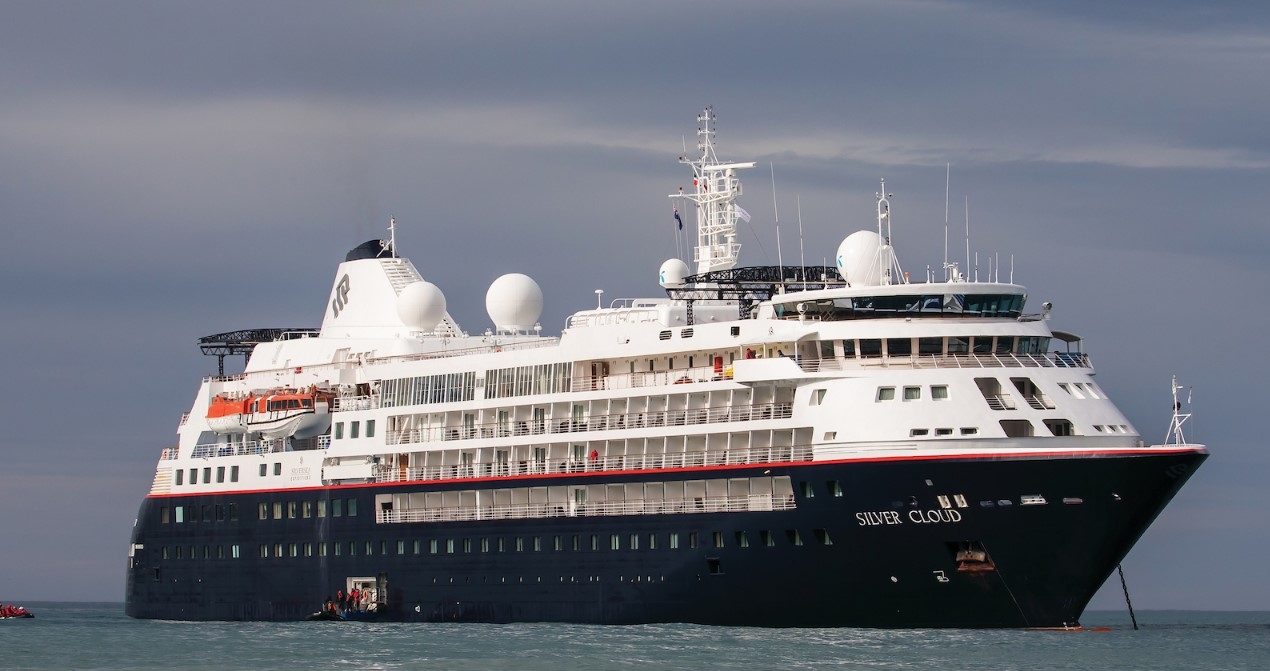
Silversea · Silver Cloud
Overview
A 14-night voyage aboard Silver Cloud, departing Apra, Guam, US on 2 May 2027 and arriving in Kobe, calling at 10 destinations along the way.
Apra, Guam, USSaipanPaganShimiju, japanToba, JapanTakamatsuKochi, JapanMiyajima IslandMiyanoura - YakushimaKobe
Cabin prices
Live prices per person based on two sharing. Select a grade to see its fare options.
Loading live cabin prices…
Itinerary
14 nights · 15 ports of call- 1
Day 1 ·ApraEmbark
2 May 2027Depart 20:00Guam is blessed with spectacular natural beauty and a rich cultural history. Apra Harbor is a deep-water port located on the western side of the island. The island is part of the Mariana Islands and near the Mariana Trench, which is the deepest part of the earth’s oceans, and the deepest location of the earth itself. The port serves both as a U.S. naval station and Guam’s main commercial port.
The harbour, formed by the Orote Peninsula to the south and Cabras Island in the north, is considered to be one of the best natural ports in the Pacific. Guam’s unique culture, traditions and heritage have remained intact despite European imperialism, wars and changing foreign governments. Archaeological evidence suggests that the indigenous Chamorros of Indo-Malayan descent migrated from the Southeast Asian islands and settled throughout the Marianas archipelago. Being expert seamen and skilled craftsmen, they flourished and built unique houses and canoes suited to the region. As a matriarchal society and through the prestige of the women, much of the Chamorro culture and traditions were able to survive. Since the 16th century, a wave of foreigners have arrived on Guam’s shores, including Ferdinand Magellan in 1521 who remained on the island for three days to restock his small convoy. Americans, Asians, Europeans, Micronesians and other visitors have since left their imprint on the island’s pastimes and tastes. - 2
Day 2 ·Saipan, Northern Mariana Islands
3 May 2027Arrive 07:00Depart 13:30Saipan is the largest of the Northern Mariana Islands, a U.S. commonwealth in the Western Pacific. It’s characterized by sandy shores and mountainous landscapes, and has several championship golf courses. Its highest point is 1,555-ft. Mt. Tapochau, a limestone peak at the island's center. Close to the northern tip, Japanese memorials mark Banzai Cliff and Suicide Cliff, sites from the 1944 Battle of Saipan. - 3
Day 3 ·Pagan, Northern Mariana Islands
4 May 2027Arrive 07:00Depart 18:00Pagan is a volcanic island in the Marianas archipelago in the northwest Pacific Ocean, under the jurisdiction of the Commonwealth of the Northern Mariana Islands. It lies midway between Alamagan to the south, and Agrihan to the north - 4
Day 4 ·At Sea
5 May 2027 - 5
Day 5 ·At Sea
6 May 2027 - 7
Day 7 ·Torishima Island Cruising
7 May 2027Arrive 13:00Depart 14:00Minami-Tori-shima also known as Marcus Island, is an isolated Japanese coral atoll in the northwestern Pacific Ocean, located some 1,848 kilometers (1,148 mi) . - 7
Day 7 ·Shimizu
8 May 2027Arrive 11:00Depart 23:00Feel your heart thumping, at your first sight of Japan’s most heavenly vision - Mount Fuji’s cone emerging through the haze. With its summit dipped in pure white snow, the iconic volcano’s cone is one of the most famous natural landmarks in the world - and a picturesque backdrop for Shimizu. View less
Come ashore to this serene vision of beauty – and whether you head straight for the siren-call of the volcano’s slopes, or the sanctuary of gorgeous, heritage-rich shrines, and tranquil tea plantations - spine-tingling views of Japan’s most tallest mountain are never far away. A perfectly symmetrical spectacle, visible for miles around, Mount Fuji is an adored national symbol of Japan. Travel closer to its slopes to soak in some of the country’s finest panoramas. Or take in the views with a dash of local culture, at the Fujisan Hongu Sengen Shrine – an elegant shrine, that stands in thrall to the salt and pepper volcano close by. The Shiraito Waterfall World Heritage Site flows just beneath the volcano – visit to see the gloriously wide curtain of water gushing through the thick vegetation. Visit Kunozan Toshogu Shrine for another perspective, or to soak up the tranquil site before swinging above on a scenic ropeway. Located on the adjacent Mount Kuno – privileged views of the mountain and Suruga Bay will unroll before you. Nihondaira Plateau is another option, where you can soak in panoramic views of the bay and Mount Fuji dominating behind. However you choose to experience it, Shimizu welcomes you into the heart of Japan, to absorb the mesmerising panoramas of the country’s most famous sight. - 8
Day 8 ·Motomachi, Oshima Island
9 May 2027Arrive 06:30Depart 18:00 - 9
Day 9 ·Toba
10 May 2027Arrive 07:00Depart 18:00 - 11
Day 11 ·Takamatsu
11 May 2027Arrive 12:30Depart 18:00Takamatsu is a port city on Japan’s Shikoku Island. It’s known for the sprawling Ritsurin Garden, with a teahouse, koi ponds, landscaped hills and pine forests. To the east, atop Mount Yashima, Yashima-ji Temple offers panoramic views over the Seto Inland Sea. Nearby, Shikoku Village is an open-air museum with a collection of historical buildings from around the island. To the south are the hot springs of Shionoe. - 11
Day 11 ·Kochi, Japan
12 May 2027Arrive 07:00Depart 14:00 - 12
Day 12 ·Miyajima
13 May 2027Arrive 06:30Depart 12:30The small island of Miyajima (“The Shrine Island”) is known for the Floating Torii Gate which is one of “The Three Most Beautiful Views” of Japan. Built in the water the Torii Gate leads to the Itsukushima Shrine and at high tide it seems to float. The Torii Gate is one of the most photographed sites in all of Japan. There are many more shrines and paths on Miyajima that are inviting to walk. - 13
Day 13 ·Miyanoura - Yakushima
14 May 2027Arrive 08:30Depart 18:00Yakushima is a round-shaped subtropical island off the southern coast of Kyushu island and part of Kagoshima prefecture. One fifth of this island is designated a Natural World Heritage Site in 1993, and it is covered by an extensive cedar forest that contains some of Japan’s oldest living trees. The symbol of Yakushima is called Yakusugi, a Japanese cedar. Yakusugi is a specific term only used for cedar trees over 1,000 years old. The oldest Yaku-Sugi is considered to be more than 7,000 years old. - 14
Day 14 ·At Sea
15 May 2027 - 15
Day 15 ·Kobe, JapanDisembark
16 May 2027Arrive 07:00The Japanese city of Kobe needs no introduction. The name is synonymous with its home grown superstar. We are not talking of its stunning shrines, cherry trees laden with blossom during sakura or effervescent city, buzzing with life 24/7. We are of course talking of a much more grass roots hero – its eponymous beef. The delicacy might have put the city on the map, but there is far more to Kobe than its meat. Naturally, Kobe wears its cuisine as a badge of honour. View less
Its port history has given it a gastronomy that is quite different from its neighbours. Seafood and sushi is naturally some of the freshest and most diverse you can find, but Kobe’s multi-cultural nature (the city is home to 98 different nationalities) means that it has one of the most diverse gastronomic cultures in Japan. Bread and bakeries are also an (unexpected) delicacy. Additionally, Sake is taken very seriously – Kobe even has its own museum dedicated to the national spirit. Historically, Kobe has always been a key city for Japan. Renamed in 1889, it was known as Owada no Tomari during the Nara Period (710-784 C.E.). Kobe’s location on the calm Inland Sea between Osaka and Kyoto has proven to be pivotal in Japanese history; it is mentioned in famous literary works such as The Tale of Genji (from approximately late 9th century) and the Taiheiki (14th century). The city and region are home to many attractions including the Himeji Castle (widely considered to be Japan's most beautiful feudal castle), a short ride away.
Your ship: Silver Cloud
Explore Silver Cloud's cabins, dining and onboard facilities.