
16 nightsFrom Tokyo (Yokohama), Japan6 ports of call
Tokyo to Vancouver
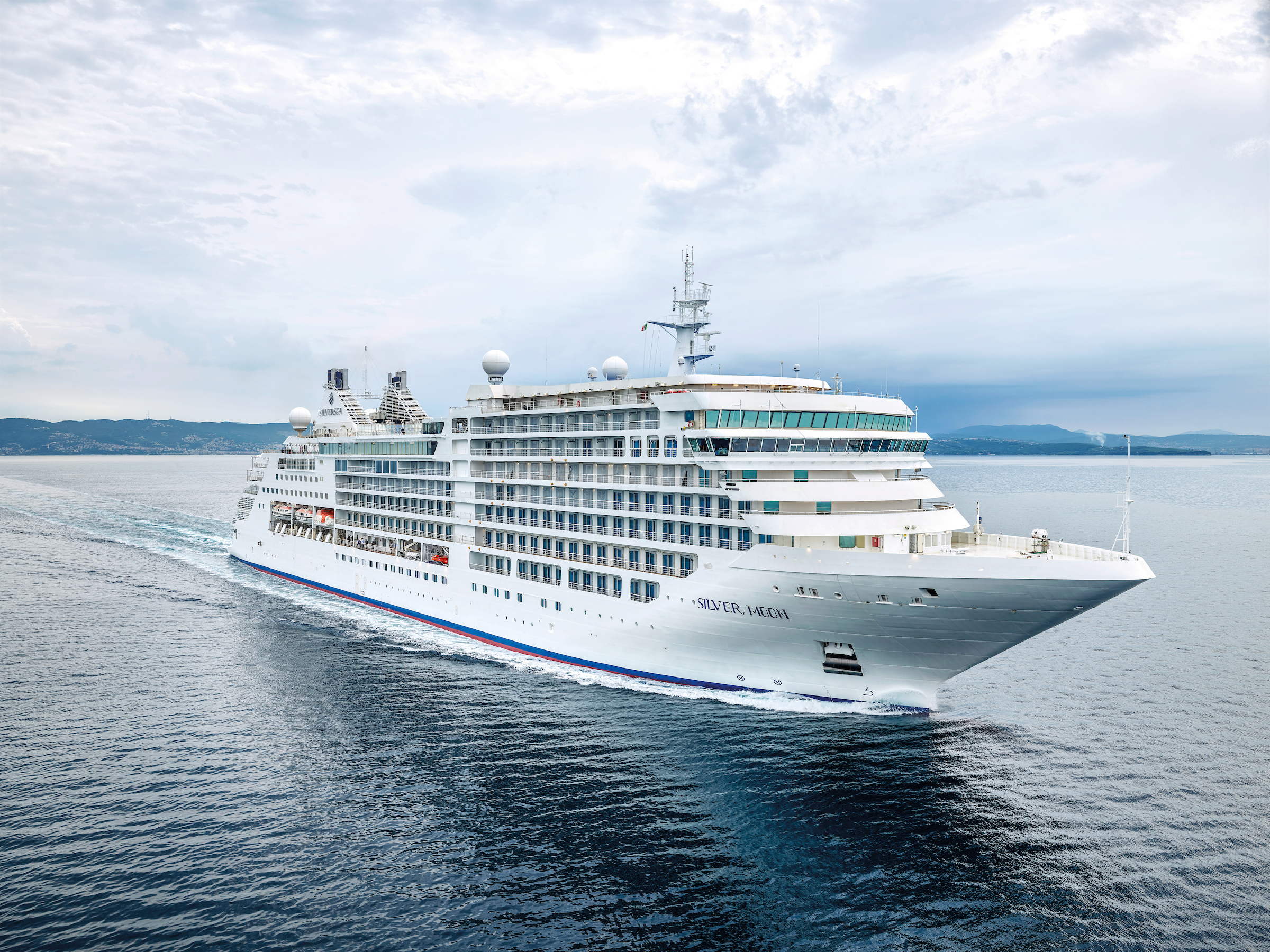
Silversea · Silver Moon
Overview
A 16-night voyage aboard Silver Moon, departing Tokyo (Yokohama), Japan on 8 May 2028 and arriving in Vancouver, Canada, calling at 6 destinations along the way.
Tokyo (Yokohama), JapanMiyako,Iwate, JapanHakodateSitkaKetchikanVancouver, Canada
Cabin prices
Live prices per person based on two sharing. Select a grade to see its fare options.
Loading live cabin prices…
Itinerary
16 nights · 17 ports of call- 1
Day 1 ·Tokyo, JapanEmbark
8 May 2028Depart 19:00Dense and delightful, there’s nowhere else like Japan’s kinetic capital - a city where ancient traditions blend seamlessly with a relentless pursuit for the future’s sharpest edge. See the city from above, as elevators rocket you up to towering viewing platforms, from which you can survey a vast urban ocean, interspersed with sky-scraping needles. Look out as far as the distant loom of Mount Fuji’s cone on clear days. View less
Futuristic – second-accurate - transport seamlessly links Tokyo’s 14 districts, while the glow of flashing advertisement boards, clanks of arcade machines, and waves of humanity flowing along its streets, adds to the sense of mesmerising, dizzying and glorious sensory overload. One of Tokyo’s most iconic sights, don’t miss the flood of people scrambling to cross Shibuya’s famous intersection. Join the choreographed dance, as crowds of briefcase-carrying commuters are given the green light to cross at the same time – bathed in the light of massive neon advertisements. The culture is immensely rich and deep, with 7th-century, lantern-decorated temples, stunning palaces and tranquil scarlet shrines waiting below cloaks of incense and nestling between soaring skyscrapers. Restaurants serve up precisely prepared sushi, and wafer-thin seafood slivers, offering a unique taste of the country’s refined cuisine. Settle into traditional teahouses, to witness intricate ceremonies, or join the locals as they fill out karaoke bars to sing the night away. In the spring, cherry blossom paints a delicate pink sheen over the city’s innumerable parks and gardens. - 2
Day 2 ·At Sea
9 May 2028 - 3
Day 3 ·Miyako, Iwate, Japan
10 May 2028Arrive 08:00Depart 18:00Miyako is a city located in Iwate Prefecture, Japan. As of 1 April 2020, the city had an estimated population of 51,150, and a population density of 41 persons per km². The total area of the city is 1,259.15 square kilometers. - 4
Day 4 ·Hakodate (Hokkaido)
11 May 2028Arrive 08:00Depart 19:00Gaze down over Hakodate, from the heights of its namesake peak - Mount Hakodate - to see the city stretching out spectacularly, with back-to-back twin bays splitting the ocean. Hakodate port was one of the first to open Japan up to the world, and to international trade in 1859 - a fact reflected in the architecture, with its influences from the West and beyond. The port area is a redbrick wash of warehouses turned shopping malls, all observed by the onion domes of the city's Russian Orthodox church. View less
Elsewhere, the star-shaped Goryokaku fortress glows with natural colours and a beautiful haze of cherry blossom during the season. Goryokaku Tower, which rises up beside it, offers a sweeping bird's eye view of the green fortress and mountain backdrop. Buses trundle up the 335-metre incline to the top of Mount Hakodate, but the best way to reach the views is to jump on the ropeway, which swings high above downtown's buildings, over a carpet of pine trees. Head up to the mountain's heights as sunset approaches. With darkness sweeping in, and the lights flickering to life, the panorama is one of Japan's most spectacular. Soak it all in, and look out to the horizon, dotted with the shimmering lights of ships hauling in harvests of the city's renowned squid. The plankton-rich waters attract a delicious variety of feasting sea life to Hakodate's coast, which is then plated up in the city's numerous, skilled restaurants. For an eye-opening, whirring morning, see the freshest produce being doled out at Hakodate Morning Market – amid a cacophony of noise and activity. - 5
Day 5 ·At Sea
12 May 2028 - 6
Day 6 ·At Sea
13 May 2028 - 7
Day 7 ·At Sea
14 May 2028 - 8
Day 8 ·At Sea
15 May 2028 - 9
Day 9 ·Date Line gain a day
16 May 2028 - 9
Day 9 ·At Sea
16 May 2028Arrive 00:01 - 10
Day 10 ·At Sea
17 May 2028 - 11
Day 11 ·At Sea
18 May 2028 - 12
Day 12 ·At Sea
19 May 2028 - 13
Day 13 ·Sitka (Alaska)
20 May 2028Arrive 07:00Depart 15:00Sitka began as a major Tlingit Indian village and was called “Shee Atika,” which translates roughly as “settlement on the outside of Shee.” “Shee” is the Tlingit name of Baranof Island.
In 1799, Alexander Baranof, the general manager of the Russian American Company, decided to move his base of operations from Kodiak and set up camp at what is now called Old Sitka, 7.5 miles north of the present-day town. He called the settlement St. Archangel Michael. The Tlingit Indians of the area resisted the occupation and, in 1802, with Baranof away, burned the fort and massacred the Russian settlers. Two years later, Baranof returned and besieged the Indian fort. The Tlingits withdrew and the area was once again in Russian hands. This time, the Russians built the new city on a different site and called it New Archangel.
For over six decades, New Archangel was the capital of the Russian empire in Alaska. By 1867, the Alaska colony had become too much of a financial burden to Russia. William Seward, U.S. Secretary of State, negotiated with the Russian Czar to purchase the Territory of Alaska for $7.2 million. The American press scoffed at Seward and the U.S. government for purchasing what they called “Seward's Folly,” “Seward's Icebox,” and “Walrussia.”
On October 18, 1867, the Russian flag was lowered at New Archangel and the Stars and Stripes were raised over newly renamed Sitka. The name comes from the Tlingit word “Sheetkah,” which means “in this place.” All Russian citizens living in the former colony were given the opportunity to become American citizens. Many went home, although a few stayed or migrated to California.
Sitka remained the capital of the Territory of Alaska from 1867 to 1906, when it was moved to Juneau. The move was a direct result of the gold rush. In plain terms, Sitka did not have any and Juneau did.
After the Japanese attack on Pearl Harbor, Sitka became a full-scale naval base. At one time during the war, Sitka had a total population of 37,000. With the end of World War II, however, the city settled into a quieter existence. The biggest boom in modern days for Sitka came in 1959 when the Alaska Lumber and Pulp Company built a pulp mill at Silver Bay, near the city.
Today, picturesque Sitka is known for its fishing and of course its many historic attractions. - 14
Day 14 ·Ketchikan, Alaska
21 May 2028Arrive 07:00Depart 12:00The Salmon Capital of the World is a thrilling introduction to wild and wonderful Alaska, sitting at the southern gateway to the Inside Passage's famed route of larger than life scenery. Cruise through the waters, or soar just above in a sightseeing plane, to take in the full majesty of the magnificent Misty Fjords National Monument. Home to grizzly and black bears - as well as cruising whales and swimming seals - the wildlife spotting opportunities in this majestic corner of the world are nothing short of spectacular. View less
Towered over by steep banks and valley walls, Ketchikan's ocean inlet is peppered with granite stacks, looming from the waters. Surrounded by glorious landscapes, head to the Alaska Rainforest Sanctuary, which is alive with bald eagles, black bears and remarkable, thick, yellow banana slugs - the squeamish are advised to keep well clear. Visit Ketchikan's Heritage Centre, where a collection of intricately carved totem poles rise up, preserving the heritage of the indigenous Tlingit and Haida people of these lands. Ketchikan has the world's largest collection, and some of the oldest and most precious totems in existence. This frontier city hasn’t always been so wholesome, however. See the colourful historic street that is built on crooked stilts over Ketchikan Creek, which has a crude history as the main red-light district in the city. The brothels closed in the 1950s, but you can explore this legendarily seedy past at Dolly’s House - a brothel turned museum. See the Married Man trail, a historical route used to enter Creek Street away from prying eyes. - 15
Day 15 ·Cruise British Columbia Inside Passage
22 May 2028 - 16
Day 16 ·Vancouver, CanadaDisembark
23 May 2028Arrive 07:30Boasting mountains, sea, culture, art and so much more, many cities claim to have it all, but few can back it up like Vancouver. Famously livable, just visiting this highrise city - surrounded by staggering natural beauty - is a thrill. Offering all of the creature comforts of an ultra-modern, worldly metropolis - even downtown has a hint of mountain-freshness to its air - and part of Vancouver's appeal is how easily you can swap the skyscrapers for whale-filled oceans and mountain-punctured skies. View less
Head up to the Vancouver Lookout Tower for the ultimate 360-degree views of the city glistening, amid the beautiful embrace of the beckoning wilderness beyond. But what to see first? Art lovers might choose the Vancouver Art Gallery or the Contemporary Art Gallery. Nature lovers might rush for the ferry to visit Vancouver Island - where they can encounter grizzly bears, whales and orcas. Culture vultures, on the other hand, will probably head for the sights and sounds of Canada's biggest Chinatown. From steaming dim sum for lunch to Chinese apothecaries offering herbs to soothe any illness, it’s all here thanks to the migrant workers of the 19th century. The one-of-a-kind treasure of Stanley Park brings wild wonder and natural beauty to this cosmopolitan city's doorstep, and the pine-tree clad park offers isolated trails and amazing views. Wander the Seawall that encircles it - a 20-mile coastal path, full of joggers, whizzing skaters and wandering couples. Grab a bike and cycle between Coal Harbour and Kitsilano Beach. You can top up your tan on the shore, as you soak in the glorious views of the mountains and cityscape from the sands.
Your ship: Silver Moon
Explore Silver Moon's cabins, dining and onboard facilities.