
14 nightsFrom Papeete11 ports of call
Papeete to Papeete
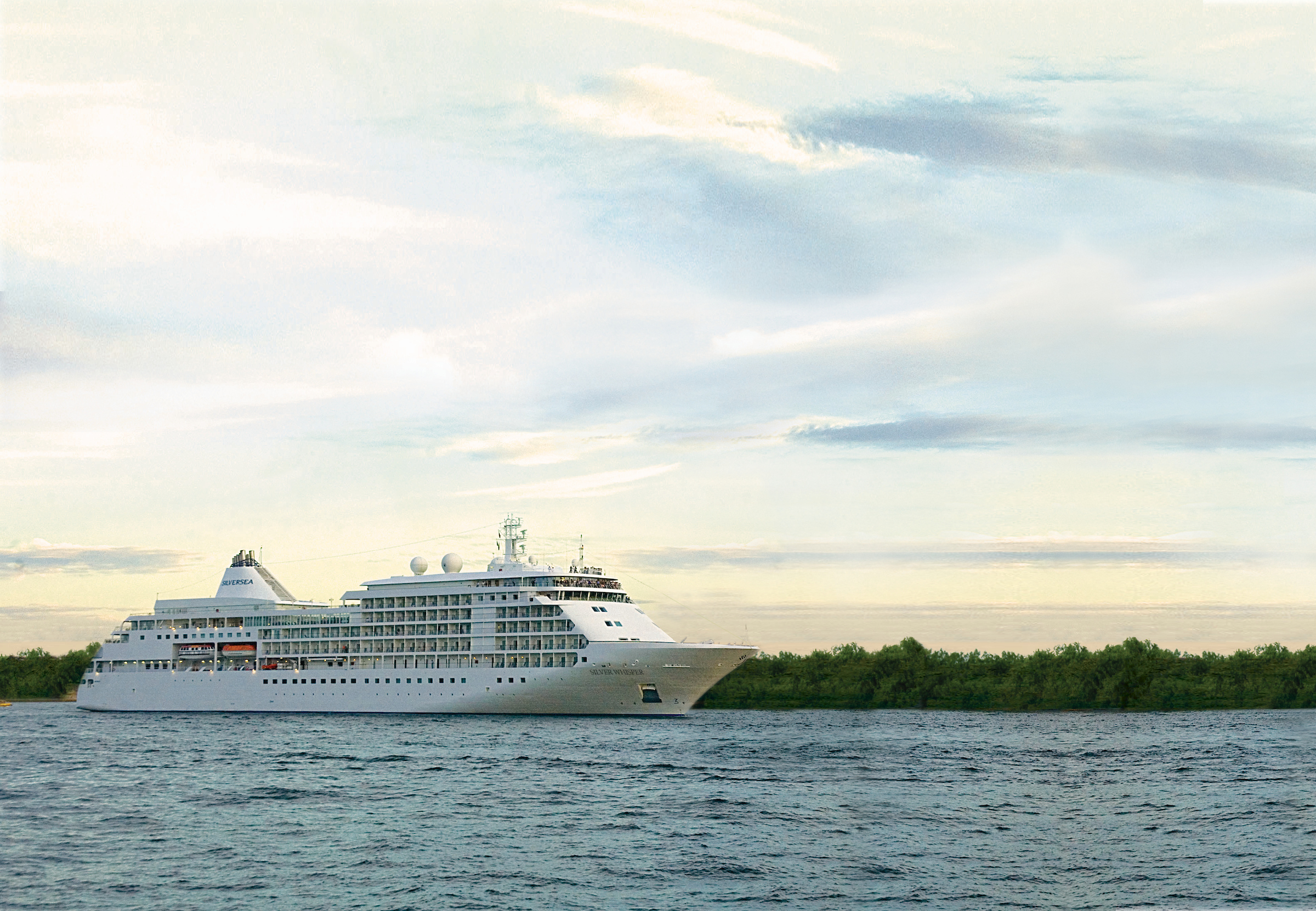
Silversea · Silver Whisper
Overview
A 14-night voyage aboard Silver Whisper, departing Papeete on 9 Apr 2028 and returning to the same port, calling at 11 destinations along the way.
PapeeteMoto Iriru, RaiateaFakarava, Tuamotu IslandsFatu Hiva (Omoa)Nuku Hiva, French PolynesiaTahuata, Marquesas IslandsRangiroaHuahine, French PolynesiaBora BoraMooreaPapeete
Cabin prices
Live prices per person based on two sharing. Select a grade to see its fare options.
Loading live cabin prices…
Itinerary
14 nights · 17 ports of call- 1
Day 1 ·Papeete (Tahiti)Embark
9 Apr 2028Depart 19:00Formed by two ancient volcanoes and joined at the isthmus of Taravao, Tahiti is the largest island of the Society Archipelago and the economic heart of French Polynesia. Ever since the famous French impressionist painter Paul Gauguin immortalized Tahitian maidens in vibrant colors on his canvasses, Tahiti has had a mysterious allure and still summons up all the romance of the South Pacific as a tropical paradise.
Rising in the center, Mount Orohena and Mount Aorai are the highest points; deep valleys radiate in all directions from these central peaks. Steep slopes drop abruptly from the high plateaus to coastal plains. The northeast coast is rugged and rocky without a barrier reef, and thus exposed to intense, pounding surf. Villages lie on a narrow strip between mountains and ocean. The south coast is broad and gentle with large gardens and coconut groves; a barrier reef shields it from the sea. - 2
Day 2 ·Moto Iriru, Raiatea, French Polynesia
10 Apr 2028Arrive 08:00Raiatea is the second largest of the Society Islands, after Tahiti, in French Polynesia. The island is widely regarded as the "centre" of the eastern islands in ancient Polynesia and it is likely that the organised migrations to the Hawaiian Islands, New Zealand and other parts of East Polynesia started at Raiatea. - 3
Day 3 ·Moto Iriru, Raiatea, French Polynesia
11 Apr 2028Depart 06:00Raiatea is the second largest of the Society Islands, after Tahiti, in French Polynesia. The island is widely regarded as the "centre" of the eastern islands in ancient Polynesia and it is likely that the organised migrations to the Hawaiian Islands, New Zealand and other parts of East Polynesia started at Raiatea. - 3
Day 3 ·Motu Taha'a, French Polynesia
11 Apr 2028Arrive 08:00Depart 18:00 - 4
Day 4 ·At Sea
12 Apr 2028 - 5
Day 5 ·Fakarava, Tuamotu Archipelago
13 Apr 2028Arrive 07:00Depart 16:00Fakarava is oblong shaped and has an almost continuous string of reef and motu stretching for 40 km (25 mi) on its eastern edge. It's the second largest of the Tuamotu atolls, located 450 km (280 mi) northeast of Tahiti, and 120 km (75 mi) southeast of Rangiroa. It's renowned for the drift diving in its two passes—Garuae (also spelled Ngarue) in the north near the main town of Rotoava (and the airport) and Tamakohua Pass, 48 km (30 mi) across the lagoon in the south.
The tiny village of Tetamanu, situated by the southern pass, was once the capital of the Tuamotus and houses the first church built in the archipelago in 1874. In 2006 the entire atoll was deemed an UNESCO biosphere reserve; to preserve the lagoon no overwater bungalows have been built in it. Fakarava was "discovered" by Russian explorer Fabian Gottlieb Von Bellingshausen in 1820; some 20 years later missionaries arrived, in the guise of fanatical Catholic priest Honore Laval, and began building churches. - 6
Day 6 ·At Sea
14 Apr 2028 - 7
Day 7 ·Fatu Hiva, Marquesas Islands
15 Apr 2028Arrive 08:30Depart 19:00Fatu Hiva is the southernmost and most remote island in the Marquesas Group. First seen by Europeans in 1595 when Mendaña went to colonize the Solomon Islands, the island again gained some fame through the visit of Thor Heyerdahl in the mid-1930s. Steep cliffs, sharp mountain peaks and many narrow valleys form an impressive obstacle when exploring this volcanic island. The two villages of Omoa and Hana Vave have combined some 650 inhabitants and are both located on the more protected western side of the island.
They are connected by a 17 kilometer long road that climbs up to the central plateau. Omoa has a protected little harbor for local boats, but Hana Vave has the Bay of Virgins, one of the most photographed bays in the Marquesas Islands, if not French Polynesia. Islanders are known for their tapa (bark cloth) paintings and wood carvings –which are highly sought after in Tahiti. - 8
Day 8 ·Nuku Hiva, Marquesas Islands
16 Apr 2028Arrive 08:30Depart 19:00Think of French Polynesia and you are automatically transported to the white sands of Tahiti, the blue seas of Bora Bora or, at the very least, the iconic statues of Easter Island. Now, imagine a place that is home to that majestic trinity, but has no crowds and is full of island authenticity that is rare in these global times. You have just imagined Nuku Hiva. The island is the second largest after Tahiti in the archipelago, but is yet to be discovered by tourism. - 9
Day 9 ·Tahuata, Marquesas Islands
17 Apr 2028Arrive 08:30Depart 17:00 - 10
Day 10 ·At Sea
18 Apr 2028 - 11
Day 11 ·Rangiroa, French Polynesia
19 Apr 2028Arrive 09:00Depart 17:00Rangiroa, meaning ‘Vast Sky’ in Puamotu, is the largest atoll in the Tuamotu Archipelago and one of the largest in the world. Surrounded by two legendary bodies of water, Moana-tea (Peaceful Ocean) and Moana-uri (Wild Ocean), the atoll consists of about 250 islets and sandbars, with approximately 100 narrow passages in the fringing reef. The lagoon covers 618 square miles (1,600 square km), large enough that it has its own horizon. - 12
Day 12 ·Huahine , French Polynesia
20 Apr 2028Arrive 07:00Depart 19:00Although it lies between Moorea and Bora Bora, Huahine (pronounced Hu-a-hee-nee or Wha-hee-nee) isn't on the tourist circuit just yet, but it should be. Its near-deserted roads and villages and wooded hills entwined with jungle vines beckon those looking for a little R&R.Huahine is two islands (Huahine Nui and Huahine Iti) joined by a bridge. What passes for action takes place in the main town of Fare (pronounced far-ay) on Huahine Nui, the northern and bigger island. - 13
Day 13 ·Bora Bora (Society Islands)
21 Apr 2028Arrive 09:00Depart 19:00If you have ever dreamt up your ideal island holiday, we suspect it goes something like this: Soapy blue seas? Check. Sparkling white beaches? Check. Thatched wooden huts, gently sloping palm trees and kaleidoscopic marine life? Check, check and check. And yet, even by ticking every box, first time viewing of Bora Bora still beggars belief. This tropical hideaway less than 12 m2 in the heart of the South Pacific has been toping travel wish lists for years.
Long considered the realm of honeymooners – spectacularly romantic sunsets are a speciality – Bora Bora is not just for wandering with your love. If the prismatic shades of blue of the world’s most beautiful lagoon do not fill you up, then perhaps underwater scooters and aqua Safaris will charge your batteries. If exploring Bora Bora’s lush hinterland is more your glass of tequila sunrise, then trips around the island (often stopping off at the celebrity haunt Bloody Mary Restaurant & Bar) are a must. Bora Bora’s peaceful ambience has not always been the case. The island was a US supply base, known as “Operation Bobcat” during WWII. During this time, Bora Bora was home to nine ships, 20,000 tons of equipment and nearly 7,000 men. Eight massive 7-inch naval cannons were installed around the island, all but one of which is still in place. Although little is known of the history of the island, it is known that Bora Bora was called Vava’u in ancient times. This supports belief that the island was colonised by Tongans prior to French annex in 1888. - 14
Day 14 ·Moorea Island
22 Apr 2028Arrive 07:00Tahiti's heart-shaped sister island Moorea is located only nine miles across the Sea of the Moon from Tahiti. While Bora Bora and Tahiti are the destinations most prominently advertised, it is Moorea, the Magical Island that is the best-kept secret of the trio of famous French Polynesian islands. In fact, Moorea has often been likened to James Michener's mythological island of Bali Hai - and it is easy to see why. Picture perfect lagoons and gleaming white beaches are surrounded by jagged mountains and volcanic spires. Its six mountains include Mount Rotui. From its summit there are spectacular views of Opunohu Bay and the island.
Captain Samuel Wallis was the European discoverer of the Windward Island in 1767. After leaving Tahiti, he passed along the north coast of Moorea without landing. The first European visitors to the island include botanist Joseph Banks and some sailors sent ashore by Captain Cook in 1769. Captain Cook himself anchored in Opunohu Bay for one week in 1777, but never visited the bay that now bears his name. - 14
Day 14 ·Papeete (Tahiti)
22 Apr 2028Formed by two ancient volcanoes and joined at the isthmus of Taravao, Tahiti is the largest island of the Society Archipelago and the economic heart of French Polynesia. Ever since the famous French impressionist painter Paul Gauguin immortalized Tahitian maidens in vibrant colors on his canvasses, Tahiti has had a mysterious allure and still summons up all the romance of the South Pacific as a tropical paradise.
Rising in the center, Mount Orohena and Mount Aorai are the highest points; deep valleys radiate in all directions from these central peaks. Steep slopes drop abruptly from the high plateaus to coastal plains. The northeast coast is rugged and rocky without a barrier reef, and thus exposed to intense, pounding surf. Villages lie on a narrow strip between mountains and ocean. The south coast is broad and gentle with large gardens and coconut groves; a barrier reef shields it from the sea. - 15
Day 15 ·Papeete (Tahiti)Disembark
23 Apr 2028Formed by two ancient volcanoes and joined at the isthmus of Taravao, Tahiti is the largest island of the Society Archipelago and the economic heart of French Polynesia. Ever since the famous French impressionist painter Paul Gauguin immortalized Tahitian maidens in vibrant colors on his canvasses, Tahiti has had a mysterious allure and still summons up all the romance of the South Pacific as a tropical paradise.
Rising in the center, Mount Orohena and Mount Aorai are the highest points; deep valleys radiate in all directions from these central peaks. Steep slopes drop abruptly from the high plateaus to coastal plains. The northeast coast is rugged and rocky without a barrier reef, and thus exposed to intense, pounding surf. Villages lie on a narrow strip between mountains and ocean. The south coast is broad and gentle with large gardens and coconut groves; a barrier reef shields it from the sea.
Your ship: Silver Whisper
Explore Silver Whisper's cabins, dining and onboard facilities.