
14 nightsFrom Fort Lauderdale4 ports of call
Transatlantic Crossing Featuring Bermuda & Morocco
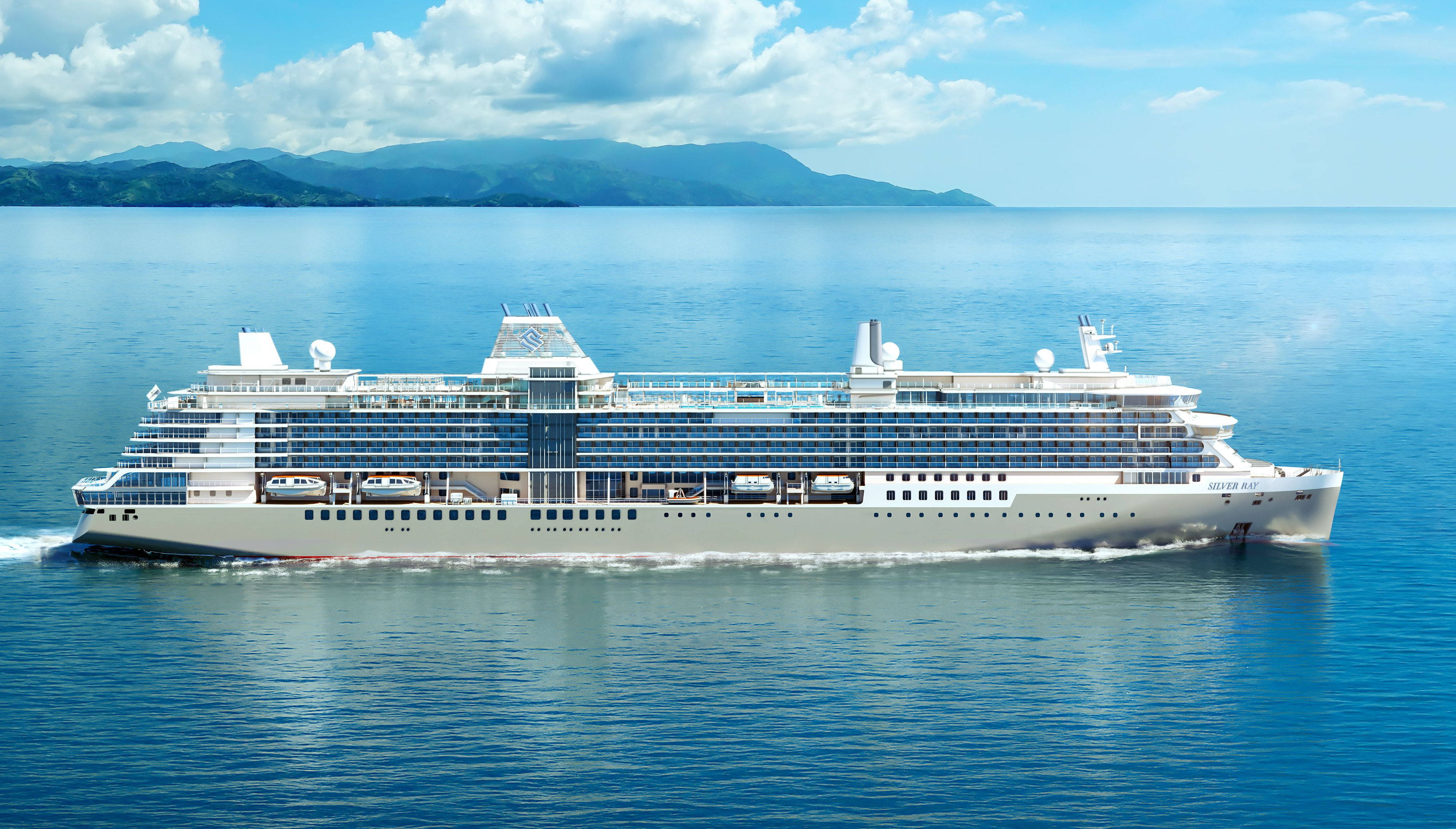
Silversea · Silver Ray
Overview
A 14-night voyage aboard Silver Ray, departing Fort Lauderdale on 1 Apr 2028 and arriving in Lisbon, calling at 4 destinations along the way.
Fort LauderdaleRoyal Naval Dockyard, BermudaCasablancaLisbon
Cabin prices
Live prices per person based on two sharing. Select a grade to see its fare options.
Loading live cabin prices…
Itinerary
14 nights · 15 ports of call- 1
Day 1 ·Fort Lauderdale, FloridaEmbark
1 Apr 2028Depart 19:00With its heady mix of Creole culture and French sophistication, there is more than a pinch of je ne sais quoi in Fort de France. The capital of Martinique, and by far the biggest city in the whole of the French West Indies, if you are looking for Paris in the Caribbean, you’ll find it in Fort de France.
The island has been under French govern since 1638 when the first governor of Martinique Jacques Dyel du Parquet commissioned a fort (from which the city takes its name) to keep out invaders. Not even an unsuccessful attack by the British in 1720, nor the French Revolution in 1789, has been able to shake the French govern of the island and today the city’s French and Creole heritage are impossible to untangle. The colonial past is everywhere, take a stroll down the narrow streets and enjoy the remarkable architecture of the Schœlcher Library, St. Louis Cathedral and the Old Town Hall. Among the many legacies Dyel du Parquet left on the island is sugarcane. A drive through the tropical forests will not only reward you with trees bending under the weight of papayas, mangoes and bananas, but will also afford superb vistas of the elegant plant swaying in the breeze. The arrival and subsequent export of sugar brought the French bourgeoisie in their droves and many of their mansions are still standing. Josephine de Beauharnais, the Napoleonic Empress of “not tonight” fame, hails from the island and those interested will find her childhood home, La Pagerie in nearby Trois Ilets. - 2
Day 2 ·At Sea
2 Apr 2028 - 3
Day 3 ·At Sea
3 Apr 2028 - 4
Day 4 ·Royal Naval Dockyard, Bermuda
4 Apr 2028Arrive 10:00 - 5
Day 5 ·Royal Naval Dockyard, Bermuda
5 Apr 2028Depart 12:00 - 6
Day 6 ·At Sea
6 Apr 2028 - 7
Day 7 ·At Sea
7 Apr 2028 - 8
Day 8 ·At Sea
8 Apr 2028 - 9
Day 9 ·At Sea
9 Apr 2028 - 10
Day 10 ·At Sea
10 Apr 2028 - 11
Day 11 ·At Sea
11 Apr 2028 - 12
Day 12 ·At Sea
12 Apr 2028 - 13
Day 13 ·Casablanca, Morocco
13 Apr 2028Arrive 09:00Depart 20:00Immortal lines from the silver screen may have imprinted a warm, fuzzy visage of old Casablanca into our minds, but this thriving city is a curious example of what Morocco’s modernity looks like. Glistening white art deco buildings line the wide pathways that sweep through Casablanca, as the sea sparkles like a thin mirage on the horizon. There’s an aura of creativity amid Casablanca’s culture and chaos, helping to make the city one of Morocco’s most curious and compelling.
The Hassan II Mosque took a staggering seven years and 10,000 artists to craft its legacy as the country's largest mosque, and to bring the world's tallest minaret to sky-high reality. A vision of cool to the touch marble, cavernous prayer rooms and intricate inlays, the mosque is extraordinary in scale and ambition. Retractable roofs let the sun flood in, while dizzying glass floors dazzle, and the blue Atlantic waves surge below your feet. After that humbling visit, stroll along La Corniche - where surfers glide across rough and tumble waves, and chic cafes offer front-row seats for sweet peppermint teas with a side of people-watching. Casablanca is a diner's city - boulevards laced with French-fusion restaurants, buzzy beachfront joints, and raw seafood bars provide gem-like offerings fresh from the boat. Those seeking a slice of that golden-age Hollywood romance can wander through the medina, with its unabashed ramshackle feel, and maze of alleyways punctuated with busy barber shops and butchers. - 14
Day 14 ·At Sea
14 Apr 2028 - 15
Day 15 ·LisbonDisembark
15 Apr 2028Arrive 07:00Lisbon, the capital of Portugal, is a city open to the sea and carefully planned with 18th-century elegance. Its founder is said to be the legendary Ulysses, but the theory of an original Phoenician settlement is probably more realistic. Known in Portugal as Lisboa, the city was inhabited by the Romans, Visigoths and, beginning in the 8th century, the Moors. Much of the 16th century was a period of great prosperity and overseas expansion for Portugal. Tragedy struck on All Saints' Day in 1755 with a devastating earthquake that killed about 40,000 people. The destruction of Lisbon shocked the continent. As a result, the Baixa (lower city) emerged in a single phase of building, carried out in less than a decade by the royal minister, the Marques de Pombal. His carefully planned layout of a perfect neo-classical grid survived to this day and remains the heart of the city. Evidence of pre-quake Lisbon can still be seen in the Belém suburb and the old Moorish section of the Alfama that sprawls below the Castle of St. George.
Lisbon is a compact city on the banks of the Tagus River. Visitors find it easy to get around as many places of interest are in the vicinity of the central downtown area. There is a convenient bus and tram system and taxis are plentiful. Rossio Square, the heart of Lisbon since medieval times, is an ideal place to start exploring. After a fire destroyed parts of the historic neighborhood behind Rossio in 1988, many of the restored buildings emerged with modern interiors behind the original façades.
The city boasts a good many monuments and museums, such as the Jeronimos Monastery, Tower of Belém, the Royal Coach Museum and the Gulbenkian Museum. High above the Baixa is the Bairro Alto (upper city) with its teeming nightlife. The easiest way to connect between the two areas is via the public elevator designed by Gustave Eiffel.
Cruising up the Tagus River to the ship's berth, you can already spot three of Lisbon's famous landmarks: the Monument to the Discoveries, the Tower of Belém and the Statue of Christ, which welcomes visitors from its hilltop location high above Europe's longest suspension bridge.
Your ship: Silver Ray
Explore Silver Ray's cabins, dining and onboard facilities.