
13 nightsFrom Incheon10 ports of call
Japan & South Korea Featuring Okinawa
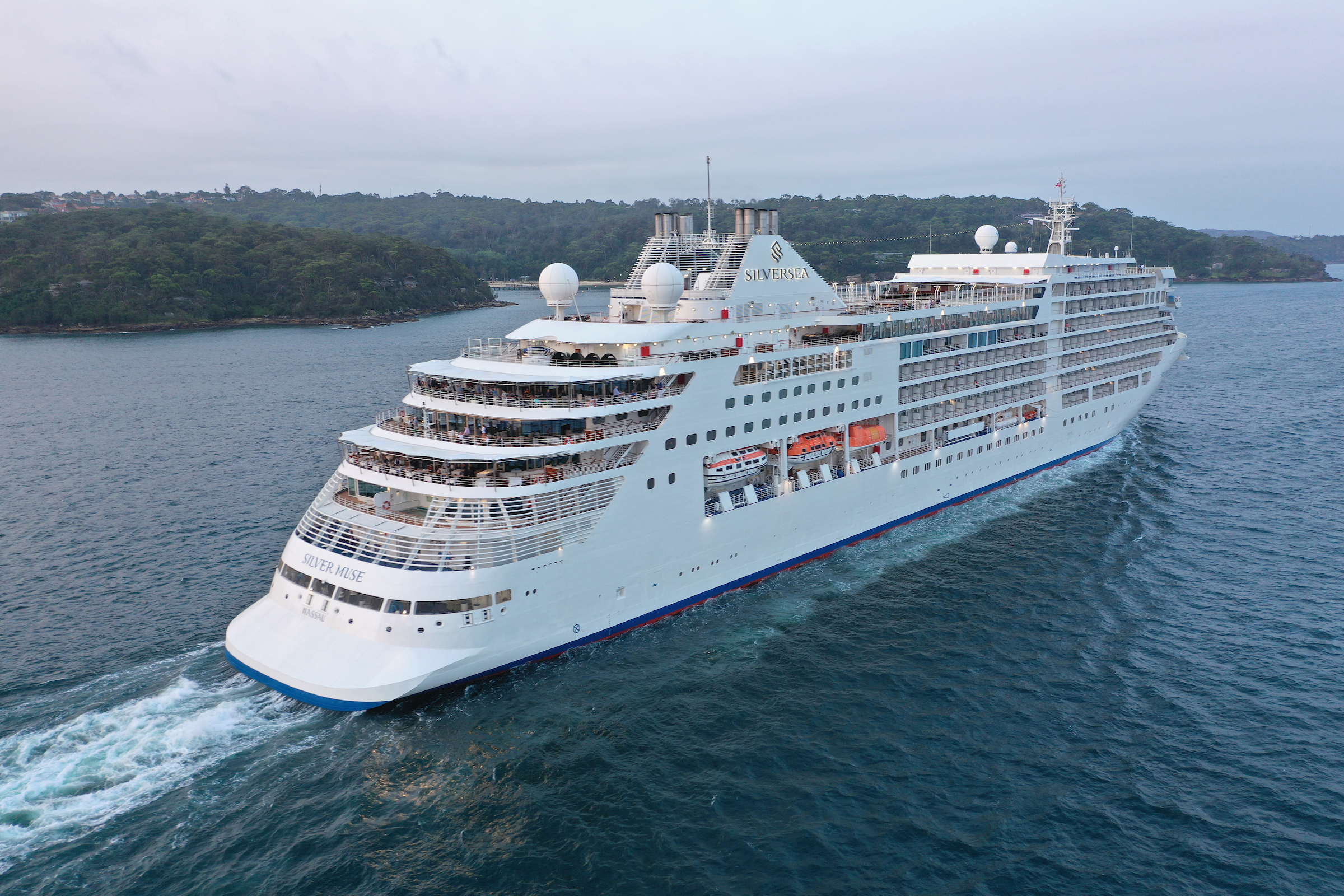
Silversea · Silver Muse
Overview
A 13-night voyage aboard Silver Muse, departing Incheon on 25 Oct 2027 and arriving in Hong Kong, China, calling at 10 destinations along the way.
IncheonJejuBusan, South KoreaNagasakiKagoshimaAburatsu (Japan)Naha (Okinawa Is.)Ishigaki IslandTaipeiHong Kong, China
Cabin prices
Live prices per person based on two sharing. Select a grade to see its fare options.
Loading live cabin prices…
Itinerary
13 nights · 14 ports of call- 1
Day 1 ·Incheon (Seoul)Embark
25 Oct 2027Depart 19:00The bright lights of neighbouring big city Seoul might burn brightly but Incheon, just 27 kilometres away, has nothing to be ashamed of. The coastal city was the first to open its borders to the world in 1883, and as such has always enjoyed a special relationship with the west. So much so that it was granted “English Status” in 2007, with many residents priding themselves on their command of the language. View less
The city’s love of English has made it a business powerhouse so expect soaring skyscrapers and smart technology as part of the landscape. Incheon was also the first to welcome the Chinese and today the city’s Chinatown is one of the most vibrant and welcoming there is. A frenetic and exciting hybrid of Chinese and Korean heritage, it is said that Jjajangmyeon (black soy bean noodles), South Korea’s de facto national dish originates from here. Try a steaming bowl from one of the many vendors, then walk it off with the short 15-minute stroll from Chinatown to the traditional Sinpo Market for different kind of sensational feast. The city is steeped in history, notably in recent times during the Korean War. In 1950, the US general General MacArthur led UN forces behind enemy lines in freeing the city from North Korean pressure. MacArthur’s victory is commemorated by a statue in the Jaya (Freedom) Park. The city’s history of course goes back much further, with the first historical record dating as far back as 475 CE. At the time the city was called Michuhol, only changing its name to Incheon in 1413. - 2
Day 2 ·At Sea
26 Oct 2027 - 3
Day 3 ·Jeju, South Korea
27 Oct 2027Arrive 08:00Depart 17:00Jeju province encompasses the South Korean island of Jeju in the Korea Strait. It's known for its beach resorts and volcanic landscape of craters and cavelike lava tubes. Hallasan Mountain, a dormant volcano, features hiking trails, a crater lake at the 1,950m summit and nearby Gwaneumsa Temple. The Geomunoreum Lava Tube System includes 7km-long Manjanggul Cave, created centuries ago when Hallasan was still active - 4
Day 4 ·Busan, South Korea
28 Oct 2027Arrive 09:30Depart 19:00"A tapestry of kaleidoscopic colours, intense seafood flavours, and urban beach bliss, Busan rolls across a glorious natural setting on the Korean Peninsula's south-east. One of the largest and busiest ports in the world, 3.5 million people call South Korea's second city home, and the amiable locals help to lend the city its quirky, offbeat outlook. A spacious, playful and cosmopolitan place, Busan is a lively, liveable city, cradled by lush mountains and endless ocean scenery.
Haedong Yonggung Temple nestles on a dramatic cliffside, just above the crumbling rocks and crashing waves of the East Sea. Dating back to 1376, the temple's multi-storey pagoda is adorned with lions - each representing a different emotion. Elsewhere, lanterns glitter in the night sky around Mount Geumjeongsan, freshly released from the beautiful Beomeosa Temple, which was established in AD 678. The hillside shantytown of Gamcheon Culture Village has completed an improbable transformation, blossoming from a sea of makeshift homes for Korean war refugees, into a colourful explosion of creativity and curiosity. Local artists have been let loose to create interactive installations, and the entire area is now an expansive canvas for expression. Lose yourself among vibrant alleyways of flamingo-pink, lemon-yellow and baby-blue painted facades in this unique area. Sample bibimbap, fiery-hot beef and rice, from street food vendors, before relaxing on one of South Korea's best beaches - Haeundae's banana bend of sand. Metallic skyscrapers offer an unusual backdrop to this pristine expanse of golden powder and are mirrored by elaborate sandcastles and sculptures during the annual sand festival - when spontaneous water fights and firework displays also take place. Gwangalli beach is another urban option, laying out spectacular views of the reaching Gwangan Bridge - the country's second largest bridge. At night, 16,000 bulbs bathe this engineering marvel in colour." - 5
Day 5 ·Nagasaki
29 Oct 2027Arrive 08:00Depart 18:00You will want to be on deck as the ship cruises into this splendid natural harbor, which has played such an important role in the history of this city, and Japan as a whole.
The accidental arrival of an off-course Portuguese ship in 1543 was the beginning of Nagasaki's longtime role as Japan's “Door to the West.” The missionary St. Francis Xavier visited briefly, and there was a substantial number of converts during the period known as the “Christian Century.” Eventually the Japanese authorities perceived the growing influence of Christianity to be a threat, leading to the banning of the religion. The Catholic Spanish and Portuguese were expelled in favor of the Dutch, who were felt to be more interested in trade than religion. All contact with foreigners was forbidden, and no Japanese were allowed to travel abroad. The only exception was the closely watched Dutch enclave of Dejima. Through this small outpost a trickle of Western thought and science continued to filter into the country, and Nagasaki became an important scientific and artistic center. When the city was again opened to the West in 1859, Nagasaki was quickly reestablished as a thriving industrial center, especially in shipbuilding, the industry that made it a prime target in World War II. - 6
Day 6 ·Kagoshima
30 Oct 2027Arrive 09:30Depart 19:00One of Japan's most southerly major cities, Kagoshima is dominated by the imposing Sakurajima volcano's cone – a legendary active volcano that broods, churns and puffs out ash nearby. A pretty old-time ferry chugs across the still waters to the gently sloping foothills of the volcano's cone, and it's easy to imagine where the comparisons with its sister city Naples materialised, as you sail the glorious sweeping Kinko Bay, below beaming sunshine, towards the immense volcanic spectacle. View less
This is certainly no historic relic, and the volcano remains revered and feared, with the most dramatic recent eruption taking place in 1914, and spewing out a new bridge of land into the sea. Make the most of the geothermal activity in the area by indulging in a stress-simmering black sand bath. Incredibly relaxing, you'll be submerged in the warm sand, as you feel your muscles relaxing in the heat, and rejuvenating blood pumping around your body. Enjoy a privileged view of the iconic volcano's loom from the terraced garden of Senganen Garden. Built in 1658, this elegant, traditional garden has belonged to the Shimadzu family for 350 years. Wander the gardens - which bloom with Japan's renowned cherry tree blossoms and feature tiny bridges looping over ponds and rock pools - before sitting back and sipping a wholesome green matcha latte. Elsewhere, museums offer Feudal Era and Satsuma Province history, as well as insights into the Kamikaze squadrons of World War II. Lake Ikeda is also close by, so be sure to keep an eye out for the legendary Issie monster. - 7
Day 7 ·Aburatsu
31 Oct 2027Arrive 08:00Depart 17:00Aburatsu Port is a natural port located on the Nichinan Coast in scenic Miyazaki Prefecture. - 8
Day 8 ·Naze, Amani Oshima Japan
1 Nov 2027Arrive 09:30Depart 19:00Amami Oshima is something of an enigma for historians. No one can accurately place its age: stone tools suggest habitation as early as the Japanese Paleolithic period (pre-10,000 BC), while other artefacts, including pottery, indicate human presence much later, from the bronze age onwards. Great clumps of the sub-tropical cycad plant — one of the oldest surviving species in the world, said to be over 250 million years old — cover the island in profusion, immediately conjuring up images of dinosaurs chomping on the enormous leaves. View less
In other words, it’s very, very old. You won’t find the island’s port, Naze, mentioned in many guidebooks, nor indeed will you find much documentation about the island itself. Despite being the largest island in the Amami archipelago, tourism has not stretch this far. Closer to Taiwan than Tokyo, Amami Oshima is about as far off the beaten track as it gets. Do not expect the usual Japanese hybrid of techno wizardry versus ancient tradition here. Moreover, splendid coastline and verdant forested interior. There is superb diving and snorkelling to be had in the clear, coral-encrusted waters off the island, and many little-used, golden-sanded beaches to picnic on. The unspoilt slopes of Amami’s Kinsakubaru forest are filled with bright, healthy looking plants, many of which even the most ardent botanist would have trouble naming. Purple Lidth’s jay, Ryukyu robin, the orange-crowned Akahige, or the striking red-backed Ryukyu Akashobin, all live peacefully in the treetops. - 9
Day 9 ·Naha Okinawa
2 Nov 2027Arrive 10:00Depart 21:00 - 10
Day 10 ·At Sea
3 Nov 2027 - 11
Day 11 ·Ishigaki-jima, Japan
4 Nov 2027Arrive 07:00Depart 17:00 - 12
Day 12 ·Keelung, Taiwan
5 Nov 2027Arrive 07:00Depart 17:00Located on the north coast of Taiwan, and embraced by lush green mountains, Keelung City is Taiwan’s second-biggest port and a major gateway to Taipei's glittering lights and spectacular skyscrapers. It can get a little damp here at times - the city is known as the 'Rainy Port' after all - but even the elements fail to dampen the spirits in this Taiwanese hotbed of tradition, modernity and rich culture. View less
Keelung is famous for its Mid-Summer Ghost festival – when dragons decorated with flowers and spitting pyrotechnics are paraded through the streets. Flickering lanterns glitter on the water’s waves, creating a beautiful, ethereal scene. If you do linger in Keelung, witness the city coming to life as the sun dips - and Keelung Miaokou night market floods with people below a blinding wash of lights. Most will choose to take the ride to the country's capital, Taipei, and visit this mesmerising modern city, which blends influences from around the world. A quirky city of museums and countless bustling markets. Stands and stalls work late into the night, serving up every food you can imagine. Wander between the salivating smells and rising flames of open fires, which cook up everything from fried oysters to chicken and fish pastries - as you ride the all-out sensory assault of the city's bustling markets. Incredible temples are sprinkled across Taipei, such as Bao-An Temple, a peaceful, incense-infused place of colourful artistry. The country's heritage is reflected in towering new architecture like the tiered pagoda of the Taipei 101 skyscraper, which dominates the skyline from every angle. - 13
Day 13 ·At Sea
6 Nov 2027 - 14
Day 14 ·Hong Kong, ChinaDisembark
7 Nov 2027Arrive 07:00A spectacular, serrated skyline of soaring towers and neon lights, Hong Kong is a vibrant, immersive metropolis and cultural hub. Dramatic harbour-front light shows transform the waterfront’s gleaming buildings into a colourful canvas – best seen from the Star Ferry, when the Symphony of Lights blares into life each evening. A city where future and tradition collides - perhaps best illustrated by the skyscrapers that feature gaping holes, designed to allow spirit dragons to soar from the hills to the waterfront unimpeded. View less
Wander flowing shopping streets, wade through sprawling markets and soak up the neon glory of this one-of-a-kind city - which continues to reach for the sky. Hong Kong's dense jumble of activity is one of its main appeals, but once you've felt the thrill of rising to towering observation decks, to see the soaring city from above, it's surprisingly easy to find peace among Hong Kong's intense urban wonders. Victoria Peak is the highest point and it offers staggering views down over the city and harbour. The Peak Tram funicular can ferry you to the top, to the vantage point which was historically adored by the rich for the cooler air found here, away from the busy bustle of the city streets. Many elaborate temples add a tranquil element to Hong Kong’s whirr, and Tin Hau temple has a surprisingly urban location, considering its dedication to the Goddess of the Sea. It did once occupy the shorefront, but the city's growth saw land reclaimed from the sea around it, leaving the temple marooned inland. Having been leased to the British for 99 years, milky tea is a revered tradition here - enjoy your cup with a serving of local dim sum.While it's easy to think all the bright lights are the sum of today's Hong Kong, you need only walk or board a tram for the short jaunt west into Western to discover a side of Hong Kong that is more traditionally Chinese but no less high-energy. You'll discover the real Hong Kong to the east of Central, too, in Wan Chai, Causeway Bay, and beyond. Amid the residential towers are restaurants, shopping malls, bars, convention centers, a nice smattering of museums, and—depending on fate and the horse you wager on—one of Hong Kong's luckiest or unluckiest spots, the Happy Valley Racecourse. Kowloon sprawls across a generous swath of the Chinese mainland across Victoria Harbour from Central. Tsim Sha Tsui, at the tip of Kowloon peninsula, is packed with glitzy shops, first-rate museums, and eye-popping views of the skyline across the water. Just to the north are the teeming market streets of Mong Kok and in the dense residential neighborhoods beyond, two of Hong Kong's most enchanting spiritual sights, Wong Tai Sin Temple and Chi Lin Nunnery. As you navigate this huge metropolis (easy to do on the excellent transportation network), keep in mind that streets are usually numbered odd on one side, even on the other. There's no baseline for street numbers and no block-based numbering system, but street signs indicate building numbers for any given block.
Your ship: Silver Muse
Explore Silver Muse's cabins, dining and onboard facilities.