
19 nightsFrom Rio de Janeiro8 ports of call
Rio de Janeiro to Lisbon
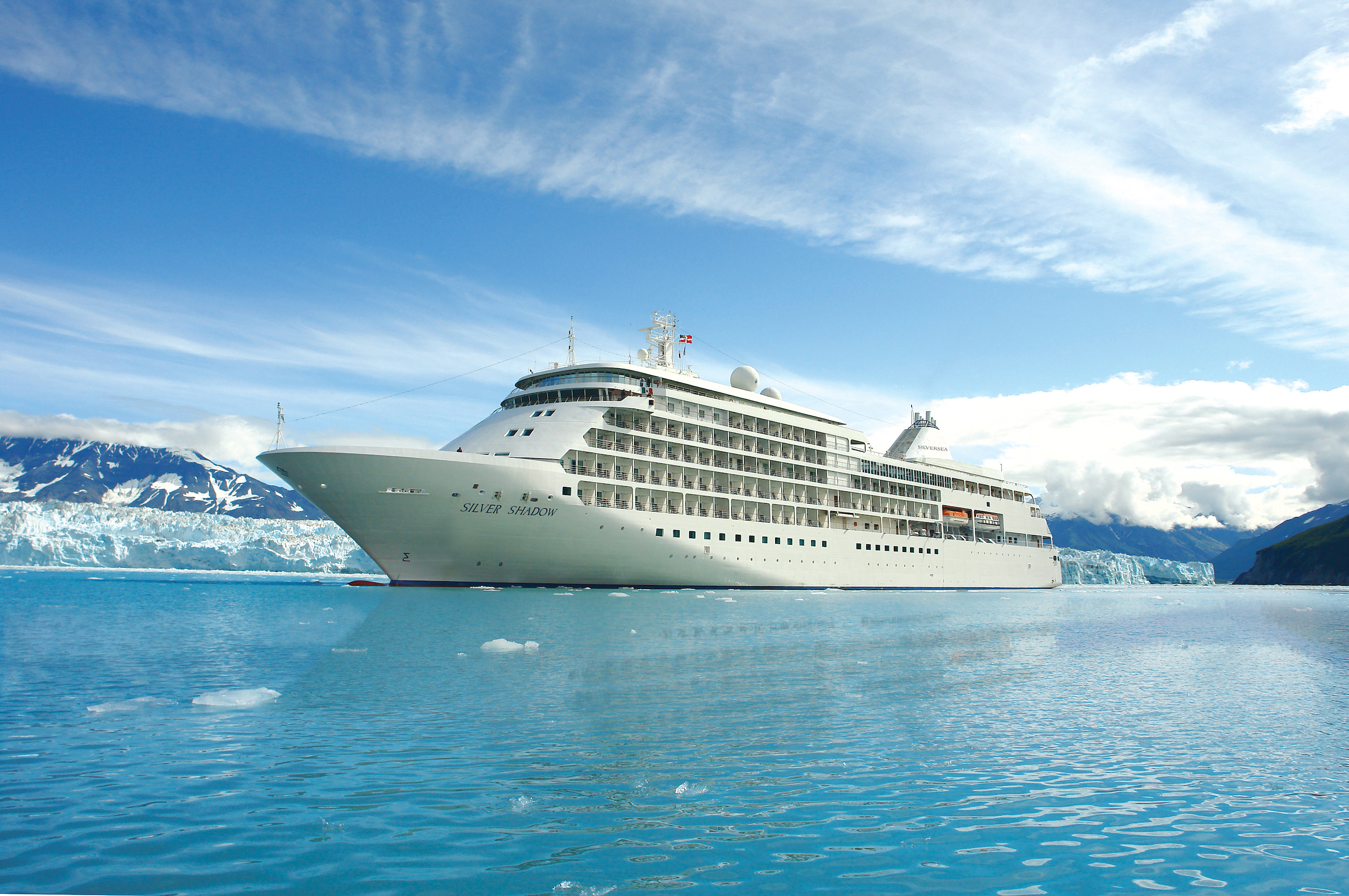
Silversea · Silver Shadow
Overview
A 19-night voyage aboard Silver Shadow, departing Rio de Janeiro on 27 Feb 2028 and arriving in Lisbon, calling at 8 destinations along the way.
Rio de JaneiroSalvadorRecifePorta PraiaSanta Cruz de TenerifeArrecife, Lanzarote, Canary IslandsFunchalLisbon
Cabin prices
Live prices per person based on two sharing. Select a grade to see its fare options.
Loading live cabin prices…
Itinerary
19 nights · 20 ports of call- 1
Day 1 ·Rio de Janeiro, BrazilEmbark
27 Feb 2028Today, with the center rebuilt many times since colonial days, the major interest lies in the beach communities south of the city center rather than in Rio's buildings and monuments. For some 60 years, the beach districts of Copacabana, Ipanema and Leblon have been Rio's heart and soul, providing a constant source of recreation to maintain the city's fame as the most dynamic and captivating tourist capital in South America. - 2
Day 2 ·Rio de Janeiro, Brazil
28 Feb 2028Depart 23:00Today, with the center rebuilt many times since colonial days, the major interest lies in the beach communities south of the city center rather than in Rio's buildings and monuments. For some 60 years, the beach districts of Copacabana, Ipanema and Leblon have been Rio's heart and soul, providing a constant source of recreation to maintain the city's fame as the most dynamic and captivating tourist capital in South America. - 3
Day 3 ·At Sea
29 Feb 2028 - 4
Day 4 ·At Sea
1 Mar 2028 - 5
Day 5 ·Salvador De Bahia, Brazil
2 Mar 2028Arrive 08:00Depart 18:00Multicolored buildings surrounding Pelourinho Square, narrow cobblestone streets, a colorful market and countless churches make a picturesque and fascinating historic center. Toward the mouth of the bay lies the newer section, with skyscrapers and some fine homes built during the last century. Farther out, at Porto da Barra, are the best city beaches, bars and restaurants. At the mouth of the bay stands the Fort of San Antonio, built on the spot where Amérigo Vespucci landed in 1501. The road along the seafront passes the famous lighthouse and leads to Salvador's new suburbs along a string of golden beaches. - 6
Day 6 ·At Sea
3 Mar 2028 - 7
Day 7 ·Recife
4 Mar 2028Recife, with a population of nearly 2 million, is Brazil's fourth largest city and the capital of the State of Pernambuco. It also has the distinction of not having been founded by the Portuguese. In fact, it was the Dutch Prince Maurice of Nassau who founded Recife in 1637 on reclaimed land after his troops had burned Olinda, the original capital. The city center consists of three portions: Recife proper with the dock area and commercial buildings, located on an island formed by the rivers Capibaribe, Beberibe and Pina; Santo Antonio, which is also located on the island; and Boa Vista. The latter part is made into an island by the Canal Tacaruna, which separates it from the mainland. South of the center lies the residential and beach district of Boa Viagem, reached via a bridge across the Pina River. Although Recife itself has long since burst its original, colonial boundaries and much of the city center is given over to modern skyscrapers and office buildings, there are still a few quiet squares with a number of impressive churches and lovely public buildings as well as several interesting museums. In addition, nearby Olinda lends colonial grace and elegance which accounts for much of the area's attraction as a tourist destination. The less determined sightseer will find parks, beaches, and especially the markets, where it is easy to absorb the feel of the city and watch people get on with their lives. - 8
Day 8 ·At Sea
5 Mar 2028 - 9
Day 9 ·At Sea
6 Mar 2028 - 10
Day 10 ·At Sea
7 Mar 2028 - 11
Day 11 ·At Sea
8 Mar 2028 - 12
Day 12 ·Praia
9 Mar 2028Arrive 08:00Depart 18:00Santiago is the main island of the Cape Verde archipelago and the first one to be settled by the Portuguese in the 15th century. Praia is the capital city of the islands. Its old town enjoys an imposing setting on a plateau overlooking the ocean.
The Cape Verde Islands are located 300 miles (480 km) off the coast of West Africa. When the first Portuguese arrived in 1456, they found a land rich in vegetation, but no permanent inhabitants. With the colonisation, the Portuguese planted vineyards and brought in slaves from the West African coast. A population emerged of mixed European and African ancestry, forging a distinct Cape Verdean, highly individual culture - 13
Day 13 ·At Sea
10 Mar 2028 - 14
Day 14 ·At Sea
11 Mar 2028 - 15
Day 15 ·Santa Cruz de Tenerife , Spain
12 Mar 2028Arrive 08:00Depart 17:00Although this busy port city is smaller, quieter and less attractive than Las Palmas in Gran Canaria, Santa Cruz has its own share of elegant monuments. Until 1837, the island's capital was La Laguna, not Santa Cruz, so there are only a few of the buildings in the city center that are any older than that. At the busy Plaza de España, there are several pedestrian streets leading north and to the area west of the port, where you'll find the city's stunning auditorium and maritime park. View less
A real highlight of the city are its ramblas, long tree-lined boulevards that fall steeply from the north end of the city to the sea. - 16
Day 16 ·Arrecife, Canary Islands, Spain
13 Mar 2028Arrive 08:00Depart 13:00Nestled on the east coast of Lanzarote, Arrecife takes its name from the rocky reefs and outcrops that dominate its coastline. This pretty working city has a friendly, authentic feel, and has managed to remain true to its roots as a historic fishing village. There’s a lot to explore, and whether you want to lie back on long swathes of opulent golden sand, or strap on hiking boots to crunch across Lanzarote’s scorched volcanic scenery, this versatile capital has so much to offer.
With castles, caves, sleepy beaches, and a glittering saltwater lagoon, Arrecife is the perfect place to get acquainted with the sun-kissed appeal of the Canary Islands. Lanzarote’s charcoal desert vistas radiate a remarkable luna-like quality, but dotted cacti, waving palms, and bursts of vibrant wildflowers add an accent of colour to the canvas. Arrecife itself boasts apricot-coloured beaches and labyrinthine lanes of white-wash buildings within its Old Quarter, where you can smell fresh fish grilling, and see locals dipping delicious local salty potatoes - papas arrugadas - into colourful sauces. An evening stroll along El Charco de san Gines is a must for watching fishing boats bobbing gently on the lagoon, and watching spectacular sunsets burning across the sky. Standing tall for more than four centuries, Castillo De San Gabriel is located on the tiny island of Islote de los Ingleses, and was once a target for pirates, who would appear menacingly on the Atlantic’s horison. The stalwart 16th-century fortress now serves as the History Museum of Arrecife, and exhibitions inside explore the evolution of the city, and the ancient culture of Lanzarote. The International Museum of Contemporary Art, meanwhile, displays modern and abstract works within the 18th-century San José Castle’s refined setting. See works from Cesar Manrique - the prominent artist and architect whose slick sixties style flair can be admired across the island. - 17
Day 17 ·At Sea
14 Mar 2028 - 18
Day 18 ·Funchal, Madeira
15 Mar 2028Arrive 08:00Depart 17:00Bedecked with dramatic cliffs, fertile mountains and sun-gorged beaches, Madeira is a lush, colourful island of plants, paradise and Portuguese-flavoured pleasures. Bathing in year-round sunshine, Funchal - the lowkey capital of Madeira - is perfect for slowing the pace, and toasting the thrilling scenery with a bottle of the island's famous wine. Narrow, cobblestone streets line the old town, where whitewash buildings, iron-wrought balconies, and tiled patterns carry echoes of Lisbon. Rua de Santa Maria is the city's oldest street, and the doors have been vividly painted by local artists.
Sit for a drink, to sample your choice of Madeira's renowned wines - Boal is the ideal option for those with a sweeter tooth. You'll also find Corpo Santo Chapel here, one of the few remaining buildings to have survived from the 15th century. Blossoming parks and gardens splash colour around, and the sweet smell of pollen lingers in Parque de Santa Catarina. Look out over Funchal harbour between the fountains and blooming flower beds, as ducks and swans enjoy leisurely days on the lake. Madeira Botanical Garden waits in the hills over the city, along with Palhero Garden – a sophisticated and elegantly landscaped English garden, 500 meters above sea level. For an even more dramatic view of this gorgeous setting, head up to Cap Girao – a rusty-red cliff with a cable car strung up to its sheer drop. The cliff falls away vertically to the vivid blue waters below. Or head down to the sea, to enjoy Funchal's gorgeous pebble beaches rustling, framed by colossal, craggy cliffs. - 19
Day 19 ·At Sea
16 Mar 2028 - 20
Day 20 ·LisbonDisembark
17 Mar 2028Lisbon, the capital of Portugal, is a city open to the sea and carefully planned with 18th-century elegance. Its founder is said to be the legendary Ulysses, but the theory of an original Phoenician settlement is probably more realistic. Known in Portugal as Lisboa, the city was inhabited by the Romans, Visigoths and, beginning in the 8th century, the Moors. Much of the 16th century was a period of great prosperity and overseas expansion for Portugal. Tragedy struck on All Saints' Day in 1755 with a devastating earthquake that killed about 40,000 people. The destruction of Lisbon shocked the continent. As a result, the Baixa (lower city) emerged in a single phase of building, carried out in less than a decade by the royal minister, the Marques de Pombal. His carefully planned layout of a perfect neo-classical grid survived to this day and remains the heart of the city. Evidence of pre-quake Lisbon can still be seen in the Belém suburb and the old Moorish section of the Alfama that sprawls below the Castle of St. George.
Lisbon is a compact city on the banks of the Tagus River. Visitors find it easy to get around as many places of interest are in the vicinity of the central downtown area. There is a convenient bus and tram system and taxis are plentiful. Rossio Square, the heart of Lisbon since medieval times, is an ideal place to start exploring. After a fire destroyed parts of the historic neighborhood behind Rossio in 1988, many of the restored buildings emerged with modern interiors behind the original façades.
The city boasts a good many monuments and museums, such as the Jeronimos Monastery, Tower of Belém, the Royal Coach Museum and the Gulbenkian Museum. High above the Baixa is the Bairro Alto (upper city) with its teeming nightlife. The easiest way to connect between the two areas is via the public elevator designed by Gustave Eiffel.
Cruising up the Tagus River to the ship's berth, you can already spot three of Lisbon's famous landmarks: the Monument to the Discoveries, the Tower of Belém and the Statue of Christ, which welcomes visitors from its hilltop location high above Europe's longest suspension bridge.
Your ship: Silver Shadow
Explore Silver Shadow's cabins, dining and onboard facilities.