
14 nightsFrom Cartagena, Colombia5 ports of call
Cartagena to Valparaiso
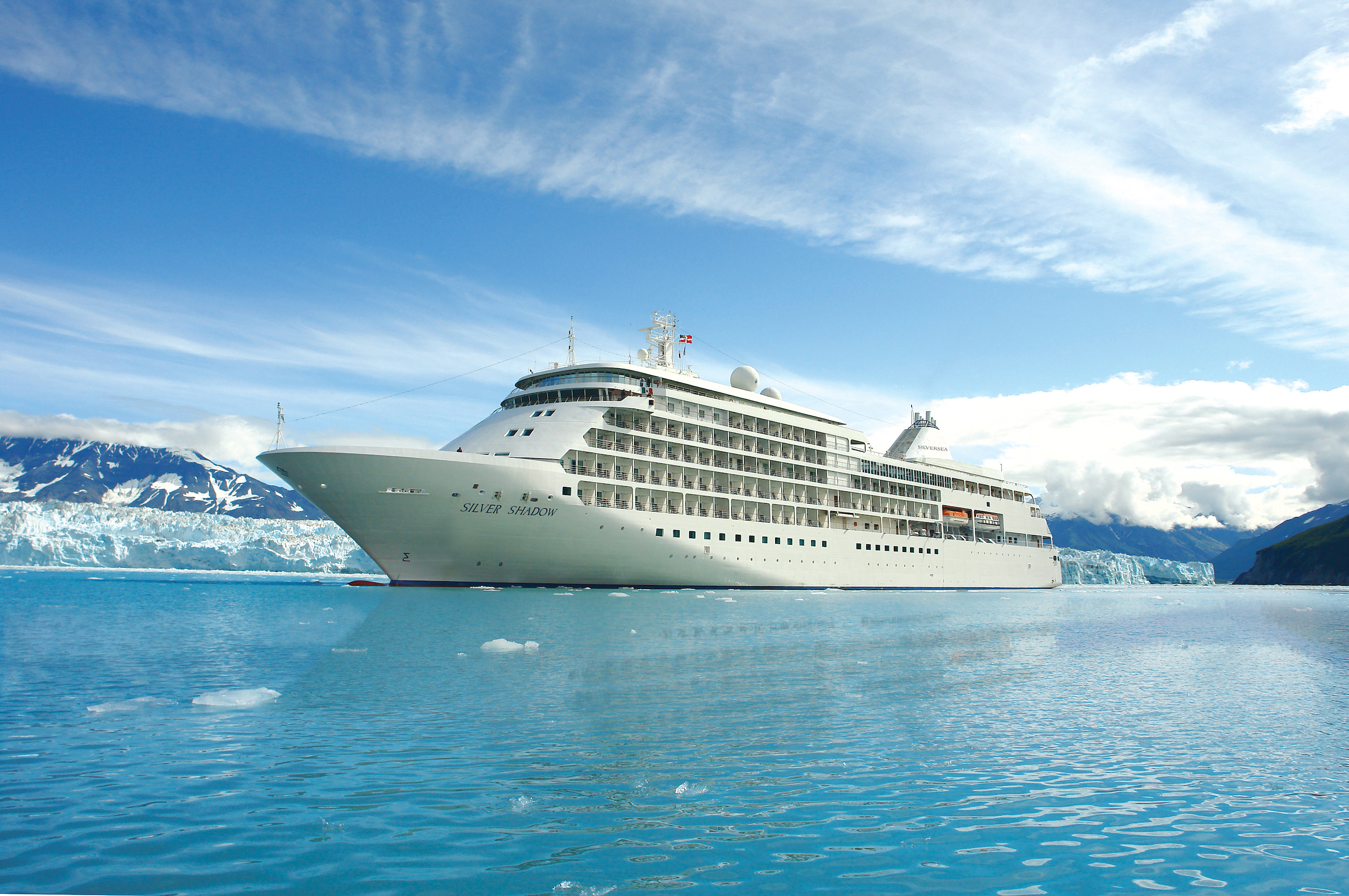
Silversea · Silver Shadow
Overview
A 14-night voyage aboard Silver Shadow, departing Cartagena, Colombia on 15 Jan 2028 and arriving in Valparaiso, calling at 5 destinations along the way.
Cartagena, ColombiaFuerte Amador, Panama CityMantaCallao, PeruValparaiso
Cabin prices
Live prices per person based on two sharing. Select a grade to see its fare options.
Loading live cabin prices…
Itinerary
14 nights · 16 ports of call- 1
Day 1 ·Cartagena, ColombiaEmbark
15 Jan 2028Depart 23:00Get your sunglasses ready, because Cartagena is a riot of colour, charisma and Caribbean charm. The best way of seeing the city is by foot and soaking up the uniquely South American atmosphere. Stroll through the jumble of cobbled streets, step back in time, and enjoy one of the Caribbean’s loveliest destinations. Cartagena was declared a UNESCO World Heritage Site in 1984 as a shining example of an extensive and complete system of military fortifications in South America. The city’s strategic location, on a secluded bay facing the Caribbean Sea, meant that it was an essential stop from Europe to the West Indies during the time of commercial and naval exploration. Vestiges of this time are still to be found on the walls of several of the beautiful buildings lining the streets of the old town. The magnificent city is a walled fortress that stretches for 11 kilometres, dating from 1533 and once played host to Sir Francis Drake, who passed through in 1586 (and set fire to 200 buildings during his visit). Despite its 16th century roots, Cartagena today is a modern and glorious riot of colour. Fuchsia pink bougainvillea tumbles down from turquoise painted balconies, while well-preserved colonial buildings painted in vibrant colours line the streets. Take shelter from the heat and enjoy the sensual atmosphere that is so exclusively Colombian by grabbing a seat in a local bar, ordering a plate of Empanadas and enjoying a Guaro—the colloquial name for aguardiente — the country’s national spirit. - 2
Day 2 ·At Sea
16 Jan 2028 - 3
Day 3 ·Panama Canal Transit
17 Jan 2028Arrive 05:30Depart 18:30Enter the mighty Panama Canal, one of history’s most ambitious and spectacular stretches of waterway. Connecting the Atlantic and Pacific oceans, and slicing through the heart of a continent, the canal is a staggering engineering triumph, eliminating the need to traverse the treacherous waters of South America and Cape Horn. Sail one of the world’s great canals to appreciate the true scale of this achievement, as your ship manoeuvres between its vast, gushing locks and huge lakes. View less
The French began construction in 1881, but the costly project was left abandoned and unfinished until the United States finally completed the work in 1914. Following the path of the Panama Railway of 1855, locks raise ships large and small 26 metres up above sea level to the canal’s elevated channel. New locks have recently been added, which allow the canal to accommodate ever bigger ships. Leaving the confinement of the locks, you will enter the canal’s channel, to sail through Panama’s core. Wide lakes are linked by painstakingly chiselled wedges of canal, which slice through the lush scenery. Look out for the Culebra Cut section, the most challenging stretch of the entire route to construct. The Bridge of the Americas is a vast arched landmark, which sweeps across the Pacific Entrance and was completed in 1962. It’s one of several huge bridges that you will sail below on the 51-mile journey, including the much newer Centennial Bridge, and the Atlantic Bridge, which spans the entrance close to Colon. - 4
Day 4 ·Fuerte Amador
17 Jan 2028Arrive 19:00Expect incredible morning views as you arrive into the port for Panama City. Tinged with a silver pre-dawn light, the city will metamorphosise into a golden glow as the sun rises above it. And from then on expect one stunning view after another. Very interesting in its own right, Fuerte Amador is obviously overshadowed by its proximity to Panama City.
So should the Miraflores museum of the Canal, which offers a comprehensive and immersive tour of the Canal including a 3-D experience, four exhibition halls, an observation deck, and a surprisingly good restaurant not interest you then there is always the option of lovely Casco Viejo – literally the old quartier of Panama. The grand old colonial houses, cobbled streets, independent boutiques and buzzing street scene make this a must stop on your itinerary. And if you like seafood, you will not want miss the many restaurants and market stalls serving different variations of so-fresh-it’s-still-practically-swimming ceviche. Best eaten like the Panamanians do, with salty crackers and a cold beer on the beach. And if money is no object, a cup of geisha coffee – supposedly the world’s best and definitely the world’s most expensive at $7 a shot is definitely a pick me up! Cool cosmopolitan capital aside, Panama has a skyscraper filled skyline that is worthy of some of its North American counterparts. But if urban utopia is not your scene then fear not, the sandy beaches and lush rainforests are never more than a short cab ride away. - 4
Day 4 ·Fuerte Amador
18 Jan 2028Depart 18:00Expect incredible morning views as you arrive into the port for Panama City. Tinged with a silver pre-dawn light, the city will metamorphosise into a golden glow as the sun rises above it. And from then on expect one stunning view after another. Very interesting in its own right, Fuerte Amador is obviously overshadowed by its proximity to Panama City.
So should the Miraflores museum of the Canal, which offers a comprehensive and immersive tour of the Canal including a 3-D experience, four exhibition halls, an observation deck, and a surprisingly good restaurant not interest you then there is always the option of lovely Casco Viejo – literally the old quartier of Panama. The grand old colonial houses, cobbled streets, independent boutiques and buzzing street scene make this a must stop on your itinerary. And if you like seafood, you will not want miss the many restaurants and market stalls serving different variations of so-fresh-it’s-still-practically-swimming ceviche. Best eaten like the Panamanians do, with salty crackers and a cold beer on the beach. And if money is no object, a cup of geisha coffee – supposedly the world’s best and definitely the world’s most expensive at $7 a shot is definitely a pick me up! Cool cosmopolitan capital aside, Panama has a skyscraper filled skyline that is worthy of some of its North American counterparts. But if urban utopia is not your scene then fear not, the sandy beaches and lush rainforests are never more than a short cab ride away. - 5
Day 5 ·At Sea
19 Jan 2028 - 6
Day 6 ·At Sea
20 Jan 2028 - 7
Day 7 ·Manta, Ecuador
21 Jan 2028Arrive 08:00Depart 18:00Manta is one of Ecuador’s ports along the central coast and the most populated city in Manabi Province. Its existence can be traced to pre-Columbian times when Manta was a trading post for the Incas and Mantas. It was also the port where Charles Marie de La Condamine arrived, leading the French mission to measure the location of the equator in 1735. - 8
Day 8 ·At Sea
22 Jan 2028 - 9
Day 9 ·At Sea
23 Jan 2028 - 10
Day 10 ·Lima (Callao)
24 Jan 2028Arrive 08:00Depart 22:00 - 11
Day 11 ·At Sea
25 Jan 2028 - 12
Day 12 ·At Sea
26 Jan 2028 - 13
Day 13 ·At Sea
27 Jan 2028 - 15
Day 15 ·Valparaiso, Chile
28 Jan 2028Arrive 13:30Since time immemorial Valparaiso has inspired writers, poets, musicians and artists alike. If the city is still a little rough around the edges, this only adds to its bohemian ambience; the architecture, style, street art, nightlife, and live music scenes of Valparaiso are some of the best in the world. Add colourful clifftop homes to the mix and you'll soon see why Valpariaso is many people's favourite Chilean city. The city was founded in 1536 by Spanish conquistador Juan de Saavedra, who named the city after his birthplace. View less
Many of the colonial buildings he implemented are still standing today, despite the rain, wind, fire and several earthquakes (one of which almost levelled the city in 1906). Quirky architecture also abounds; poetry lovers and amateur architects will no doubt want to make the 45 km trip south to Chilean poet laureate (and Nobel Prize winner) Pablo Neruda’s ship-shaped house and museum for a taste of the extraordinary. The city and region are also extremely well known for their love of good food and wine. The vineyards of the nearby Casablanca Valley - first planted in the early 1980s - have earned worldwide recognition in a relatively short space of time. However, Chile’s viticulture history does date back much farther than that. De Saavedra brought grape vines on his voyage to South America in order to make his own wine and this led to a new grape brandy being created, Pisco. Today give any Chilean a Pisco and wherever they are in the world, they will be home. - 15
Day 15 ·Valparaiso, ChileDisembark
29 Jan 2028Since time immemorial Valparaiso has inspired writers, poets, musicians and artists alike. If the city is still a little rough around the edges, this only adds to its bohemian ambience; the architecture, style, street art, nightlife, and live music scenes of Valparaiso are some of the best in the world. Add colourful clifftop homes to the mix and you'll soon see why Valpariaso is many people's favourite Chilean city. The city was founded in 1536 by Spanish conquistador Juan de Saavedra, who named the city after his birthplace. View less
Many of the colonial buildings he implemented are still standing today, despite the rain, wind, fire and several earthquakes (one of which almost levelled the city in 1906). Quirky architecture also abounds; poetry lovers and amateur architects will no doubt want to make the 45 km trip south to Chilean poet laureate (and Nobel Prize winner) Pablo Neruda’s ship-shaped house and museum for a taste of the extraordinary. The city and region are also extremely well known for their love of good food and wine. The vineyards of the nearby Casablanca Valley - first planted in the early 1980s - have earned worldwide recognition in a relatively short space of time. However, Chile’s viticulture history does date back much farther than that. De Saavedra brought grape vines on his voyage to South America in order to make his own wine and this led to a new grape brandy being created, Pisco. Today give any Chilean a Pisco and wherever they are in the world, they will be home.
Your ship: Silver Shadow
Explore Silver Shadow's cabins, dining and onboard facilities.