
9 nightsFrom Tromso, Norway4 ports of call
Tromsø to Longyearbyen
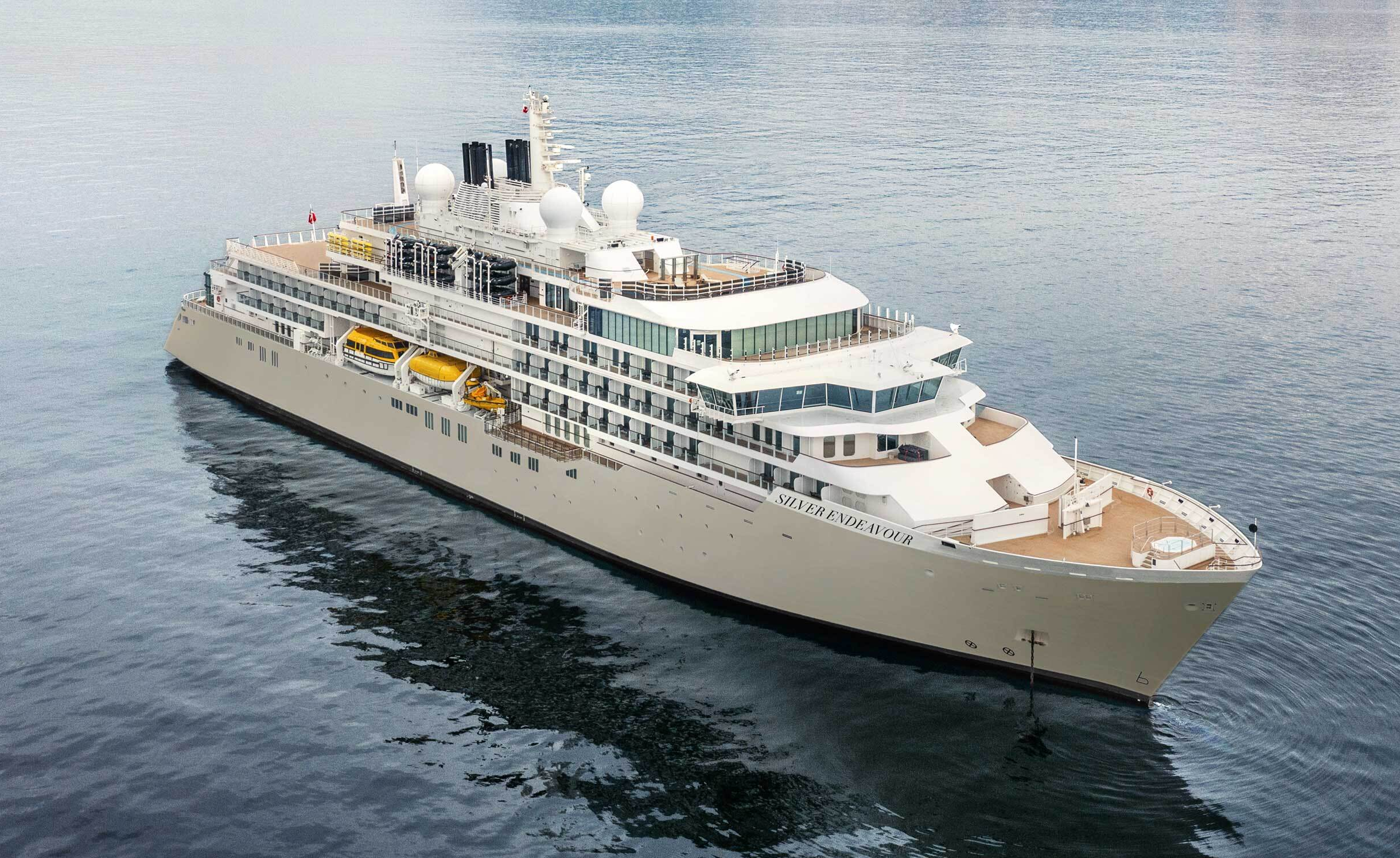
Silversea · Silver Endeavour
Overview
A 9-night voyage aboard Silver Endeavour, departing Tromso, Norway on 17 Jul 2026 and arriving in Longyearbyen, calling at 4 destinations along the way.
Tromso, NorwaySkarsvagSvalbardLongyearbyen
Cabin prices
Live prices per person based on two sharing. Select a grade to see its fare options.
Loading live cabin prices…
Itinerary
9 nights · 11 ports of call- 1
Day 1 ·TromsøEmbark
17 Jul 2026Depart 18:00Feel your heart flutter, as you catch your first glimpse of that famous emerald haze dancing across the stars, during your visit to this wonderful Arctic gateway. Located in the far north of Norway, a visit to Tromso beckons you to the extremes of this magical country, to explore a fairytale land of jagged mountains, glistening glaciers and husky-pulled sledges. Despite its remote location, you'll discover a perhaps surprisingly cosmopolitan city, with a healthy student population injecting plenty of energy. View less
Sat 250 miles above the Arctic Circle - at 69° north - you can bathe in the midnight sun's glow during summer, before winter brings the thick blackness and starry skies of endless polar nights. The darkness doesn't stop the fun - with a polar night half-marathon taking place in January - but the return of the sun is always a reason for a celebration here. To get the best view over the city, take the cable car to Storsteinen's amazing viewpoint. Magnificent views down over the city, fjord and Tromso's arching bridge will unravel before you. Learn more about northerly traditions, polar expeditions and arctic hunting at the Polar Museum. The Science Centre, meanwhile, explains how humans have harnessed and survived these epic landscapes over the years, and explores Tromso's breathtaking natural spectacle - the northern lights. The city is famed for its extraordinary viewing opportunities, which are often said to be the best in the world. The Alpine Botanic Garden is the most northern such garden on the planet, showcasing some of Norway's hardiest plantlife, which survives and thrives at this nose-bleeding altitude. - 2
Day 2 ·Skarsvag
18 Jul 2026Arrive 08:00Depart 17:00For those who like to travel far (very far) off the beaten track, then you have found your Nordic nirvana in Skarsvag. Large, sparsely populated (there are just 60 human year round residents), and a joy to all those who revel in stark, unbridled beauty, Skarsvag also enjoys the auspicious title of being the world’s most northerly fishing village. But rolling hills, prolific birdlife and arctic fjords aside, Skarsvag is above all famous for its proximity to the North Cape. View less
Found on the island of Magerøya, the most northernmost point of Europe above the arctic circle is a bucket list basic. Stand beneath the massive metal globe and gaze out onto the Barents Sea, where the only land between you and the North Pole is the Svalbard archipelago. This is truly the land of the midnight sun – in fact, you are so far north that the sun doesn’t even dip beneath the horizon between May and mid-July. The island’s famous bird cliffs are quite spectacular, and home to thousands of puffins, gannets and cormorants. Those willing to hike to cape Knivskjellodden, the northernmost point on Magerøya, will be rewarded with stunning cliff face views of the North Cape Plateau. Before leaving, head into the impressive North Cape Hall for exhibitions on the North Cape’s history. Travellers have been visiting since 1664, when Italian priest Francesco Negri arrived, so there are some tales to tell! More intriguingly, a tunnel has been hewn into the rock, leading down to the cliff face, complete with a chapel. - 3
Day 3 ·Cruising Along North Cape
18 Jul 2026Arrive 18:00Depart 19:00Situated at the very north tip of Norway and inside the Arctic Circle, there is something very special about being (almost) at the top of the world. Called the northernmost point of Europe, the North Cape (Nordkapp in Norwegian) lies about 1,306.3 mi from the North Pole, with no dry land between except for the Svalbald archipelago.
Home to where the Atlantic and Arctic oceans meet, this is the true land of the midnight sun – constant spectacular scenic views and 24-hour sunlight lends itself to a sense of giddy informality aboard. Just imagine sipping a chilled glass of champagne at the very top of the world in full daylight at midnight – sensational. Be sure to be on the lookout for hundreds of thousands of puffins, gannets, cormorants, seals, dolphins and whales that make this stretch of chilly water their home. Not forgetting the colourful, compact fishing villages, so at odds with the otherwise this stark, barren landscape. - 4
Day 4 ·Cruise & Explore Bear Island
19 Jul 2026Arrive 13:00Depart 17:30Bear Island is considered Svalbard’s southernmost island, roughly half way between Spitsbergen and Norway’s North Cape. Although the last polar bears were seen in 2004, the name goes back to Dutch explorer Willem Barentsz and his visit in 1596. The island has been used to hunt walrus, for whaling, and even coal mining has taken place. The strategic location on the border of the Norwegian Sea and the Barents Sea has led to a meteorological station being set up by Norway near Gravodden on Bear Island’s north coast.
Some two thirds of the island is a relatively flat plain with shallow freshwater lakes and Ramsar Wetland, while the entire island and the surrounding waters are a Nature Reserve. Bear Island has also been designated an Import Bird Area as it is a staging area for Pink-footed and Barnacle Geese and the steep cliffs south of Sørhamna are home to thousands of breeding seabirds. This is a specially protected area where Zodiacs are allowed to cruise along the cliffs around Kapp Kolthoff. In smaller amounts Atlantic Puffins, Northern Gannets, Glaucous Gulls and Great Skuas are found in between the large Black-legged Kittiwake, Little Auk, Common Guillemot and Brünnich’s Guillemot colonies. The constant battering of the sea has not only created impressive sea caves and tunnels, but unfortunately the Russian vessel Petrozavodsk shipwrecked near Revdalen at the base of the limestone cliffs and the waves are causing a continuous disintegration of the remains of the ship. - 5
Day 5 ·Svalbard
20 Jul 2026Arrive 12:30Depart 12:30Svalbard’s northern region is less influenced by the Norwegian Current coming through the Greenland Sea than the southern region and shows more ice. The northern part of the island of Spitsbergen shows quite a number of impressive fjords, bays and glaciers. The Nordaust Svalbard Nature Reserve includes Spitsbergen’s east coast, the Hinlopen Strait, Nordaustlandet and some islands further east like Kvitoya and Storoya. View less
Several walrus haul-outs, spectacular glaciers, bird cliffs and bird islands, as well as surprising flora in Arctic deserts and the possibility to see polar bears and to visit historically important sites make this an area prone for exploration. Ice conditions will dictate which sites can be seen. - 5
Day 5 ·Svalbard
21 Jul 2026Svalbard’s northern region is less influenced by the Norwegian Current coming through the Greenland Sea than the southern region and shows more ice. The northern part of the island of Spitsbergen shows quite a number of impressive fjords, bays and glaciers. The Nordaust Svalbard Nature Reserve includes Spitsbergen’s east coast, the Hinlopen Strait, Nordaustlandet and some islands further east like Kvitoya and Storoya. View less
Several walrus haul-outs, spectacular glaciers, bird cliffs and bird islands, as well as surprising flora in Arctic deserts and the possibility to see polar bears and to visit historically important sites make this an area prone for exploration. Ice conditions will dictate which sites can be seen. - 6
Day 6 ·Svalbard
22 Jul 2026Svalbard’s northern region is less influenced by the Norwegian Current coming through the Greenland Sea than the southern region and shows more ice. The northern part of the island of Spitsbergen shows quite a number of impressive fjords, bays and glaciers. The Nordaust Svalbard Nature Reserve includes Spitsbergen’s east coast, the Hinlopen Strait, Nordaustlandet and some islands further east like Kvitoya and Storoya. View less
Several walrus haul-outs, spectacular glaciers, bird cliffs and bird islands, as well as surprising flora in Arctic deserts and the possibility to see polar bears and to visit historically important sites make this an area prone for exploration. Ice conditions will dictate which sites can be seen. - 7
Day 7 ·Svalbard
23 Jul 2026Svalbard’s northern region is less influenced by the Norwegian Current coming through the Greenland Sea than the southern region and shows more ice. The northern part of the island of Spitsbergen shows quite a number of impressive fjords, bays and glaciers. The Nordaust Svalbard Nature Reserve includes Spitsbergen’s east coast, the Hinlopen Strait, Nordaustlandet and some islands further east like Kvitoya and Storoya. View less
Several walrus haul-outs, spectacular glaciers, bird cliffs and bird islands, as well as surprising flora in Arctic deserts and the possibility to see polar bears and to visit historically important sites make this an area prone for exploration. Ice conditions will dictate which sites can be seen. - 8
Day 8 ·Svalbard
24 Jul 2026Svalbard’s northern region is less influenced by the Norwegian Current coming through the Greenland Sea than the southern region and shows more ice. The northern part of the island of Spitsbergen shows quite a number of impressive fjords, bays and glaciers. The Nordaust Svalbard Nature Reserve includes Spitsbergen’s east coast, the Hinlopen Strait, Nordaustlandet and some islands further east like Kvitoya and Storoya. View less
Several walrus haul-outs, spectacular glaciers, bird cliffs and bird islands, as well as surprising flora in Arctic deserts and the possibility to see polar bears and to visit historically important sites make this an area prone for exploration. Ice conditions will dictate which sites can be seen. - 9
Day 9 ·Svalbard
25 Jul 2026Svalbard’s northern region is less influenced by the Norwegian Current coming through the Greenland Sea than the southern region and shows more ice. The northern part of the island of Spitsbergen shows quite a number of impressive fjords, bays and glaciers. The Nordaust Svalbard Nature Reserve includes Spitsbergen’s east coast, the Hinlopen Strait, Nordaustlandet and some islands further east like Kvitoya and Storoya. View less
Several walrus haul-outs, spectacular glaciers, bird cliffs and bird islands, as well as surprising flora in Arctic deserts and the possibility to see polar bears and to visit historically important sites make this an area prone for exploration. Ice conditions will dictate which sites can be seen. - 10
Day 10 ·LongyearbyenDisembark
26 Jul 2026Arrive 07:00
Your ship: Silver Endeavour
Explore Silver Endeavour's cabins, dining and onboard facilities.