
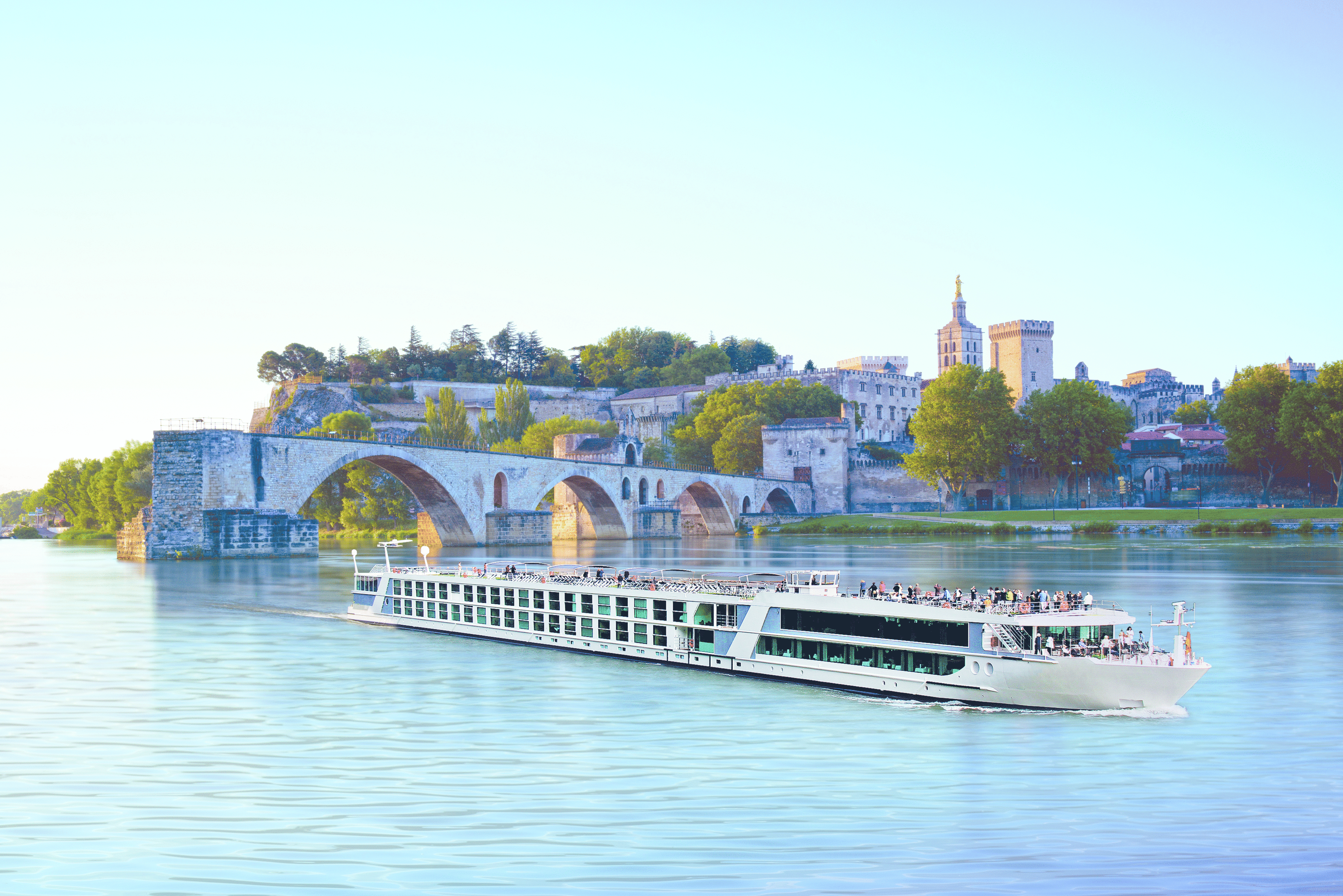
14 nightsFrom Marseille, France17 ports of call
Discover the Rhine & Rhone Rivers
Emerald Cruises · Emerald Liberte
Overview
A 14-night voyage aboard Emerald Liberte, departing Marseille, France on 25 Jul 2026 and arriving in Amsterdam, calling at 17 destinations along the way.
Marseille, FranceArlesAvignonViviersTournonLyonChalon-Sur-SaoneBeauneLyonBaselBreisachKehlStrasbourgHeidelbergKoblenzCologneAmsterdam
Cabin prices
Live prices per person based on two sharing. Select a grade to see its fare options.
Loading live cabin prices…
Itinerary
14 nights · 20 ports of call- 1
Day 1 ·MarseilleEmbark
25 Jul 2026Marseille, a port city in southern France, has been a crossroads of immigration and trade since its founding by the Greeks circa 600 B.C. At its heart is the Vieux-Port (Old Port), where fishmongers sell their catch along the boat-lined quay. Basilique Notre-Dame-de-la-Garde is a Romanesque-Byzantine church. Modern landmarks include Le Corbusier’s influential Cité Radieuse complex and Zaha Hadid’s CMA CGM Tower. - 1
Day 1 ·Arles
25 Jul 2026Arles is a city on the Rhône River in the Provence region of southern France. It's famed for inspiring the paintings of Van Gogh, which influenced the contemporary art displayed at the Fondation Vincent Van Gogh. Once a provincial capital of ancient Rome, Arles is also known for many remains from that era, including Arles Amphitheatre (les Arènes d'Arles), now hosting plays, concerts and bullfights - 2
Day 2 ·Arles
26 Jul 2026Arles is a city on the Rhône River in the Provence region of southern France. It's famed for inspiring the paintings of Van Gogh, which influenced the contemporary art displayed at the Fondation Vincent Van Gogh. Once a provincial capital of ancient Rome, Arles is also known for many remains from that era, including Arles Amphitheatre (les Arènes d'Arles), now hosting plays, concerts and bullfights - 3
Day 3 ·Avignon
27 Jul 2026Avignon, a city in southeastern France’s Provence region, is set on the Rhône River. From 1309 to 1377, it was the seat of the Catholic popes. It remained under papal rule until becoming part of France in 1791. This legacy can be seen in the massive Palais des Papes (Popes' Palace) in the city center, which is surrounded by medieval stone ramparts - 4
Day 4 ·Viviers
28 Jul 2026Viviers is a commune in the department of Ardèche in southern France. The administrative and religious capital of Vivarais, the town of Viviers, on the right bank of the Rhône, in southern Ardèche, retains an important heritage from its rich past, including many listed monuments - 5
Day 5 ·Tournon
29 Jul 2026Tournon-sur-Rhône is a commune in the Ardèche department in southern France. - 6
Day 6 ·Lyon
30 Jul 2026Lyon, the capital city in France’s Auvergne-Rhône-Alpes region, sits at the junction of the Rhône and Saône rivers. Its center reflects 2,000 years of history from the Roman Amphithéâtre des Trois Gaules, medieval and Renaissance architecture in Vieux (Old) Lyon, to the modern Confluence district on Presqu'île peninsula. Traboules, covered passageways between buildings, connect Vieux Lyon and La Croix-Rousse hill. - 7
Day 7 ·Chalon-Sur-Saône
31 Jul 2026Chalon-sur-Saône is a commune in the Saône-et-Loire department in the region of Bourgogne-Franche-Comté in eastern France. It is a sub-prefecture of the department. It is the largest city in the department; however, the department capital is the smaller city of Mâcon. - 7
Day 7 ·Beaune
31 Jul 2026Beaune is a walled town at the center of the Burgundy winemaking region in France. Surrounded by the Côte d'Or vineyards, the cobbled town is renowned for an annual wine auction held at the Hôtel-Dieu (Hospices de Beaune). Recognized by its colorful, geometric-patterned tile roof, this 15th-century former hospital is now the Hôtel-Dieu Museum, showcasing works like "The Last Judgement" altarpiece by Van der Weyden. - 8
Day 8 ·Lyon
1 Aug 2026Lyon, the capital city in France’s Auvergne-Rhône-Alpes region, sits at the junction of the Rhône and Saône rivers. Its center reflects 2,000 years of history from the Roman Amphithéâtre des Trois Gaules, medieval and Renaissance architecture in Vieux (Old) Lyon, to the modern Confluence district on Presqu'île peninsula. Traboules, covered passageways between buildings, connect Vieux Lyon and La Croix-Rousse hill. - 8
Day 8 ·Basel
1 Aug 2026Basel is a city on the Rhine River in northwest Switzerland, close to the country’s borders with France and Germany. Its medieval old town centers around Marktplatz, dominated by the 16th-century, red-sandstone Town Hall. Its 12th-century Gothic cathedral has city views, and contains the tomb of the 16th-century Dutch scholar, Erasmus. The city’s university houses some of Erasmus’ works. - 9
Day 9 ·Breisach
2 Aug 2026Breisach is a town with approximately 16,500 inhabitants, situated along the Rhine in the Rhine Valley, in the district Breisgau-Hochschwarzwald, Baden-Württemberg, Germany, about halfway between Freiburg and Colmar — 20 kilometres away from each — and about 60 kilometres north of Basel near the Kaiserstuhl. - 10
Day 10 ·Kehl
3 Aug 2026Kehl is a town in southwestern Germany in the Ortenaukreis, Baden-Württemberg. It is located on the river Rhine, directly opposite the French city of Strasbourg - 10
Day 10 ·Strasbourg
3 Aug 2026Strasbourg is the capital city of the Grand Est region, formerly Alsace, in northeastern France. It's also the formal seat of the European Parliament and sits near the German border, with culture and architecture blending German and French influences. Its Gothic Cathédrale Notre-Dame features daily shows from its astronomical clock and sweeping views of the Rhine River from partway up its 142m spire. - 11
Day 11 ·Ludwigshafen
4 Aug 2026 - 11
Day 11 ·Heidelberg
4 Aug 2026Heidelberg is a town on the Neckar River in southwestern Germany. It’s known for venerable Heidelberg University, founded in the 14th century. Gothic Heiliggeistkirche church towers over the cafe-lined Marktplatz, a town square in the Altstadt (Old Town). The red-sandstone ruins of Heidelberg Castle, a noted example of Renaissance architecture, stand on Königstuhl hill. - 12
Day 12 ·Koblenz
5 Aug 2026Koblenz, spelled Coblenz before 1926, is a German city on the banks of the Rhine and of the Moselle, a multi-nation tributary. Koblenz was established as a Roman military post by Drusus around 8 B.C. Its name originates from the Latin cōnfluentēs, meaning " confluence" - 13
Day 13 ·Cologne
6 Aug 2026Cologne, a 2,000-year-old city spanning the Rhine River in western Germany, is the region’s cultural hub. A landmark of High Gothic architecture set amid reconstructed old town, the twin-spired Cologne Cathedral is also known for its gilded medieval reliquary and sweeping river views. The adjacent Museum Ludwig showcases 20th-century art, including many masterpieces by Picasso, and the Romano-Germanic Museum houses Roman antiquities. - 14
Day 14 ·Amsterdam
7 Aug 2026Amsterdam is the Netherlands’ capital, known for its artistic heritage, elaborate canal system and narrow houses with gabled facades, legacies of the city’s 17th-century Golden Age. Its Museum District houses the Van Gogh Museum, works by Rembrandt and Vermeer at the Rijksmuseum, and modern art at the Stedelijk. Cycling is key to the city’s character, and there are numerous bike paths - 15
Day 15 ·AmsterdamDisembark
8 Aug 2026Amsterdam is the Netherlands’ capital, known for its artistic heritage, elaborate canal system and narrow houses with gabled facades, legacies of the city’s 17th-century Golden Age. Its Museum District houses the Van Gogh Museum, works by Rembrandt and Vermeer at the Rijksmuseum, and modern art at the Stedelijk. Cycling is key to the city’s character, and there are numerous bike paths
Your ship: Emerald Liberte
Explore Emerald Liberte's cabins, dining and onboard facilities.